What Lure Fishing Gear for Beginners Is Worth Buying
- Category
- Fishing Gear
- Date
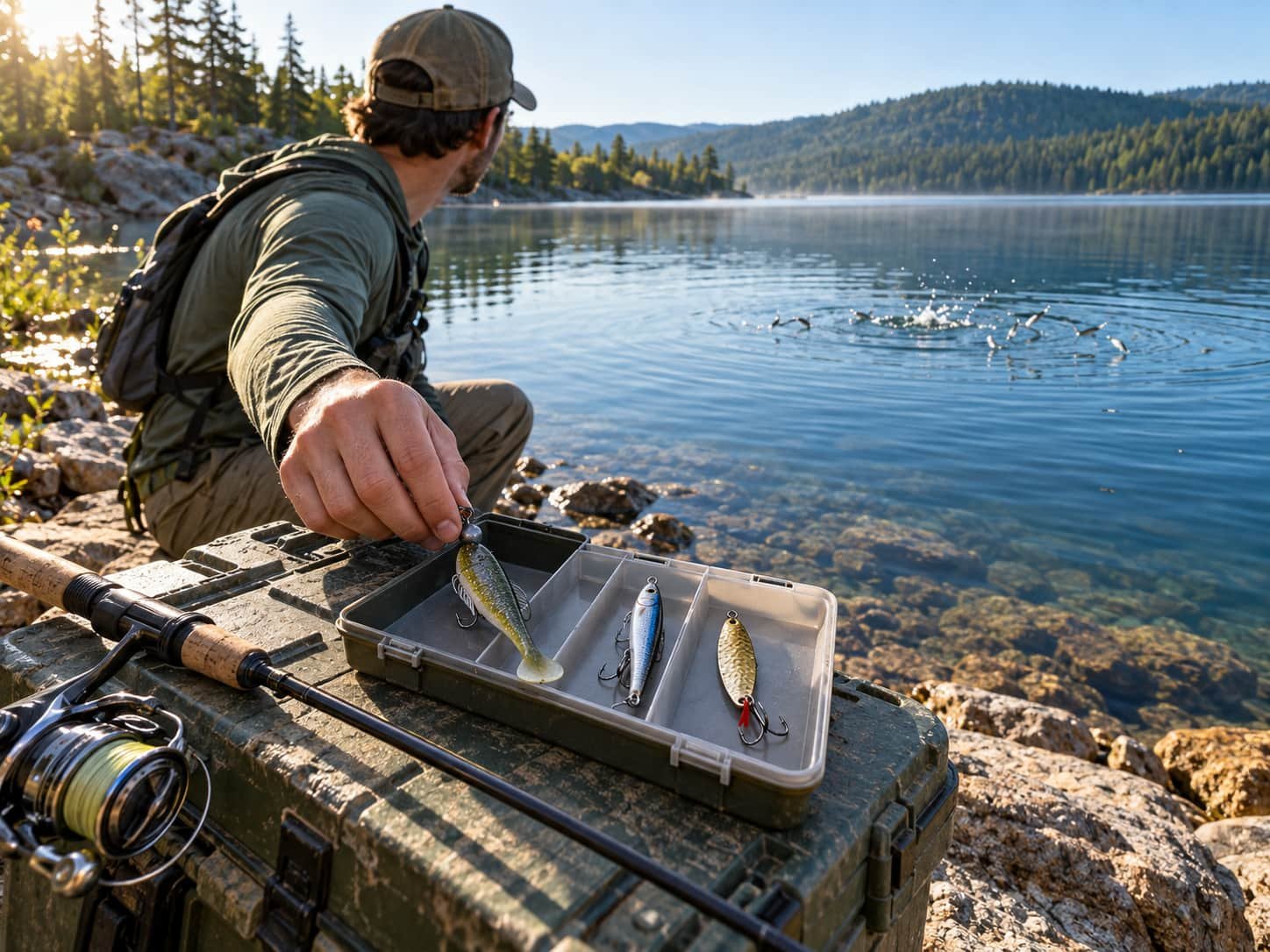
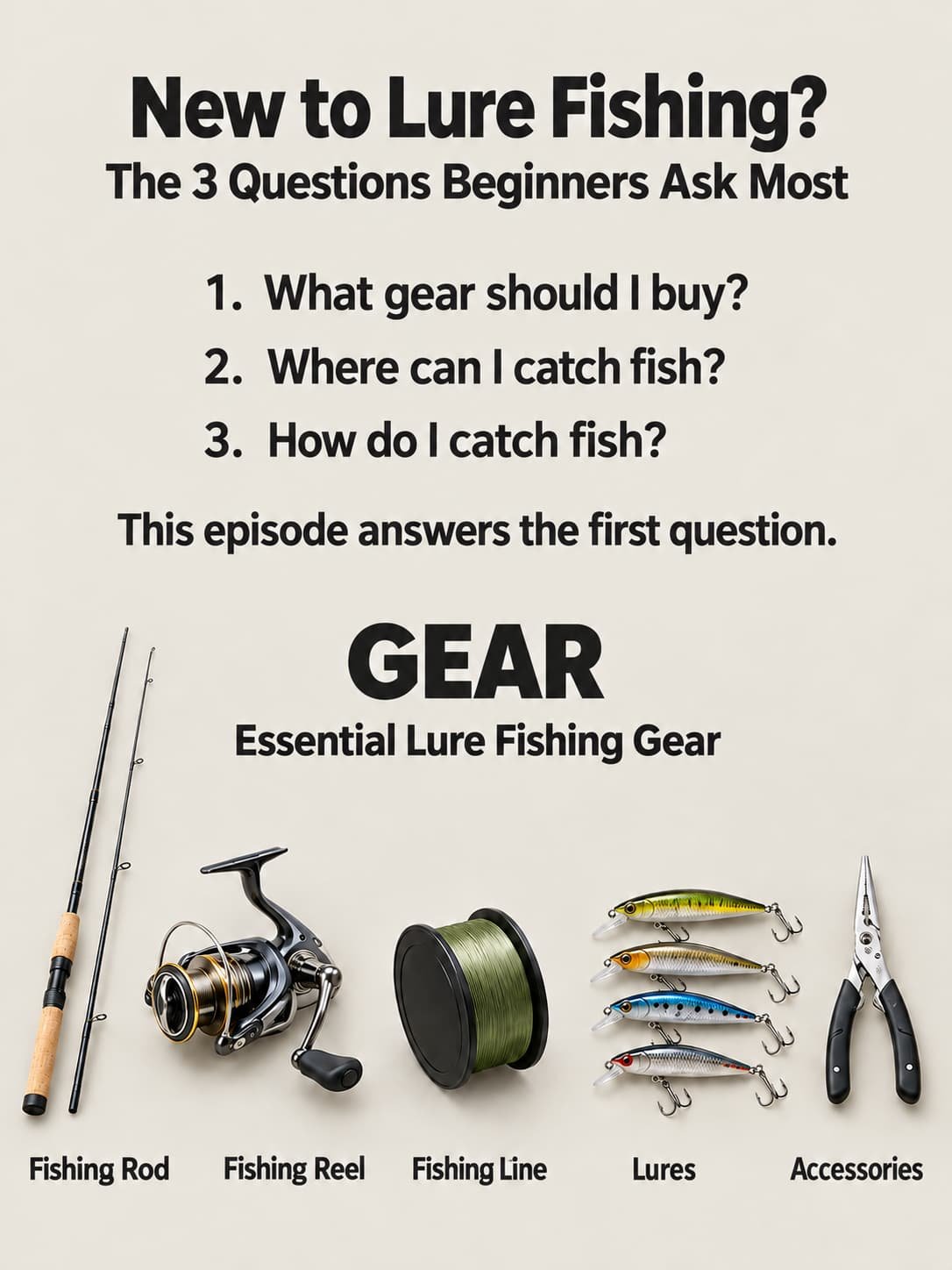
If you’re choosing lure fishing gear for beginners, keep your first setup simple and easy to fish. Start with a spinning rod and reel you can cast comfortably, braided line with a fluorocarbon leader, and a small selection of lures you understand.
Soft plastics, sinking pencils, and spoons give you enough variety to cover different depths and activity levels without overloading your tackle box. The guide below shows how to match your lure choice to fish behavior and the water in front of you before making the next cast.
| Gear Category | Type or Specification | Features and Use | Beginner Recommendation |
|---|---|---|---|
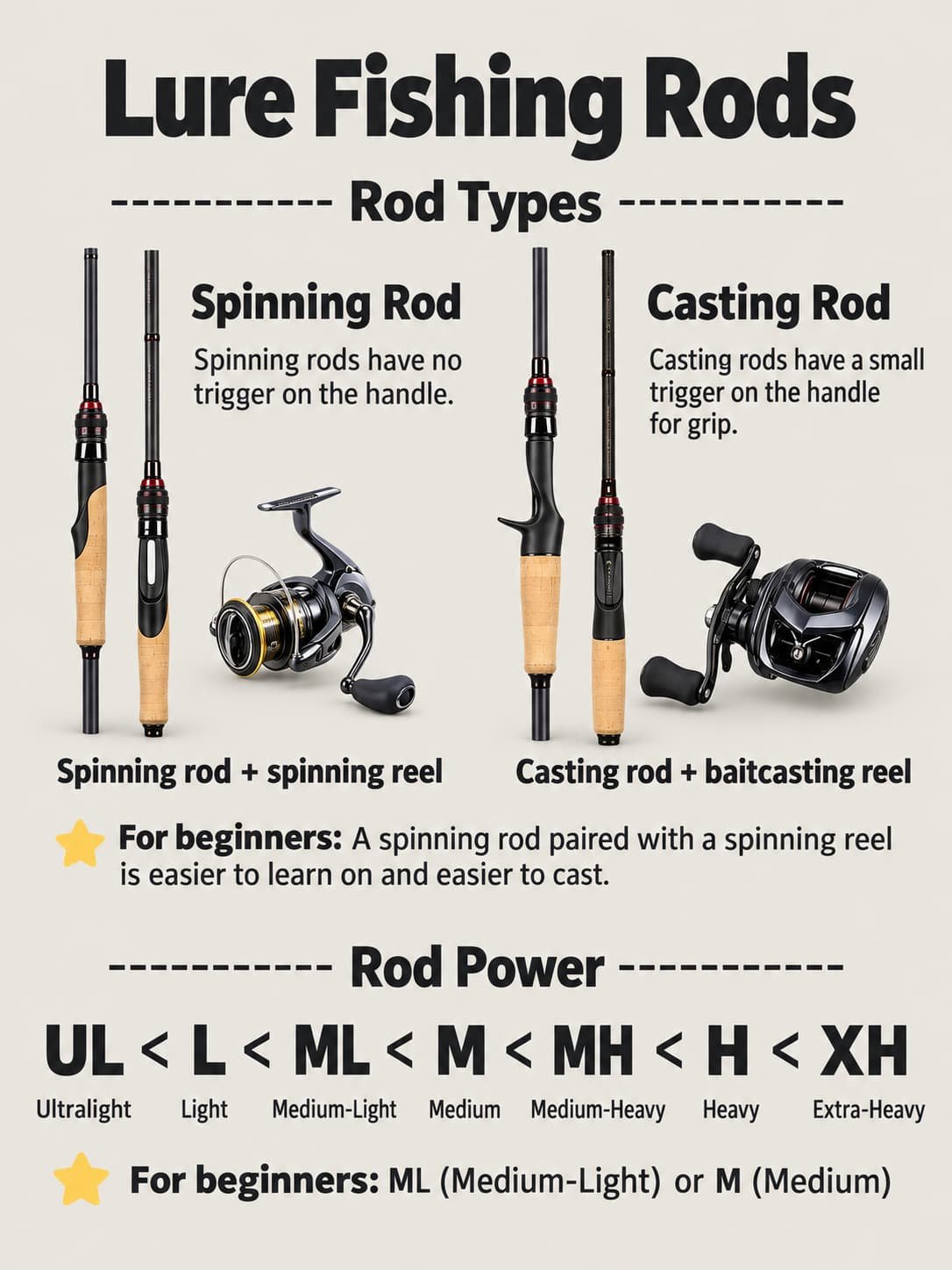
| Fishing rod | Spinning rod | Has no trigger grip on the handle and pairs with a spinning reel. | Easier to learn and cast with; recommended as a first setup. |
| 1 | Casting rod | Has a small trigger grip on the handle and pairs with a baitcasting reel. | Consider one after you have gained some experience with lure fishing. |
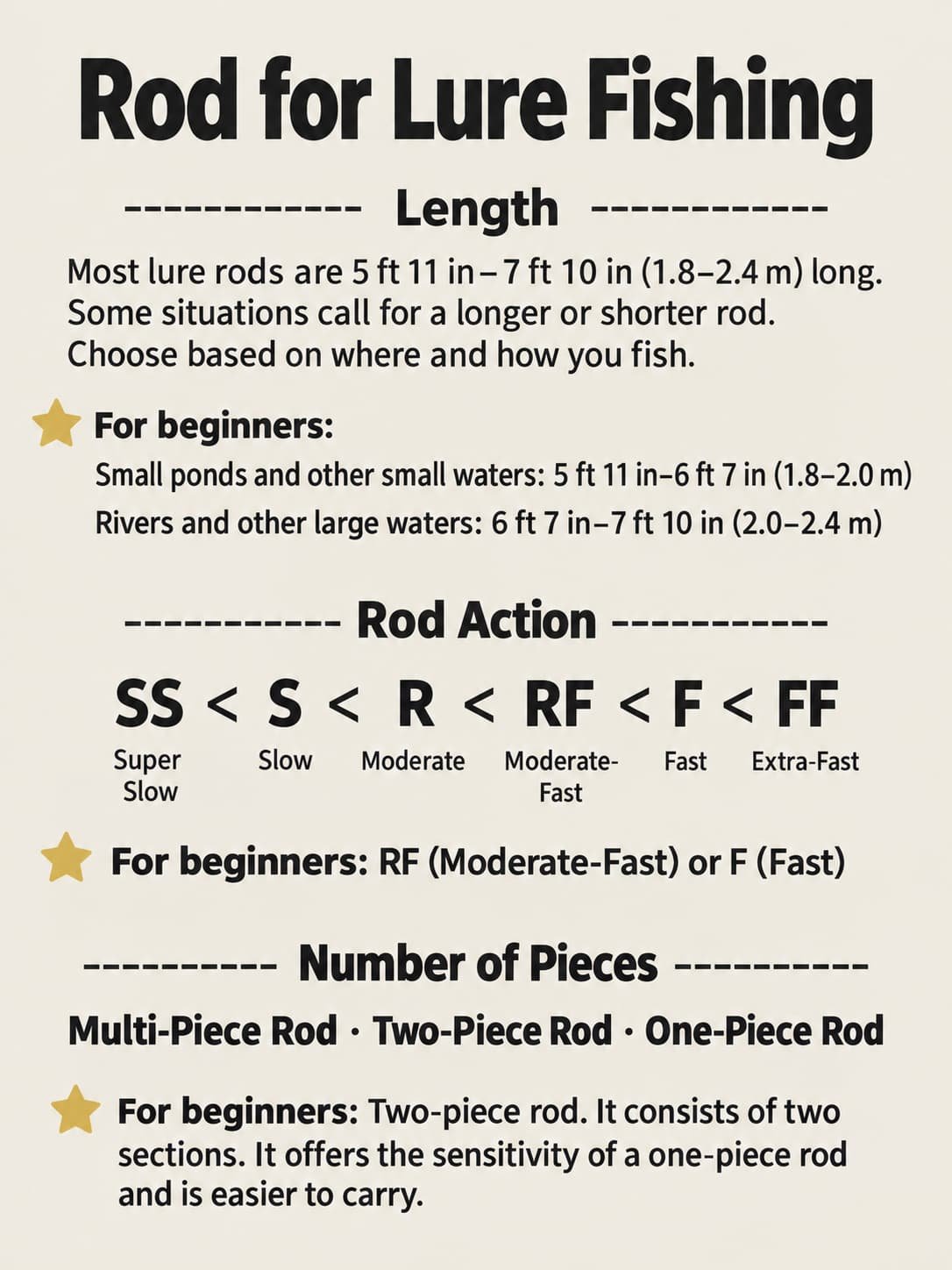
| 2 | Length | Most lure rods are about 5 ft 11 in–7 ft 10 in (1.8–2.4 m) long. | For small ponds and other small waters: 5 ft 11 in–6 ft 7 in (1.8–2.0 m). For rivers and larger waters: 6 ft 7 in–7 ft 10 in (2.0–2.4 m). |
| 3 | Power | From lightest to heaviest: UL (Ultralight) < L (Light) < ML (Medium-Light) < M (Medium) < MH (Medium-Heavy) < H (Heavy) < XH (Extra-Heavy). | ML or M is recommended for beginners. |
| 4 | Action | From slowest to fastest: SS (Super Slow) < S (Slow) < R (Moderate) < RF (Moderate-Fast) < F (Fast) < FF (Extra-Fast). | RF or F is recommended for beginners. |
| 5 | Number of pieces | Rods are available in multi-piece, two-piece, and one-piece models. | A two-piece rod has two sections, is easier to transport, and offers sensitivity close to that of a one-piece rod. |
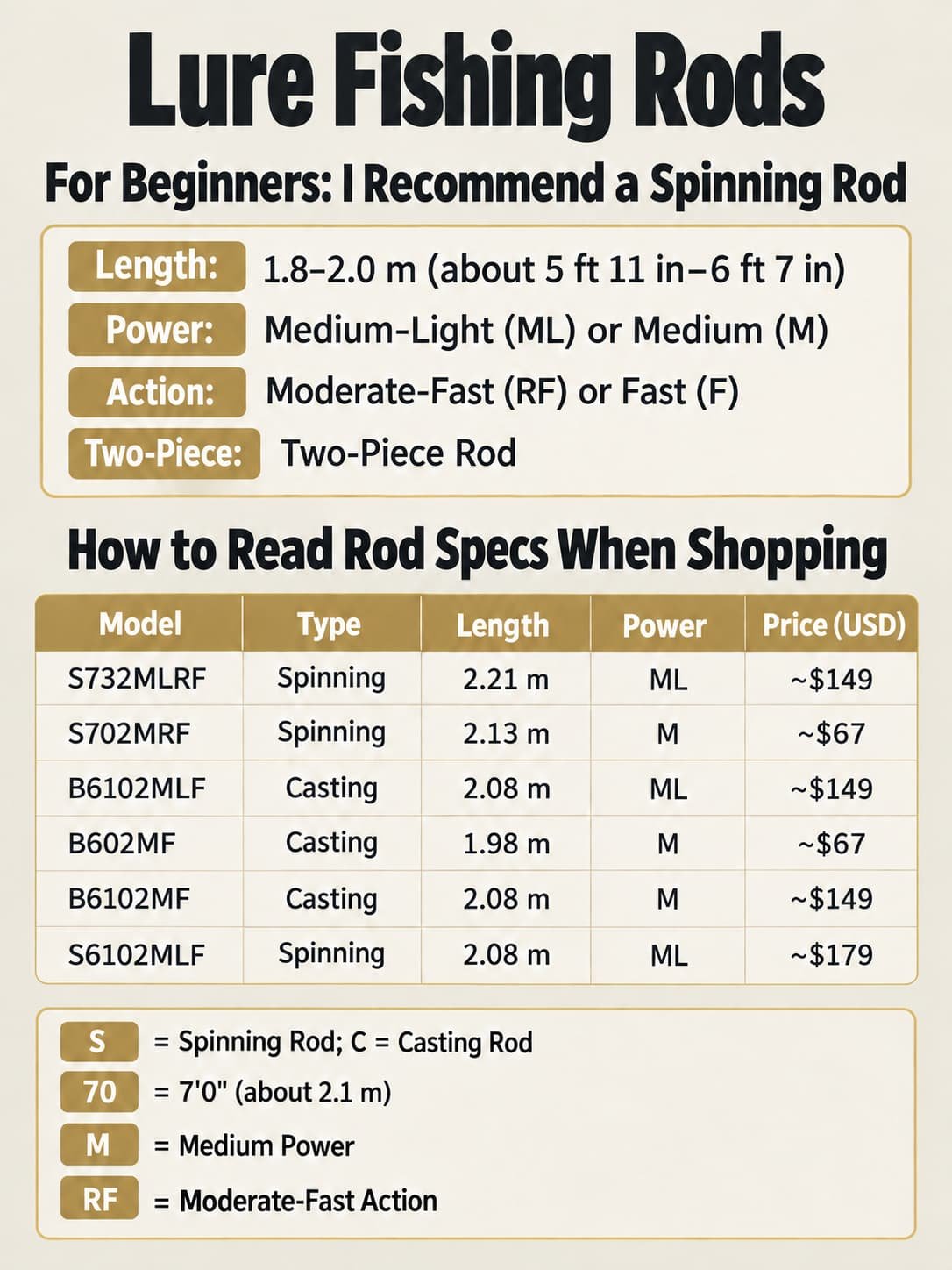
| Starter rod setup | Spinning rod | Length: 1.8–2.0 m; power: ML or M; action: RF or F; two-piece construction. | This is the rod setup recommended for beginners in the images. |
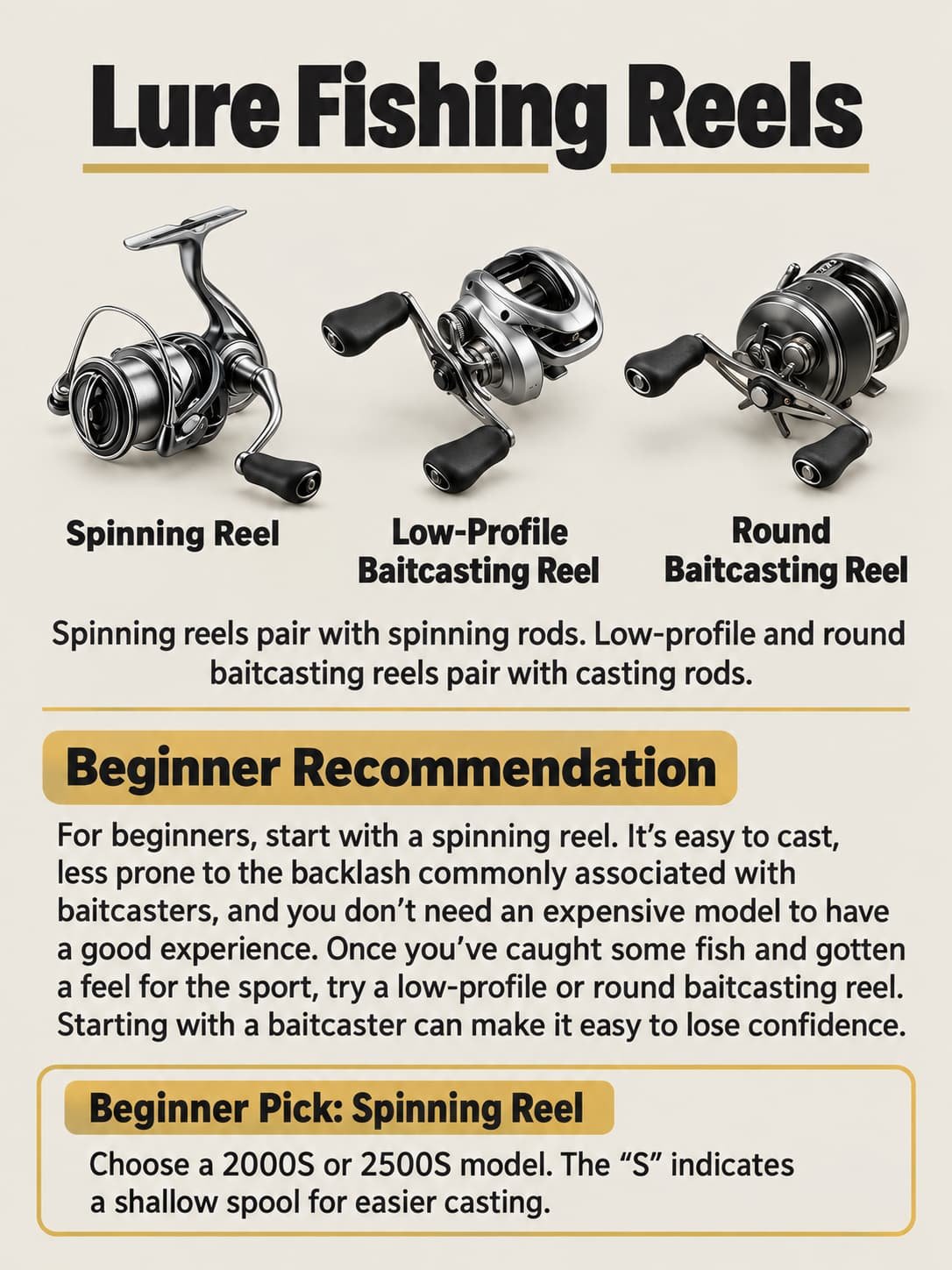
| 1 | Spinning reel | Pairs with a spinning rod. | Easier to cast and less prone to baitcaster backlash, often called a “bird’s nest.” |
| 2 | Low-profile or round baitcasting reel | Pairs with a casting rod. | Consider one after you have caught some fish and become more comfortable with the sport. |
| 3 | Spinning reel size | Size 2000S or 2500S; “S” indicates a shallow spool. | The images note that a shallow spool makes casting easier. |
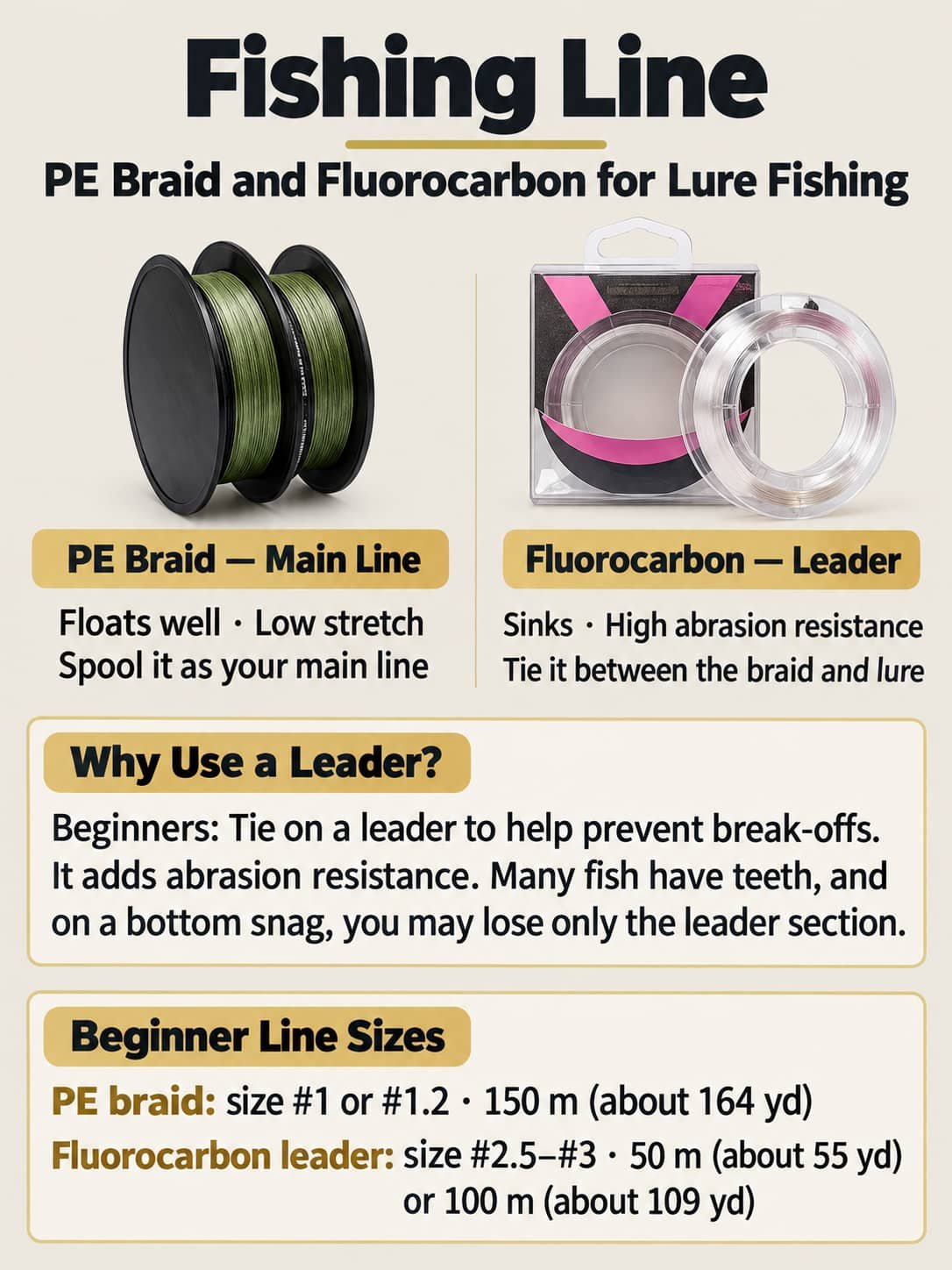
| 4 | PE braided line | Used as the main line; floats well and has low stretch. | Size #1 or #1.2; about 150 m (164 yd). |
| 5 | Fluorocarbon leader | Sinks and resists abrasion; tie it between the braided main line and the lure. | Size #2.5–#3; about 50 m (55 yd) or 100 m (109 yd). A leader helps prevent break-offs. If the rig snags on the bottom, you may lose only the leader section. |
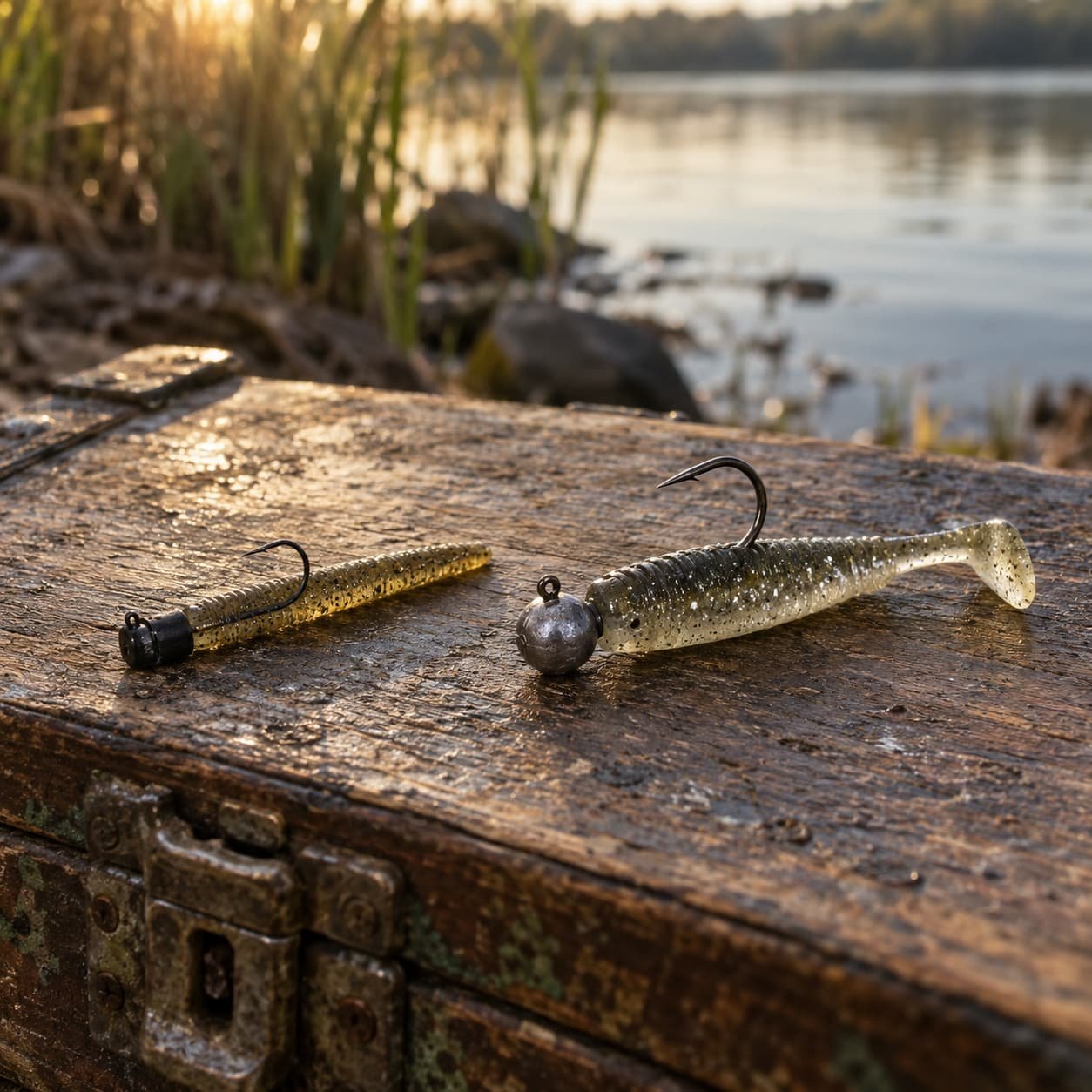
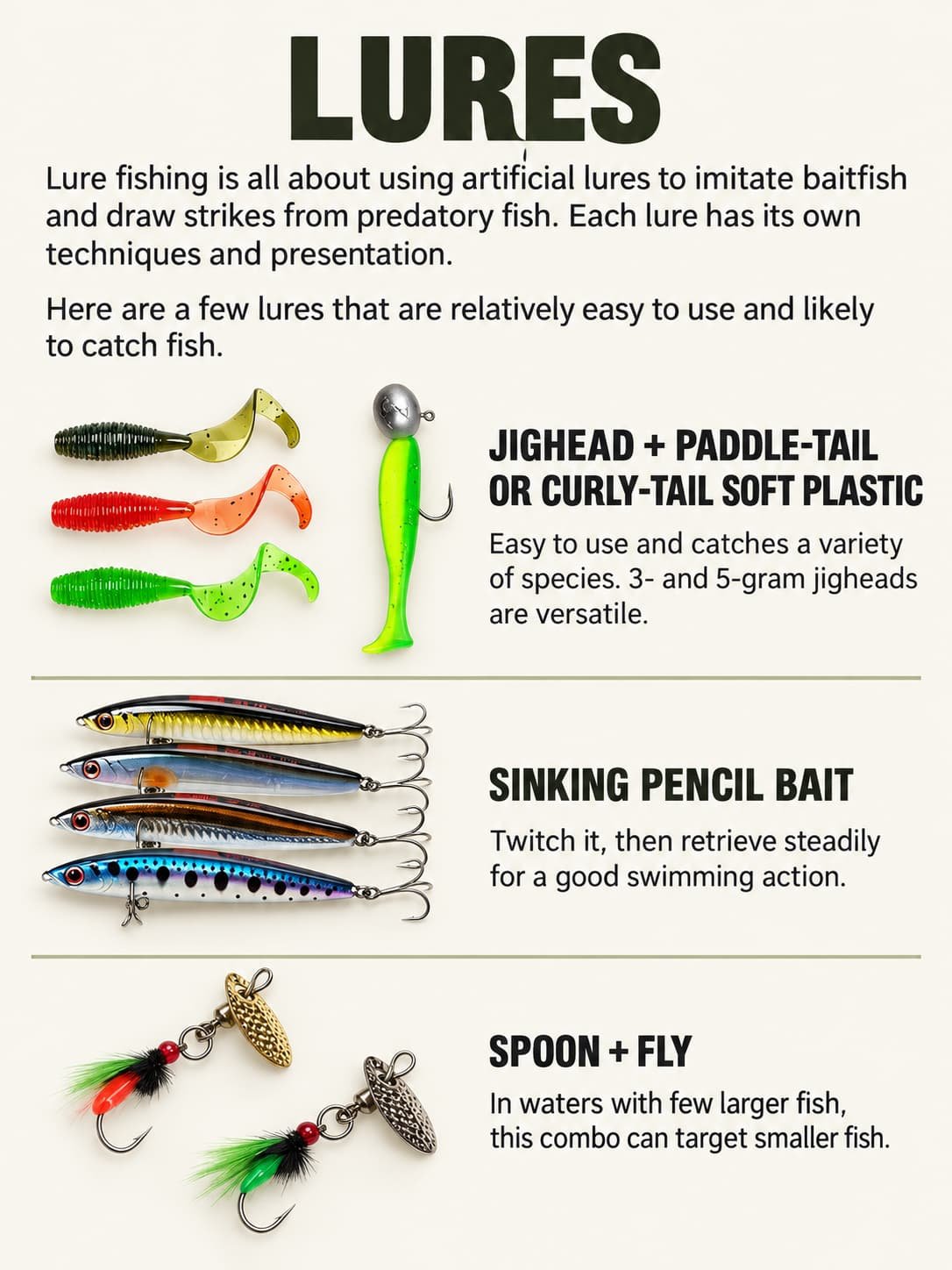
| Lure | Jighead with a paddle-tail or curly-tail soft plastic | Relatively easy to use and catches a variety of fish species. | The images describe 3–5 g jigheads as versatile. |
| 1 | Sinking pencil bait | A sinking pencil-style lure. | Twitch it, then retrieve steadily to create a swimming action. |
| 2 | Spoon and fly | A spoon paired with a fly. | Can target smaller fish in waters with few larger fish. |
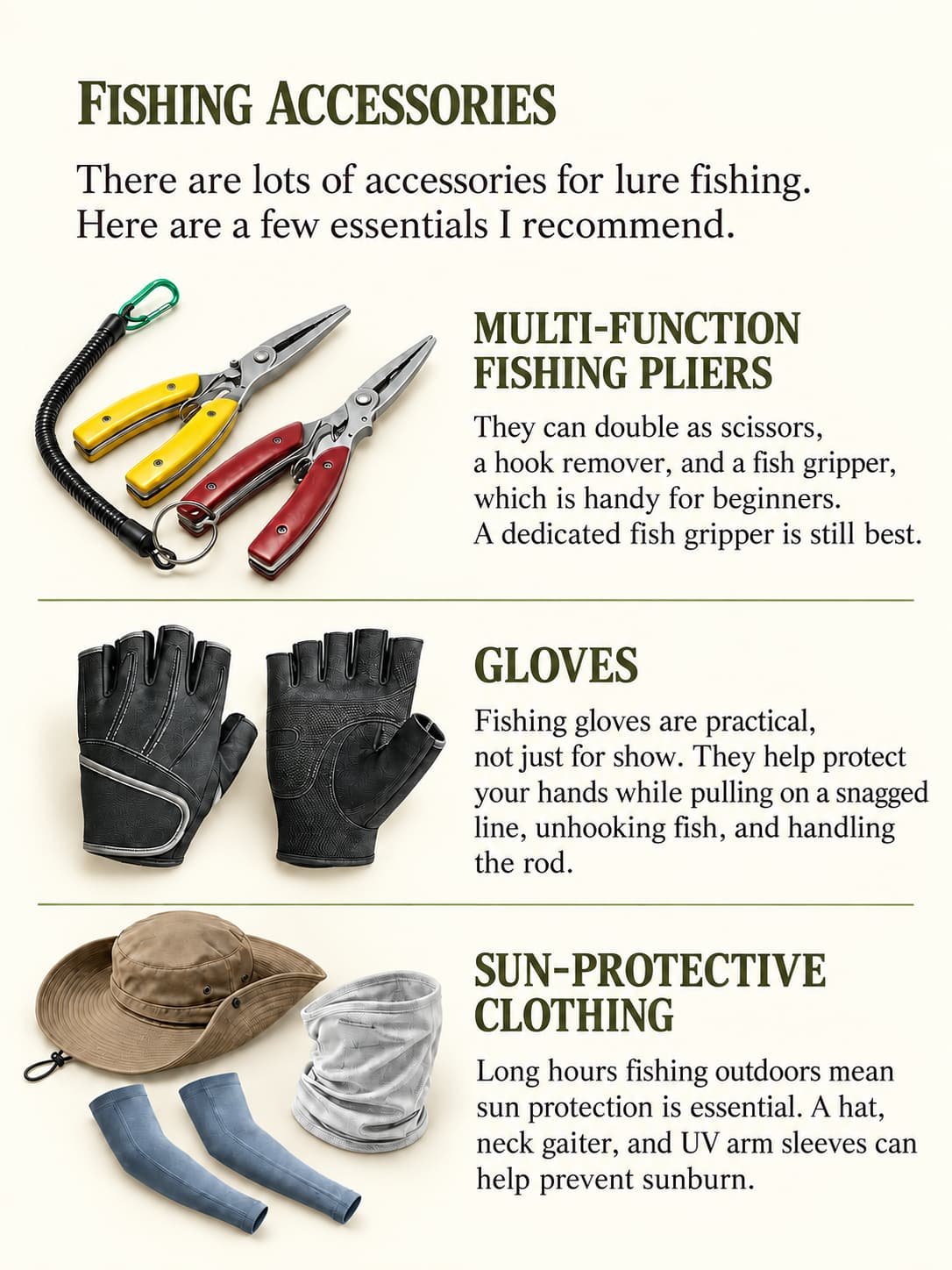
| Fishing accessories | Multi-purpose fishing pliers | Can serve as line cutters, a hook remover, and a fish gripper. | Useful for beginners; the images note that a dedicated fish gripper is still the best choice for gripping fish. |
| 1 | Fishing gloves | Help protect your hands while freeing a snagged line, unhooking fish, and handling the rod. | A practical accessory for fishing. |
| Sun protection | Sun-protective clothing | Includes a hat, neck gaiter, and UV arm sleeves. | Useful during long days outdoors to help prevent sunburn. |
More to Explore
Related Articles
More guides in Fishing Gear
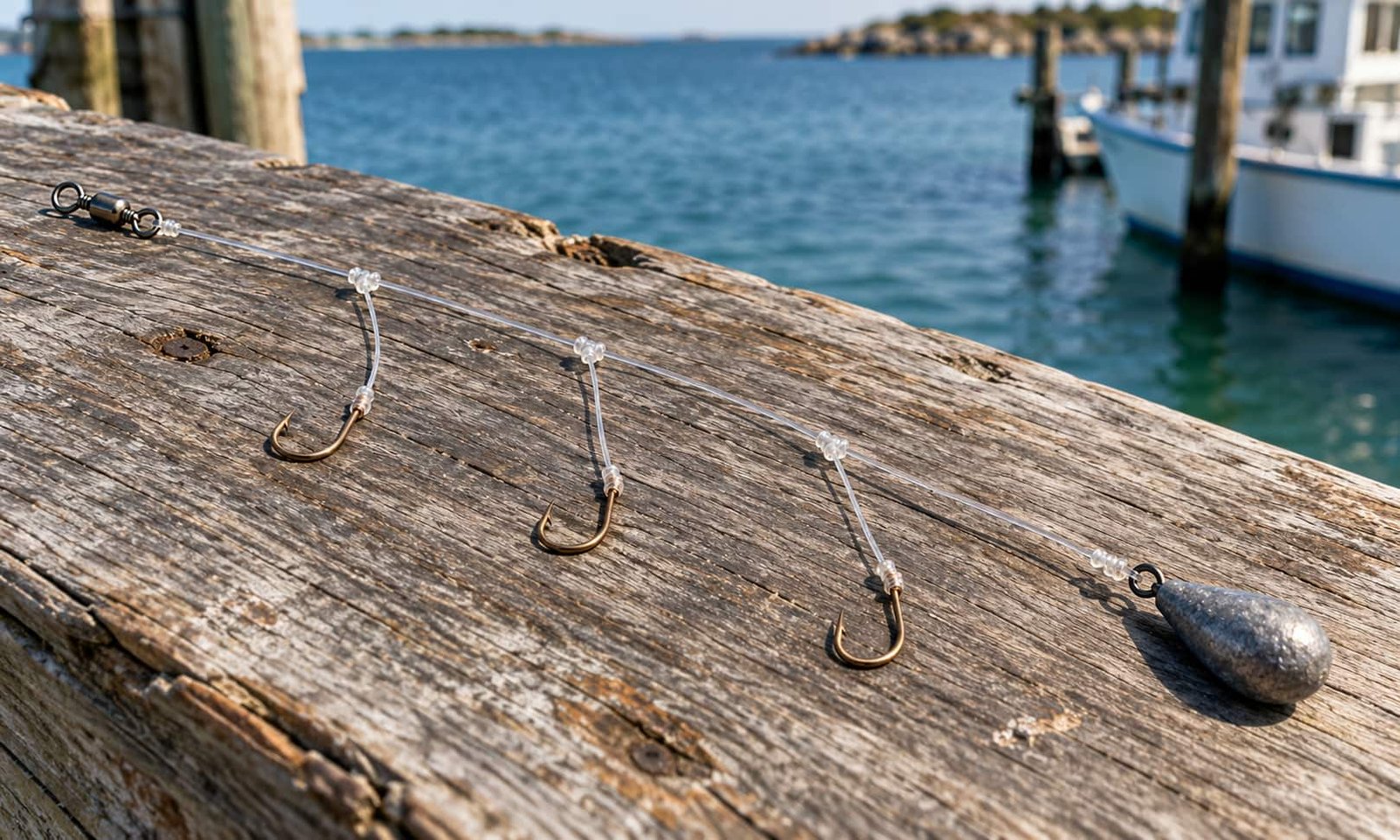
Take a closer look at 6 saltwater fishing rigs, from shore setups to boat rigs, with diagrams that show how the lines, hooks, and sinkers connect.
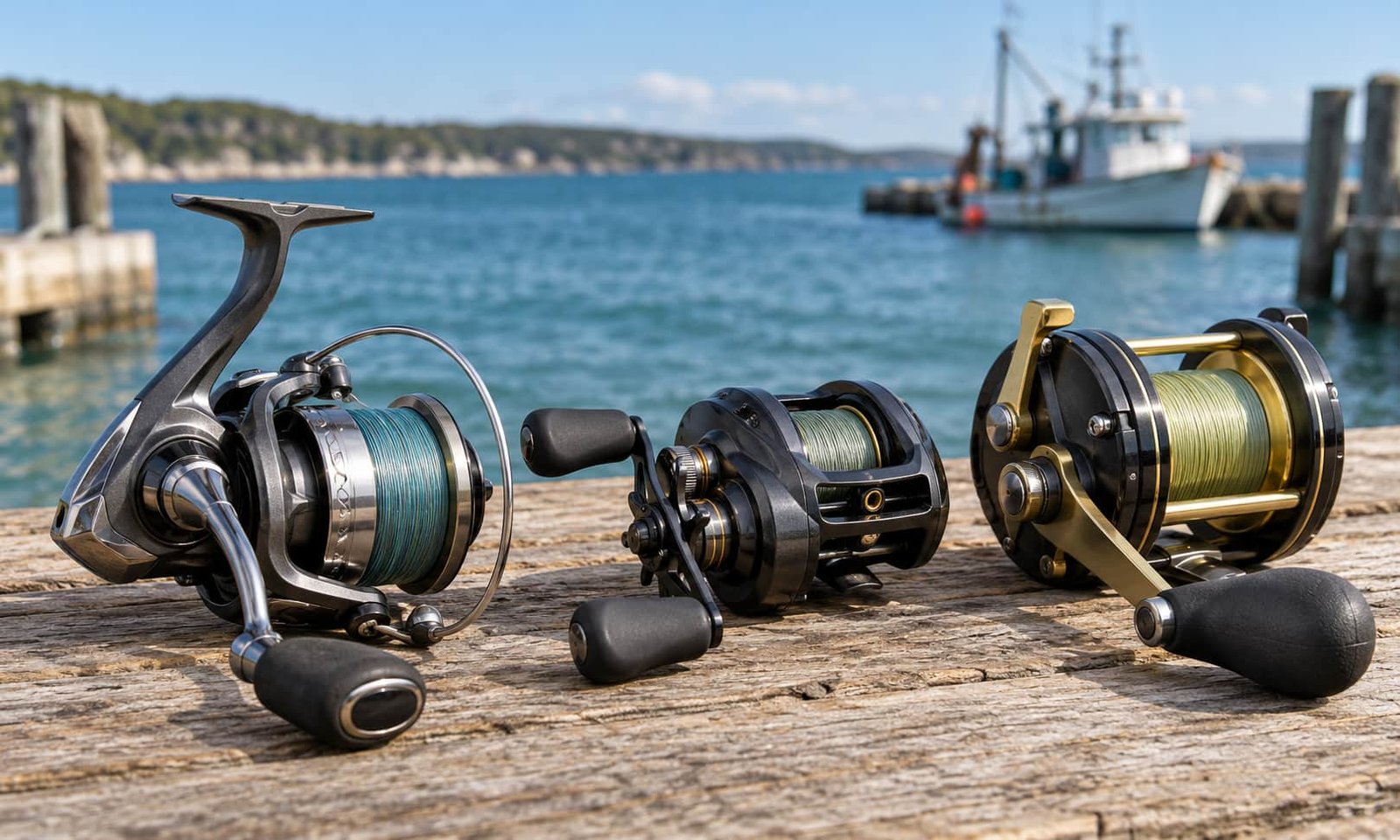
Learn how to choose a saltwater fishing reel for shore or boat fishing by comparing reel type, drag performance, and line capacity before you buy.
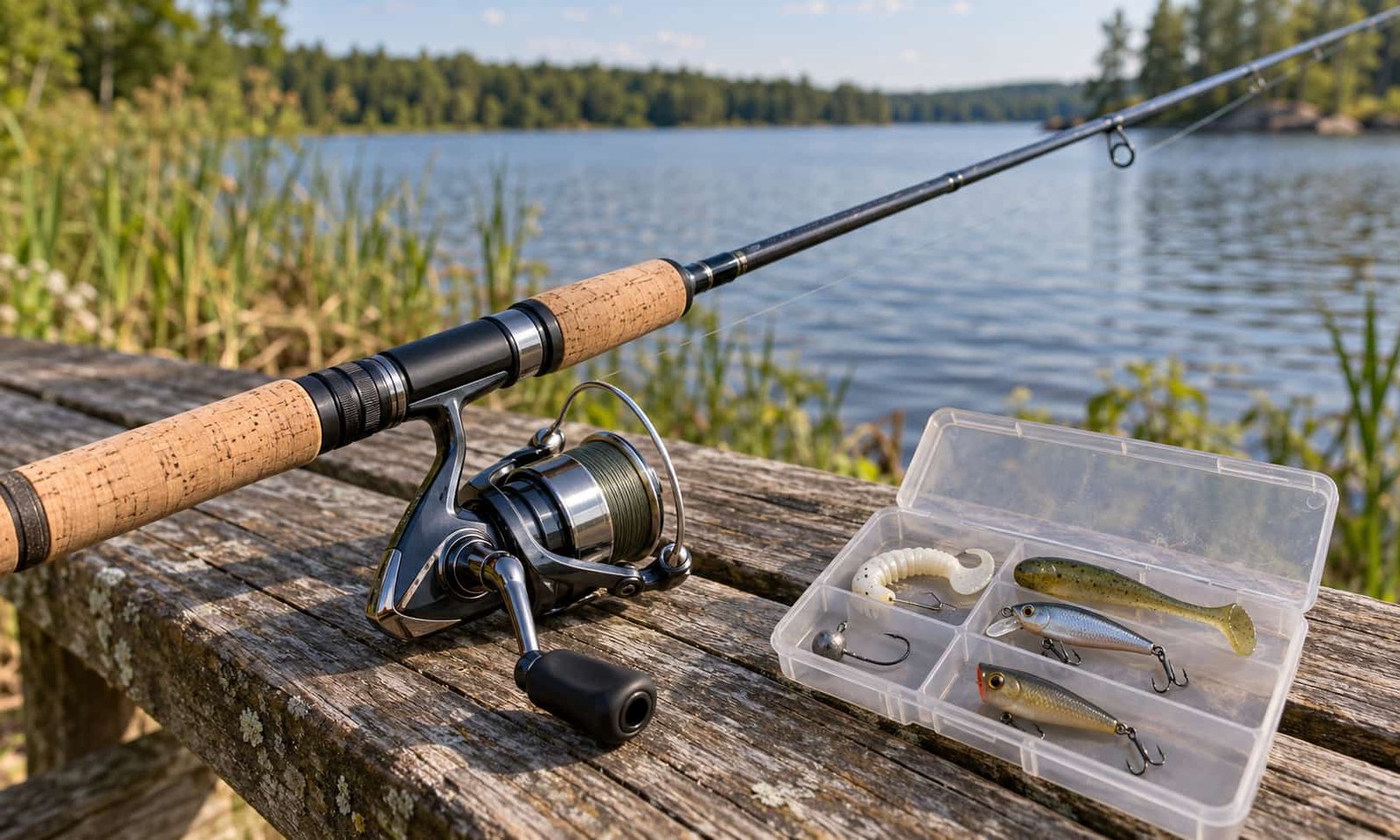
Build a bass fishing setup for beginners with a rod, braided line, and a leader that work together. Learn knots and casting before your first trip.
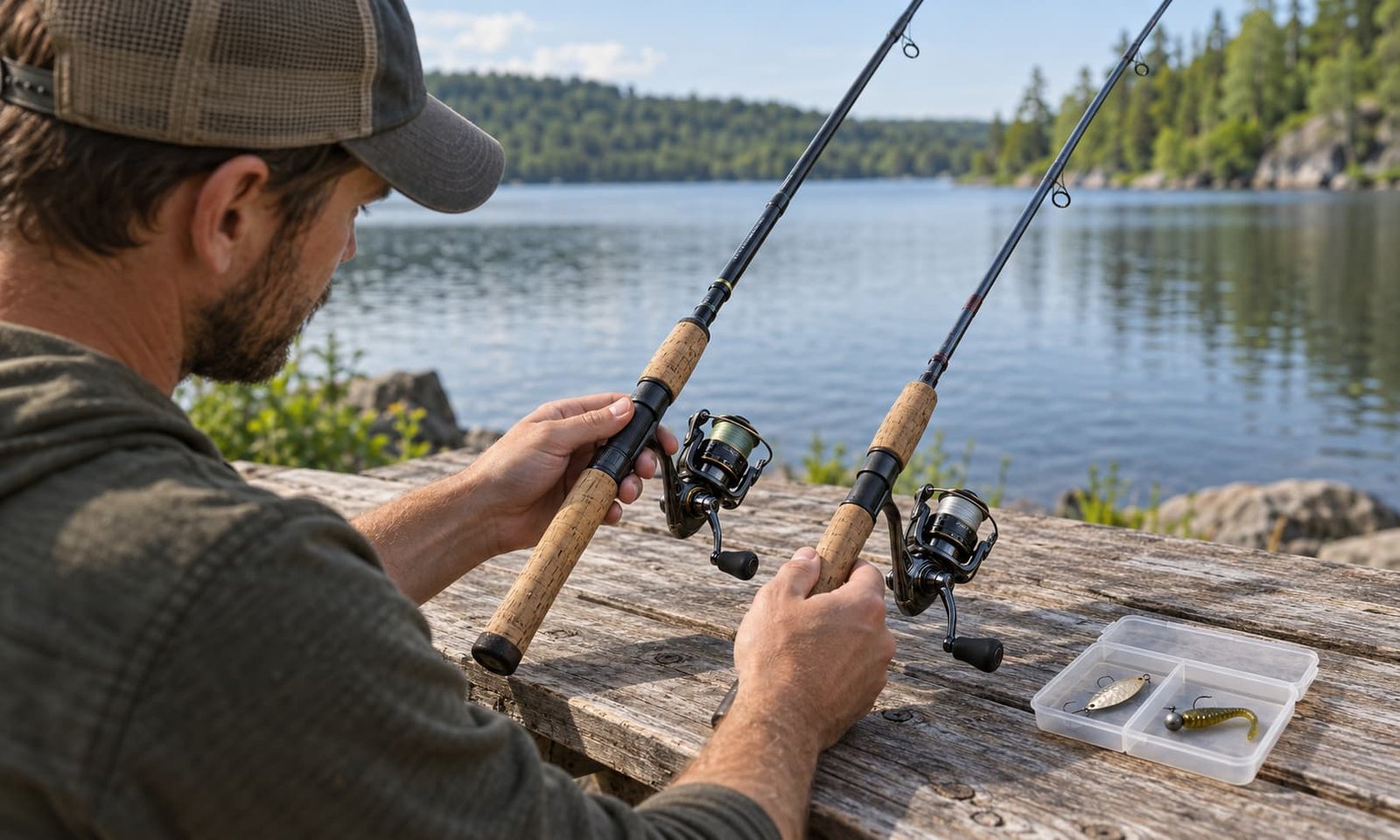
Learn how to choose a lure fishing rod by length, power, action, and lure weight. Find a practical starting setup before buying your first rod.
Learn how to adjust baitcaster brakes for better spool control, smoother casts, and fewer backlashes before you start pushing for more distance.
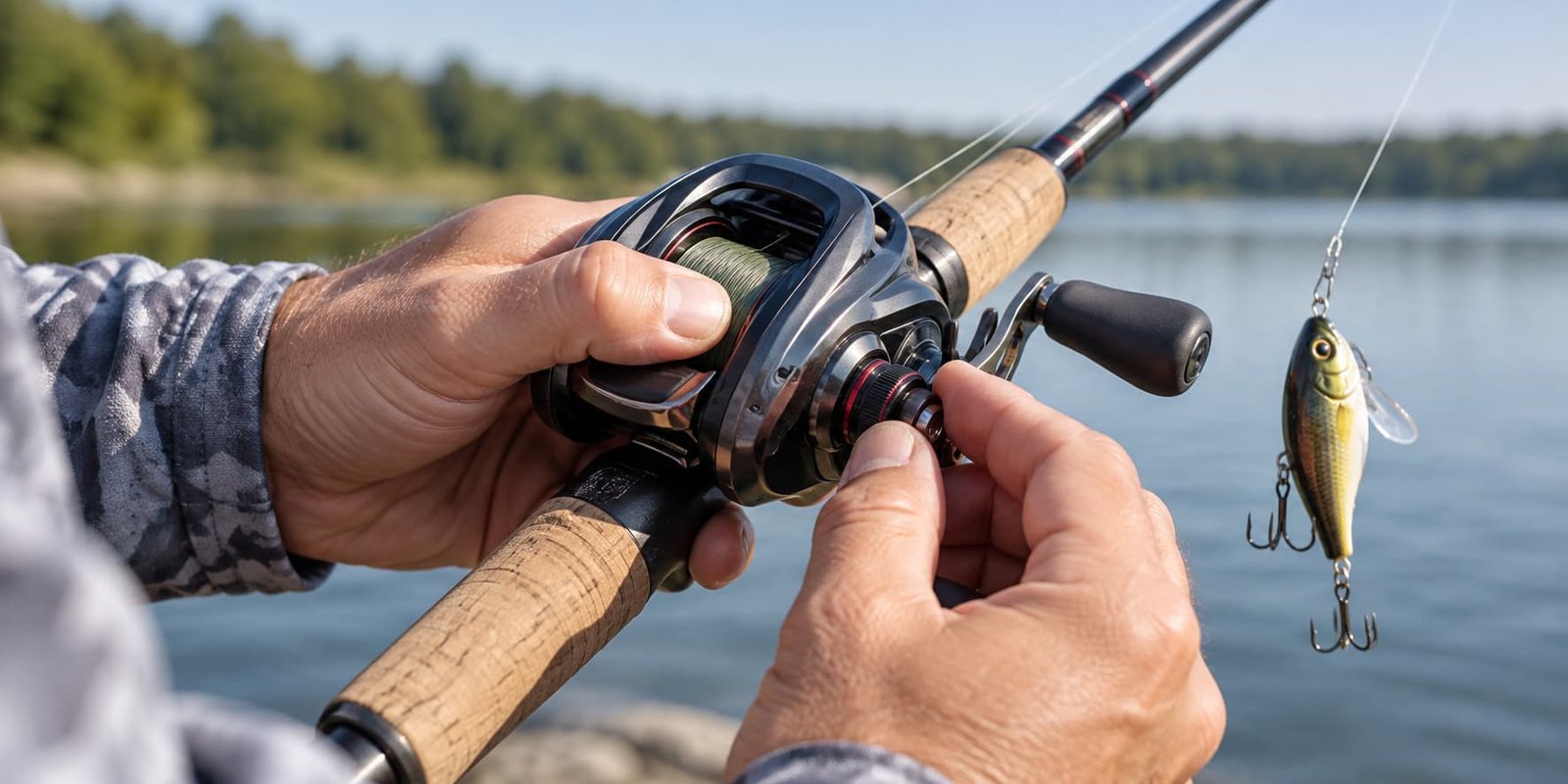
Unsure what gear to buy first? This lure fishing setup for beginners guide covers spinning rods, reels, braid, fluorocarbon leaders, and lure weights.
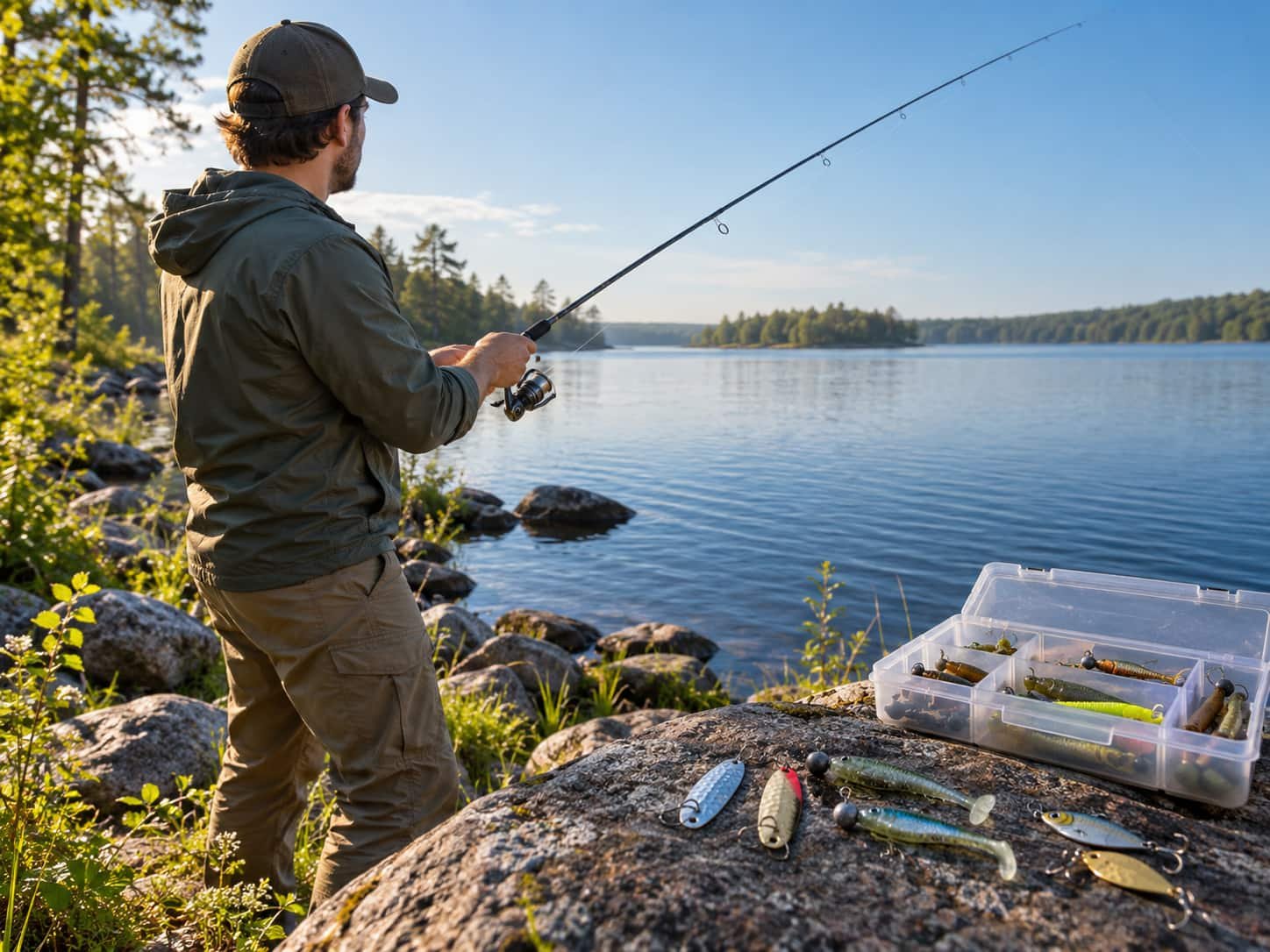
Skip the crowded tackle bag. See which rod, reel, fishing line, and starter lures help you learn faster on the water.
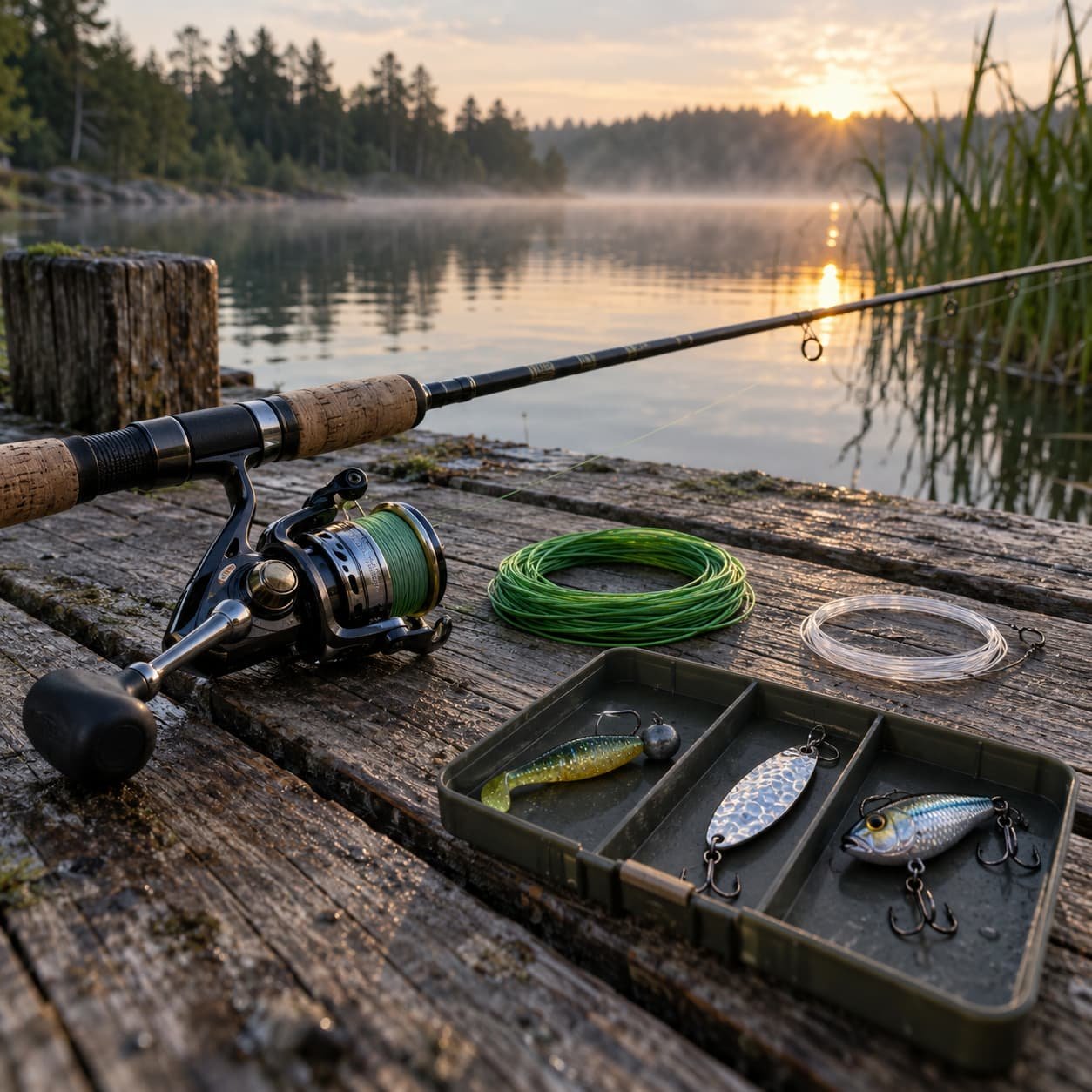
Not sure which rig to tie on? See the difference between jig head and Ned hook before choosing your next soft bait setup.