Beginner's guide to choosing Lure fishing gear
- Category
- Fishing Gear
- Date
A lot of new anglers make the same mistake: buying too much gear before they really know what they need. Then the first few trips turn into more time sorting through tackle than actually fishing.
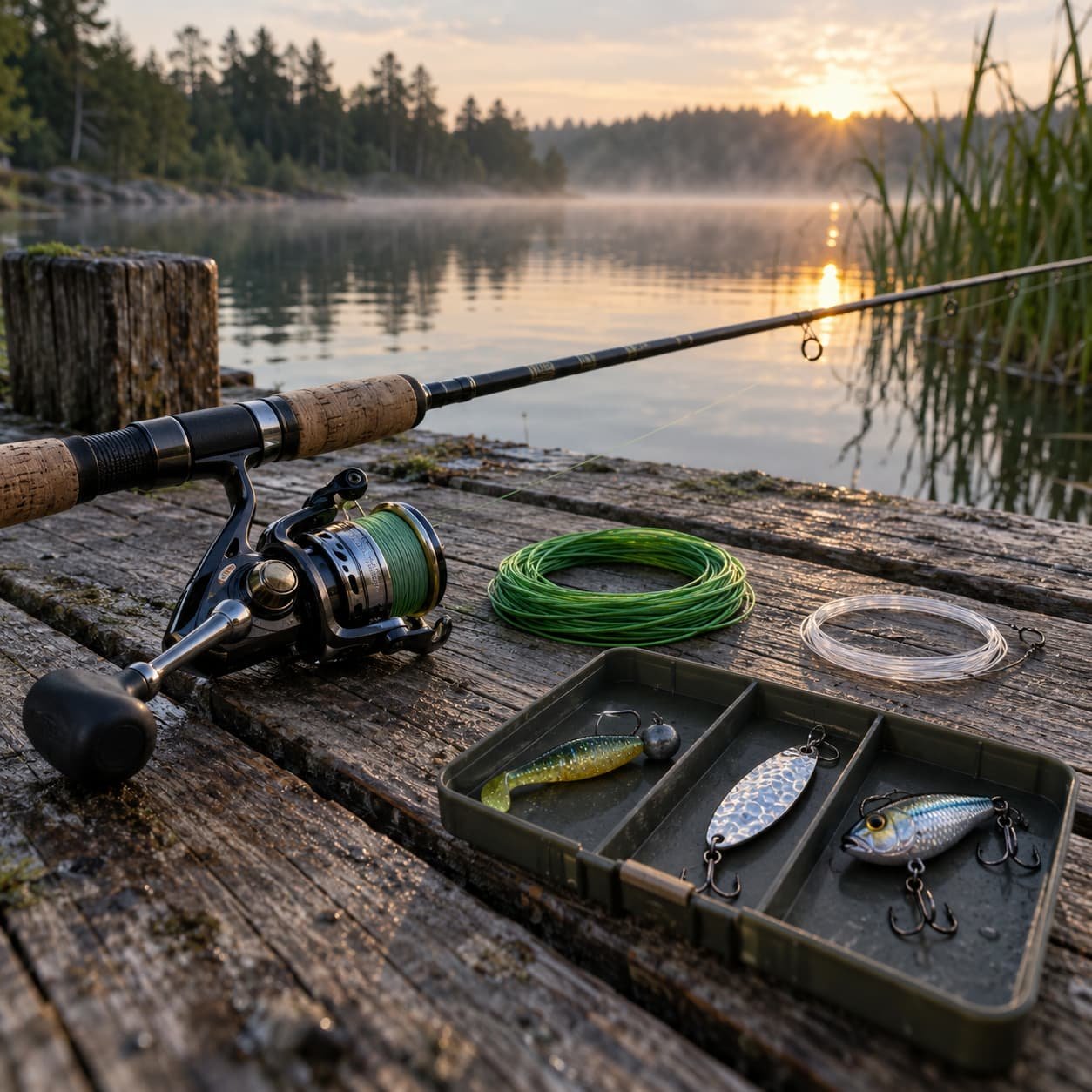
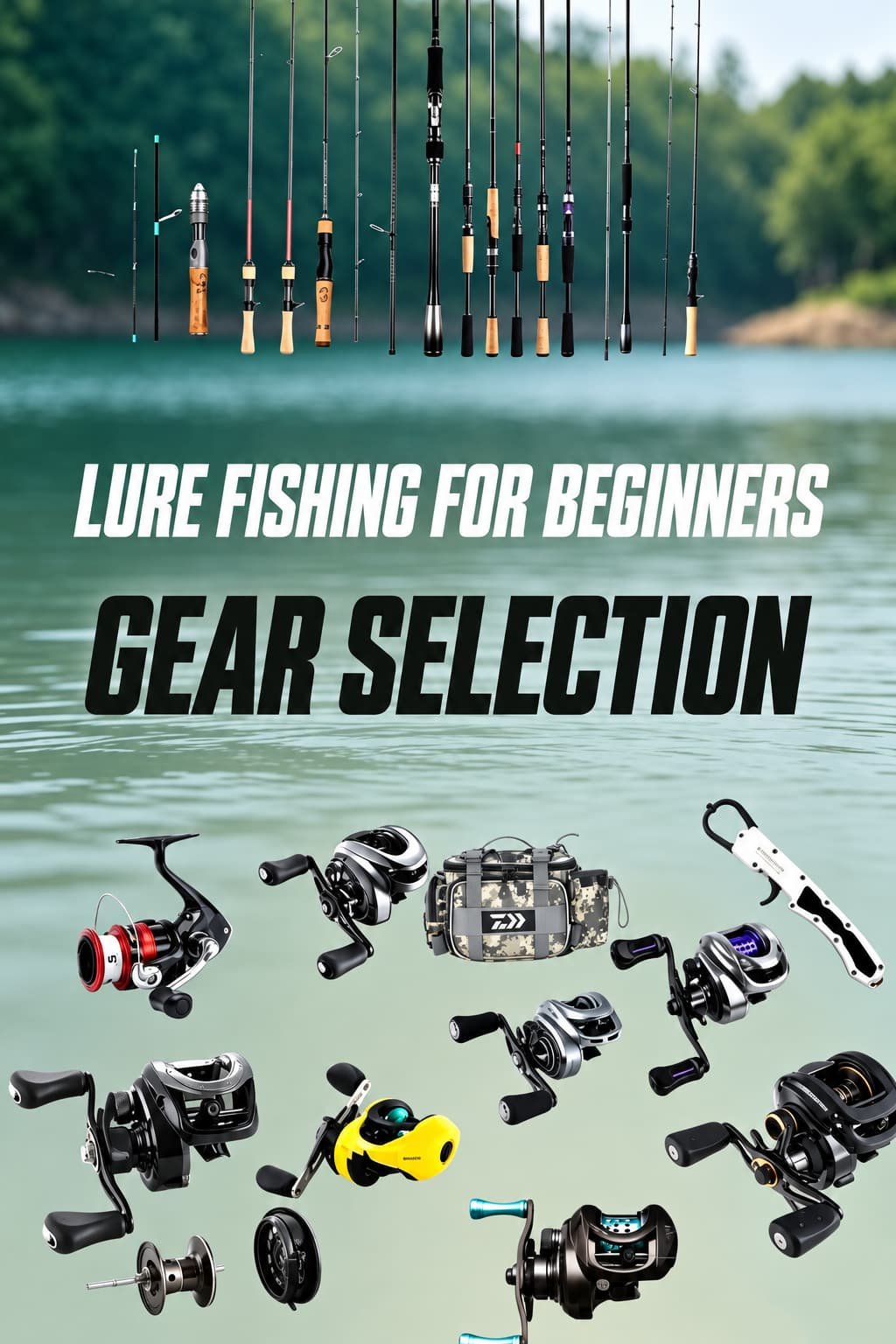
A better place to start is with a simple setup you can learn quickly and use in different situations. That means understanding why a spinning reel is beginner-friendly, how rod length changes casting distance and control, and when PE braid with a fluorocarbon leader is worth using. The guide below will help you build a practical first fishing kit without wasting money on gear you may not need yet.
Should beginners choose a spinning reel or a baitcaster?
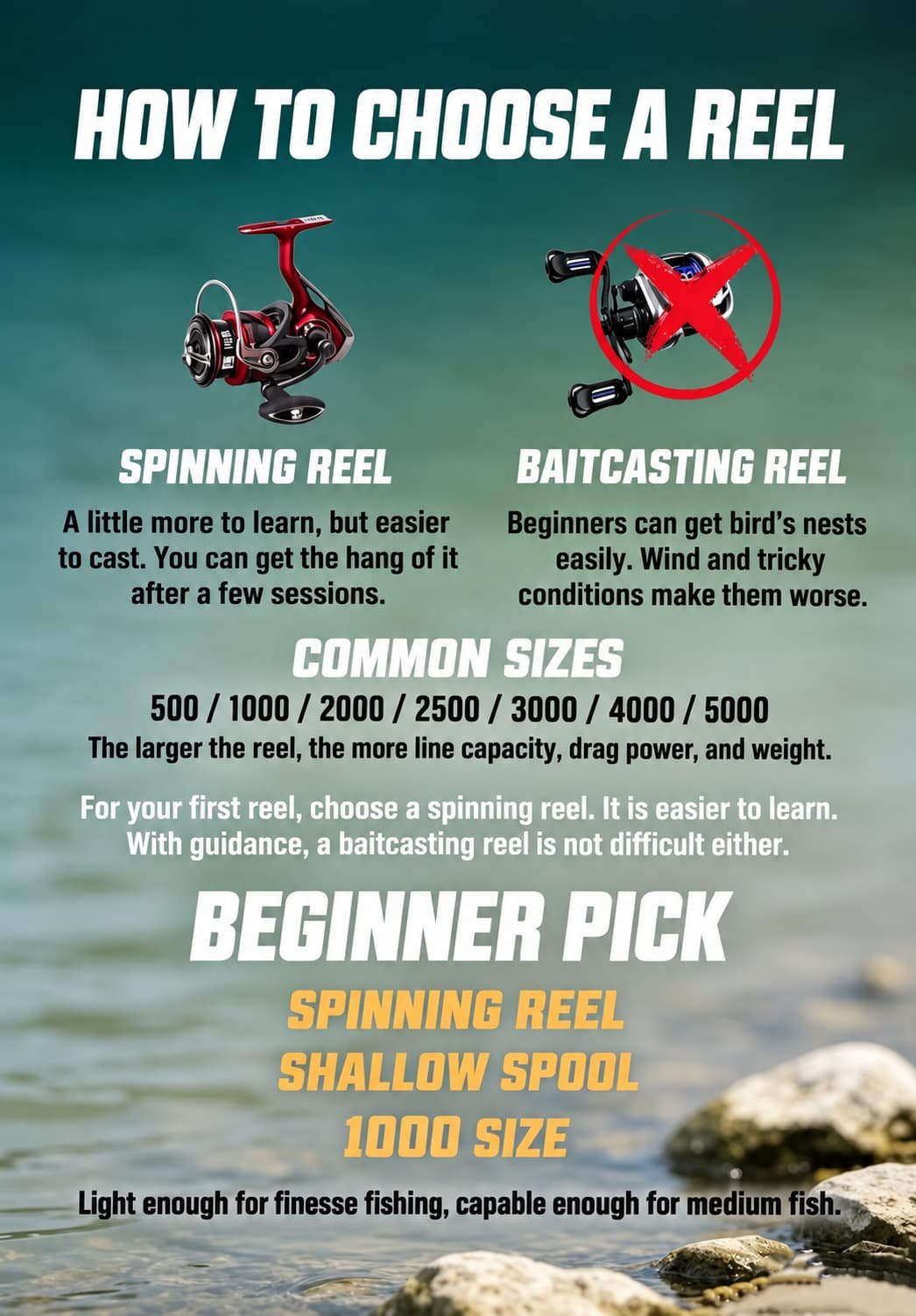
A spinning reel makes a sensible first choice because beginners can learn to cast without controlling a rotating spool. A baitcasting reel also works for lure fishing, but the spool needs closer attention during a cast. Start with spinning tackle when you want to spend more time practicing casts and less time clearing tangles.
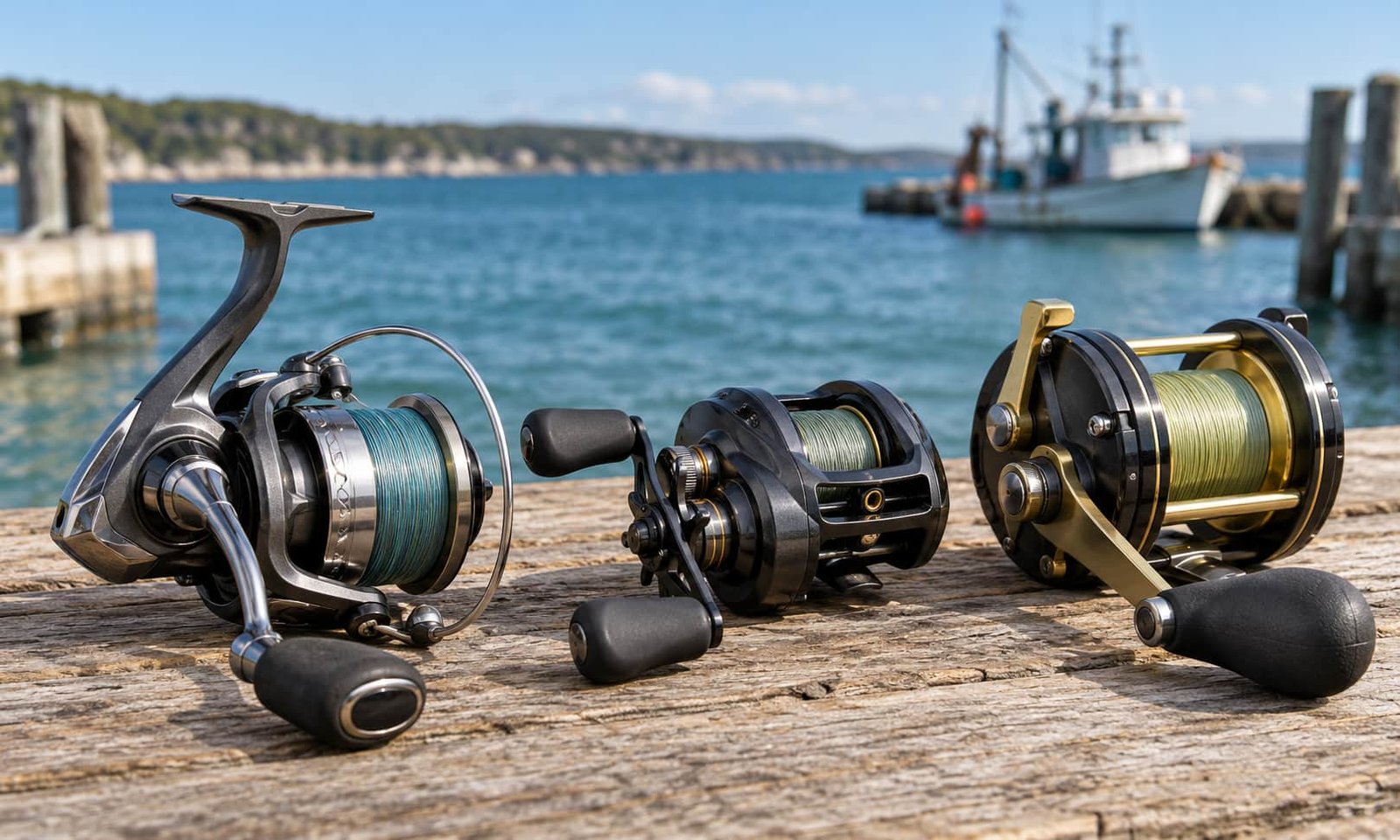
A spinning reel hangs below the rod and releases line from a fixed spool. A baitcasting reel sits above the rod and releases line from a rotating spool.
A backlash, often called a bird’s nest, happens when a baitcaster’s spool releases line faster than the lure carries the line away. Wind can make spool control harder. Guidance and practice help, but a spinning reel keeps the first purchase simple.
What spinning reel size suits this beginner setup?
A 1000-size spinning reel with a shallow spool is the starting point for this light freshwater outfit. The small reel keeps the setup manageable when fishing with small lures. A shallow spool holds less line than a comparable deep spool, so check the listed capacity against the line you plan to use.
Common reel sizes include 500, 1000, 2000, 2500, 3000, 4000, and 5000. Larger models generally offer more line capacity and may provide more drag power, but they also add weight. Drag is the reel’s adjustable resistance that allows line to leave the spool under pressure.
A larger reel does not automatically handle small lures better. Check the actual weight and line capacity when comparing models.
Which rod should you pair with a spinning reel?
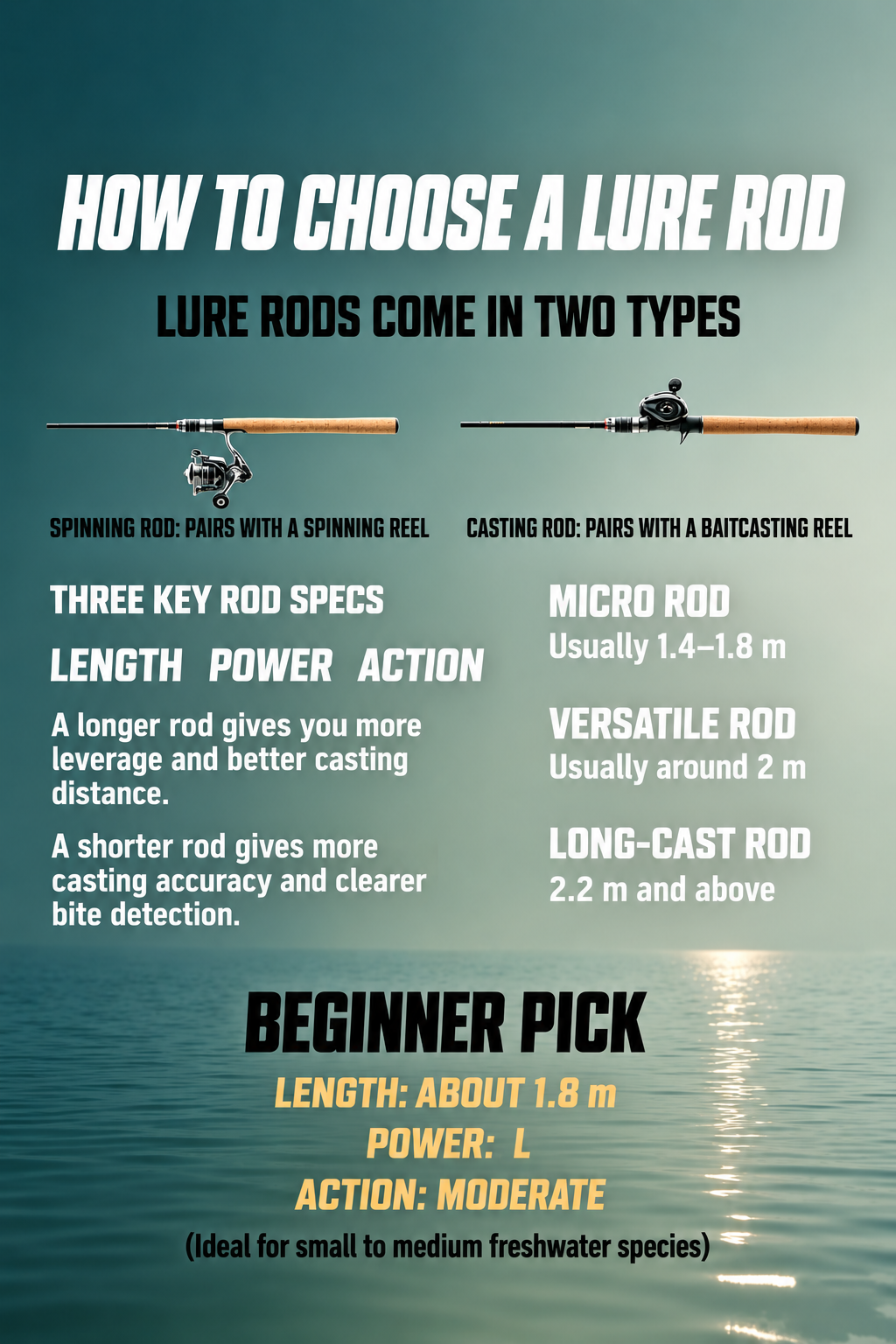
Pair a spinning reel with a spinning rod, then look for light power and a moderate action for this starter outfit. The suggested combination suits light freshwater lure fishing. A casting rod belongs with a baitcasting reel, so check the rod type before comparing lengths, handles, or other features.
Rod power describes how much force bends the rod. The letter L means Light, a power category intended for lighter tackle. The rod’s printed lure-weight and line ratings help you check whether the rest of your setup fits.
Rod action describes where the rod bends under load. A moderate-action rod bends farther down the blank than a fast-action rod. Power and action describe different qualities, so check both specifications.
How long should a beginner’s lure rod be?
A rod around 1.8 meters, or roughly 6 feet, is the suggested starting length for this light setup. The length keeps the outfit compact for learning to cast. Consider a longer rod when casting distance matters more, while remembering that rod length alone does not determine casting accuracy or bite detection.
Use the following lengths as broad shopping categories rather than fixed rules:
| Rod category | Approximate length | Main consideration |
|---|---|---|
| Short, light-lure rod | 1.4-1.8 m, about 4 ft 7 in-5 ft 11 in | Compact handling |
| General-purpose rod | Around 2 m, about 6 ft 7 in | A middle ground in length |
| Longer lure rod | 2.2 m and above, about 7 ft 3 in or longer | More reach and potential casting distance |
For this first outfit, stay near 1.8 meters and keep the rod, reel, and lure ratings compatible.
What fishing line should beginners use with this outfit?
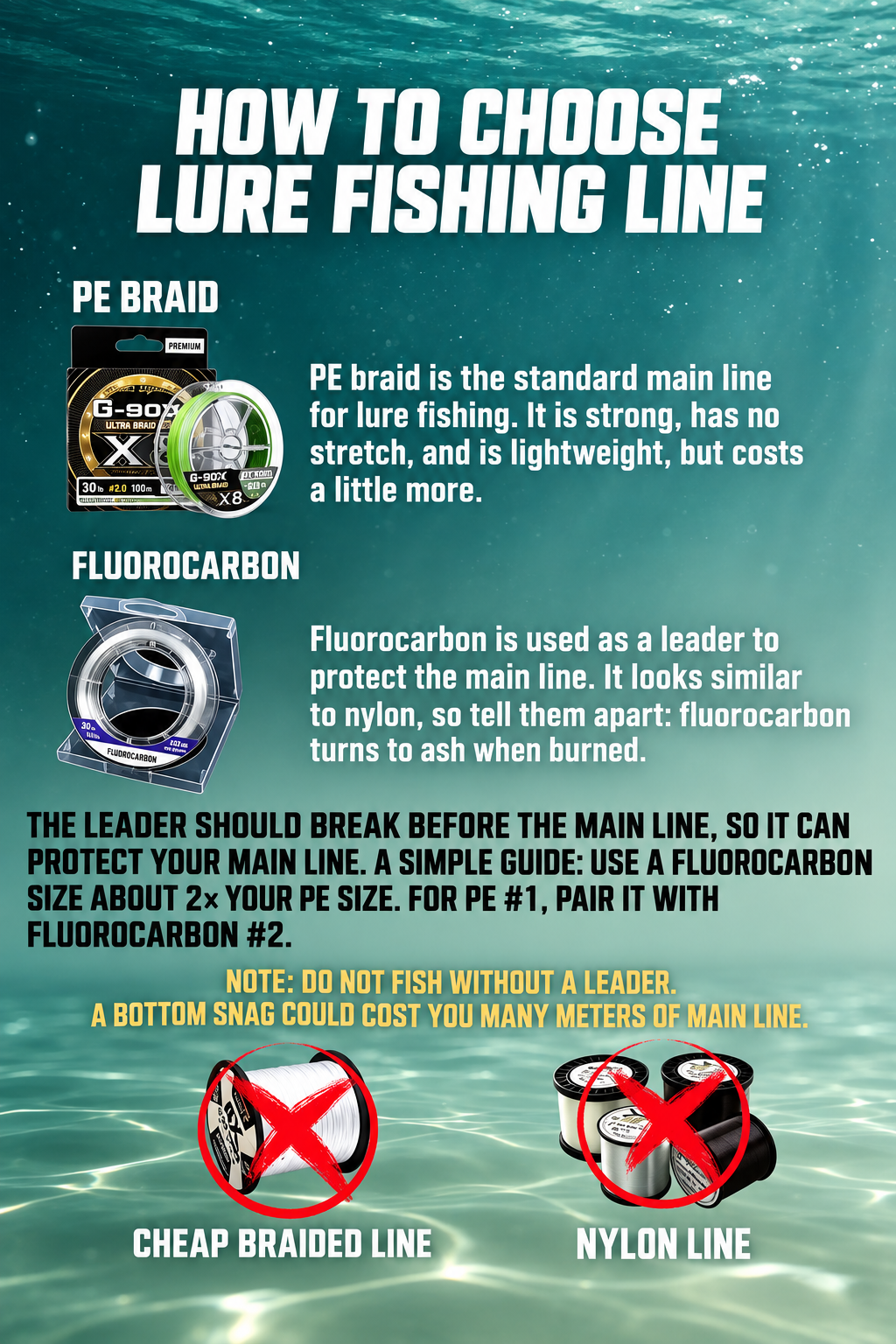
Use PE braid as the main line and fluorocarbon as the leader for this setup. PE braid is a thin line made from polyethylene fibers and has very little stretch. A fluorocarbon leader forms the final section between the braid and lure, providing a replaceable section where the line contacts underwater objects.
The two materials perform separate jobs:
| Line component | Material | Role in the outfit |
|---|---|---|
| Main line on the reel | PE braid | Carries most of the working line with little stretch |
| Final section before the lure | Fluorocarbon | Provides a replaceable leader between braid and lure |
Read the package label to identify fluorocarbon. Choose line with clear specifications; price alone does not establish braid quality. Nylon also remains a usable fishing line, although this setup uses braid.
How should you match the leader to the braid?
Match braid and leader by their stated breaking strengths rather than assuming that line-size numbers describe strength. PE #1 with fluorocarbon #2 is a size example, not a universal strength formula. If you want the leader to act as the weaker section during a snag, compare the actual lines and their knotted strength.
Line-size numbers do not translate directly across different materials. Check the pound-test or kilogram breaking-strain information on both packages before deciding whether the leader is weaker than the braid.
A weaker leader can help limit main-line loss at a snag. The size pairing alone cannot guarantee where the line breaks; knots and line condition also affect the result.
Which lures belong in a beginner’s tackle box?
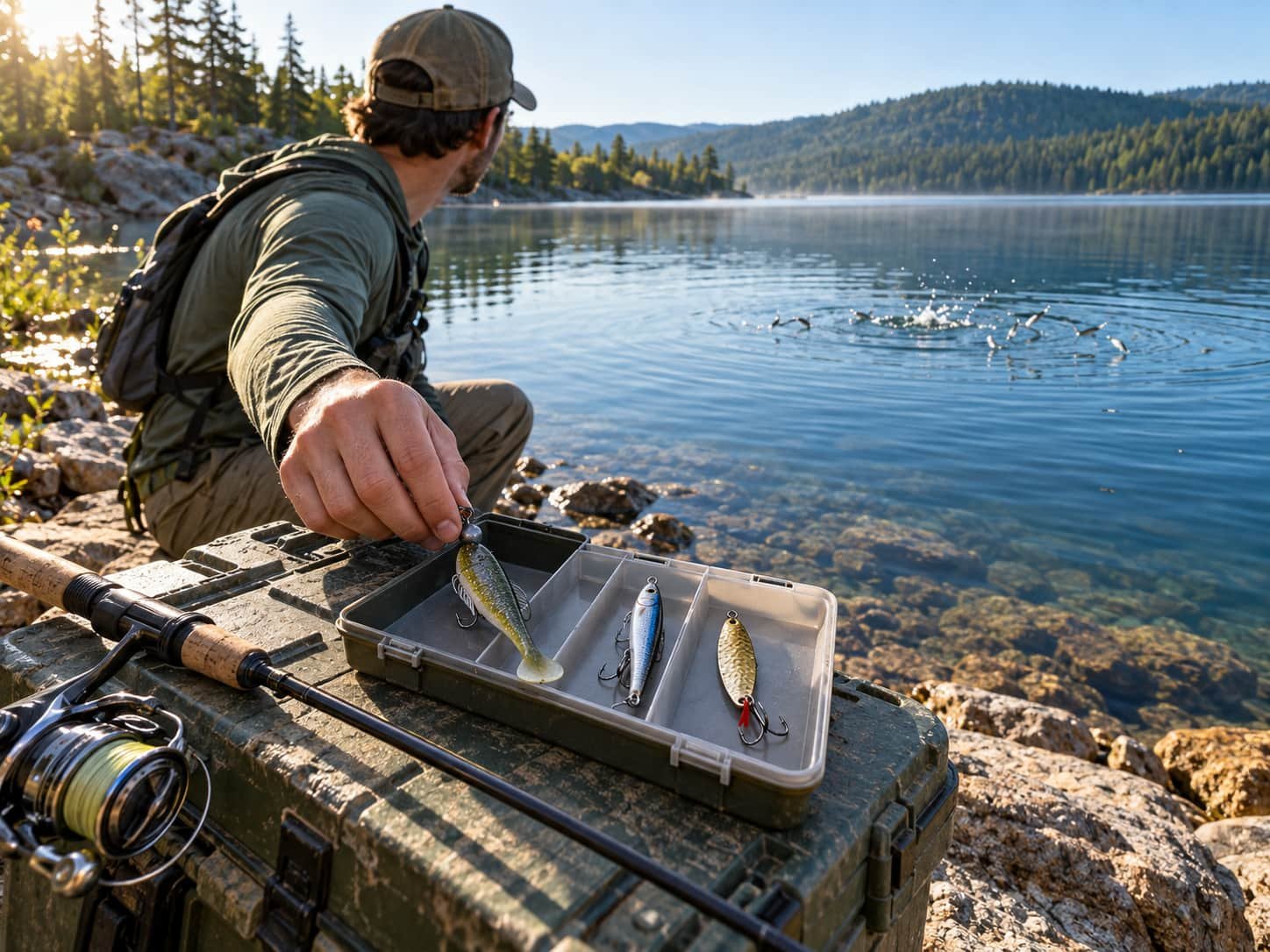
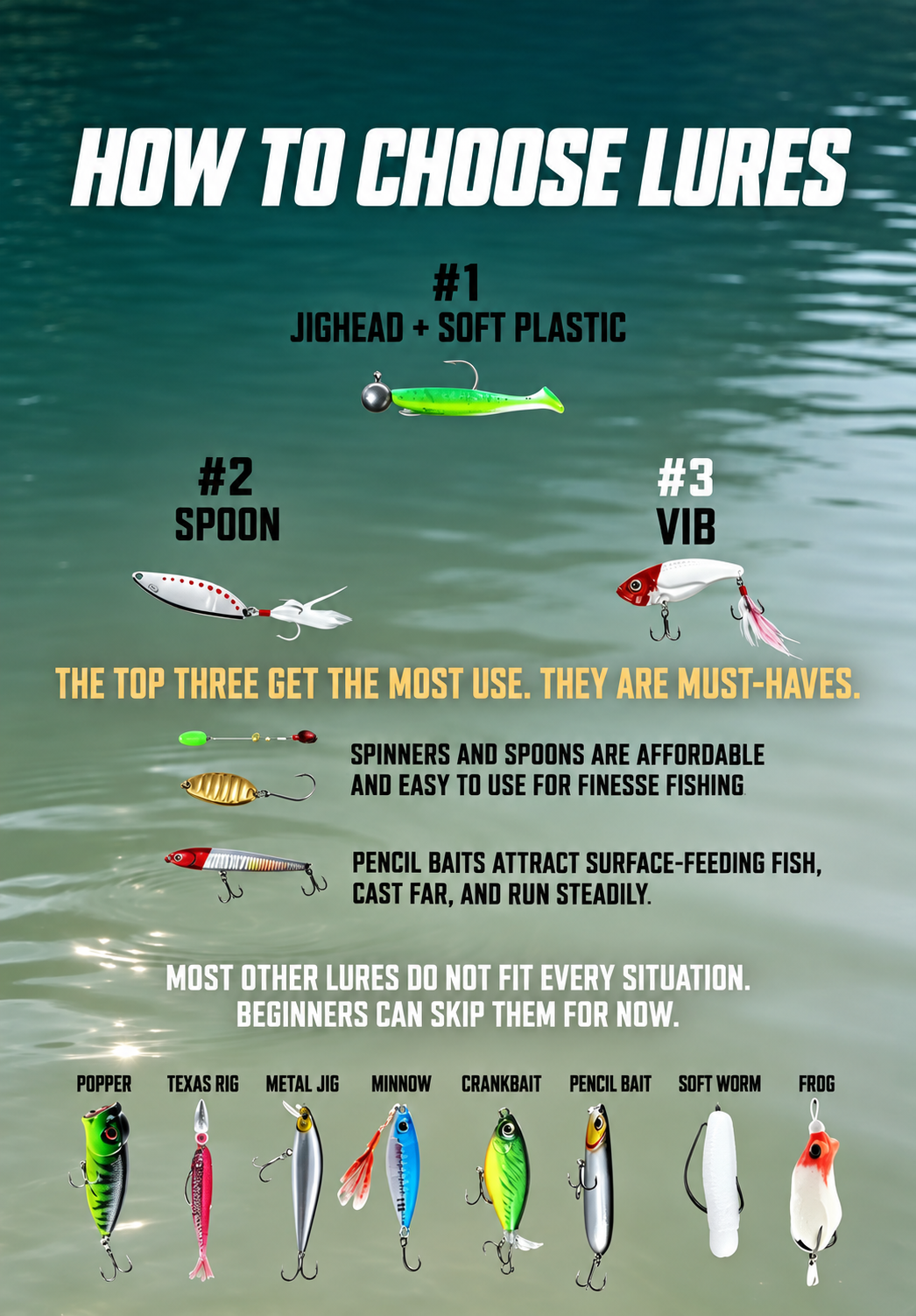
Start with a jighead and soft plastic, a spoon, and a metal blade bait. These three lure types form a compact first selection without filling the box with unfamiliar designs. Choose versions that fit the rod’s lure-weight rating, then learn the differences between the lures before buying more types.
| Lure | What the name means |
|---|---|
| Jighead with a soft plastic | A weighted hook fitted with a flexible artificial bait |
| Spoon | A shaped metal lure that flashes and wobbles as it moves |
| Metal blade bait | A thin metal lure that produces vibration when pulled through water |
The blade bait has attachment holes along its back. The thin metal body distinguishes this lure from a molded, fish-shaped lipless crankbait.
Which extra lures can you add later?
Spinners and additional spoons offer affordable options once you have the basic selection. A floating pencil bait, also called a surface stickbait, can be useful when fish feed at the surface. Check whether a pencil bait floats or sinks before buying, because the pencil-shaped body does not establish its running depth.
An inline spinner uses a rotating metal blade to create flash and vibration. Keep the spinner within the rod’s lure-weight rating.
Poppers, Texas rigs, metal jigs, jerkbaits, billed crankbaits, soft plastic worms, and frogs can wait. A Texas rig is a method of rigging a soft plastic. Begin with a small selection you understand, and let your fishing guide the next purchase.
More to Explore
Related Articles
More guides in Fishing Gear
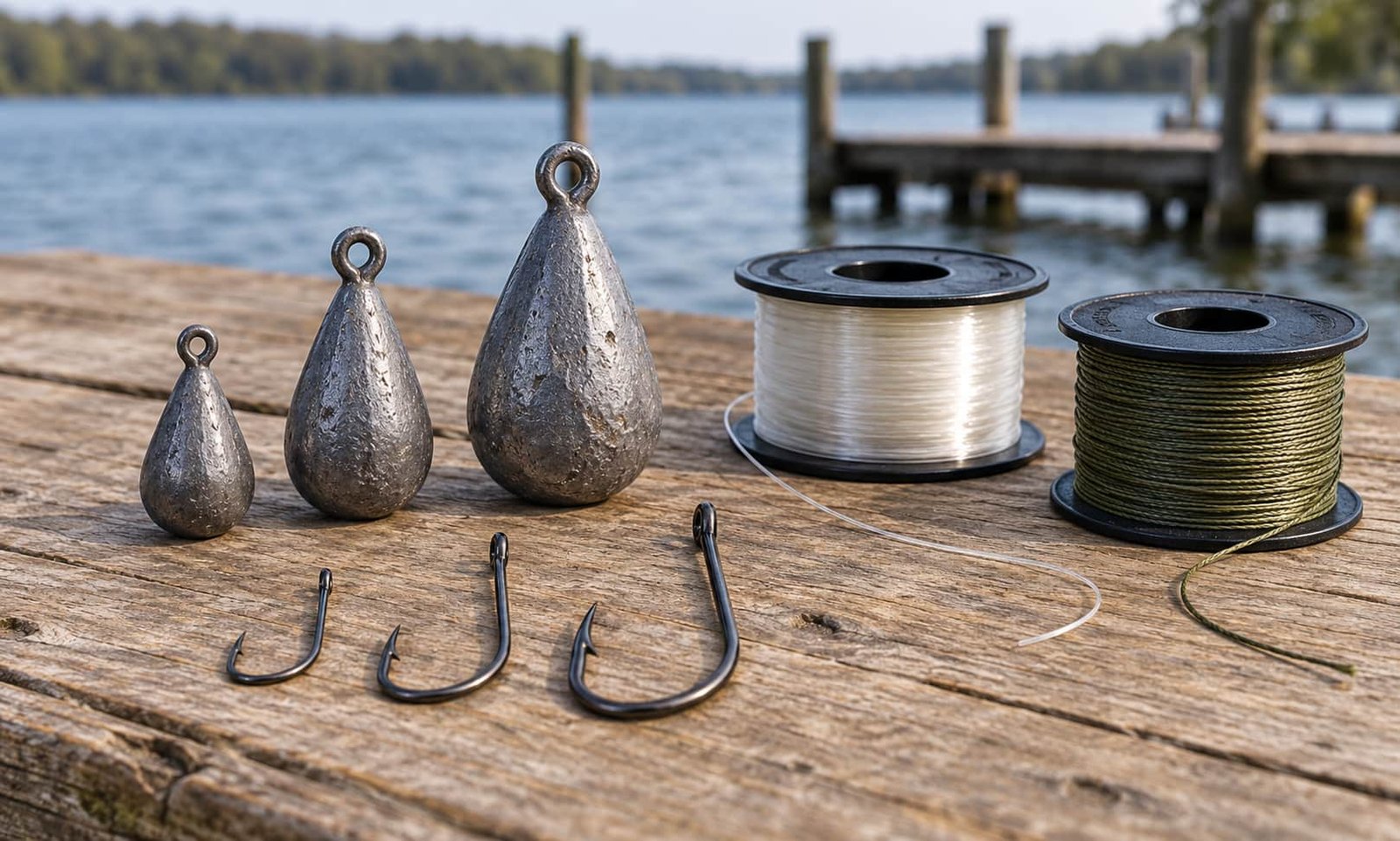
Fishing tackle sizes explained in plain English. Decode hook numbers, line ratings and sinker weights so you can choose the right gear.
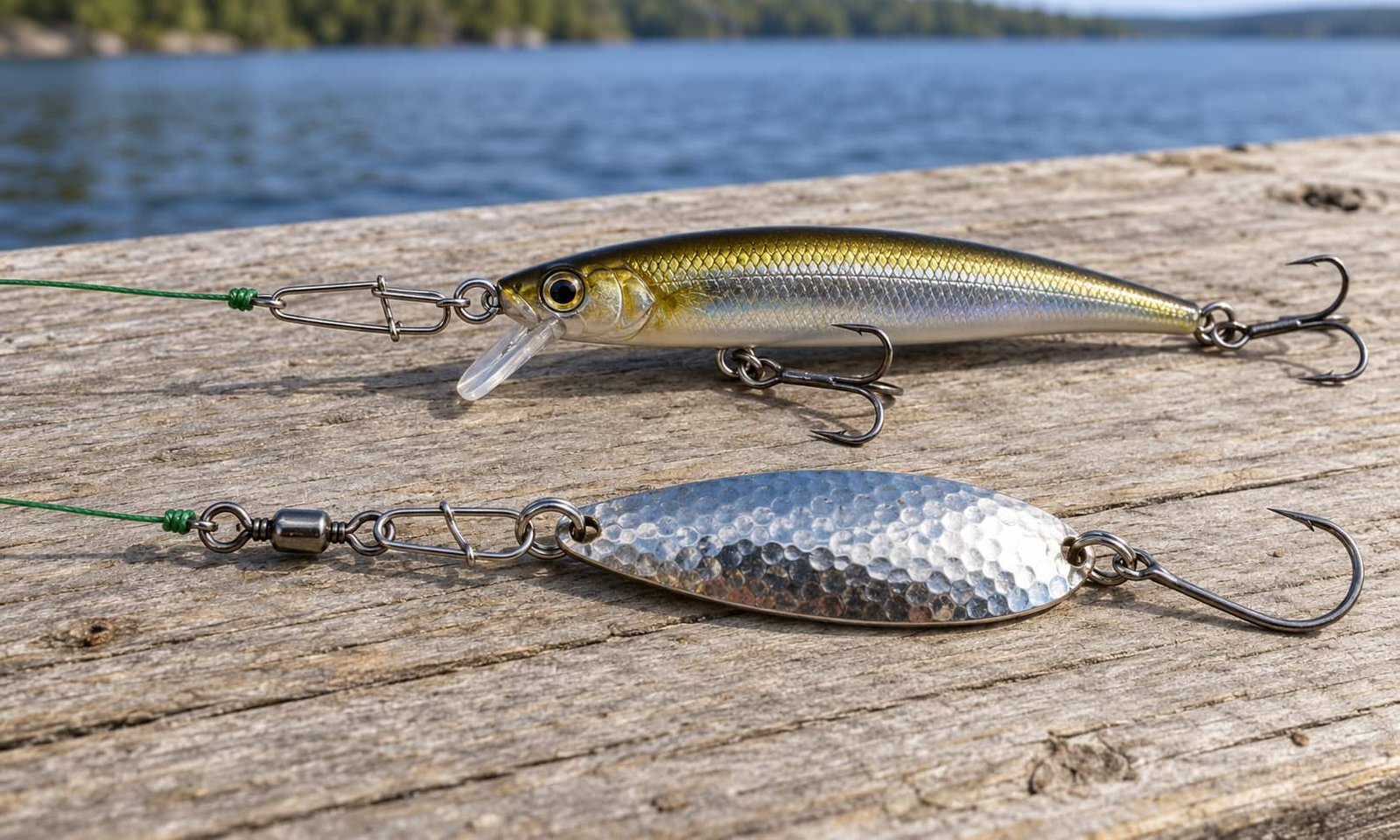
Compare snap vs snap swivel for lures and tying direct. See seven connection layouts, including the line-tie point on a lipless crankbait.
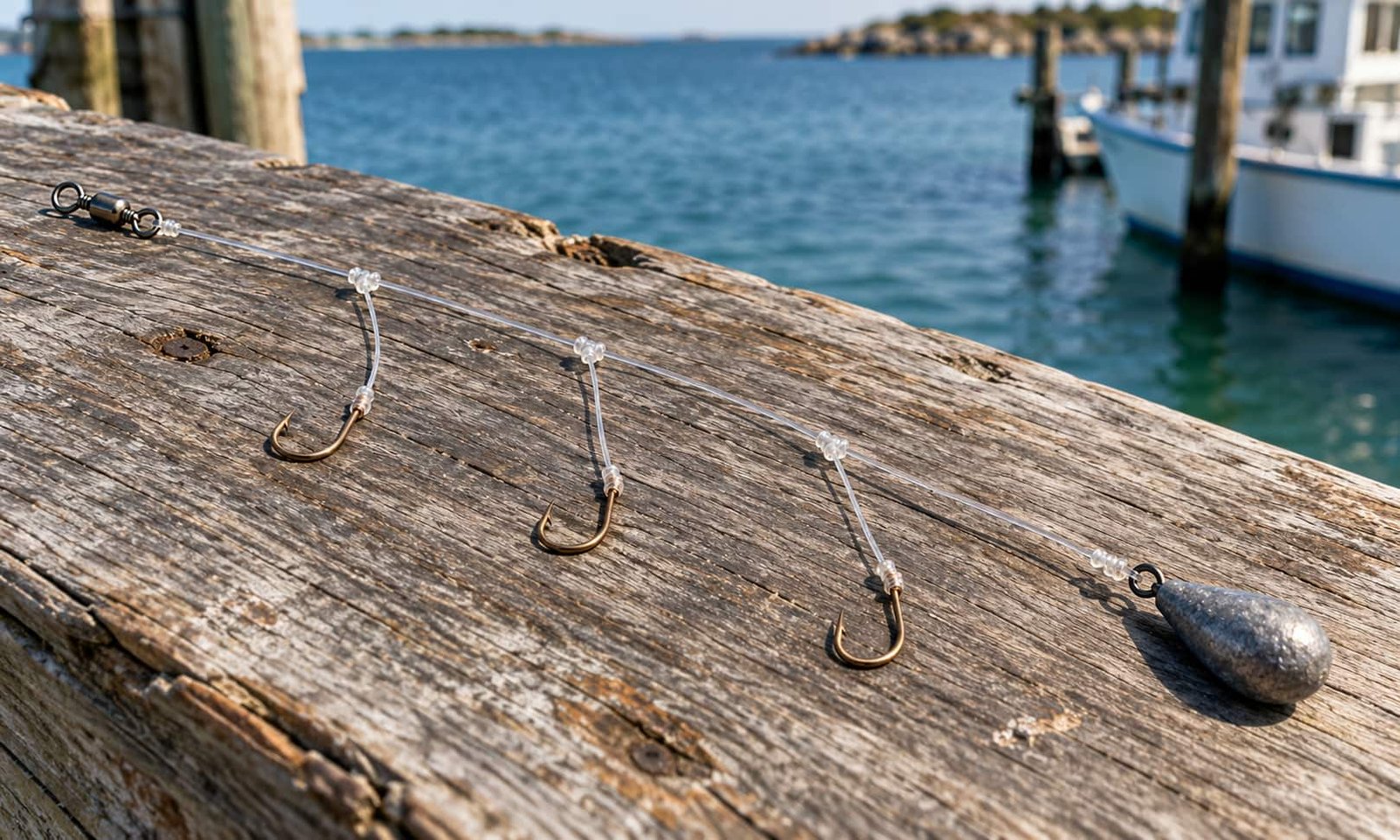
Take a closer look at 6 saltwater fishing rigs, from shore setups to boat rigs, with diagrams that show how the lines, hooks, and sinkers connect.
Learn how to choose a saltwater fishing reel for shore or boat fishing by comparing reel type, drag performance, and line capacity before you buy.
Build a bass fishing setup for beginners with a rod, braided line, and a leader that work together. Learn knots and casting before your first trip.
Learn how to choose a lure fishing rod by length, power, action, and lure weight. Find a practical starting setup before buying your first rod.
Learn how to adjust baitcaster brakes for better spool control, smoother casts, and fewer backlashes before you start pushing for more distance.
Not sure which rod to buy? Explore lure fishing gear for beginners, from rod length and power to reels, line, lures, and accessories.