How to Choose a Saltwater Fishing Reel Without Wasting Money

- Category
- Fishing Gear
- Date
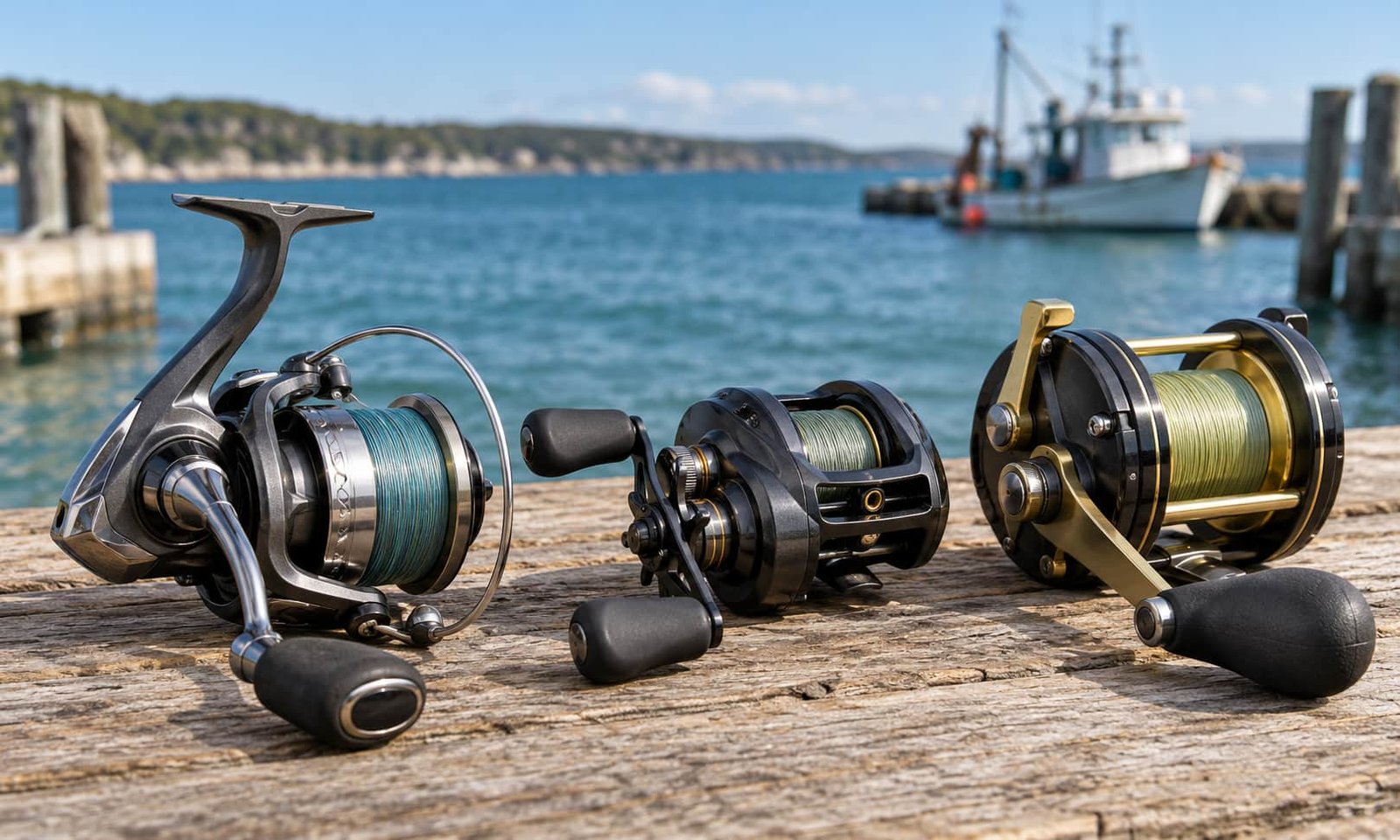
Choose a saltwater fishing reel around where you fish, the fish you target, and the way you present a bait or lure. Those decisions tell you more about the reel you need than a high bearing count or a large maximum-drag number.
Learning how to choose a saltwater fishing reel starts with a practical question. Will you cast from a beach, lower a bait beside a pier, work metal jigs from a boat, or troll offshore? Each job asks something different of the spool, drag, line capacity, and retrieve.
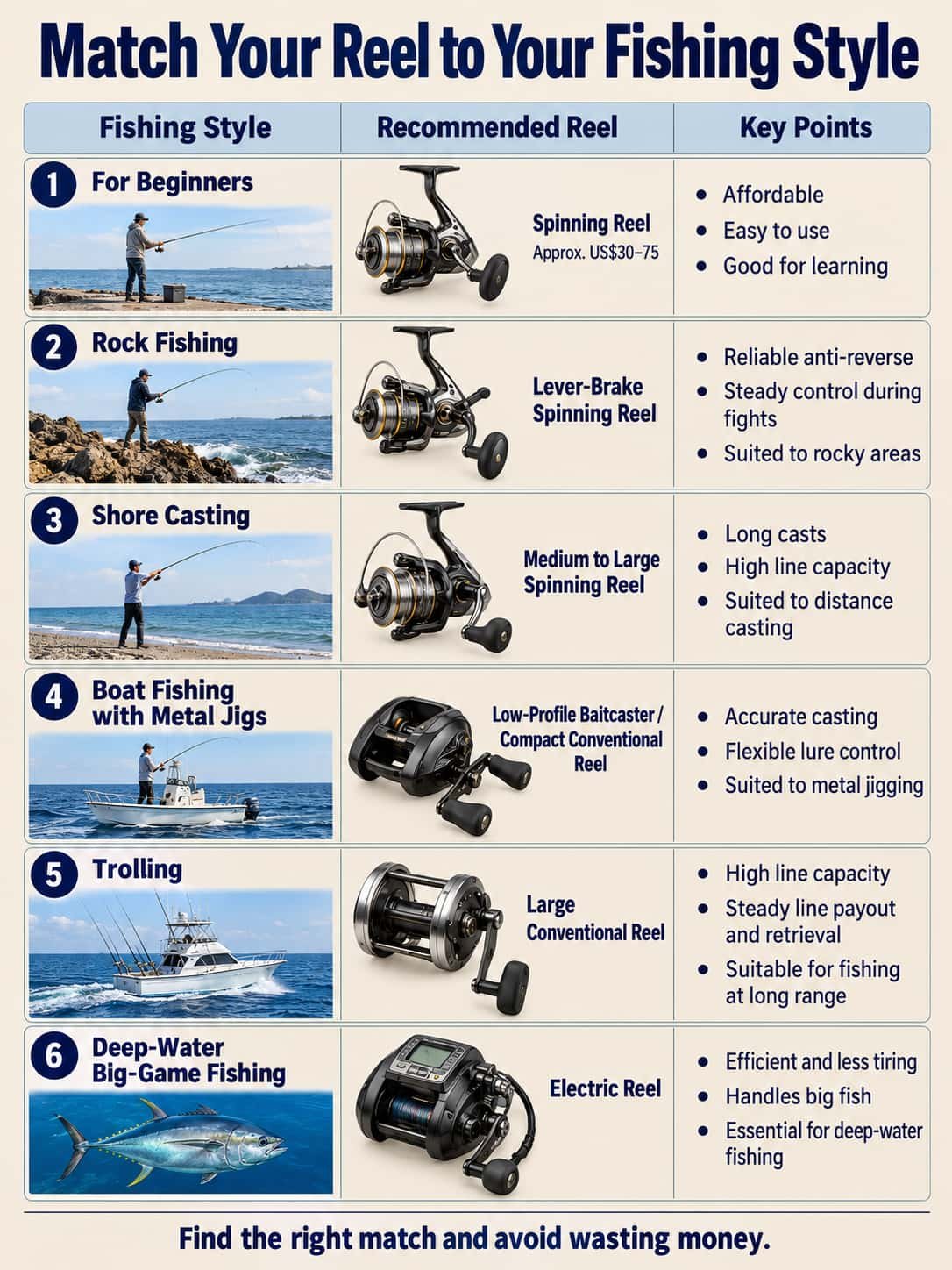
Which reel type suits your saltwater fishing?
A spinning reel gives most beginners a straightforward way to cast and manage line. A low-profile baitcaster suits controlled casting and some jigging applications. Conventional reels offer options for heavier boat fishing and trolling, while electric reels reduce the work of repeated deep-water retrieves. Choose the reel category around your usual fishing method.
A spinning reel is also called a fixed spool reel in British sea angling. A conventional reel often appears under multiplier reels in UK tackle listings. Recognizing both names makes comparisons easier when shopping across North American and European markets.
| Fishing situation | Reel type to consider | Main reason |
|---|---|---|
| Learning to cast and control line | Saltwater-rated spinning reel | Straightforward operation |
| Shore casting and surf fishing | Medium to large spinning reel | Casting ability and line capacity |
| Specialist rocky-shore fishing with controlled line release | Lever-brake spinning reel | Manual control over line release |
| Boat fishing with metal jigs or accurately placed lures | Saltwater-rated low-profile baitcaster or compact conventional reel | Direct spool and lure control |
| Offshore trolling | Larger conventional reel, often with lever drag | Line capacity and accessible drag adjustment |
| Repeated deep-water drops | Electric reel | Motor-assisted retrieval |
| Controlled vertical bait fishing and lightly weighted shore presentations | Specialist vertical bait-fishing or shore-fishing reel | Controlled drops and sensitive presentation |
The fishing method narrows the choice before the model name matters. For example, repeated offshore drops call for different equipment from a lightly weighted bait lowered beside shoreline rocks, even when both anglers fish in salt water.
What do fishing reel specifications actually tell you?
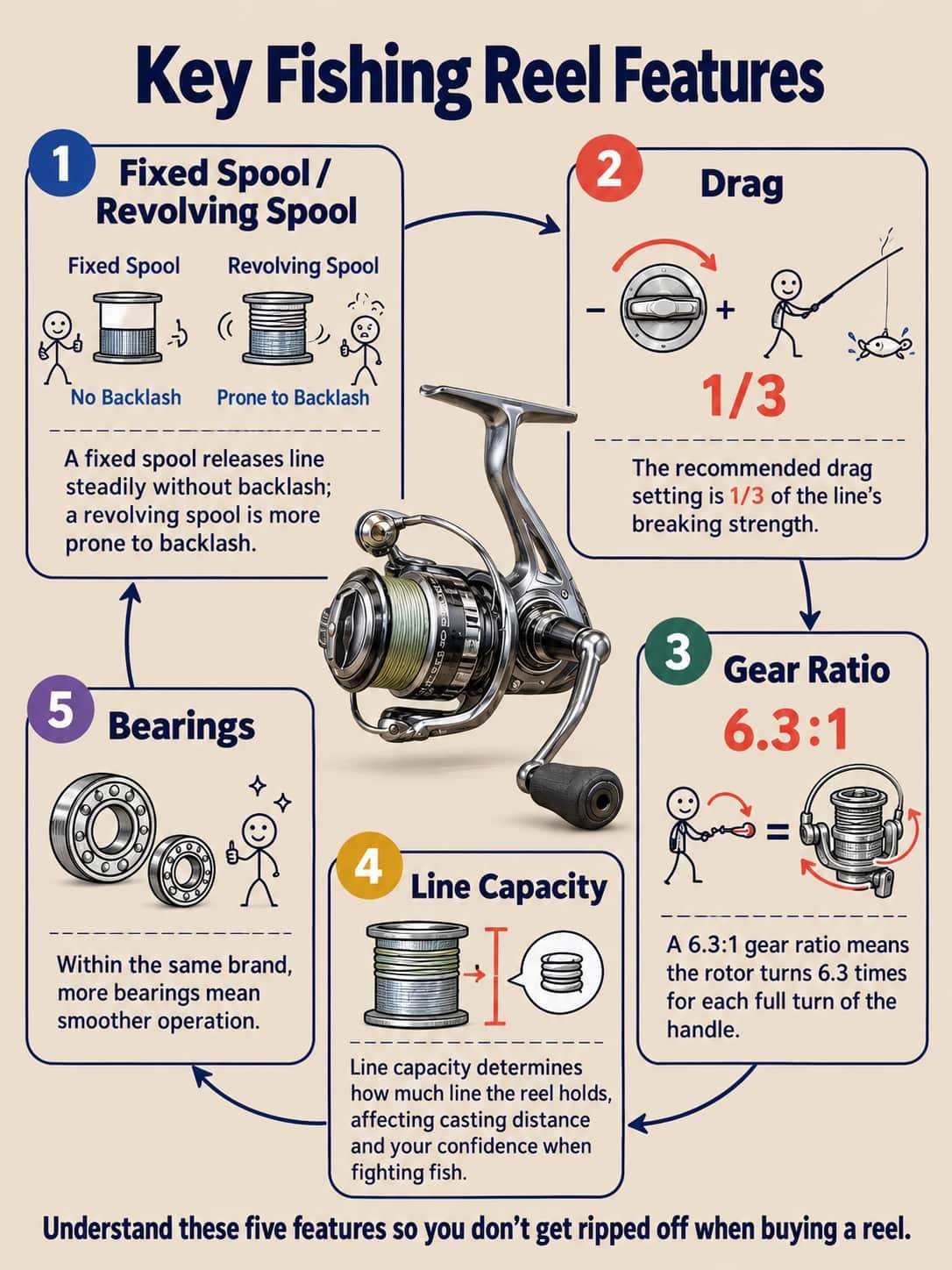
Reel specifications explain how a reel releases line, retrieves line, and handles resistance. Start with spool design, drag, gear ratio, line capacity, and bearings. Read those features together because each feature describes only part of the job. A useful specification becomes meaningful when you connect the number to your fishing conditions.
How do fixed and revolving spools change the way you fish?
A fixed spool stays stationary while line leaves the reel during a cast. A revolving spool turns as line pays out. That difference makes spinning reels easier to learn and creates the need for spool control on baitcasters and conventional reels. Revolving-spool reels can overrun when the spool releases line faster than the cast takes it away.
Backlash is the loose buildup of line caused by that spool overrun. A spinning reel avoids this particular casting problem, although poor line management can still produce loose loops and wind knots. A fixed spool therefore simplifies casting without making every kind of line tangle impossible.
How much drag do you need?
Drag is the adjustable resistance that lets a fish take line under tension. Choose a reel that releases line smoothly at the pressure your outfit can handle. A high maximum-drag figure describes available resistance; the figure does not tell you how tightly to set the reel for every fish.
A useful starting guideline is approximately one-third of the line’s breaking strength. Measure the drag rather than relying entirely on feel, and keep the setting within the limits of the rod, leader, knots, and other tackle. Maximum drag and the drag pressure used during a fight serve different purposes.
A reel’s drag rating also differs from the weight of the fish. A fish pulling line through water creates a changing load, so a drag specification cannot serve as a promise that the reel will land a particular fish weight.
What does a 6.3:1 gear ratio mean?
On a spinning reel, a 6.3:1 gear ratio means the rotor circles the spool 6.3 times per full handle turn. On a baitcaster or conventional reel, the ratio describes spool revolutions during retrieval. Gear ratio helps explain retrieve speed, while spool size also affects the amount of line recovered.
The rotor is the rotating assembly that carries the bail and lays line around a spinning reel’s spool. During retrieval, the spool moves back and forth to distribute the line evenly.
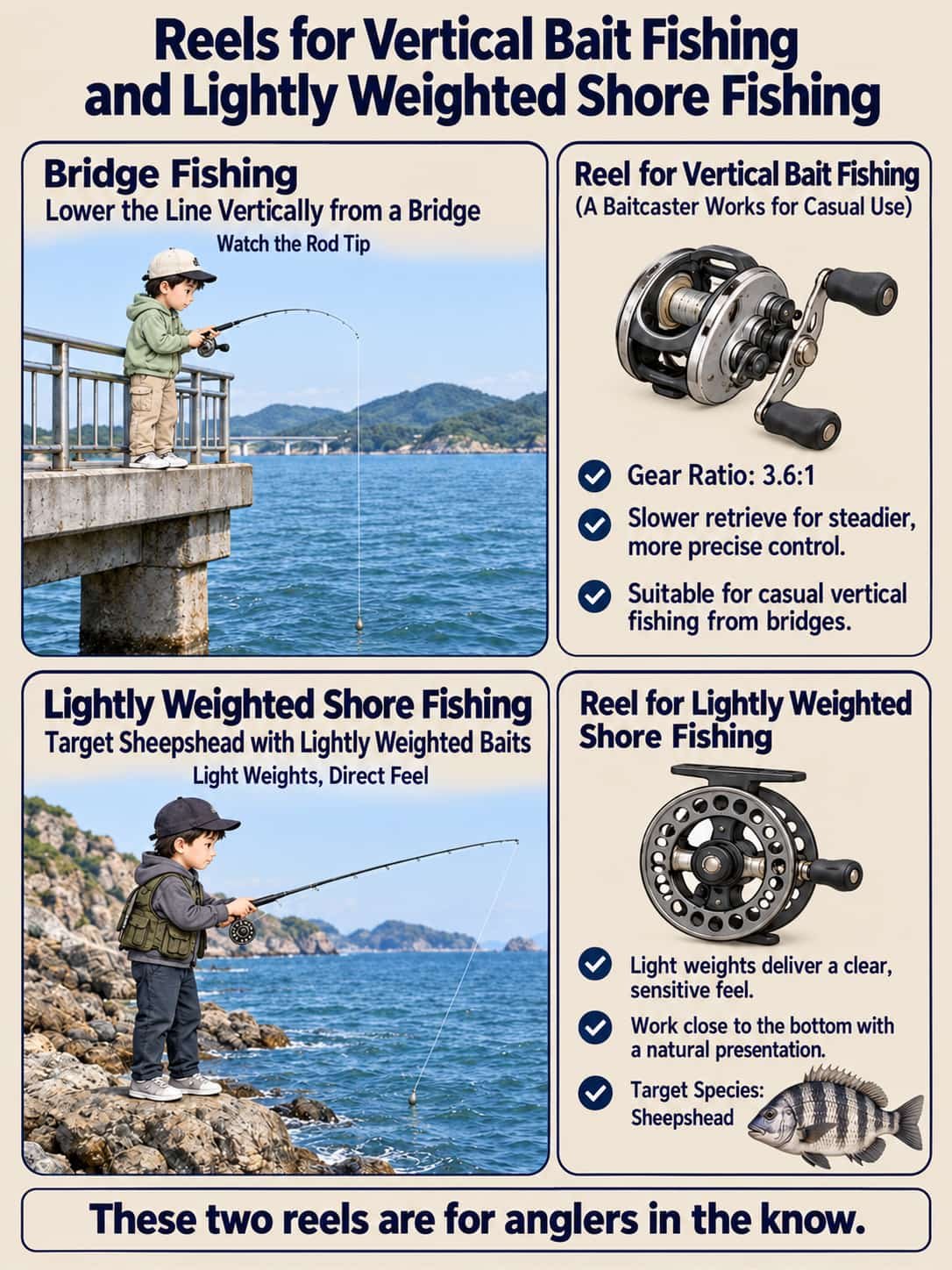
The specialist vertical bait-fishing reel illustrated with a 3.6:1 ratio emphasizes a slower retrieve and deliberate control. Compare retrieve characteristics within the intended application rather than assuming that a higher ratio always makes a better fishing reel.
How much line capacity should a saltwater reel have?
Line capacity is the amount of a specified line diameter that a spool holds. Choose enough capacity for the cast or fishing depth, with a reserve for a fish’s run. A deep-water boat setup and a long-range shore setup can need more line than a short, controlled vertical presentation.
Read the capacity figure for the line you actually plan to use. A spool holds different lengths of different line diameters, so the reel’s physical size alone does not tell you how much usable line the outfit carries.
Does a higher bearing count mean a better reel?
More bearings do not automatically make a better saltwater reel. Bearings support moving parts, but bearing quality, placement, corrosion protection, and the rest of the reel’s construction determine how the reel feels under load. Compare reels as complete tools rather than ranking models by the bearing total alone.
Even reels from the same brand can differ in construction and intended use. A smooth handle in the tackle shop provides one useful impression, but saltwater suitability and consistent operation under fishing loads deserve equal attention.
When is a spinning reel the right choice?
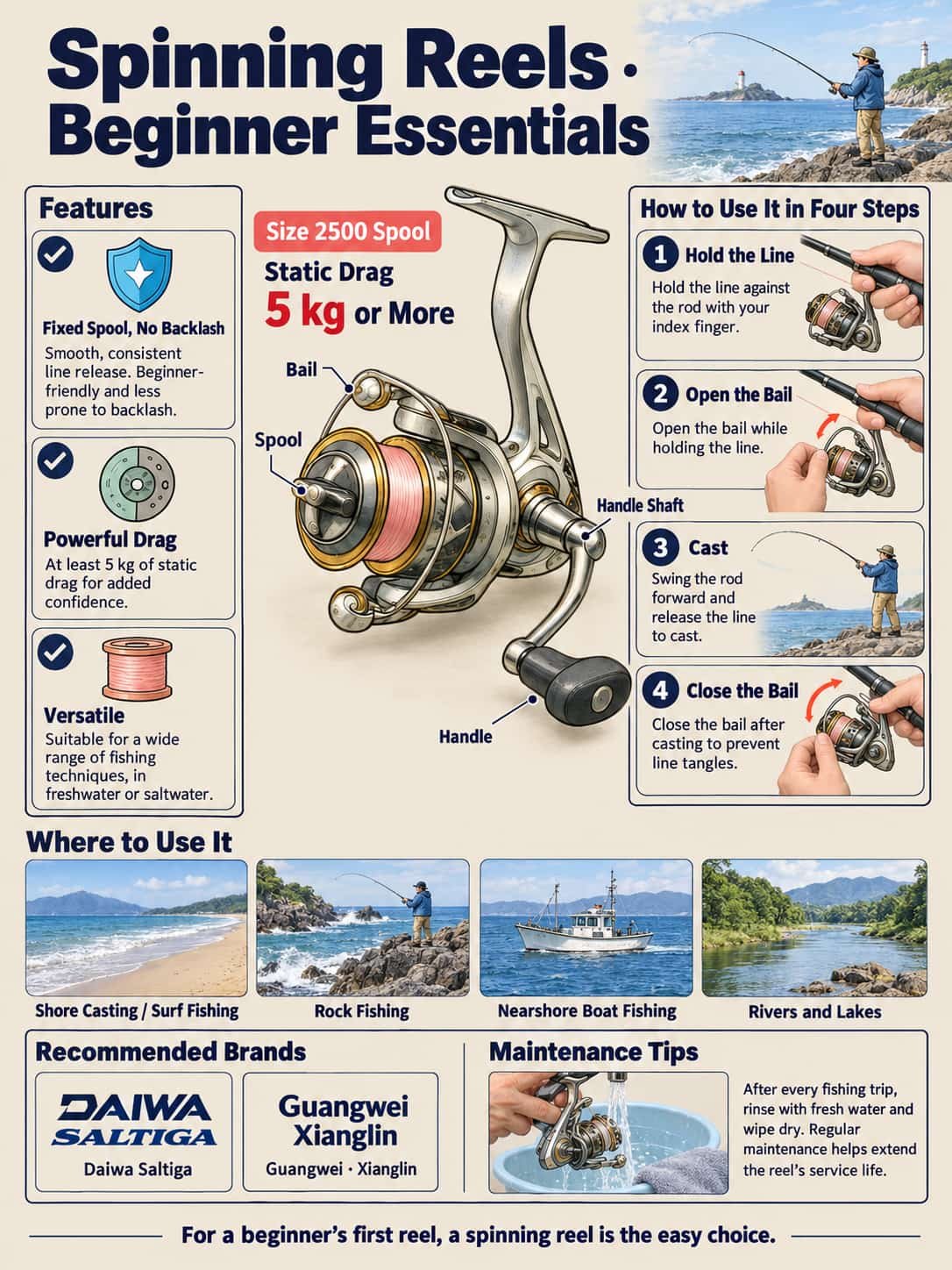
A saltwater-rated spinning reel is a practical first choice for anglers learning shore casting, fishing beaches and rocks, or making nearshore boat trips. The fixed spool simplifies line release, and the same basic casting sequence works across several situations. Choose the reel size and construction around the line, casting load, and fish involved.
A 2500-size spinning reel with a stated drag capacity of 5 kg or more provides one example of a lighter outfit. The example does not establish a universal beach or offshore reel size. Larger shore-casting and surf-fishing applications may require more spool capacity and a different match to the rod.
The basic spinning-reel parts are easy to recognize. The spool stores the line, the bail opens for casting and guides line toward the line roller when closed, and the handle drives the retrieve through the handle shaft and gearing.
A spinning-reel cast follows four steps.
- Hold the line against the rod with your index finger.
- Open the bail while keeping control of the line.
- Swing the rod forward and release the line to make the cast.
- Close the bail by hand after the cast and take up slack before retrieving.
Basic care belongs in the buying decision because every saltwater reel needs maintenance. Gently rinse the reel with fresh water after a trip, wipe the exterior dry, and follow the manufacturer’s care instructions. Keep water pressure low and avoid soaking the reel.
When does a low-profile baitcaster make sense?
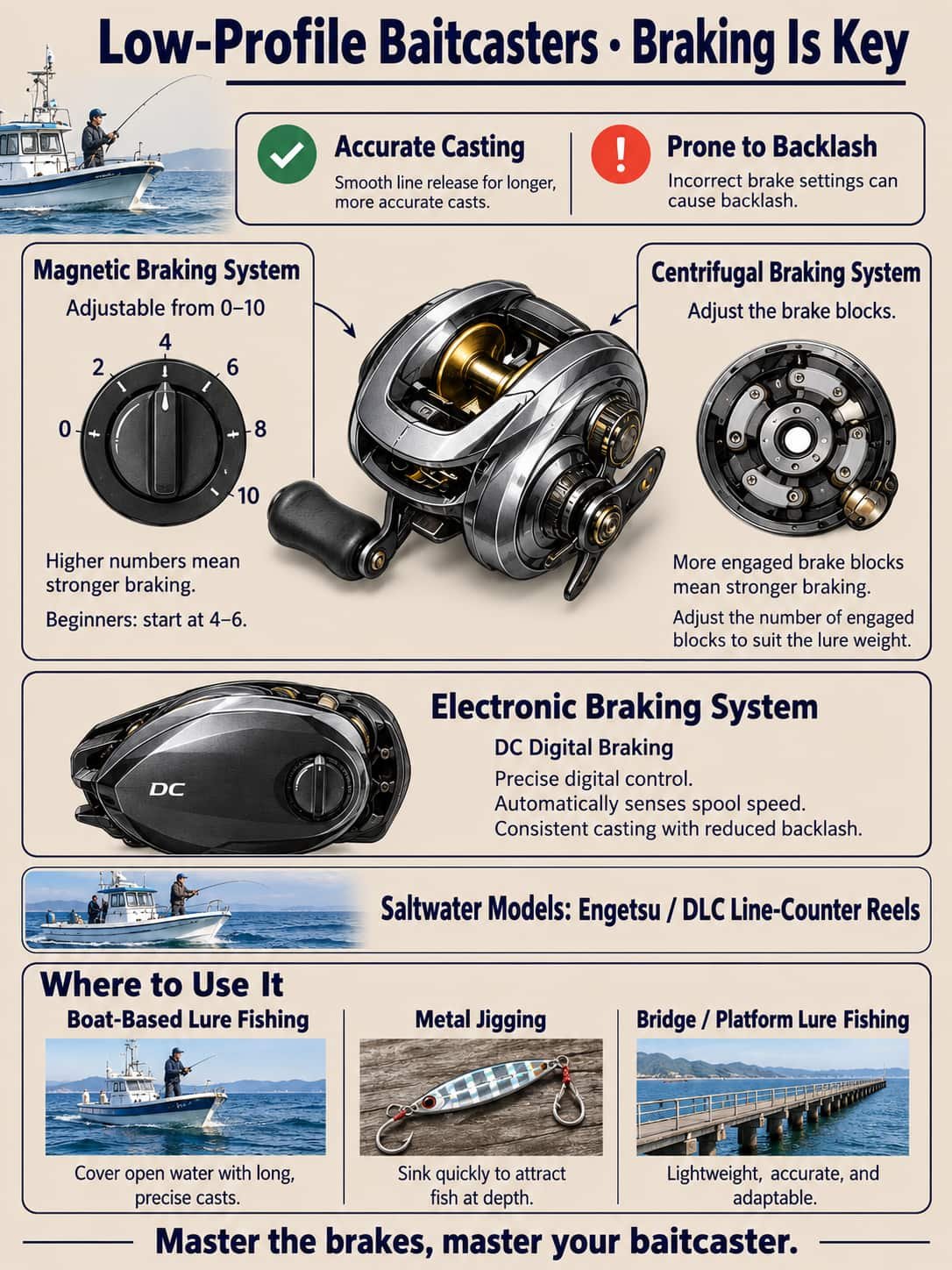
A saltwater-rated low-profile baitcaster makes sense when compact handling and controlled casting suit the fishing. Boat-based lure fishing, metal jigging, and accurately placed casts from suitable structures can all suit the design. The main learning task is controlling the revolving spool so the reel releases line at the pace the presentation needs.
A casting brake controls spool speed during a cast. Drag controls the resistance against a fish taking line. Learning the difference prevents a common setup mistake because adjusting the drag does not replace setting the casting brakes correctly.
The three casting-brake systems control spool speed in different ways.
- Magnetic braking uses an adjustable magnetic system to slow the spool. The illustrated dial runs from 0–10, with higher numbers applying more braking. The suggested 4–6 starting range applies to that example; other reels use different scales and setup procedures.
- Centrifugal braking uses brake blocks that act as the spool turns. Engaging more blocks generally increases braking. Follow the reel’s instructions when changing the block arrangement to suit the lure and casting conditions.
- Digital Control braking, commonly identified as DC, monitors spool rotation electronically and adjusts braking during the cast. The system helps reduce backlash, while the angler still needs suitable settings and good casting control.
A digital line counter performs a different job from digital casting brakes. A line-counter display reports line deployment, while a casting-brake system manages spool rotation. An LCD screen alone does not identify a baitcaster as a DC-braking reel.
When should you choose a conventional reel?
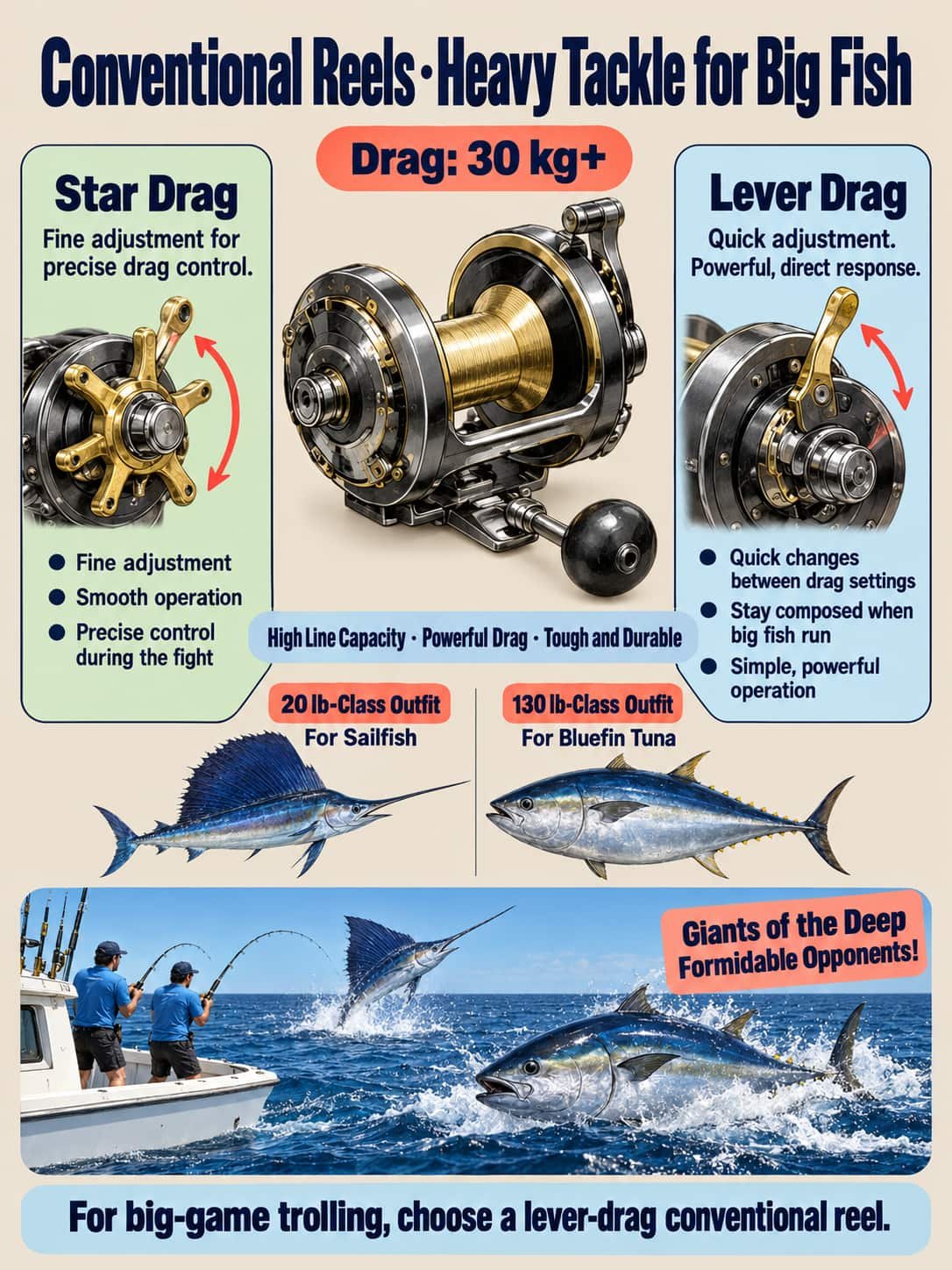
A conventional reel suits boat fishing that calls for substantial line capacity, controlled line payout, and a strong retrieve. Larger models commonly serve offshore trolling, while compact models also suit jigging. Choose the reel’s capacity and drag system for the intended outfit because conventional reels cover a wide range of sizes and applications.
Should you choose star drag or lever drag?
A star-drag reel uses a star-shaped wheel beside the handle to adjust resistance. A lever-drag reel uses a lever to move through a preset drag range. Star drag allows gradual adjustments, while lever drag makes repeatable changes accessible during a fight. Offshore trolling often favors the lever-drag arrangement.
A lever-drag reel needs its drag range set correctly before fishing. Moving the lever then changes resistance within that setup; the lever is not a substitute for checking the actual pressure applied to the line.
The 20 lb-class sailfish outfit and 130 lb-class bluefin tuna outfit illustrate very different tackle classes. The labels describe the outfit’s line class, not the fish’s weight and not the reel’s maximum drag.
The 30 kg+ drag figure belongs to the heavy-tackle end of the comparison. A recreational shore angler does not need that figure simply because the reel will encounter salt water. The fishing application determines whether such capacity has a useful purpose.
When does an electric fishing reel make sense?
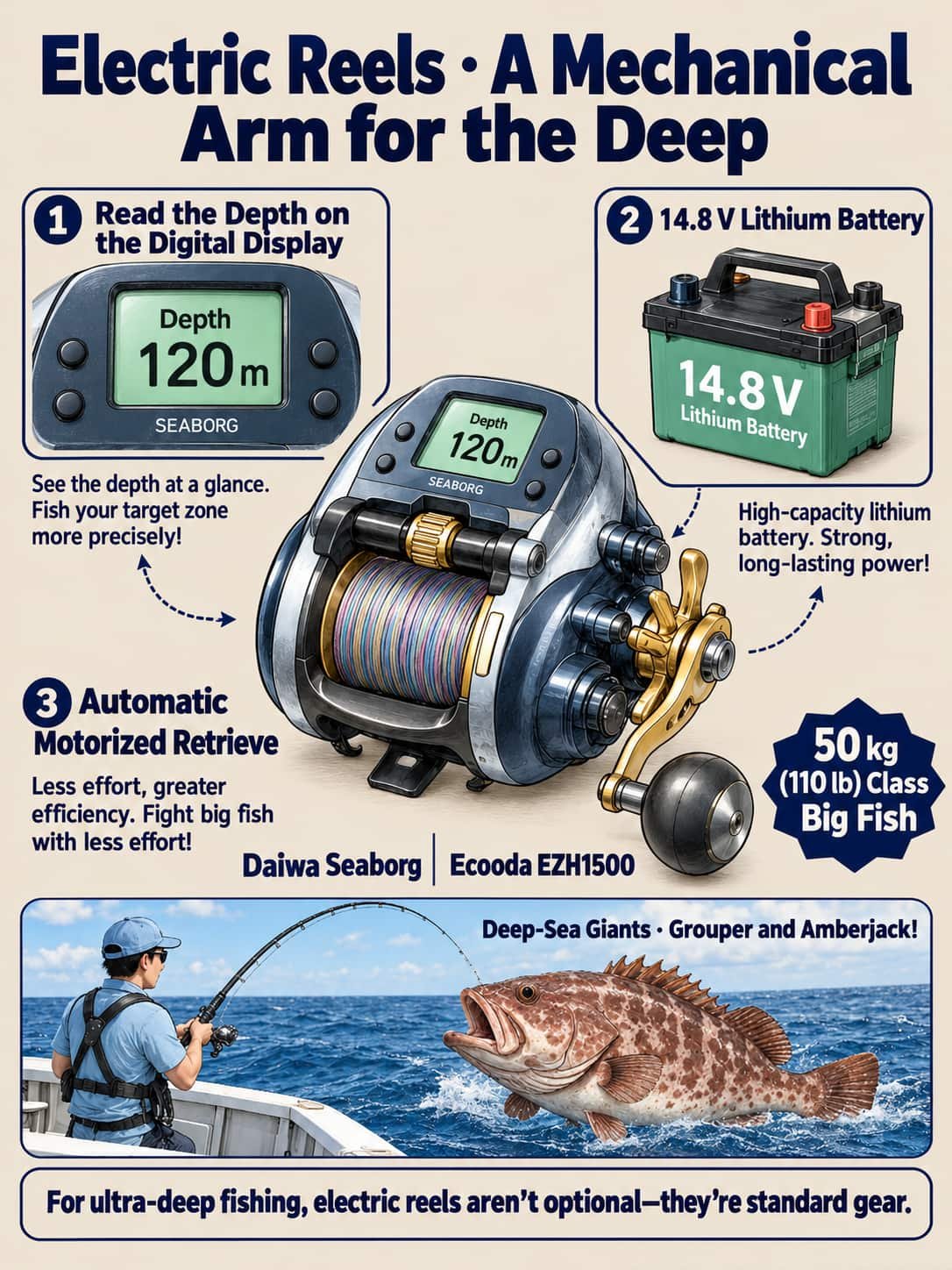
An electric reel becomes useful when repeated deep-water drops make manual retrieval demanding. The motor assists with bringing line and tackle back to the boat, and the digital counter helps repeat a controlled drop. Deep-water grouper and amberjack fishing illustrate the kind of work that can justify the added equipment and power supply.
The electric-reel example includes three figures that need separate interpretations.
- 120 m on the display represents the counter’s depth or line-out reading. Current and line angle can separate line deployed from true vertical depth, so calibrate the counter and interpret the display in context.
- 14.8 V identifies the illustrated lithium battery. Confirm the reel’s approved voltage range, battery requirements, and connections before selecting a power source.
- 50 kg (110 lb) class fish describes the large-fish context. The figure does not establish a reel’s drag rating or guarantee that every electric reel can handle the same fish.
A motorized retrieve reduces winding effort, but the angler still controls the rod, drag, and presentation. The reason to buy an electric reel is the work the motor will perform on your trips, especially when deep retrieves become a regular part of the fishing.
Where do specialist vertical-fishing and lever-brake reels fit?
Specialist reels become relevant when the presentation calls for controlled vertical line release or sensitive fishing with lightly weighted baits. A lever-brake spinning reel offers another specialist option for rocky-shore line control. These choices belong to particular techniques, so identify the fishing task before treating a specialist design as the next general-purpose upgrade.
A lever-brake spinning reel uses a finger-operated brake to control line release. The mechanism belongs to a spinning reel and differs from the lever-drag system on a conventional reel. The similar names describe different controls on different reel designs.
A vertical bait-fishing setup can lower line from a bridge or platform while the angler watches the rod tip. A lightly weighted shore presentation keeps the bait close to bottom structure with a natural movement and a clear feel through the tackle.
Sheepshead around shoreline structure provide a practical example of the lightly weighted approach. The tackle needs controlled placement and useful feedback when the bait works near rocks or other cover. The specialist reels illustrated for these methods should be evaluated for that particular presentation.
What should a beginner spend and when should you upgrade?
A beginner should buy the simplest saltwater-suitable reel that handles the intended fishing, then upgrade when a specific limitation becomes clear. An introductory budget of approximately US$30–75 provides a starting reference for comparisons. Local prices and construction vary, so prioritize suitable line capacity, a smooth drag, and corrosion resistance before extra features.
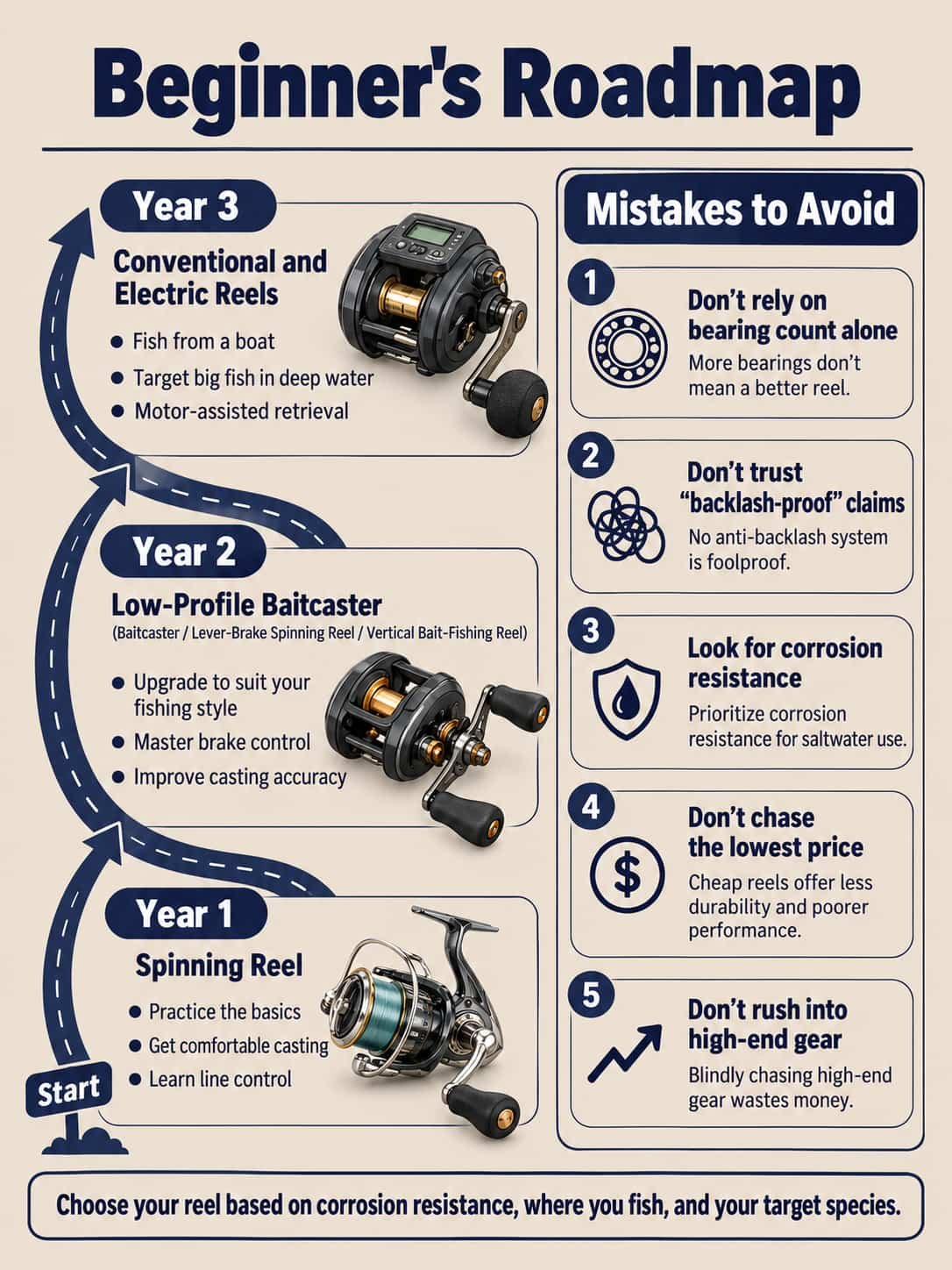
The three-year roadmap organizes skills and equipment into a useful progression.
| Stage | Main focus | Reel options |
|---|---|---|
| Year 1 | Practice casting, line control, and the basics | Spinning reel |
| Year 2 | Develop the chosen technique, learn brake control where relevant, and improve casting accuracy | Low-profile baitcaster, lever-brake spinning reel, or specialist vertical bait-fishing reel |
| Year 3 | Develop boat-fishing skills and tackle deeper water or larger fish when the opportunity calls for it | Conventional or electric reel |
Move through the roadmap as your fishing develops. An angler who continues to enjoy shore casting can keep improving with a suitable spinning reel. An angler who starts regular deep-water boat trips has a clearer reason to consider conventional or electric equipment.
What buying mistakes should you avoid?
Avoid choosing a saltwater reel by a single attractive number or promise. Bearing totals, maximum drag, anti-backlash claims, and price each leave important questions unanswered. Check how the reel suits the fishing, how the reel resists saltwater exposure, and whether the added features solve a problem you actually expect to encounter.
- Buying by bearing count alone. Check construction and saltwater protection alongside smoothness.
- Trusting backlash-proof claims. Treat casting aids as support for good setup and spool control.
- Overlooking corrosion resistance. Make saltwater suitability part of the initial shortlist.
- Chasing the lowest price. Judge the purchase by useful service and performance as well as the cost at checkout.
- Rushing into high-end equipment. Buy added capability when your fishing gives that capability a clear job.
Before buying, name the fishing location, the method, and the target fish. Use those answers to choose the reel type, check the required line capacity and drag, and set a realistic budget. The right reel makes your usual fishing easier to manage.
More to Explore
Related Articles
More guides in Fishing Gear
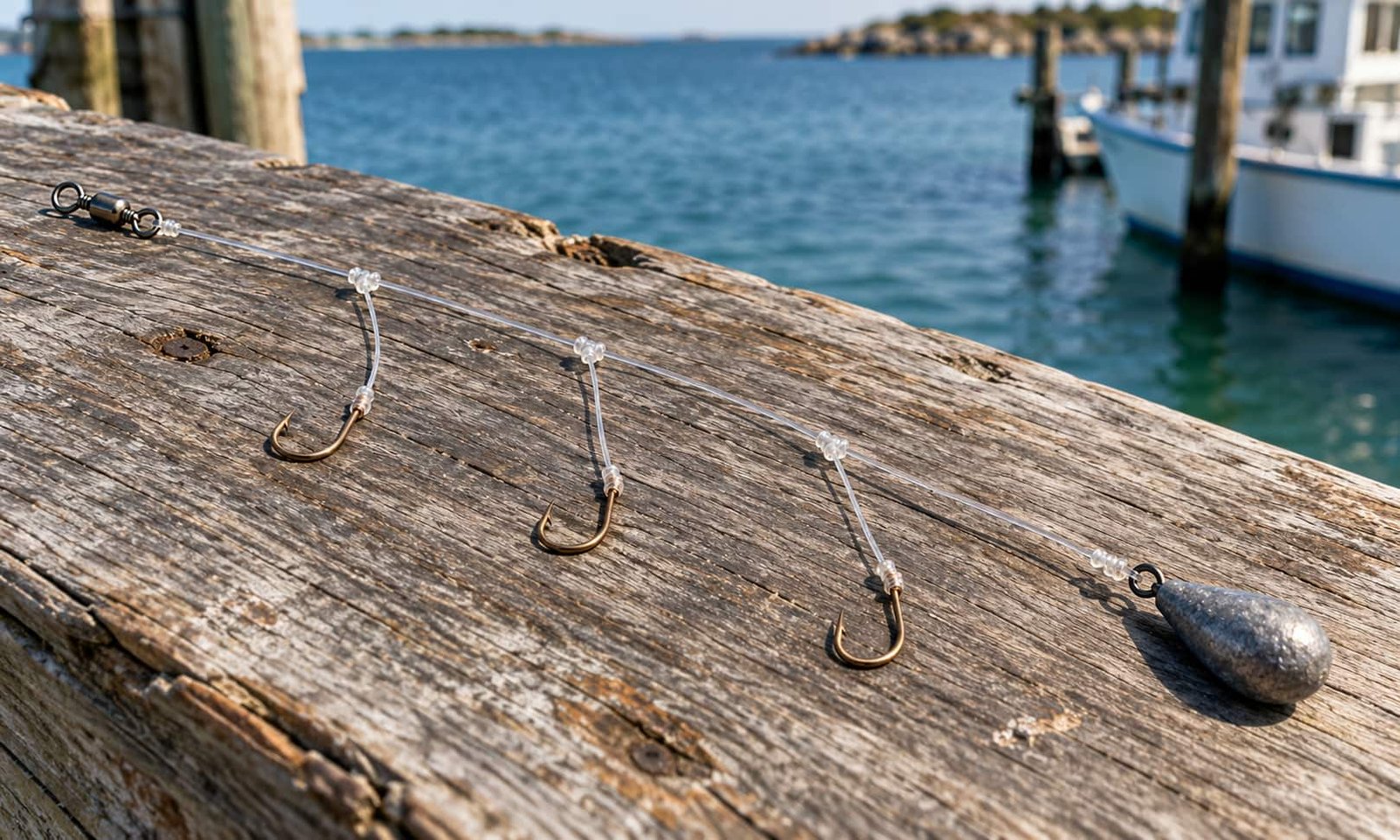
Take a closer look at 6 saltwater fishing rigs, from shore setups to boat rigs, with diagrams that show how the lines, hooks, and sinkers connect.
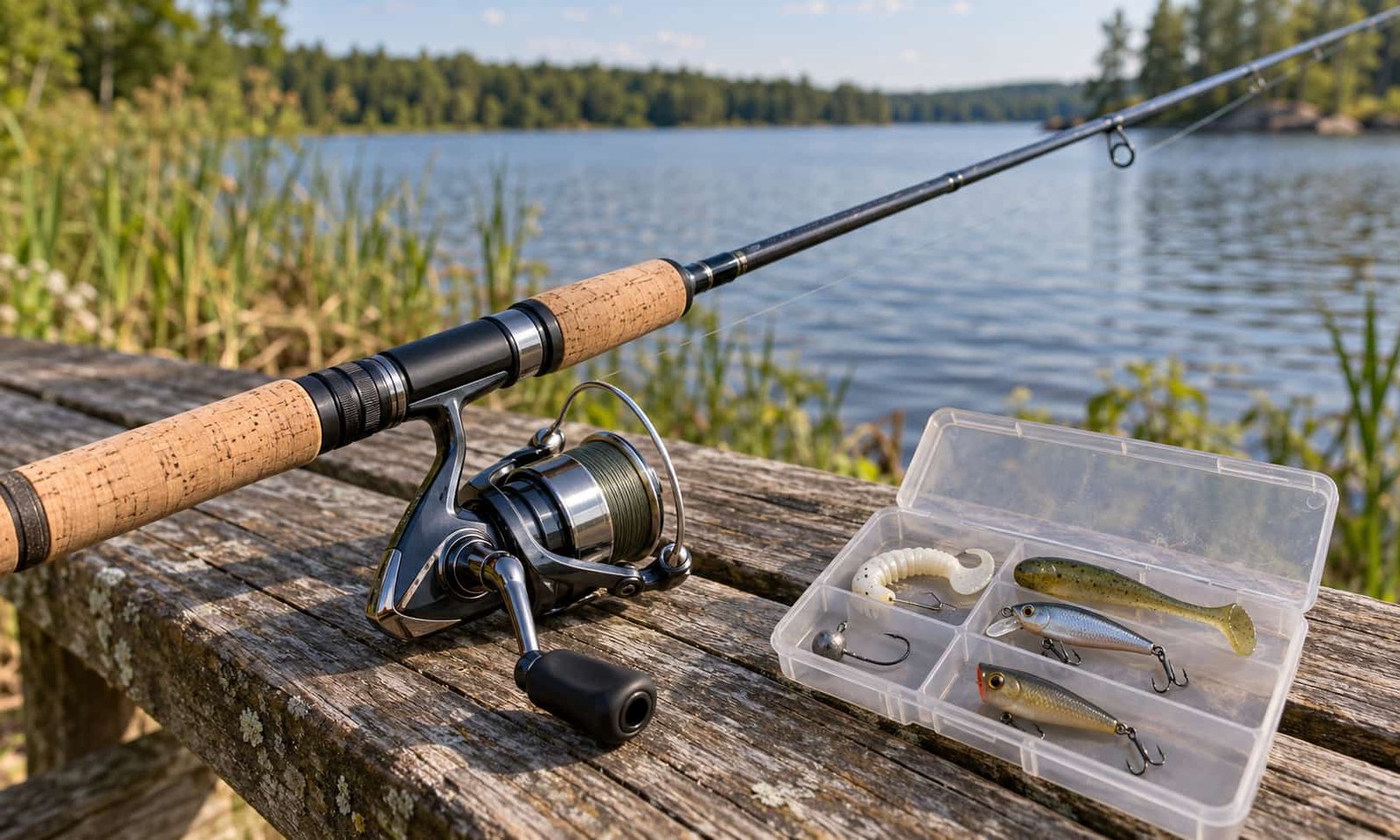
Build a bass fishing setup for beginners with a rod, braided line, and a leader that work together. Learn knots and casting before your first trip.
Learn how to choose a lure fishing rod by length, power, action, and lure weight. Find a practical starting setup before buying your first rod.
Learn how to adjust baitcaster brakes for better spool control, smoother casts, and fewer backlashes before you start pushing for more distance.
Not sure which rod to buy? Explore lure fishing gear for beginners, from rod length and power to reels, line, lures, and accessories.
Unsure what gear to buy first? This lure fishing setup for beginners guide covers spinning rods, reels, braid, fluorocarbon leaders, and lure weights.

Skip the crowded tackle bag. See which rod, reel, fishing line, and starter lures help you learn faster on the water.
Not sure which rig to tie on? See the difference between jig head and Ned hook before choosing your next soft bait setup.