Jig Head or Ned Hook? Know the Difference Before You Cast
- Category
- Fishing Gear
- Date
A lot of anglers pick a jig head or a Ned hook simply because it is what they usually use. Then, once the bait hits the water, it does not move, sink, or feel quite right.
The difference comes down to more than shape. Hook design, wire strength, bait presentation, depth, and retrieve style all affect how each setup performs.
A Ned hook makes sense when you are fishing lighter tackle and want a subtle presentation with easy hook penetration. A jig head is usually the more flexible option when you need to cover different depths, retrieves, or conditions with one setup.
Before your next trip, think about how you actually plan to fish. Match the hook to the presentation, not just to habit, and your bait will work the way it was meant to.
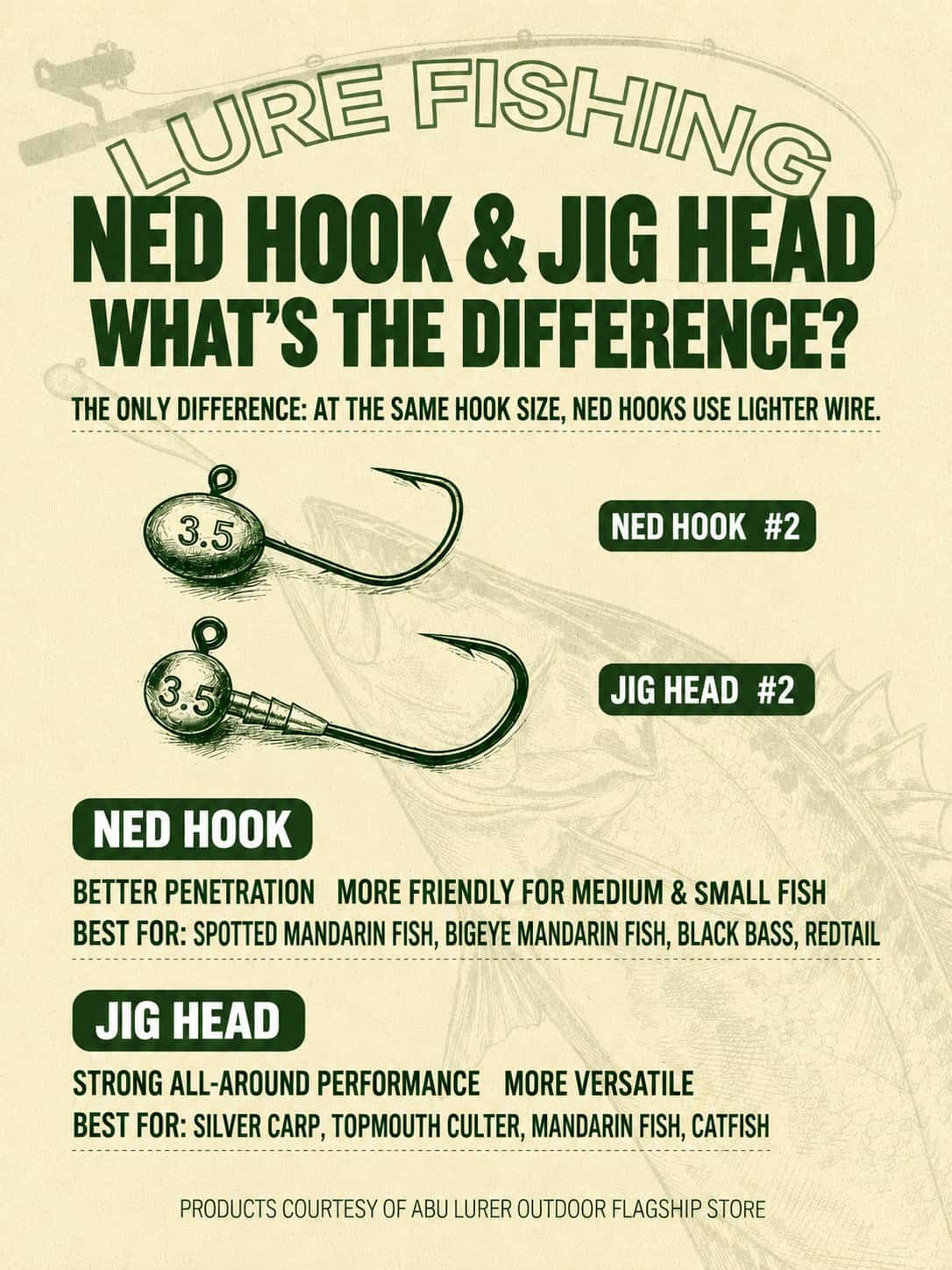
What do “jig head” and “Ned hook” actually mean?
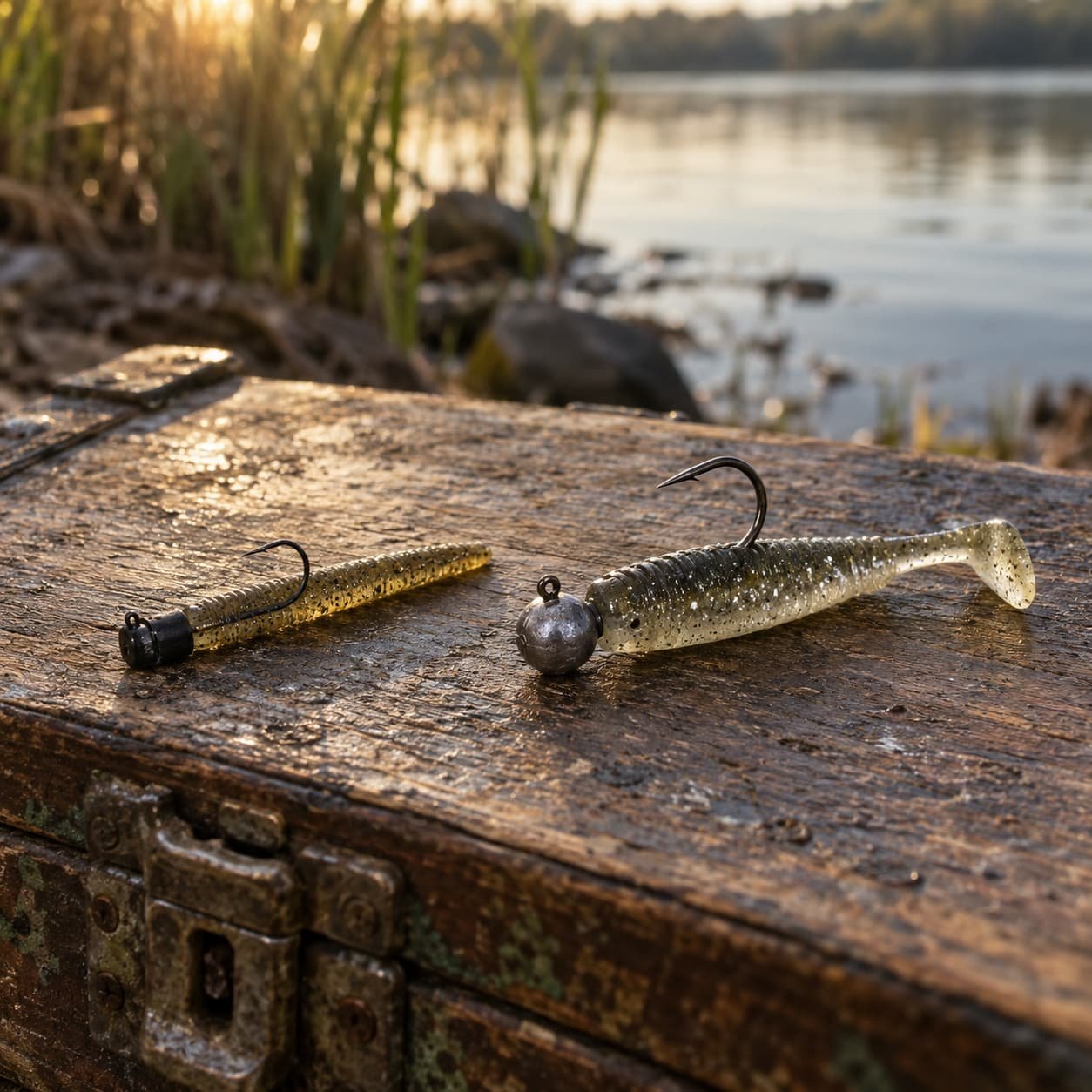
A jig head combines a weighted head with a fishing hook. A Ned hook usually means the hook on a Ned rig jig head, rather than a separate tackle category. For anglers choosing small soft plastics, the useful comparison is between a fine-wire Ned head and a heavier-wire standard jig head.
Ned heads commonly have a mushroom-shaped head, and many use fine-wire hooks. Stronger-wire Ned heads also exist, so thin wire alone does not define every Ned head.
The two size #2 examples both have a 3.5 g head. The Ned example uses thinner hook wire, while the standard jig head uses thicker wire. That comparison shows why head weight and hook strength need separate attention: matching the weight does not mean matching the hook construction.
How does hook wire affect your choice?
Fine hook wire favors easier hook penetration, while heavier wire favors strength. For small and medium fish, the lighter-wire option offers a useful starting point with compact soft plastics. A heavier-wire standard jig head suits an all-purpose presentation when hook strength matters more than the light-wire advantage.
Hook wire means the metal that forms the hook. Hook penetration describes the hook point entering a fish’s mouth during the hookset. These terms describe the hook itself; grams describe the weight of the jig head.
| Feature | Fine-wire Ned example | Standard jig head example |
|---|---|---|
| Hook size | #2 | #2 |
| Head weight | 3.5 g | 3.5 g |
| Hook construction | Thinner wire | Thicker wire |
| Main advantage in this comparison | Easier penetration | Greater strength and all-purpose use |
| Suggested soft plastic starting range | 3.5-5 cm | 5.5-7.6 cm |
Choose the actual hook construction rather than relying on the name on the packet. The two illustrated #2 hooks make the comparison easy to see, but the same thin-wire-versus-thick-wire distinction does not apply to every Ned head and standard jig head on the market.
How should you choose jig head weight for water depth?
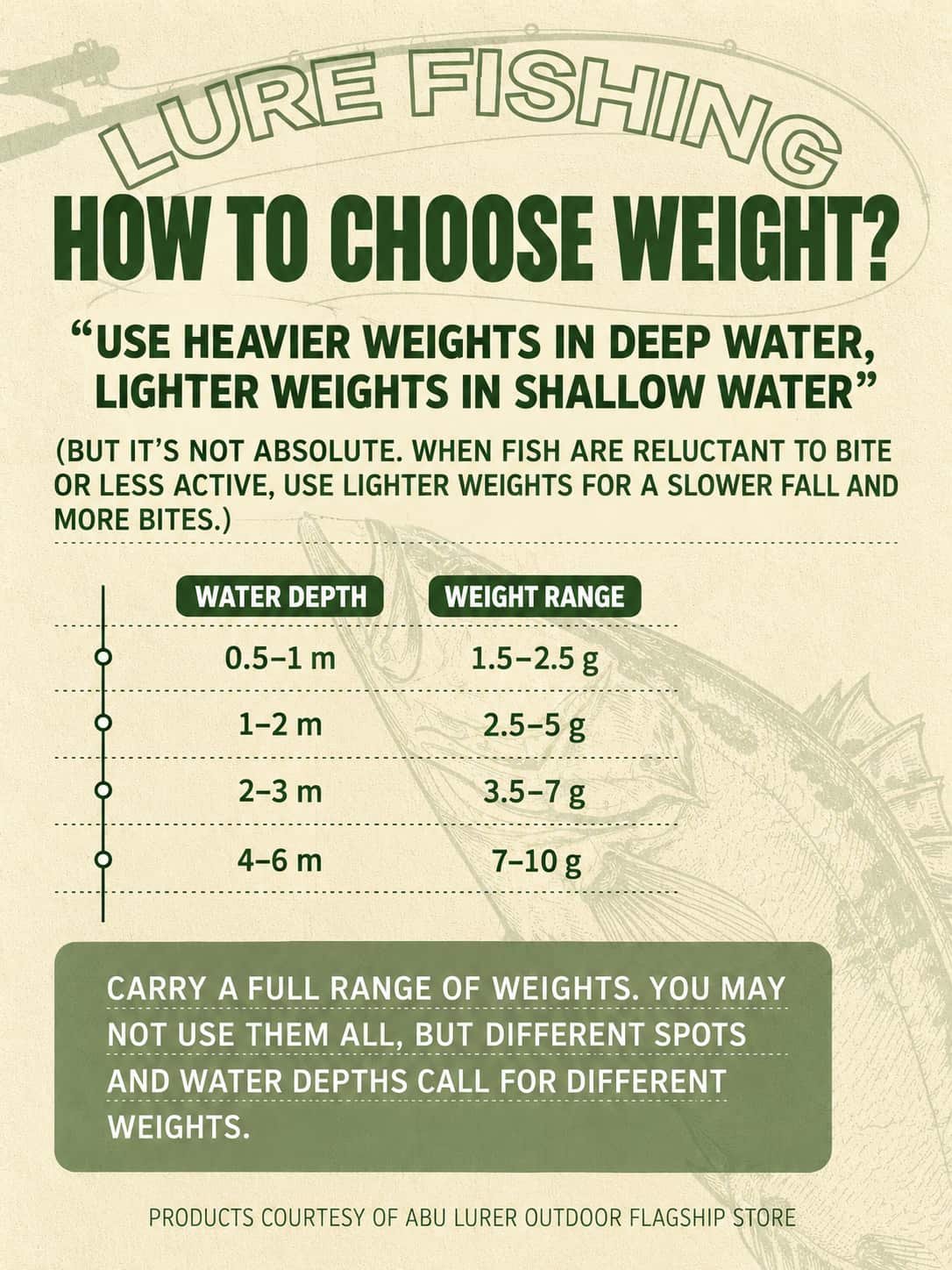
Use lighter jig heads in shallow water and heavier jig heads as the water gets deeper. The depth ranges below provide starting weights from 1.5 to 10 g. Fish activity can change the choice, so treat each range as a practical starting point rather than a fixed requirement.
| Water depth | Suggested jig head weight |
|---|---|
| 0.5-1 m | 1.5-2.5 g |
| 1-2 m | 2.5-5 g |
| 2-3 m | 3.5-7 g |
| 4-6 m | 7-10 g |
A 3.5 g head falls within the suggested range for both 1–2 m and 2–3 m of water. That overlap gives you room to adjust the presentation without assuming that every change in depth requires a different weight.
Carry several jig head weights when a fishing spot includes different depths. A selection covering the listed ranges lets you change from shallow water to deeper water without asking one head weight to handle every presentation.
When should you switch to a lighter jig head?
Switch to a lighter jig head when fish seem less active or reluctant to take the soft plastic. With the same bait, reducing head weight slows the fall and gives fish more time to respond. Water depth still matters, but fish activity can justify choosing the lighter end of the suggested range.
Fall rate means how quickly the rigged soft plastic sinks. A slower fall changes the presentation without requiring a larger or smaller bait.
For example, the suggested range for 2-3 m of water is 3.5-7 g. If fish hesitate to bite, try the 3.5 g option with the same soft plastic instead of automatically choosing 7 g.
What size soft plastic should you pair with each head?
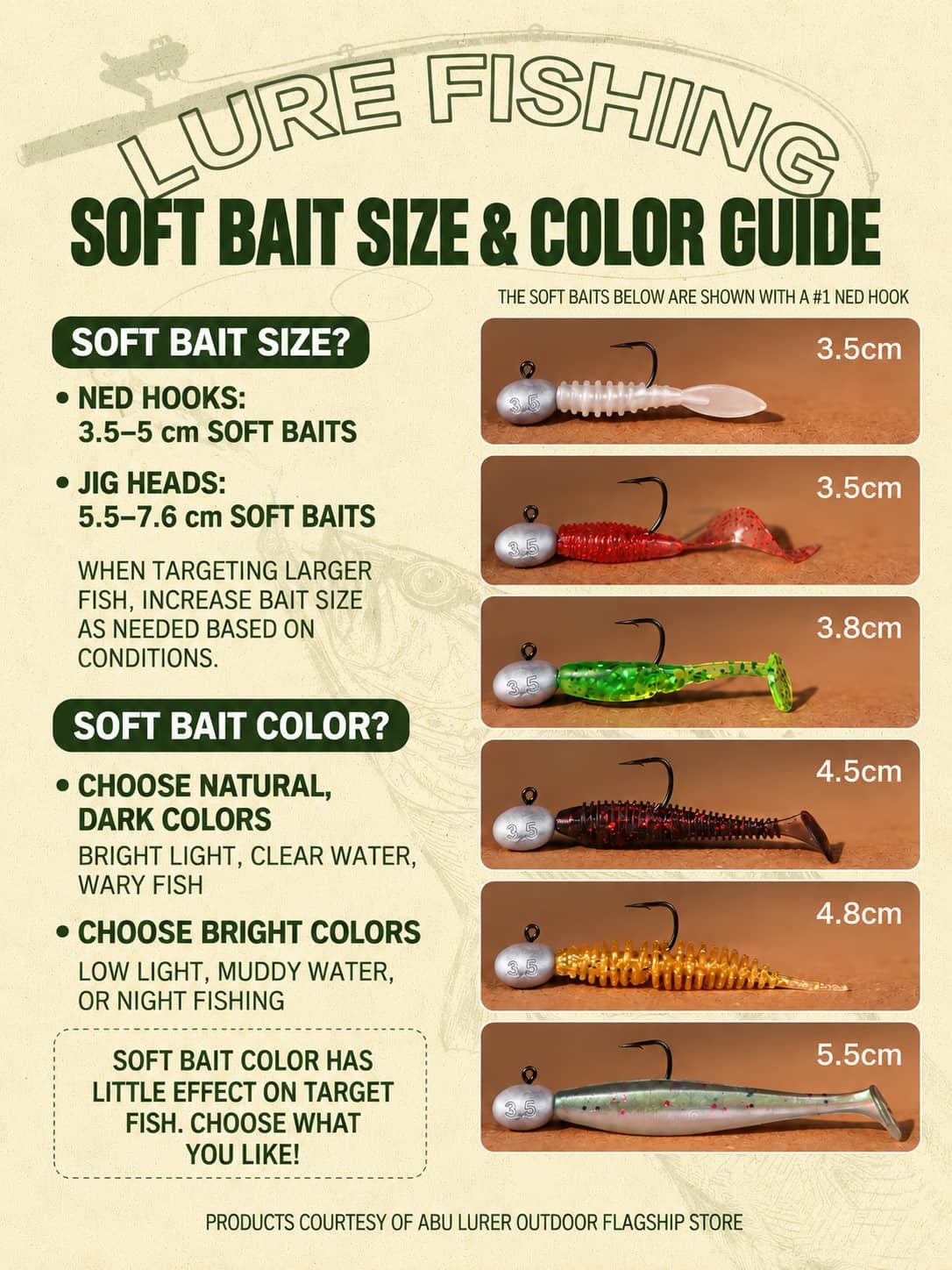
Start with 3.5–5 cm soft plastics on the compact Ned setup and 5.5-7.6 cm soft plastics on the standard jig head setup. These lengths provide a useful starting comparison for the illustrated tackle. Increase bait size when targeting larger fish, and treat the suggested ranges as guidance rather than strict limits.
| Setup | Suggested soft plastic length | Approximate length in inches |
|---|---|---|
| Compact Ned setup | 3.5-5 cm | 1.4-2 in |
| Standard jig head setup | 5.5-7.6 cm | 2.2-3 in |
The size examples show six soft plastics on a size #1 Ned hook: 3.5, 3.5, 3.8, 4.5, 4.8, and 5.5 cm. The 5.5 cm example extends beyond the suggested 3.5-5 cm starting range, which reinforces that the range is a starting guide, not a maximum bait length.
Keep hook size and bait length separate when comparing tackle. The hook-wire comparison uses size #2 hooks, while the soft plastic examples use a size #1 Ned hook. Those examples show different combinations; they do not establish one hook size for every bait in either length range.
How should you choose soft plastic colors?
Start with natural or dark soft plastics in bright light, clear water, or when fish appear wary. Consider brighter colors in low light, muddy water, or at night. These choices offer a simple starting guide; color remains an adjustment to try rather than a guarantee that fish will bite.
| Fishing conditions | Starting color choice |
|---|---|
| Bright light, clear water, or wary fish | Natural or dark colors |
| Low light, muddy water, or night fishing | Bright colors |
Keep color selection simple while you sort out hook construction, head weight, and bait size. Choose a color you feel comfortable fishing, then adjust as conditions change.
More to Explore
Related Articles
More guides in Fishing Gear
Fishing tackle sizes explained in plain English. Decode hook numbers, line ratings and sinker weights so you can choose the right gear.
Compare snap vs snap swivel for lures and tying direct. See seven connection layouts, including the line-tie point on a lipless crankbait.
Take a closer look at 6 saltwater fishing rigs, from shore setups to boat rigs, with diagrams that show how the lines, hooks, and sinkers connect.
Learn how to choose a saltwater fishing reel for shore or boat fishing by comparing reel type, drag performance, and line capacity before you buy.
Build a bass fishing setup for beginners with a rod, braided line, and a leader that work together. Learn knots and casting before your first trip.
Learn how to choose a lure fishing rod by length, power, action, and lure weight. Find a practical starting setup before buying your first rod.
Learn how to adjust baitcaster brakes for better spool control, smoother casts, and fewer backlashes before you start pushing for more distance.
Not sure which rod to buy? Explore lure fishing gear for beginners, from rod length and power to reels, line, lures, and accessories.