Fishing Tackle Sizes Explained So Hook Numbers Stop Tripping You Up
- Category
- Fishing Gear
- Date
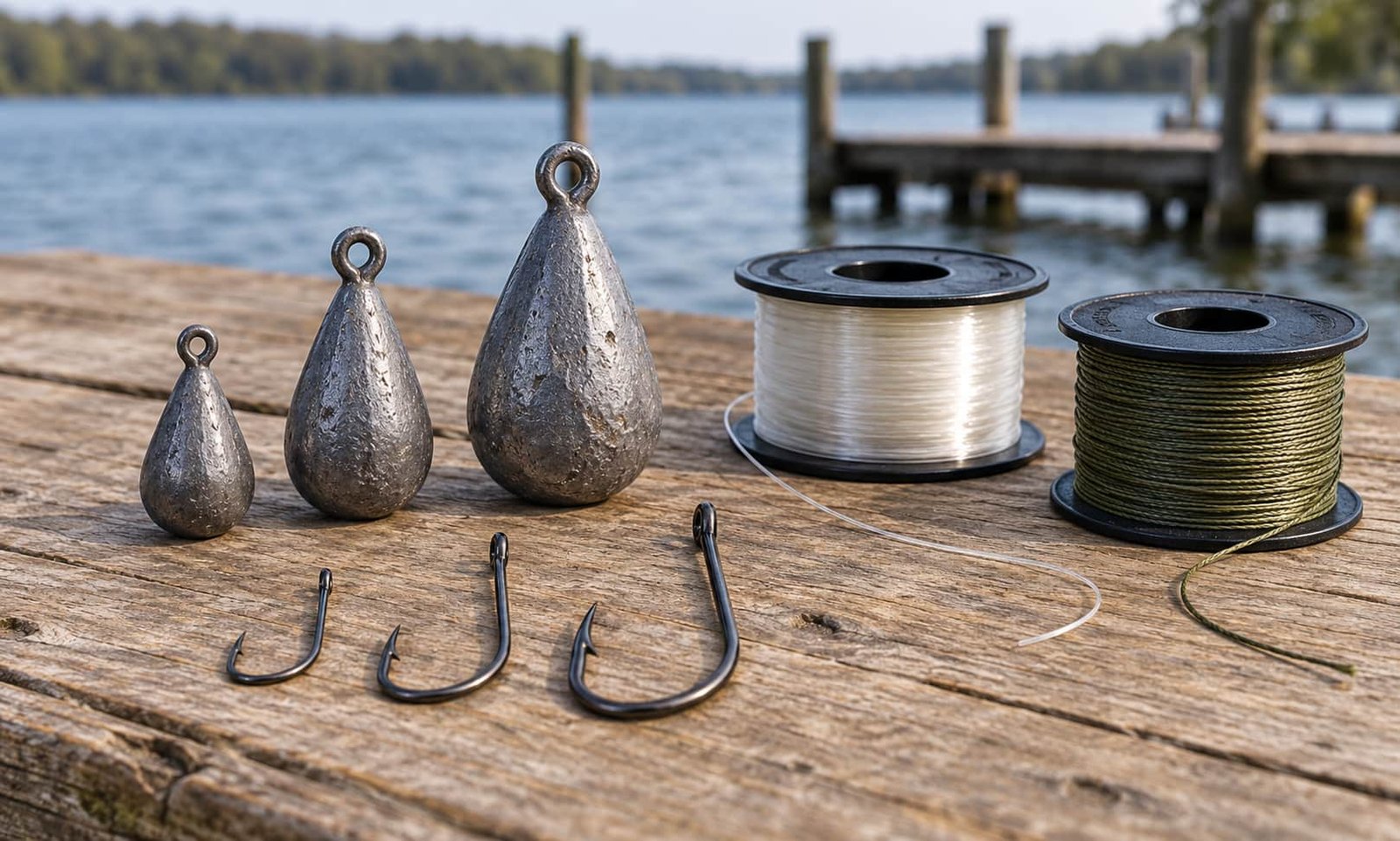
Fishing tackle size numbers mean different things on sinkers, lines and hooks. A Japanese No. 1 sinker weighs 3.75 g, while No. 1 nylon monofilament (mono) has a standard diameter of 0.165 mm. A size #1 hook follows another system altogether. Understanding what each number measures makes tackle labels much easier to read.
What do fishing tackle size numbers actually measure?
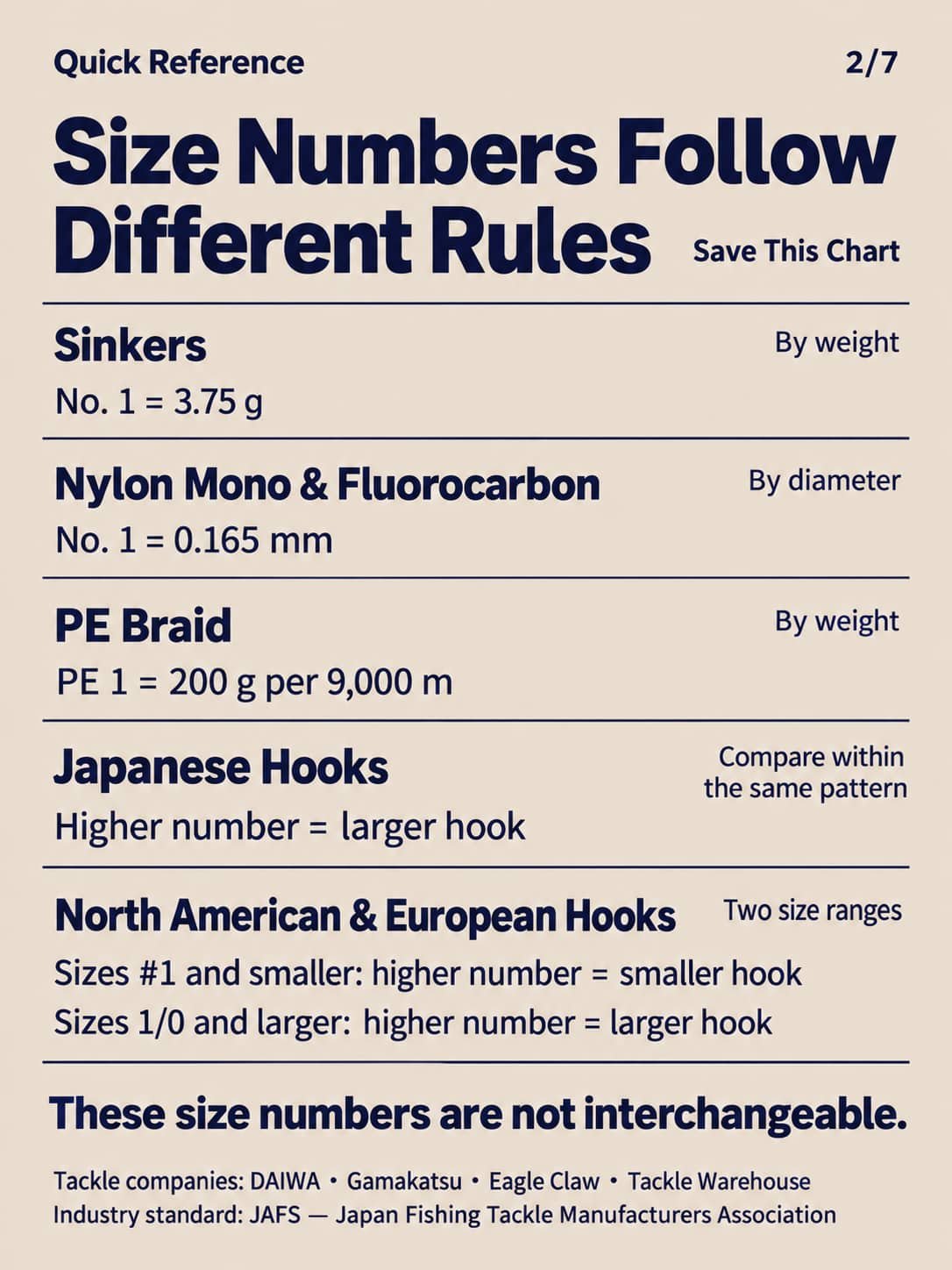
Fishing tackle numbers can describe weight, line diameter or relative hook size. Japanese numbered sinkers use a weight scale, nylon mono and fluorocarbon use standard diameters, and PE braid uses mass per unit length. Hook numbers describe relative sizes within a particular pattern rather than a universal physical measurement.
| Tackle | What the number represents | Example |
|---|---|---|
| Japanese numbered sinkers | Weight | No. 1 = 3.75 g |
| Japanese nylon mono and fluorocarbon | Standard line diameter | No. 1 = 0.165 mm |
| Japanese PE braid | Mass per unit length | PE 1 = 200 g per 9,000 m |
| Hooks | Relative size within a pattern or model | The numbering rule depends on the system |
A line's pound-test rating states its advertised breaking strength. UK tackle descriptions also use the term breaking strain. A diameter number and a breaking - strength rating describe different properties, even when both appear on the same package.
How do you convert Japanese sinker sizes into grams?
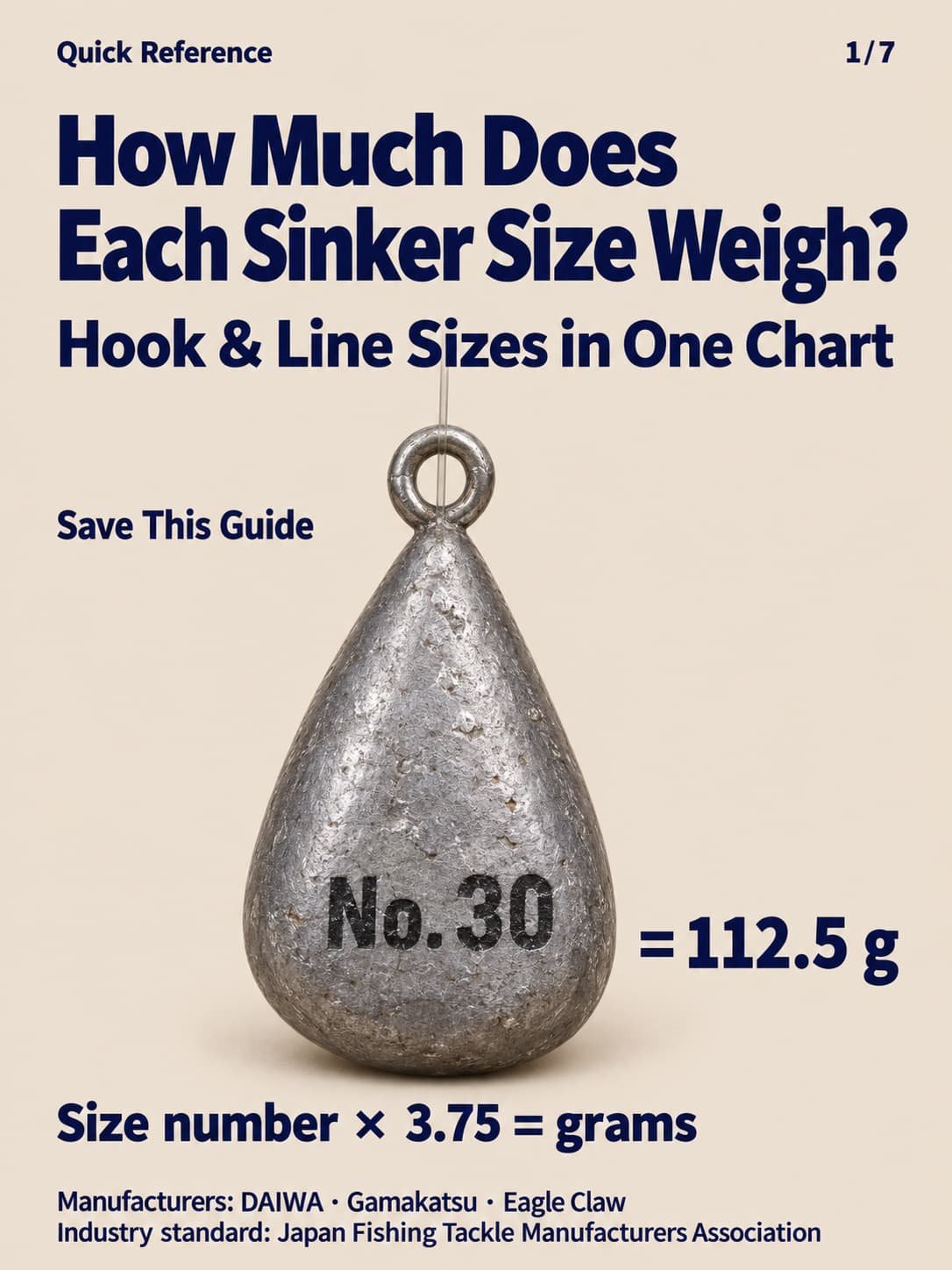
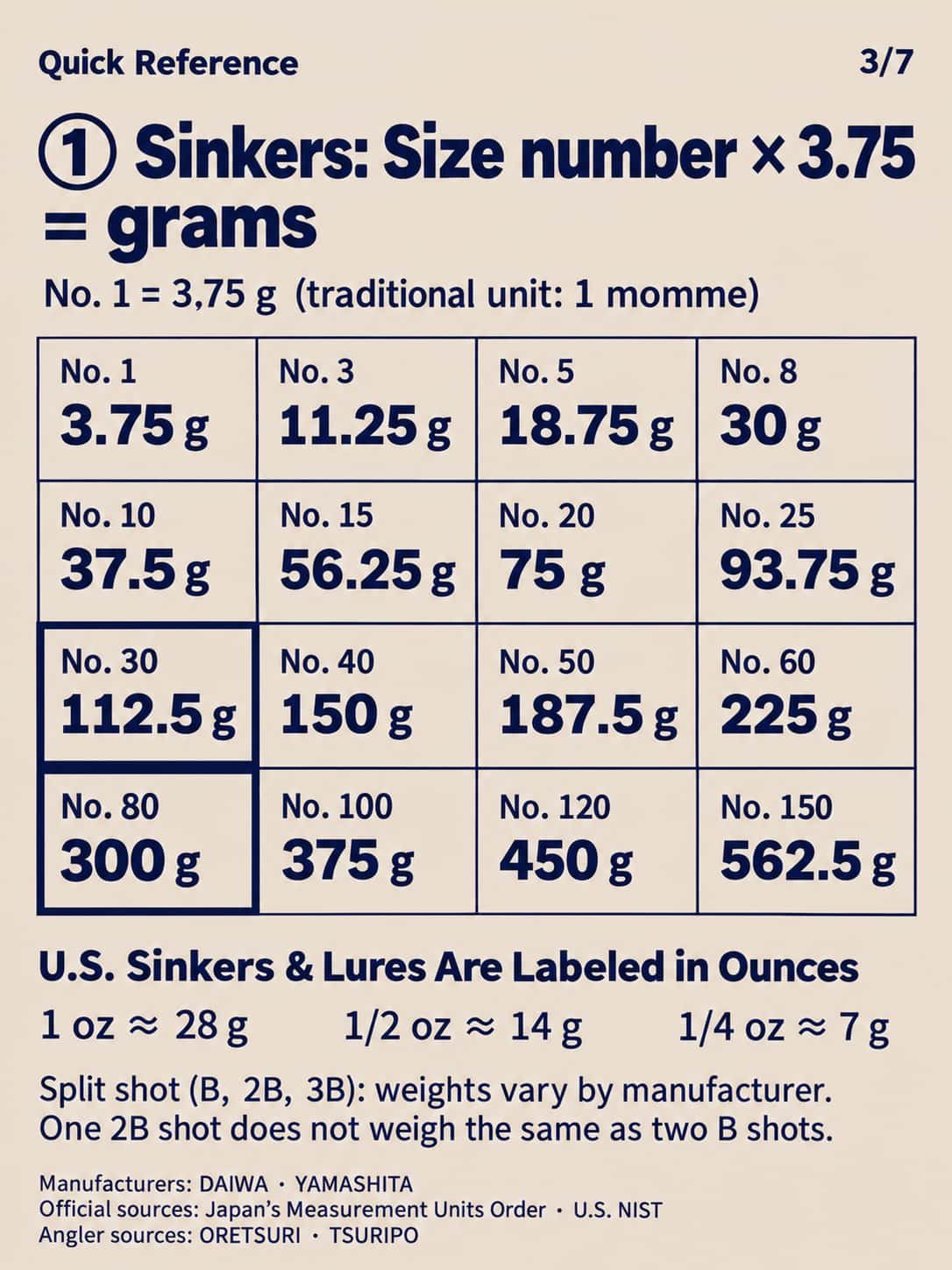
Multiply a Japanese sinker's size number by 3.75 to calculate its weight in grams. The scale comes from the momme, a traditional Japanese unit equal to 3.75 g. A No. 30 sinker therefore weighs 112.5 g, while a No. 80 weighs 300 g. This formula applies to that numbered system.
Japanese sinker size number × 3.75 = weight in grams
| Japanese sinker size | Weight |
|---|---|
| No. 1 | 3.75 g |
| No. 3 | 11.25 g |
| No. 5 | 18.75 g |
| No. 8 | 30 g |
| No. 10 | 37.5 g |
| No. 15 | 56.25 g |
| No. 20 | 75 g |
| No. 25 | 93.75 g |
| No. 30 | 112.5 g |
| No. 40 | 150 g |
| No. 50 | 187.5 g |
| No. 60 | 225 g |
| No. 80 | 300 g |
| No. 100 | 375 g |
| No. 120 | 450 g |
| No. 150 | 562.5 g |
How do ounces and split-shot sizes compare?
Ounce markings state weight directly, while B, 2B and 3B identify split-shot sizes under a separate system. U.S. sinkers and lures often use ounces. Split-shot weights can vary between manufacturers, so the marking 2B does not mean two B shots. Read each label within its own system.
| Ounce marking | Approximate weight |
|---|---|
| 1 oz | 28 g |
| 1/2 oz | 14 g |
| 1/4 oz | 7 g |
These ounce values are rounded for quick reference. Keep the approximation in mind when comparing a lure or sinker marked in ounces with one marked in grams.
How do Japanese nylon and fluorocarbon sizes relate to diameter?
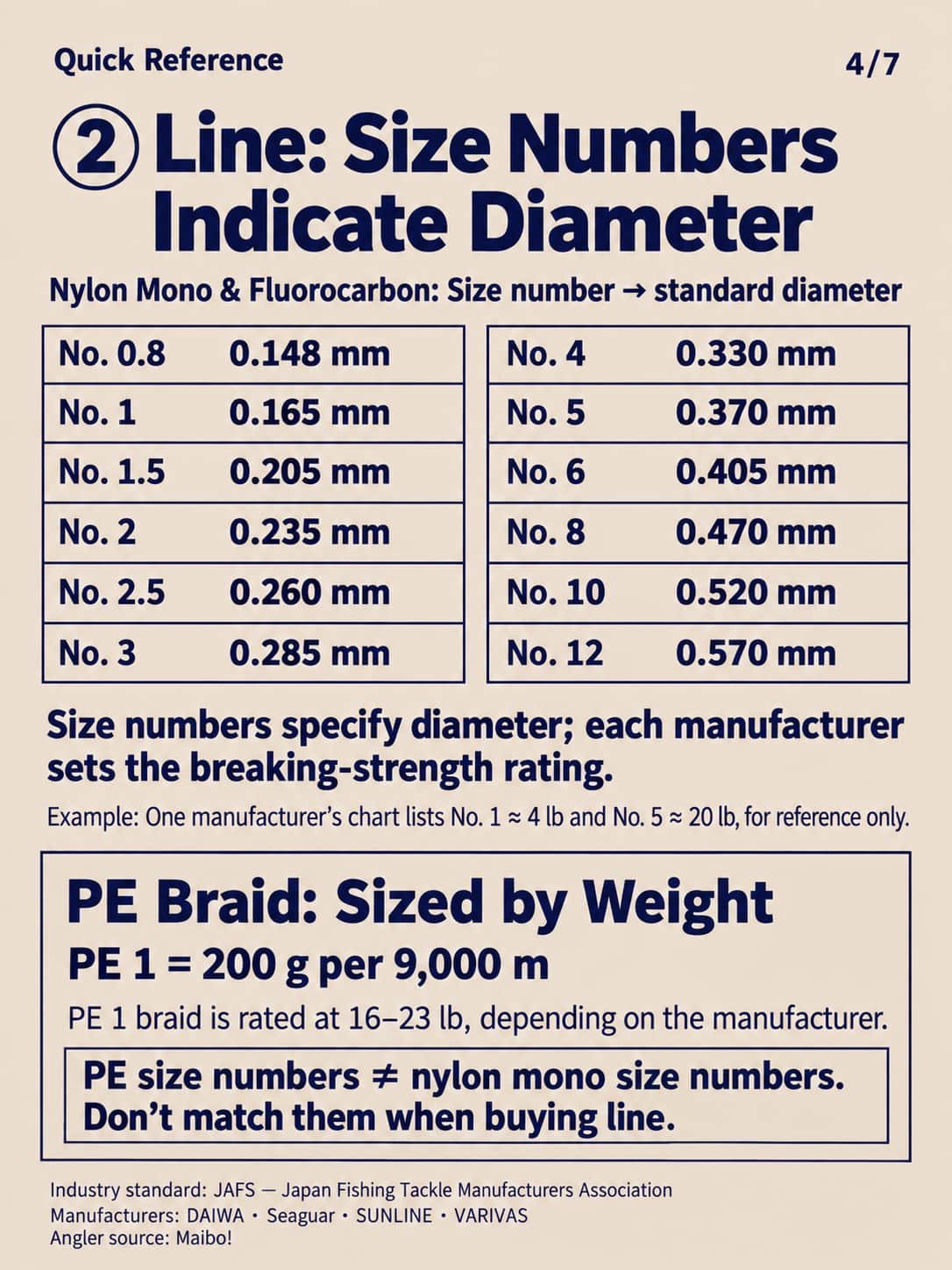
Japanese size numbers for nylon monofilament and fluorocarbon refer to standard line diameter. No. 1 has a standard diameter of 0.165 mm, while No. 5 measures 0.370 mm on the same scale. Manufacturers assign the breaking-strength ratings separately, so the size number alone does not establish a fixed pound-test rating.
| Japanese line size | Standard diameter | Japanese line size | Standard diameter |
|---|---|---|---|
| No. 0.8 | 0.148 mm | No. 4 | 0.330 mm |
| No. 1 | 0.165 mm | No. 5 | 0.370 mm |
| No. 1.5 | 0.205 mm | No. 6 | 0.405 mm |
| No. 2 | 0.235 mm | No. 8 | 0.470 mm |
| No. 2.5 | 0.260 mm | No. 10 | 0.520 mm |
| No. 3 | 0.285 mm | No. 12 | 0.570 mm |
No. 1 ≈ 4 lb and No. 5 ≈ 20 lb are reference pairings, not universal strength conversions. One manufacturer's reference chart lists those pairings, but the package's advertised breaking strength still belongs to that particular product. Use the diameter table to compare thickness and the printed strength rating to compare rated strength.
How does a PE braid rating differ from a mono size number?
Japanese mono size numbers describe standard diameter, while PE braid numbers describe mass per unit length. PE means polyethylene, the material used in this braided fishing line. PE 1 corresponds to 200 g per 9,000 m. PE 1 may carry advertised strength ratings of 16–23 lb, depending on the manufacturer.
PE 1 and No. 1 nylon mono are not interchangeable buying specifications. Check the line material, size system and manufacturer's advertised breaking strength. The matching number alone does not establish equivalent line.
How do Japanese hook sizes work?
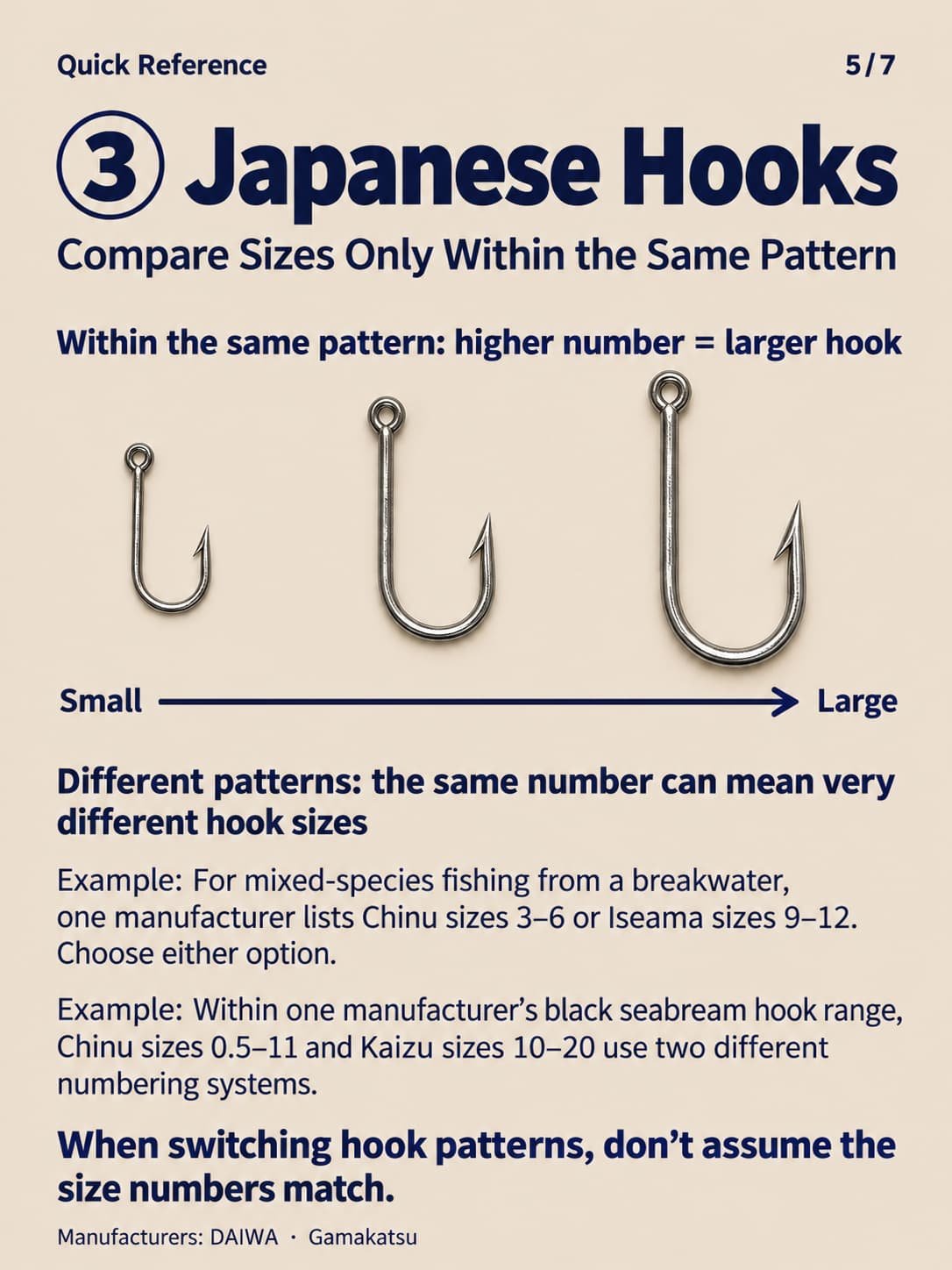
Japanese hook numbers are useful for comparing sizes within the same hook pattern. Within that pattern, a larger number indicates a larger hook. Chinu, Iseama and Kaizu are pattern names, not interchangeable size scales. A matching number on two different patterns does not guarantee matching physical dimensions.
A hook pattern is a particular hook shape or style. Keep the manufacturer and model consistent when making a close size comparison, because a shared pattern name does not establish identical dimensions across every brand.
| Example comparison | Chinu sizes | Other listed pattern and sizes |
|---|---|---|
| Mixed-species fishing from a breakwater | 3–6 | Iseama 9–12 |
| Black seabream hook ranges within one manufacturer's offering | 0.5–11 | Kaizu 10–20 |
The breakwater example offers either pattern as an option. The black seabream ranges use two separate size scales within one manufacturer's range; neither comparison establishes a universal conversion. When switching patterns, compare the actual hook model and dimensions.
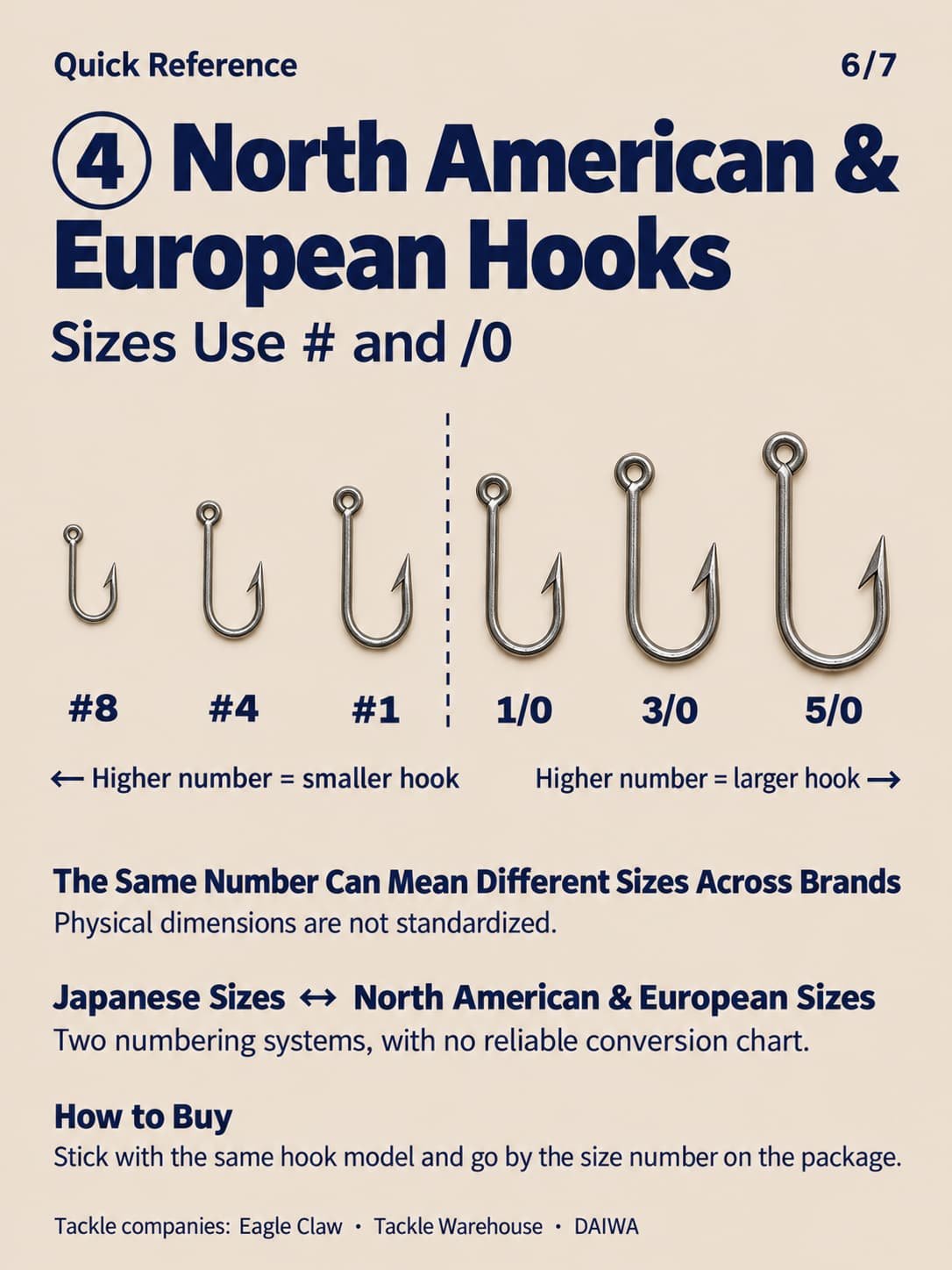
How do North American and European hook sizes work?
The hook-sizing system used in North America and Europe has two ranges. For sizes #1 and smaller, higher numbers indicate smaller hooks. For sizes 1/0 and larger, higher numbers indicate larger hooks. The /0 range is often called aught sizing in North America, and the change occurs between #1 and 1/0.
| Size range | Examples from smaller to larger | Numbering rule |
|---|---|---|
| Numbered sizes | #8 → #4 → #1 | Higher number = smaller hook |
| /0 sizes | 1/0 → 3/0 → 5/0 | Higher number = larger hook |
Within a comparable hook pattern, #8 is smaller than #4, and 3/0 is larger than 1/0. Keep the numbering system in view when reading the package: the meaning of a larger number changes once the size includes /0.
Can you convert Japanese hook sizes directly to Western sizes?
Japanese and Western hook numbers do not support a reliable universal conversion chart. Hook patterns and dimensions vary between brands, so two hooks carrying the same number can have different physical sizes. Compare the actual dimensions and the manufacturer's sizing information for the particular hook model you want to buy.
What should you check before buying hooks, line or sinkers?
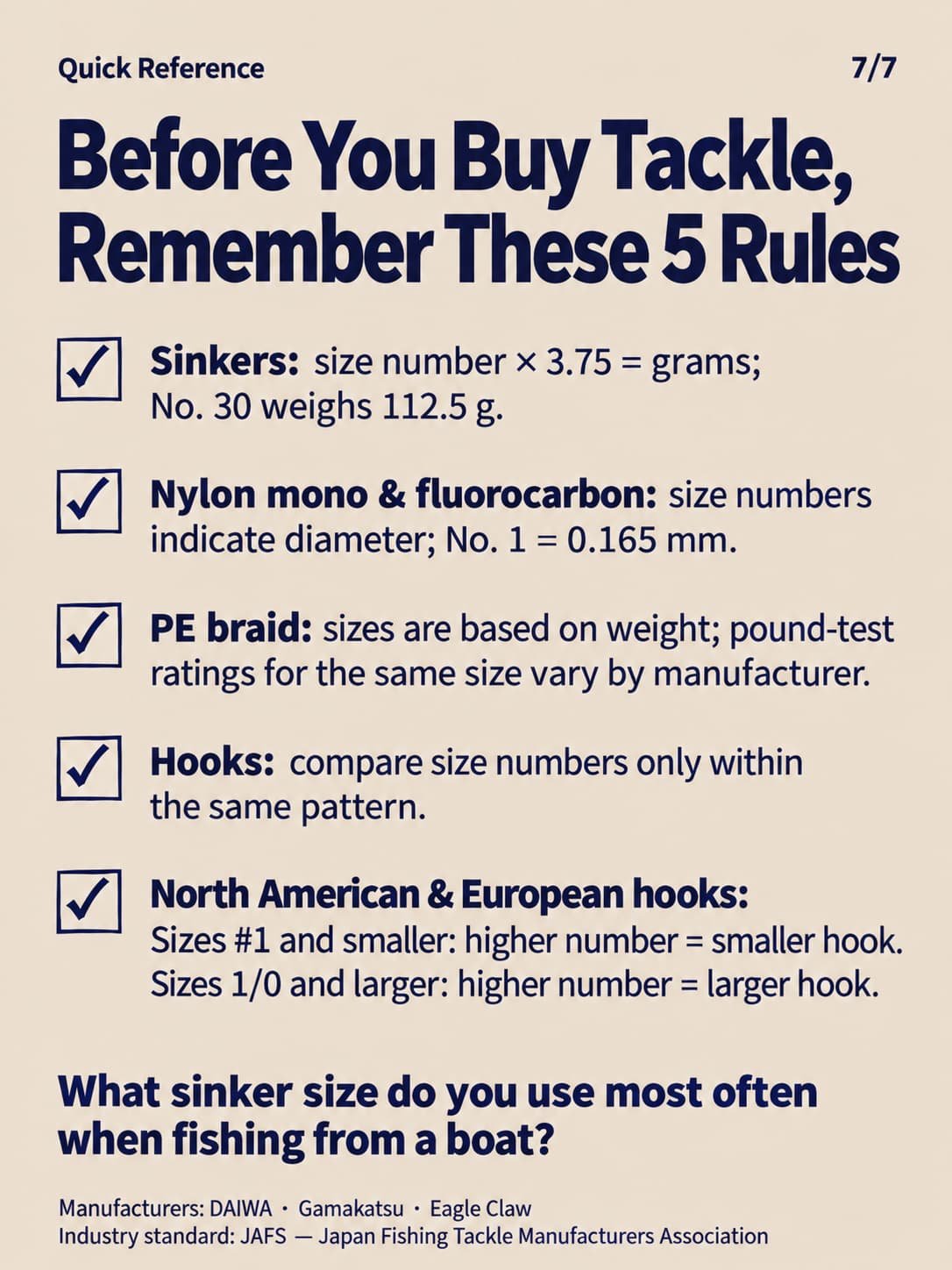
Check what the size number measures before buying sinkers, line or hooks. Japanese sinker numbers convert to grams, mono and fluorocarbon numbers refer to diameter, and PE ratings use mass per length. Hook numbers need the pattern, manufacturer and numbering system to make sense. A matching numeral alone does not establish equivalent tackle.
- Sinkers: multiply the Japanese size number by 3.75. No. 30 weighs 112.5 g.
- Nylon mono and fluorocarbon: use the Japanese number to check standard diameter. No. 1 = 0.165 mm; read breaking strength separately.
- PE braid: read the PE size and advertised pound-test rating together. Strength ratings can vary for the same PE number.
- Japanese hooks: compare sizes within the same pattern, keeping the manufacturer and model consistent.
- North American and European hooks: higher numbers mean smaller hooks in the numbered range; higher /0 numbers mean larger hooks.
More to Explore
Related Articles
More guides in Fishing Gear
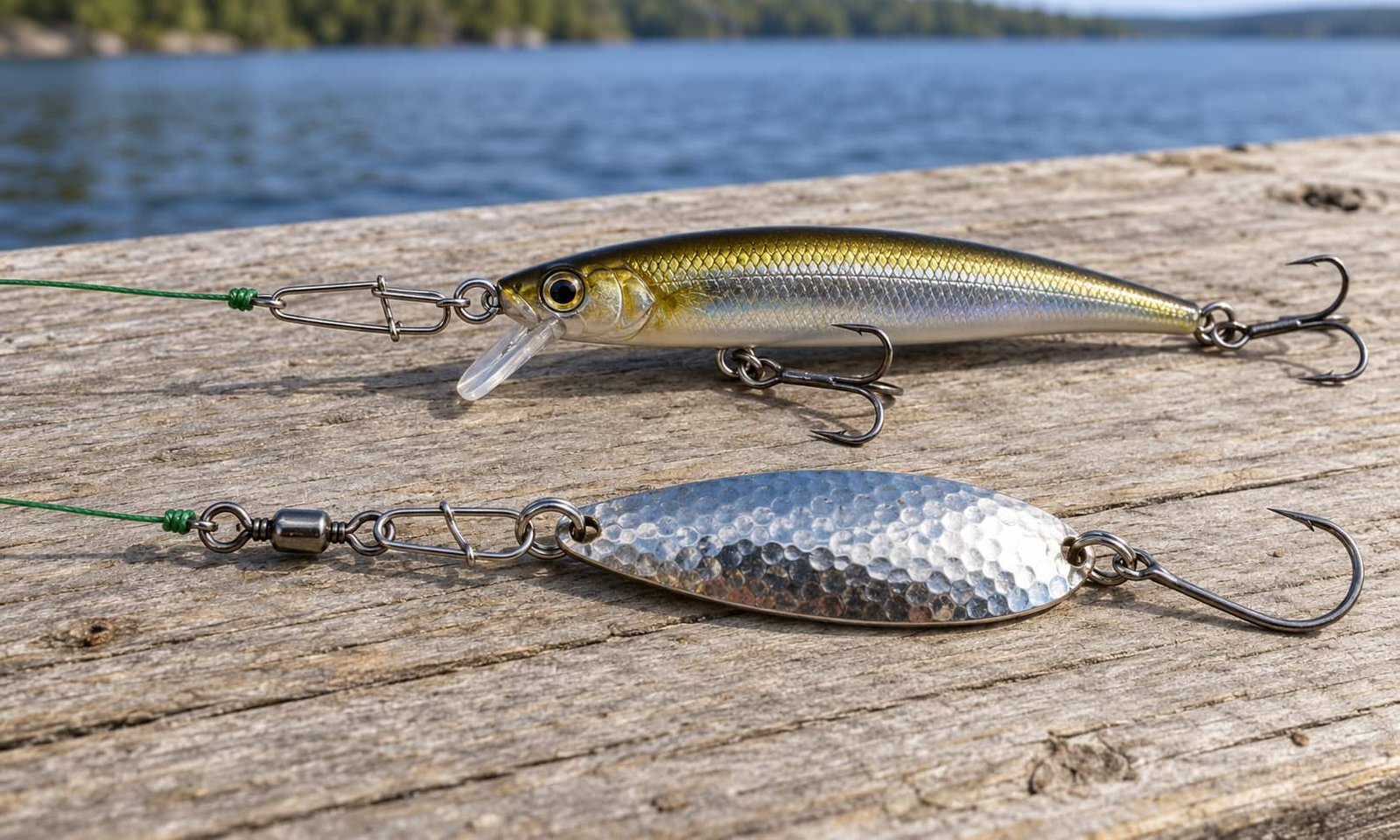
Compare snap vs snap swivel for lures and tying direct. See seven connection layouts, including the line-tie point on a lipless crankbait.
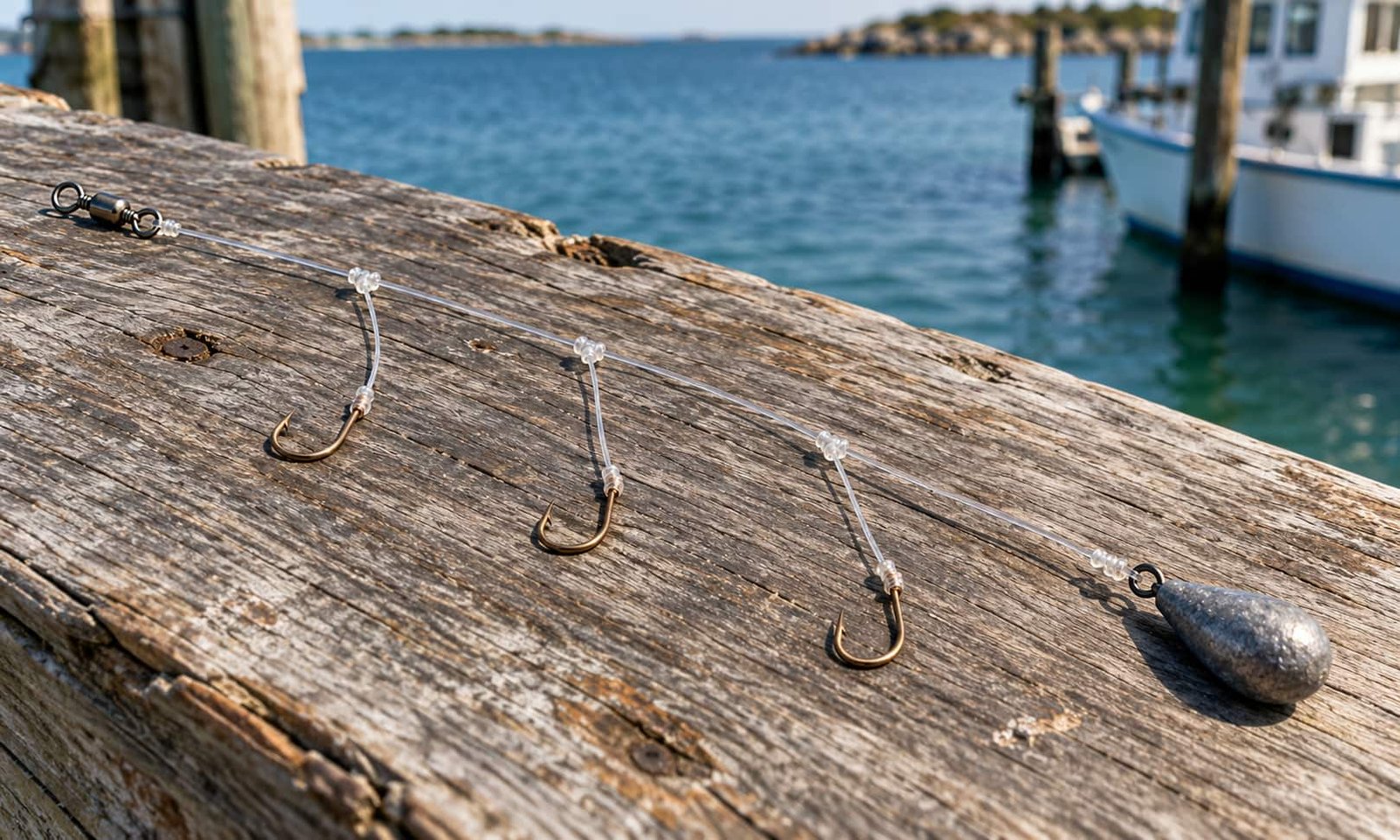
Take a closer look at 6 saltwater fishing rigs, from shore setups to boat rigs, with diagrams that show how the lines, hooks, and sinkers connect.
Learn how to choose a saltwater fishing reel for shore or boat fishing by comparing reel type, drag performance, and line capacity before you buy.
Build a bass fishing setup for beginners with a rod, braided line, and a leader that work together. Learn knots and casting before your first trip.
Learn how to choose a lure fishing rod by length, power, action, and lure weight. Find a practical starting setup before buying your first rod.
Learn how to adjust baitcaster brakes for better spool control, smoother casts, and fewer backlashes before you start pushing for more distance.
Not sure which rod to buy? Explore lure fishing gear for beginners, from rod length and power to reels, line, lures, and accessories.
Unsure what gear to buy first? This lure fishing setup for beginners guide covers spinning rods, reels, braid, fluorocarbon leaders, and lure weights.