
Lure Fishing Techniques and Bait Methods Every Beginner Needs

- Category
- Fishing Techniques
- Date

hen I first got into lure fishing, I spent far too much time swapping lures and not enough time learning how to work them properly. The biggest change came when I stopped focusing on the lure itself and started paying attention to movement, depth, speed, and timing.
Different lures need different actions to come alive. A steady retrieve, a short twitch, a lift and drop, a pause, or a zigzag retrieve can all trigger very different reactions from fish. Once you understand these basic lure fishing techniques, you stop casting at random and start fishing each lure with a clear purpose. Below are the core movements worth learning first.

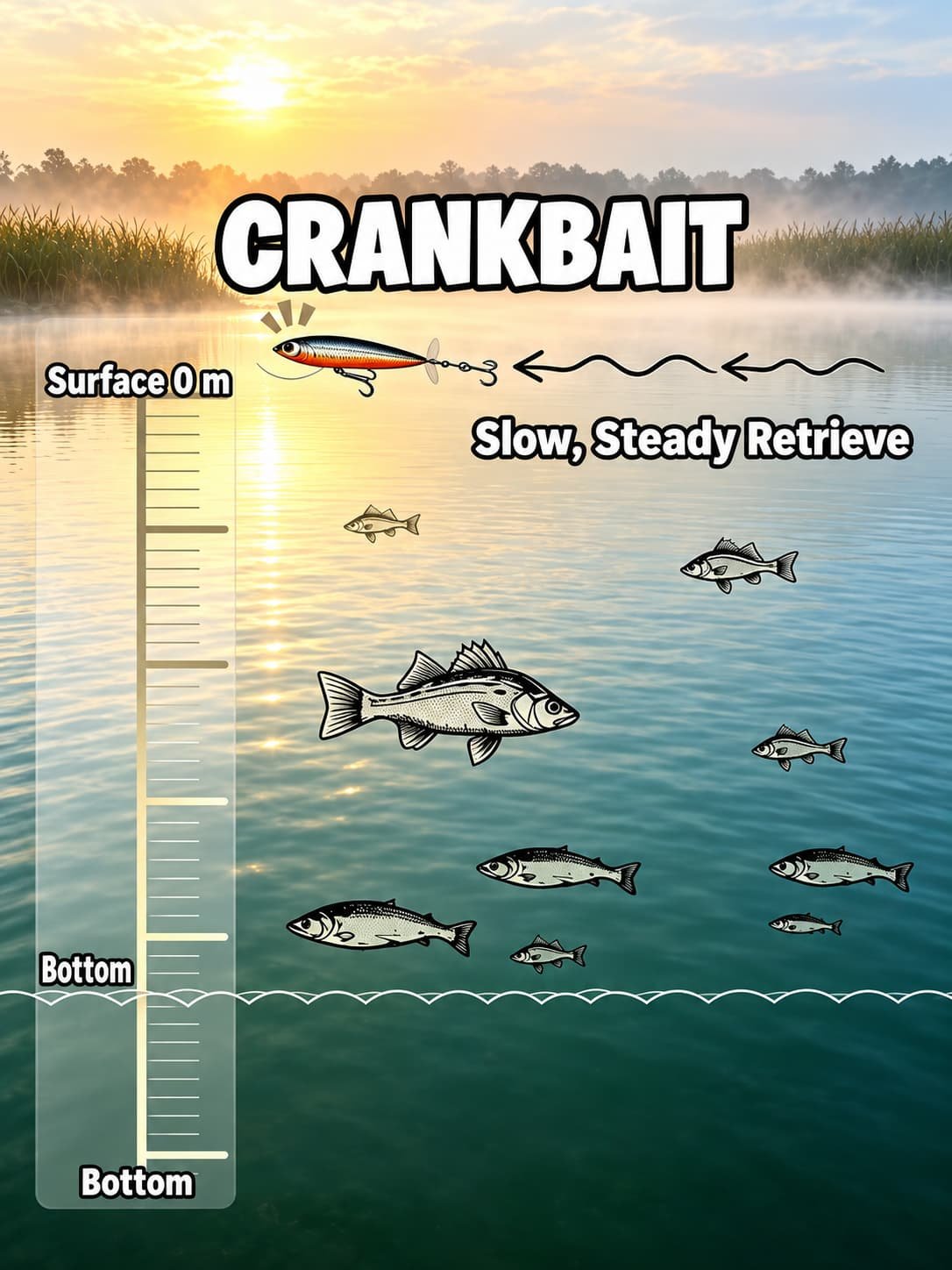
How do you fish a spoon with a steady retrieve?
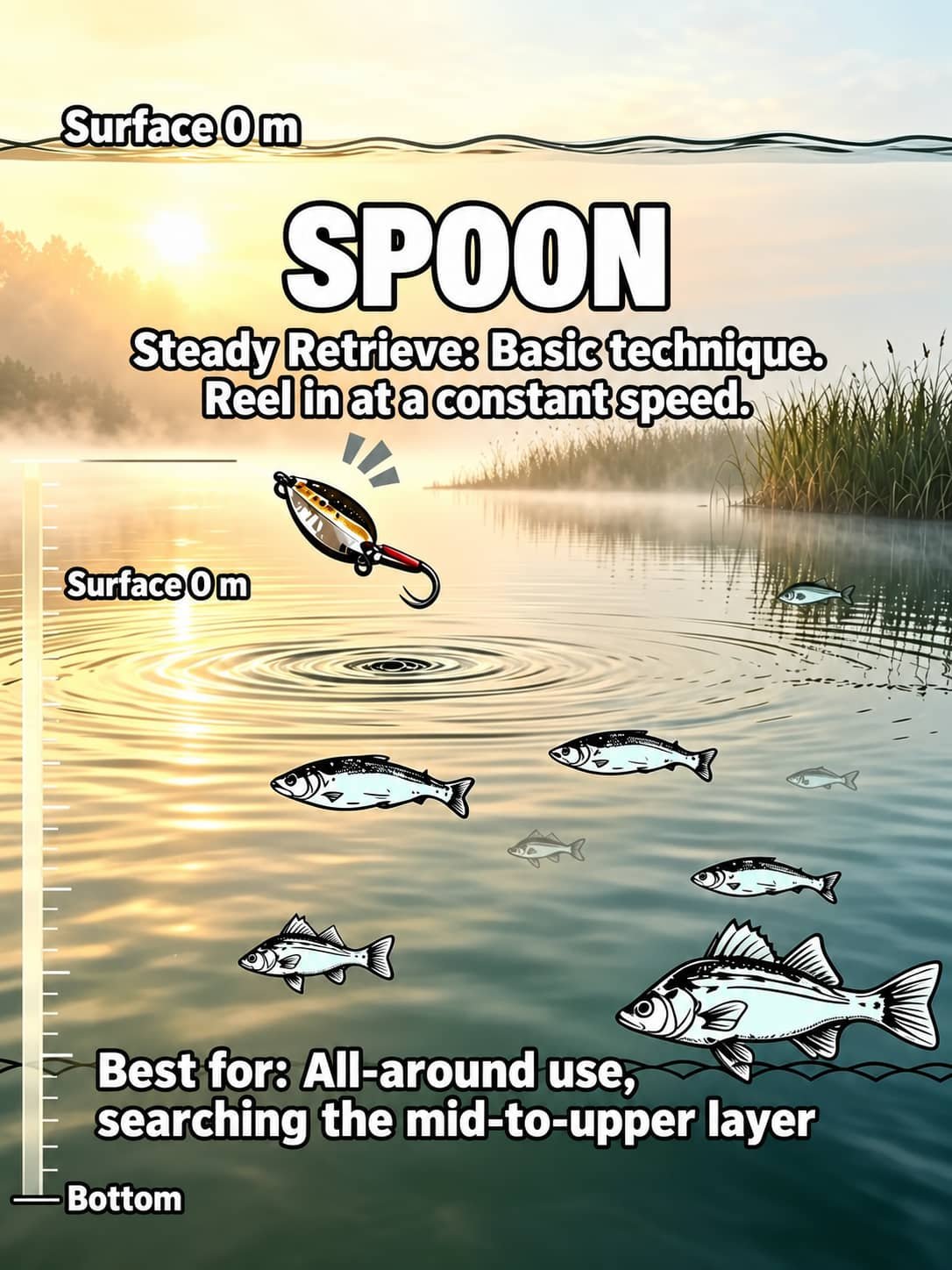
Fish a spoon by turning the reel handle at a constant speed so the lure keeps moving through the water. This steady retrieve provides a straightforward way to search the middle and upper water column. For a beginner learning to control a lure, the consistent motion gives you a clear starting point.
A spoon is a shaped metal lure that wobbles as water passes over the body. Let the spoon's shape supply the swimming action while you maintain an even retrieve. The basic method does not require repeated rod-tip jerks.
How do you work a soft plastic on a jighead?
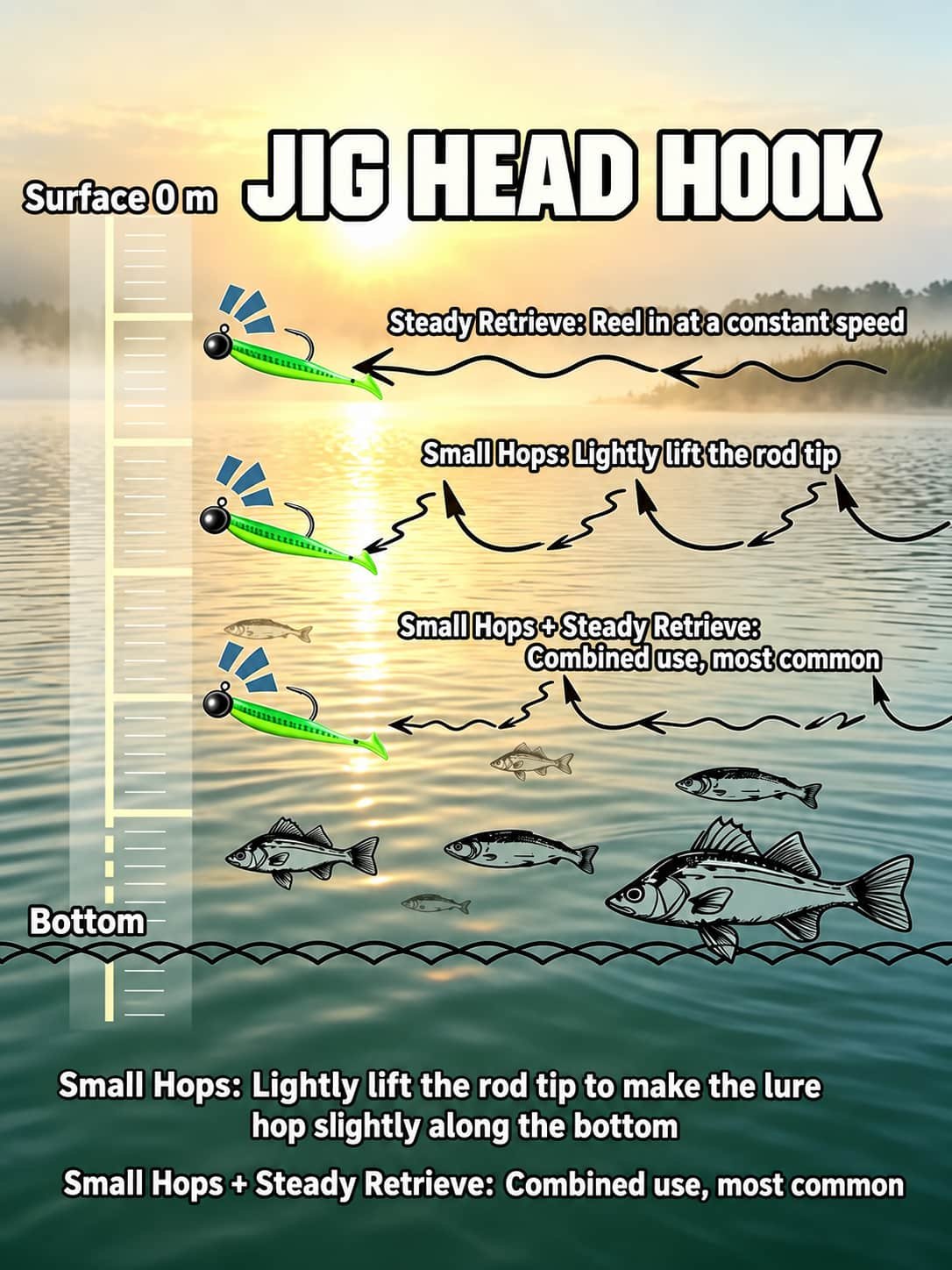
Work a soft plastic on a jighead with a steady retrieve, small hops, or a combination of both. A steady retrieve keeps the bait moving forward, while a light lift of the rod tip raises the bait off the bottom. Combining the movements adds short rises and falls between swimming stretches.
A jighead is a hook with a weight molded near the hook eye. The soft plastic supplies the body and tail, while the weighted head allows the rigged bait to sink. The retrieve determines whether the bait swims forward or hops near the bottom.
Use a light rod-tip lift to make a small hop. Allow the jighead to settle back toward the bottom before repeating the movement. A small hop creates a modest rise and fall rather than a long upward sweep.
Combine swimming and hopping by reeling steadily, adding a light lift, and returning to the steady retrieve. This sequence gives the bait two distinct movements during the same cast without making every part of the retrieve a hop.
How do you retrieve a metal jig?
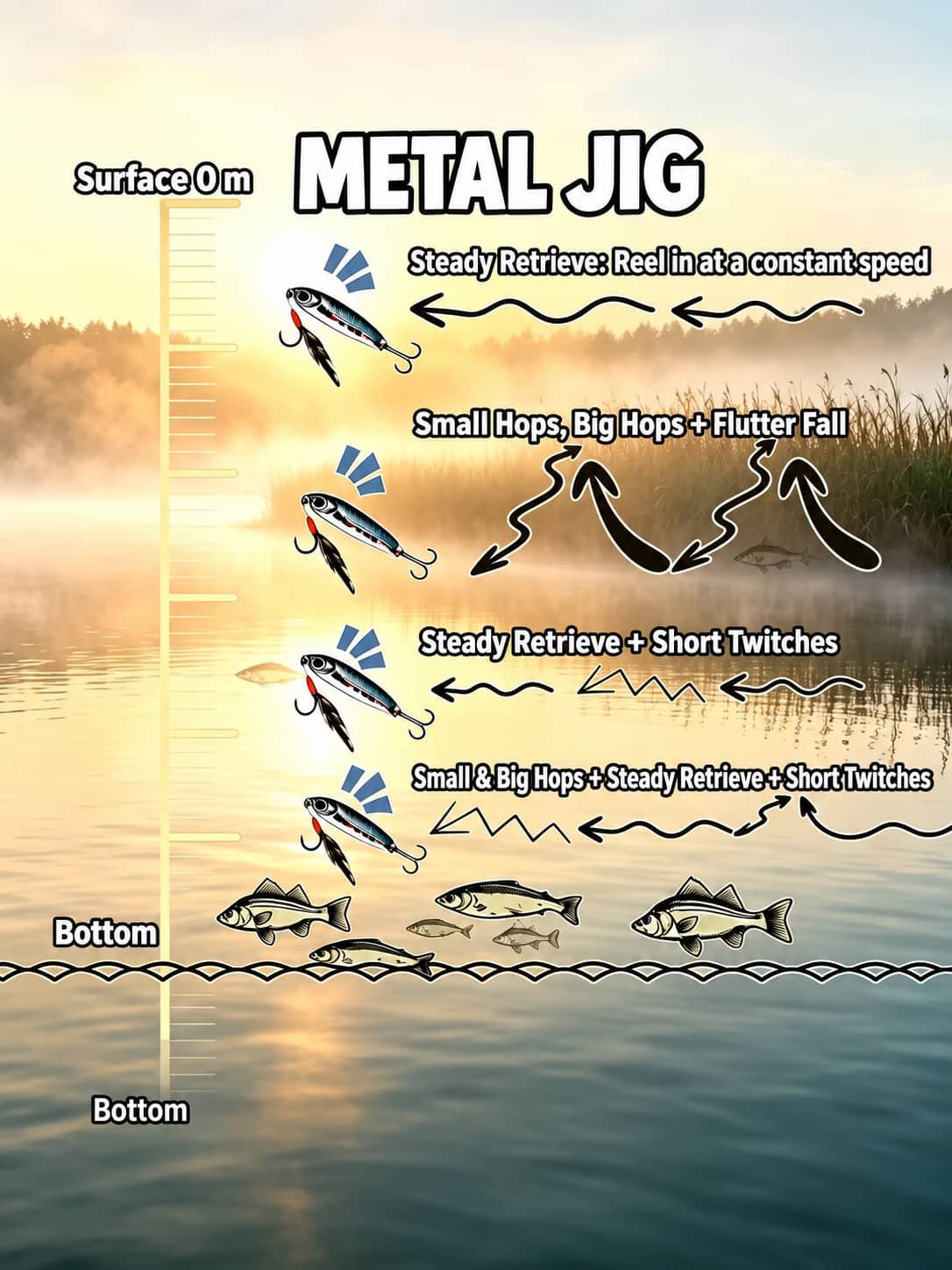
Retrieve a metal jig steadily, lift the jig and let it flutter down, or add short twitches while reeling. Small lifts create shorter rises, while larger lifts create a wider up-and-down path. You can also combine steady swimming, lifts, and twitches to vary the jig's movement during a cast.
A metal jig is a weighted metal lure that can be worked on both the retrieve and the fall. A flutter fall is the wavering descent that a suitable jig makes after a lift. Give the jig room to descend before starting the next upward movement.
Add short twitches between stretches of steady reeling when you want brief changes in movement. For a more varied sequence, reel steadily, twitch the rod tip, lift the jig, and let the lure fall before reeling again.
How do you fish a vibrating blade bait?
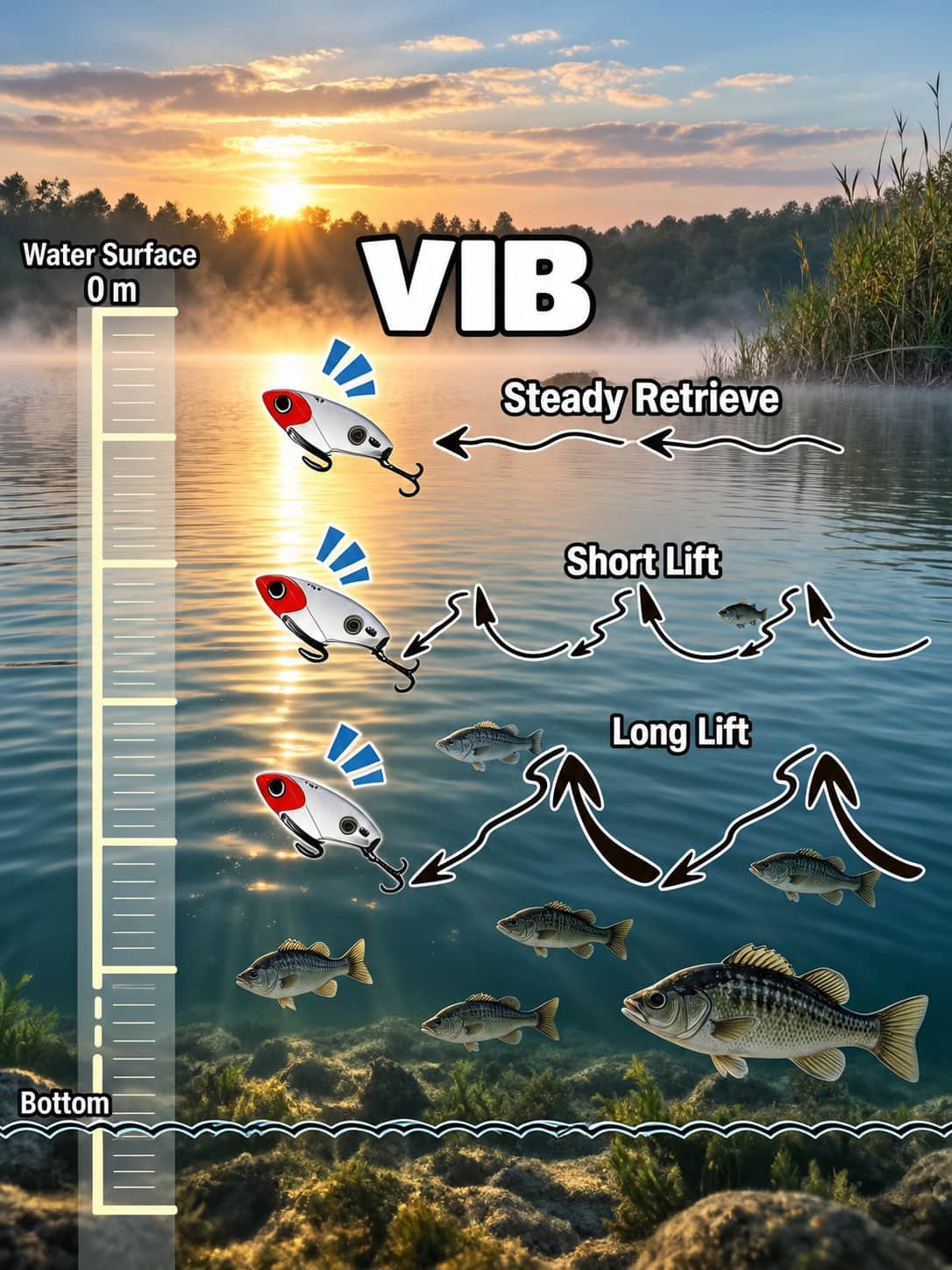
Fish a vibrating blade bait with a steady retrieve, short lifts, or longer lifts followed by a fall. A steady retrieve carries the lure forward, while lifting and lowering changes the lure's vertical path. Use shorter lifts for a compact rise and fall, and longer lifts for a larger movement.
A blade bait is a thin metal lure with a line attachment on the back and a body that vibrates when pulled through the water. Steady reeling produces a forward swimming presentation, while rod-tip lifts add an up-and-down movement.
Choose the lift length to control the size of the movement. A short lift gives the bait a compact rise and fall. A longer rod movement sends the bait farther upward before the descent.
How do you retrieve a jerkbait with twitches and pauses?
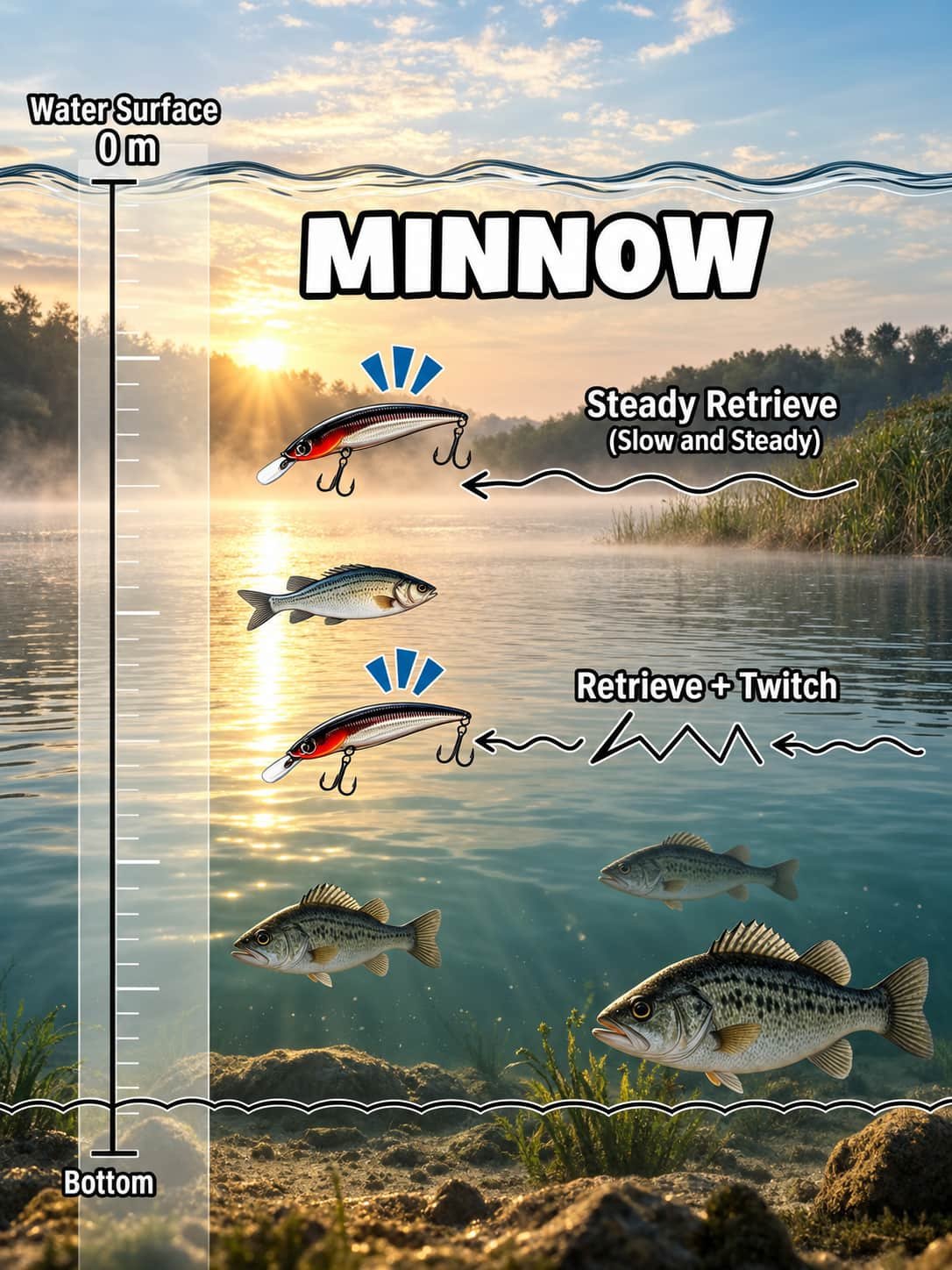
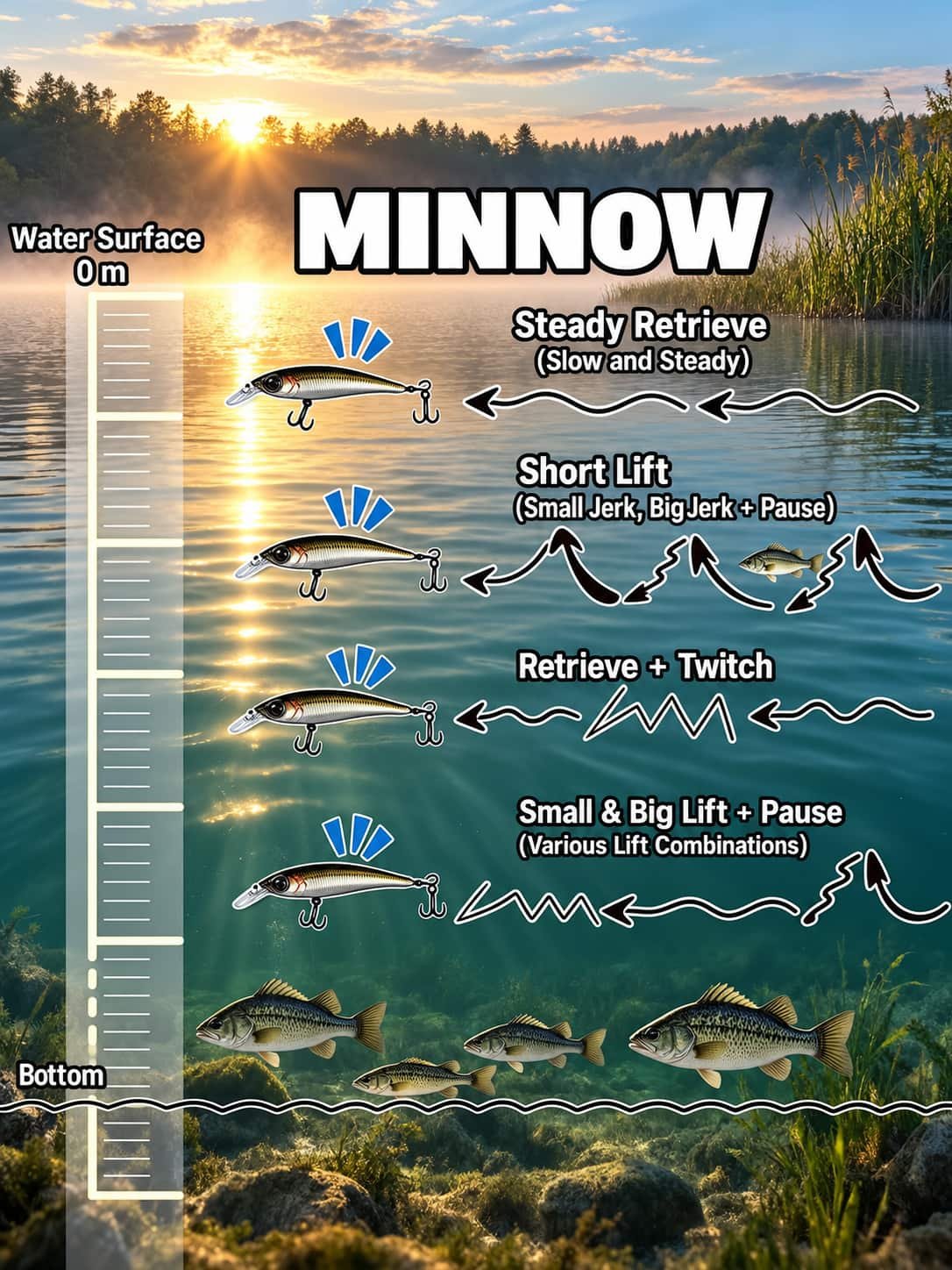
Retrieve a jerkbait slowly and steadily, or interrupt the swimming motion with twitches, stronger jerks, and pauses. A twitch is a short rod-tip movement that changes the bait's action. A pause means stopping the retrieve between movements, giving the presentation a break before the next pull or turn of the handle.
A jerkbait is a slender, baitfish-shaped hard lure designed to respond to rod movements. A lipped jerkbait has a diving bill at the front. Use a slow, steady retrieve to establish the bait's basic swimming motion before adding sharper movements.
Combine reeling and twitching by swimming the jerkbait forward, adding a short rod-tip movement, and resuming the retrieve. The change comes from the rod rather than from turning the reel handle faster throughout the cast.
Vary the sequence with smaller jerks, larger pulls, and pauses. Stop retrieving for the pause, then restart with the next rod movement or turn of the reel handle.
How do you make a lure swim in a zigzag pattern?
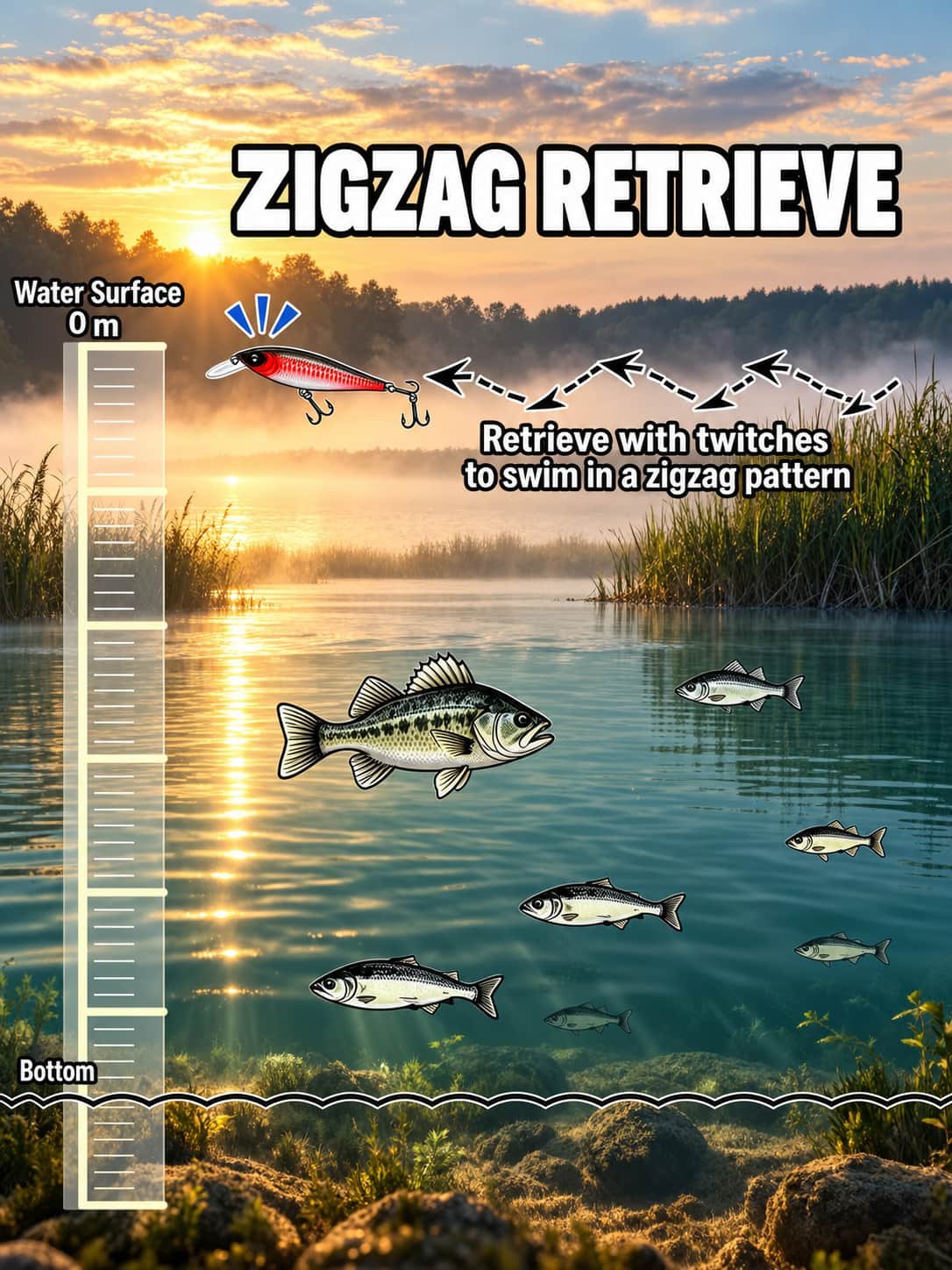
Create a zigzag retrieve by combining forward line recovery with repeated rod-tip twitches that make a suitable lure change direction. The aim is a side-to-side path rather than a straight swim. With a topwater walking bait, anglers call this action walking the dog; the lure's design determines whether the movement works.
Focus on the path of the lure as you practice the movement. Recover line between twitches while keeping the rod-tip rhythm consistent. A successful zigzag action shows a clear change of direction from side to side.
How do you work a topwater popper?
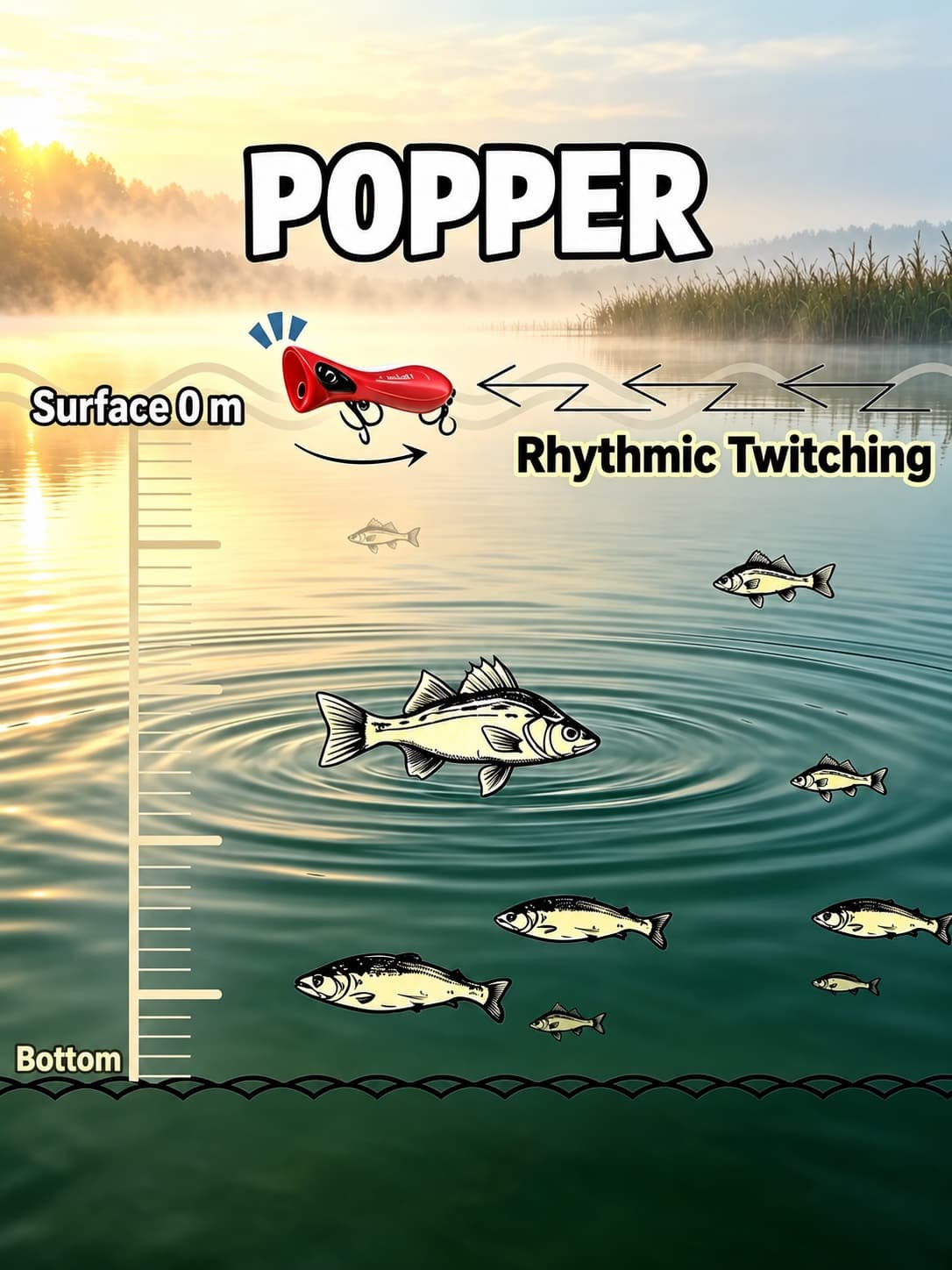
Work a topwater popper with rhythmic rod-tip twitches that move the lure across the surface. The popper's cupped face pushes water during each pull, creating the characteristic popping disturbance. Keep the action focused at the surface, where each twitch produces a visible movement rather than a lift through deeper water.
A popper is a surface lure with a concave or cupped mouth. The mouth creates the disturbance as the lure moves forward. The surface is the 0 m reference point; a popper presentation works at that boundary rather than along the bottom.
Build the retrieve around a repeatable twitching rhythm. Twitch the rod tip, recover line, and repeat the movement. Watch how the cupped face moves water so the next twitch produces the same kind of surface disturbance.
How do you fish a topwater prop bait?
Fish a topwater prop bait with a slow, steady retrieve that keeps the lure moving across the surface. The propeller turns as the bait travels forward, creating a surface disturbance. Maintain an even reel-handle rhythm so the propeller supplies the action throughout the retrieve without repeated jerks from the rod.
A prop bait is a lure fitted with a small rotating propeller at the front, rear, or both ends. A tail prop bait carries its propeller at the rear. Steady forward movement turns the propeller and keeps the bait working across the surface.
More to Explore
Related Articles
More guides in Fishing Techniques
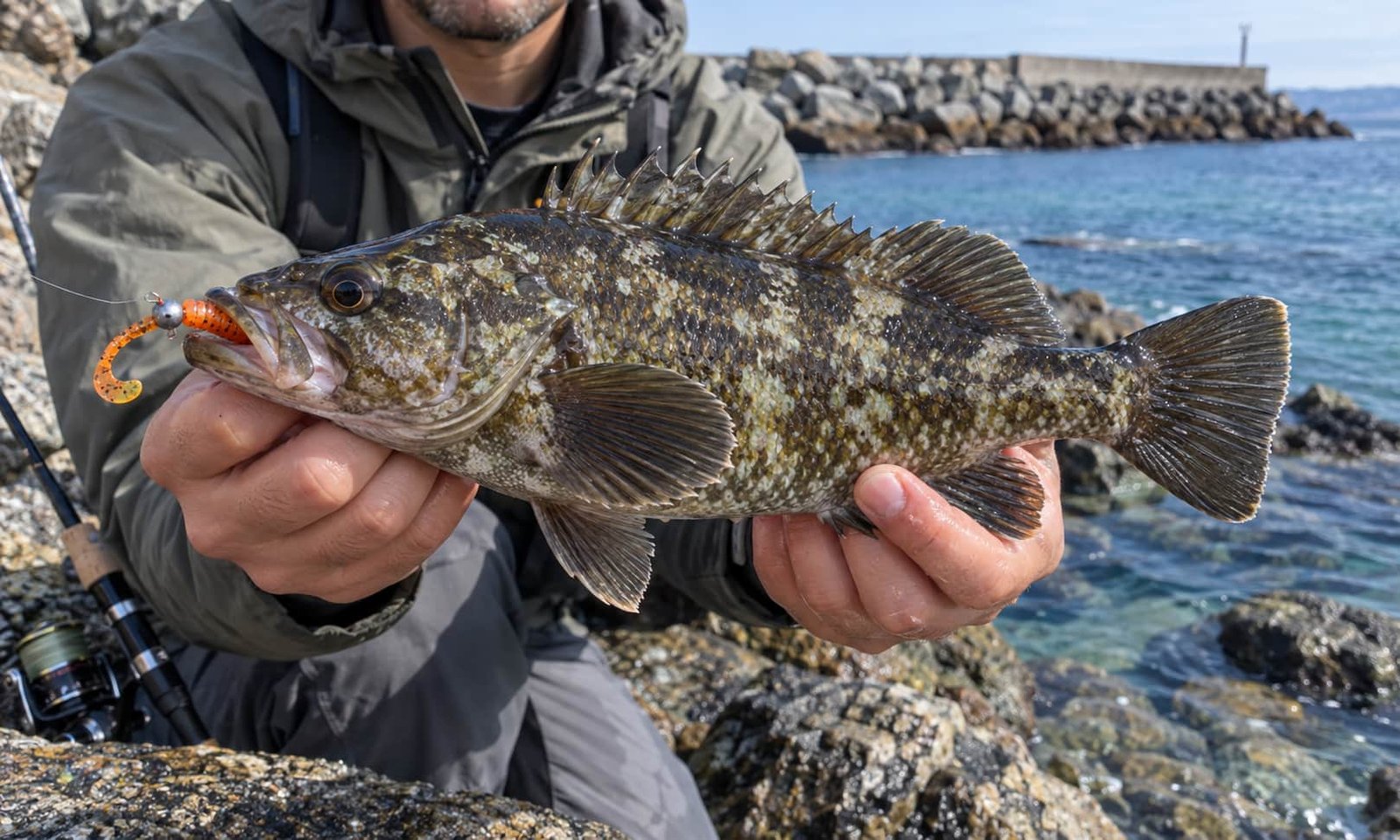
Learn how to catch rockfish from shore by reading the structure first. Target crevices, rocky edges, and the base of breakwaters, then keep your soft plastic close to the bottom where fish are likely to hold.
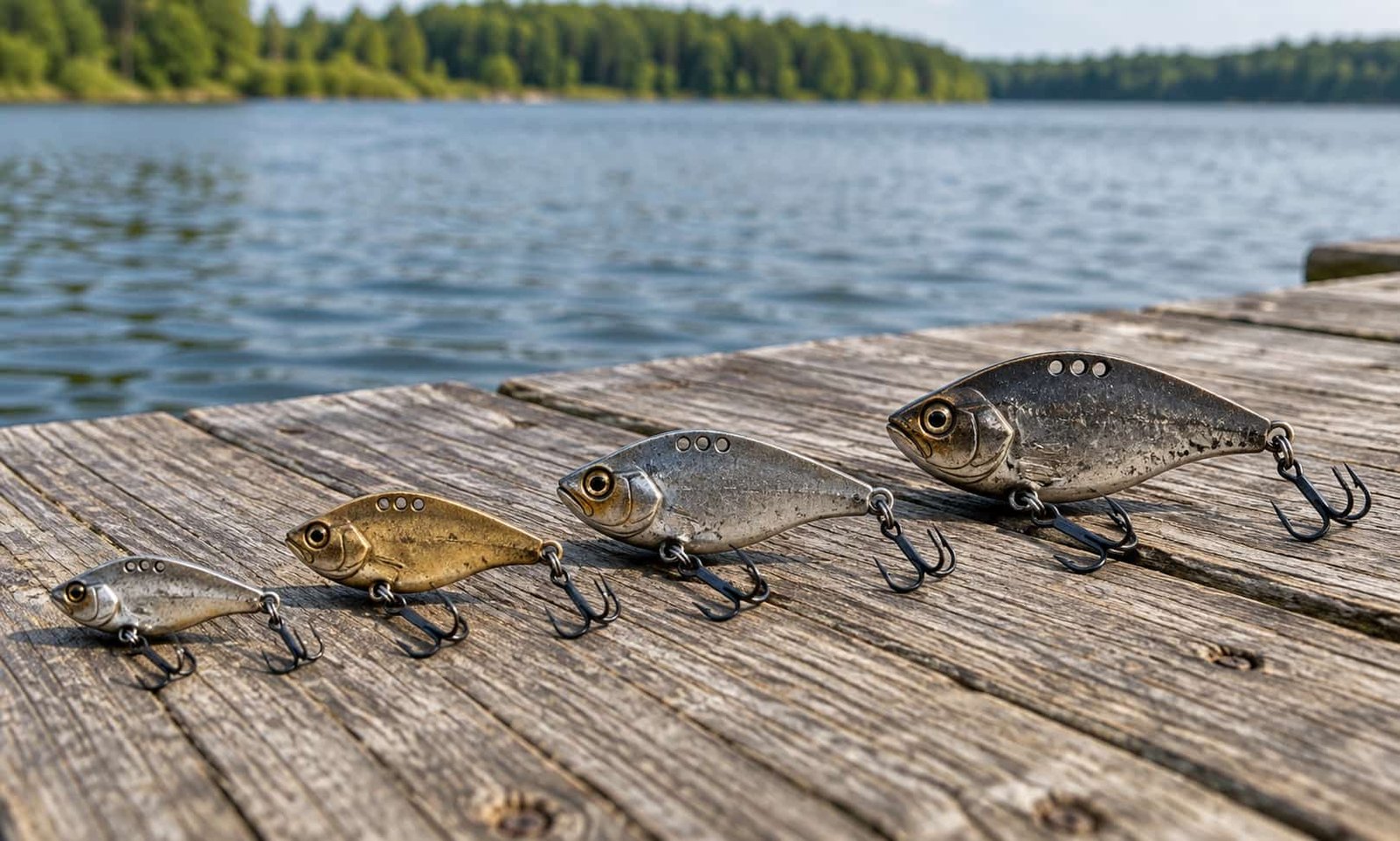
Learn how to choose a blade bait by weight, vibration, flash, and profile. See how a thin body affects the action and how to work the lure effectively.
Learn how to find fish in new water with a metal jig, a slow bottom search, and a closer look at the shallow-to-deep break.

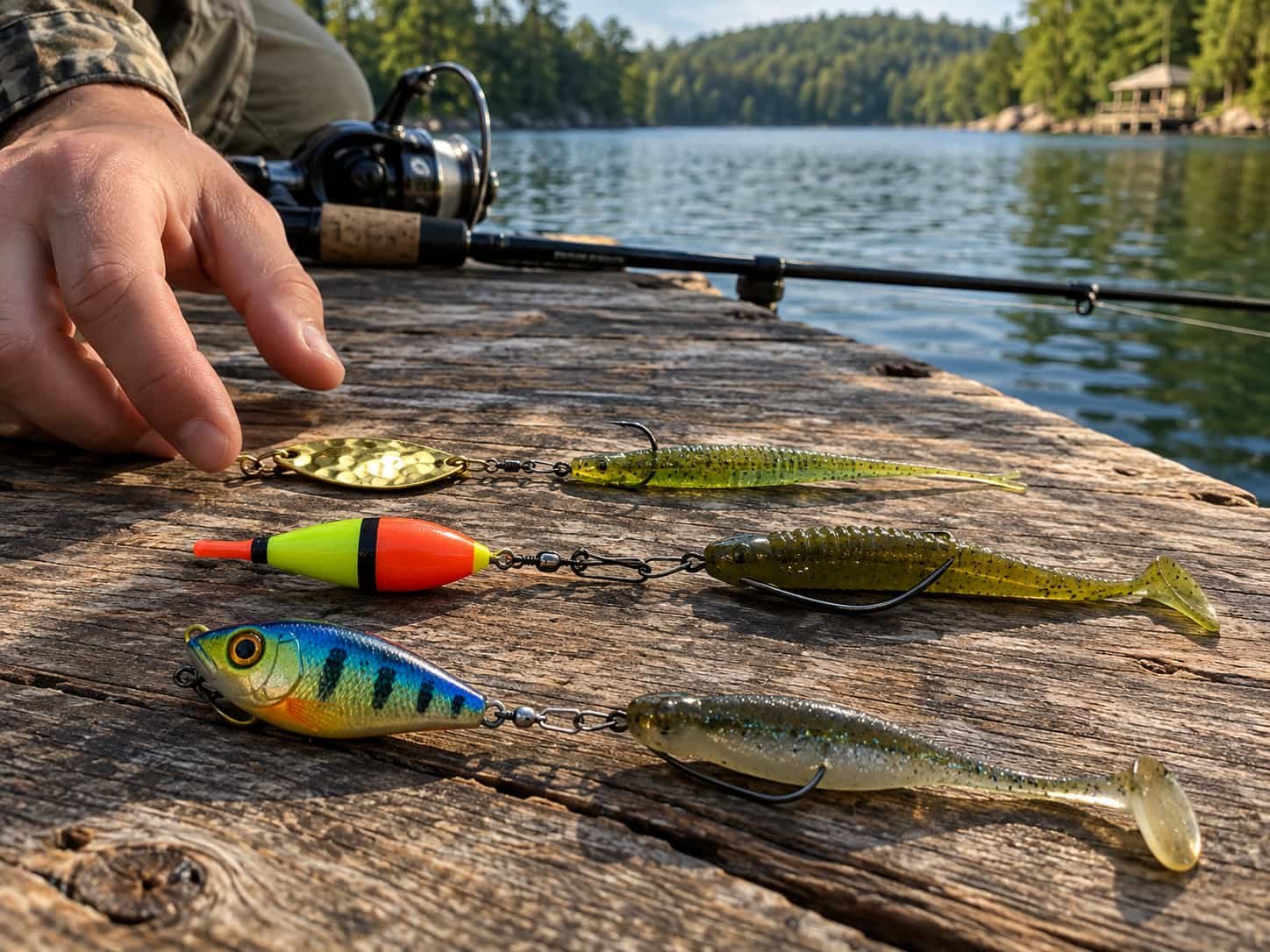
These weird fishing rigs combine hard baits and soft plastics in unexpected ways. See how each setup is built and whether one fits your next trip.
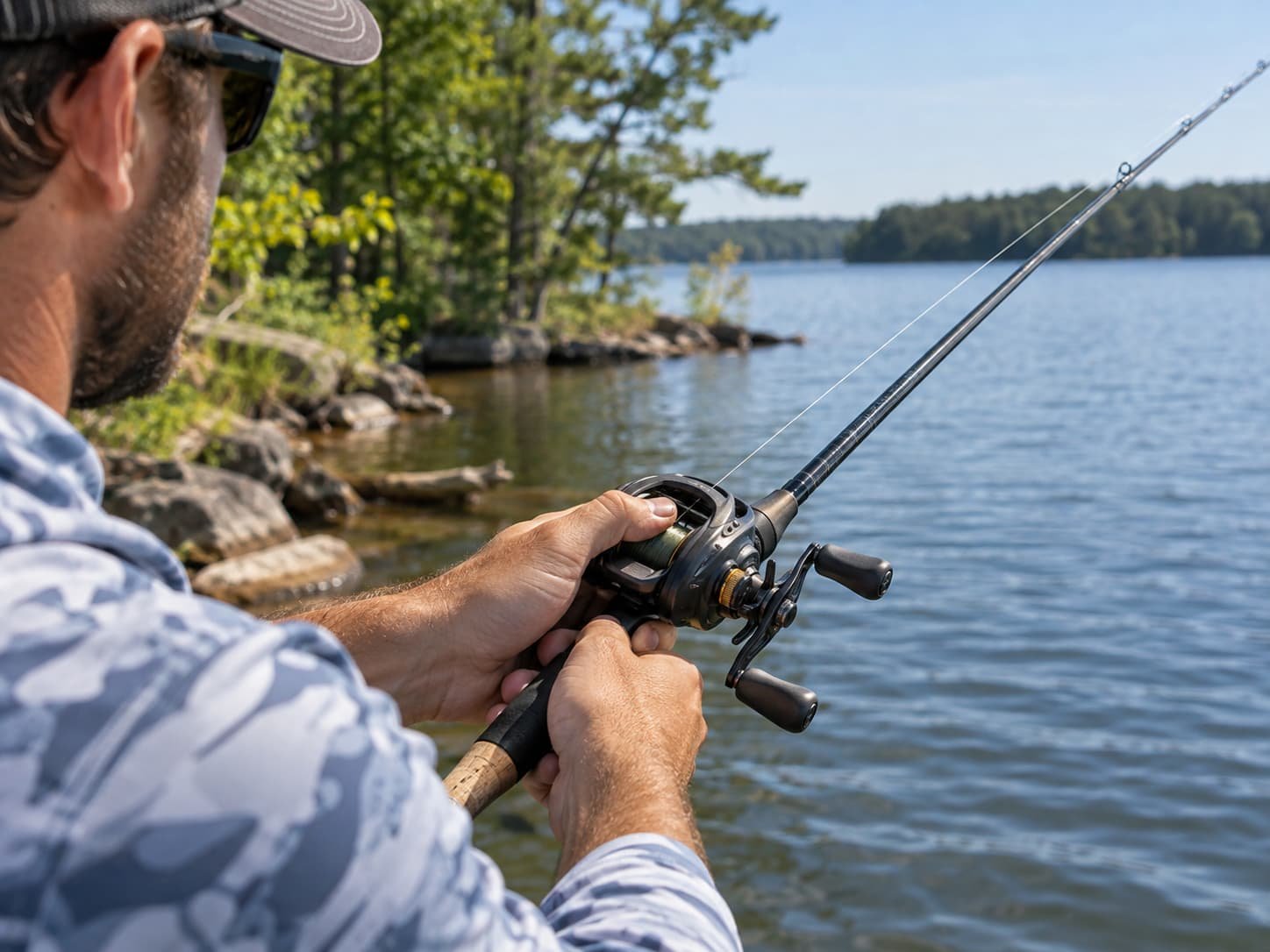
New to baitcasting? Learn how to prevent backlash on a baitcaster by setting the brakes, adjusting spool tension, and feathering the spool with your thumb.
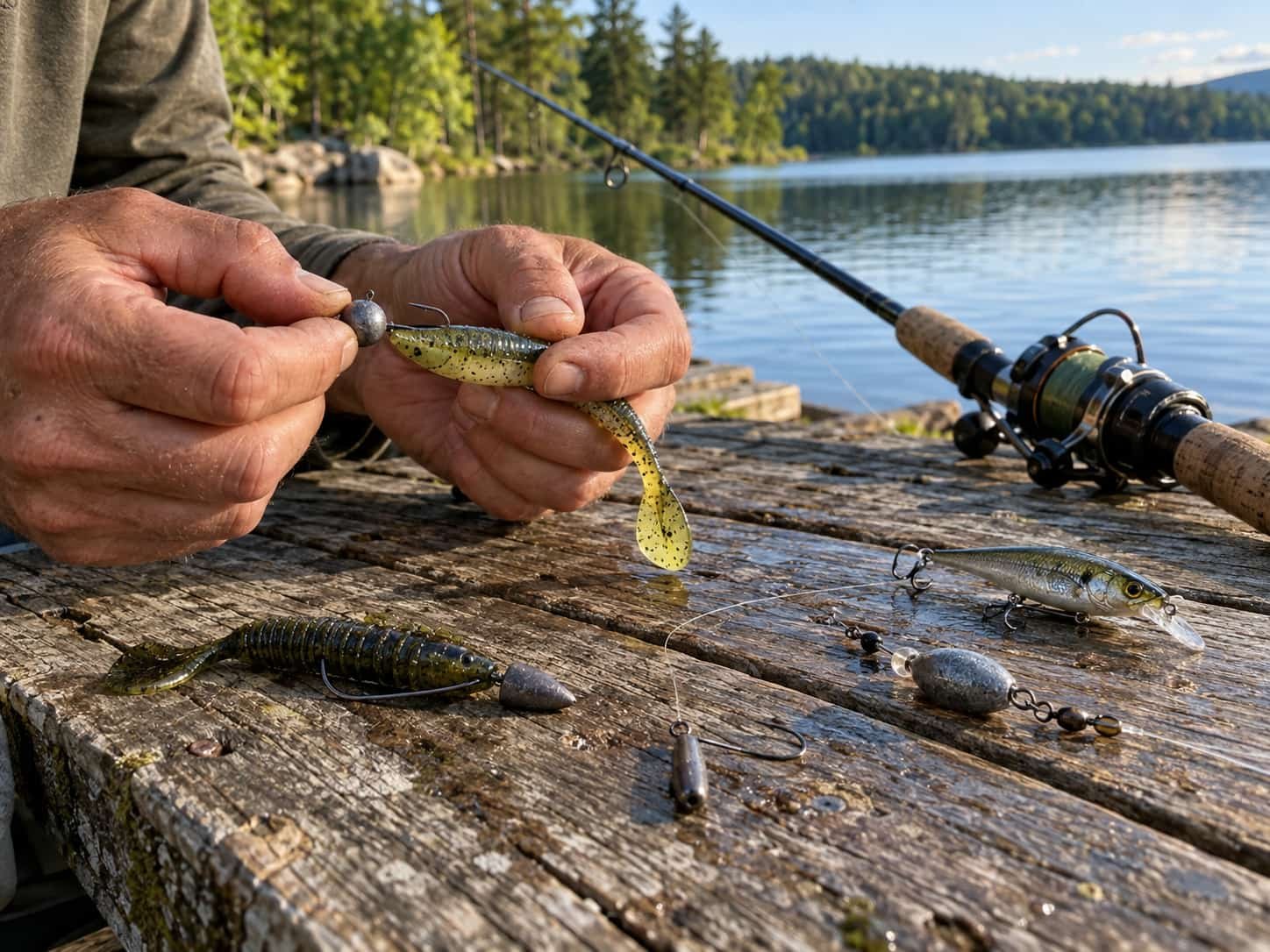
New bank, different cover? Learn lure fishing rigs for beginners and when to use a jighead, Texas rig, drop shot, Carolina rig, or minnow lure.
Learn how to retrieve fishing lures by reading fish behavior. From sharp jerks to slow drags, adjust your presentation and make every move count.

See how to cast a spinning reel from start to finish: hold the line, open the bail, swing forward, and use your finger to control where the lure lands.