How to Prevent Backlash on a Baitcaster as a Beginner
- Category
- Fishing Techniques
- Date
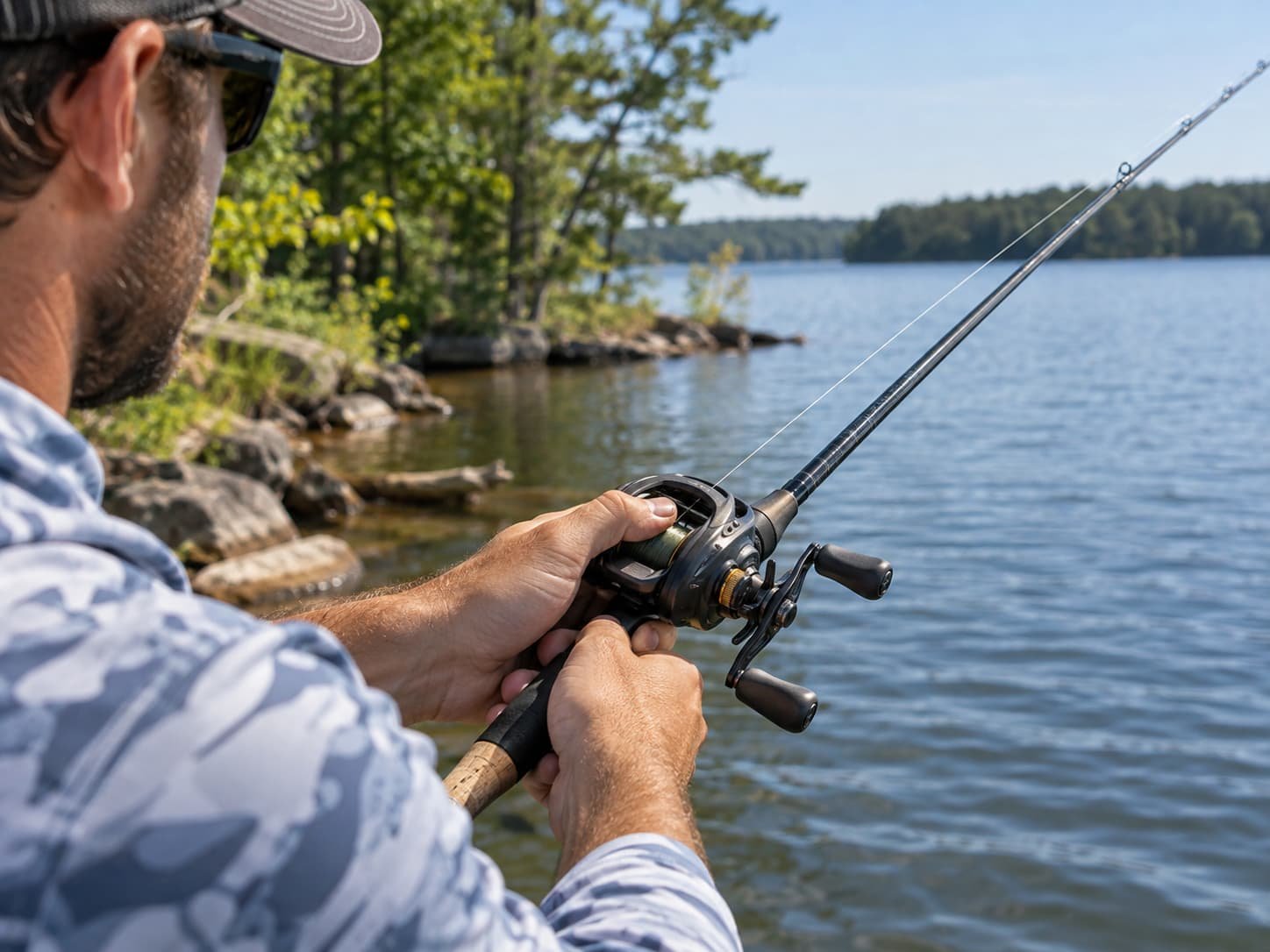
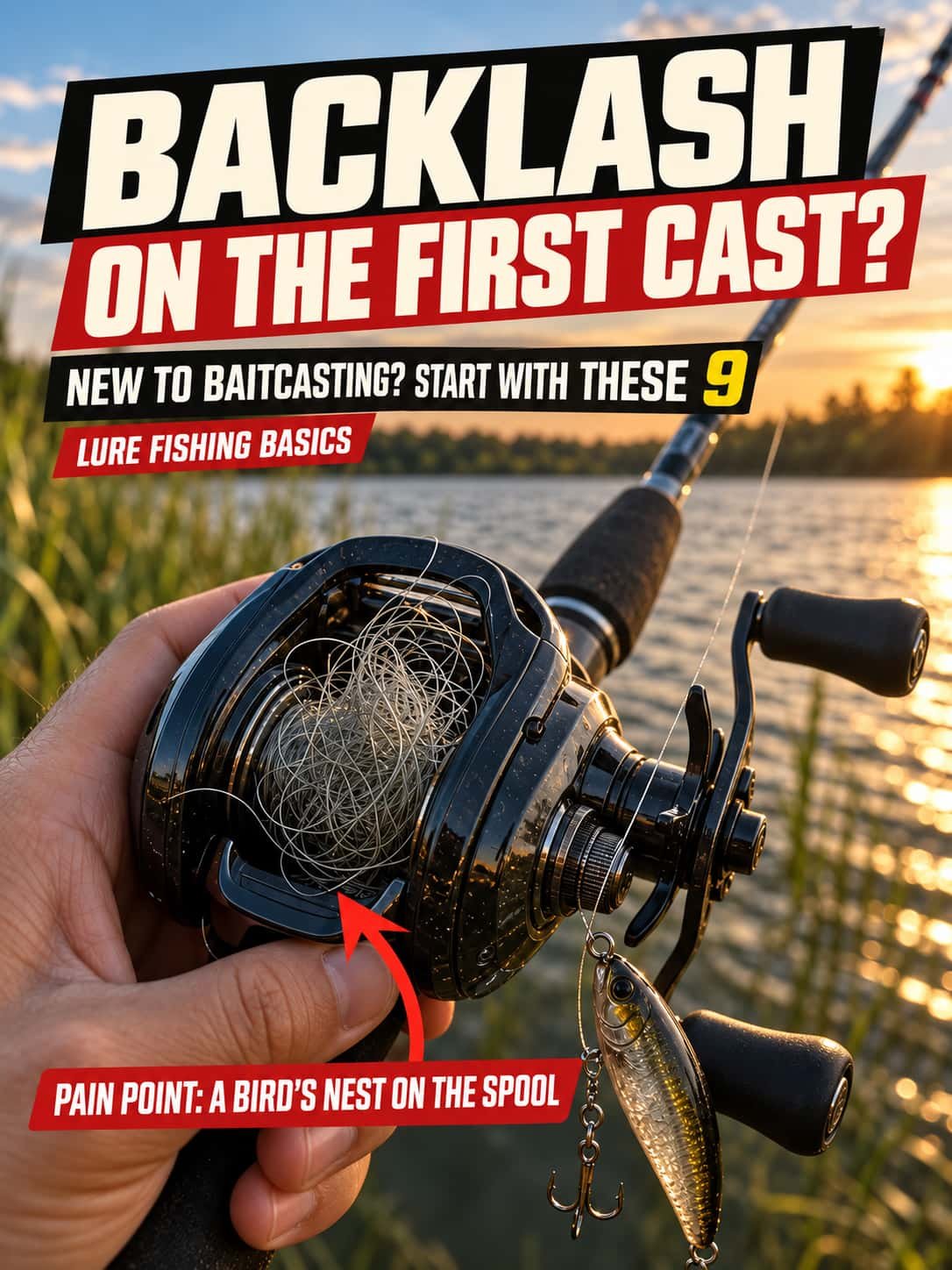
If you’re learning how to prevent backlash on a baitcaster, start by knowing that even experienced anglers still get the occasional bird’s nest. The goal is not perfect casting from day one, but better control with every cast.
A smooth casting motion, proper spool tension, and brake settings matched to your lure weight can make a big difference. Use the steps below to reduce overruns, build confidence with your baitcaster, and spend less time picking out tangles.
| Guide Section | Topic | content | Key Technical Takeaway |
|---|---|---|---|
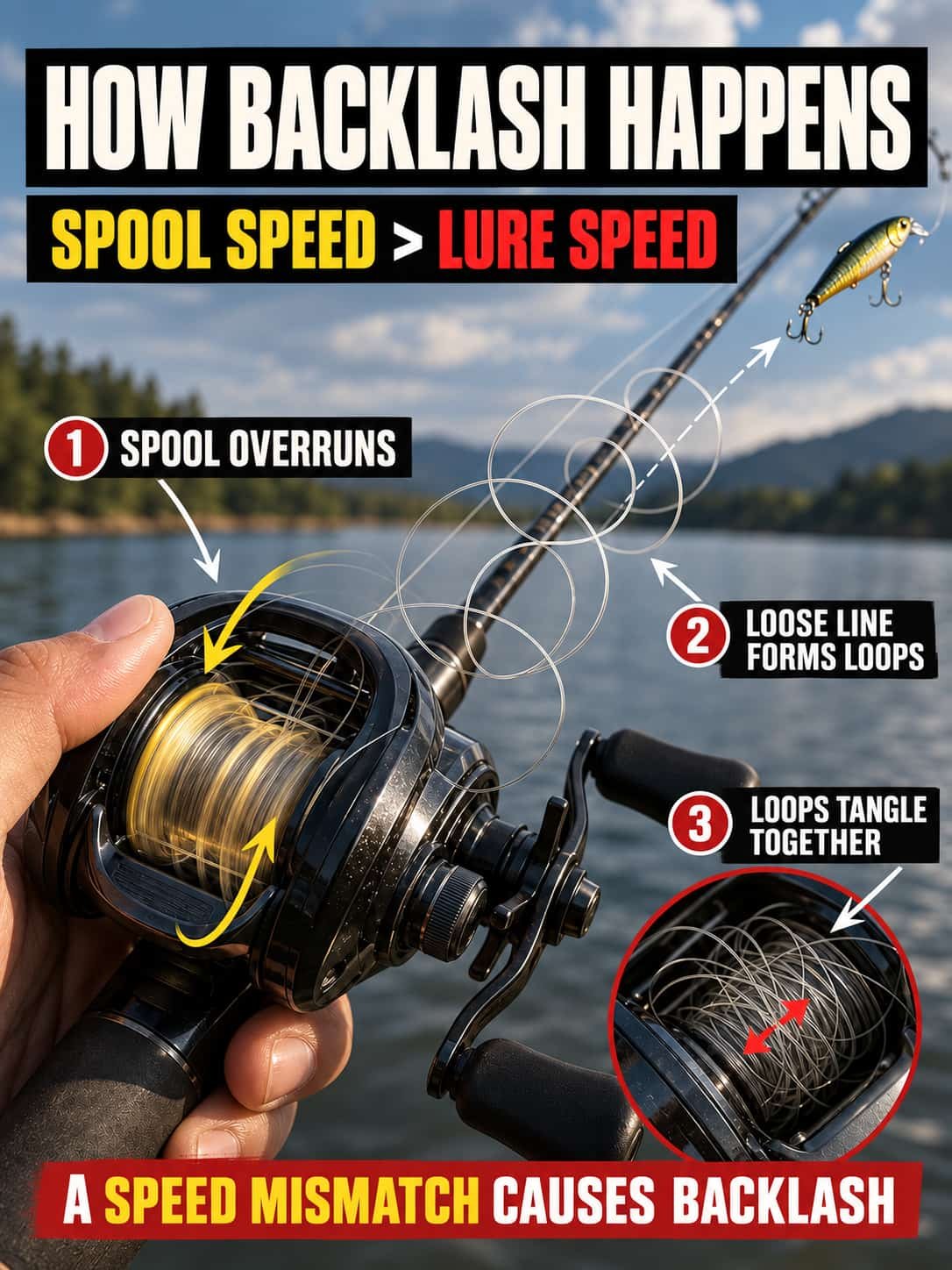
| Overview | Backlash for new baitcaster anglers | A backlash is a tangle of line on the spool. It’s a common problem when you’re learning to use a baitcasting reel. | The guide covers how to prevent and clear a backlash. |
| How It Happens | Why backlashes occur | The spool spins faster than the lure pulls line from the reel. When the lure slows, slack line forms loops that pile up and tangle. | A spool overrun happens when spool speed no longer matches the lure’s speed. |
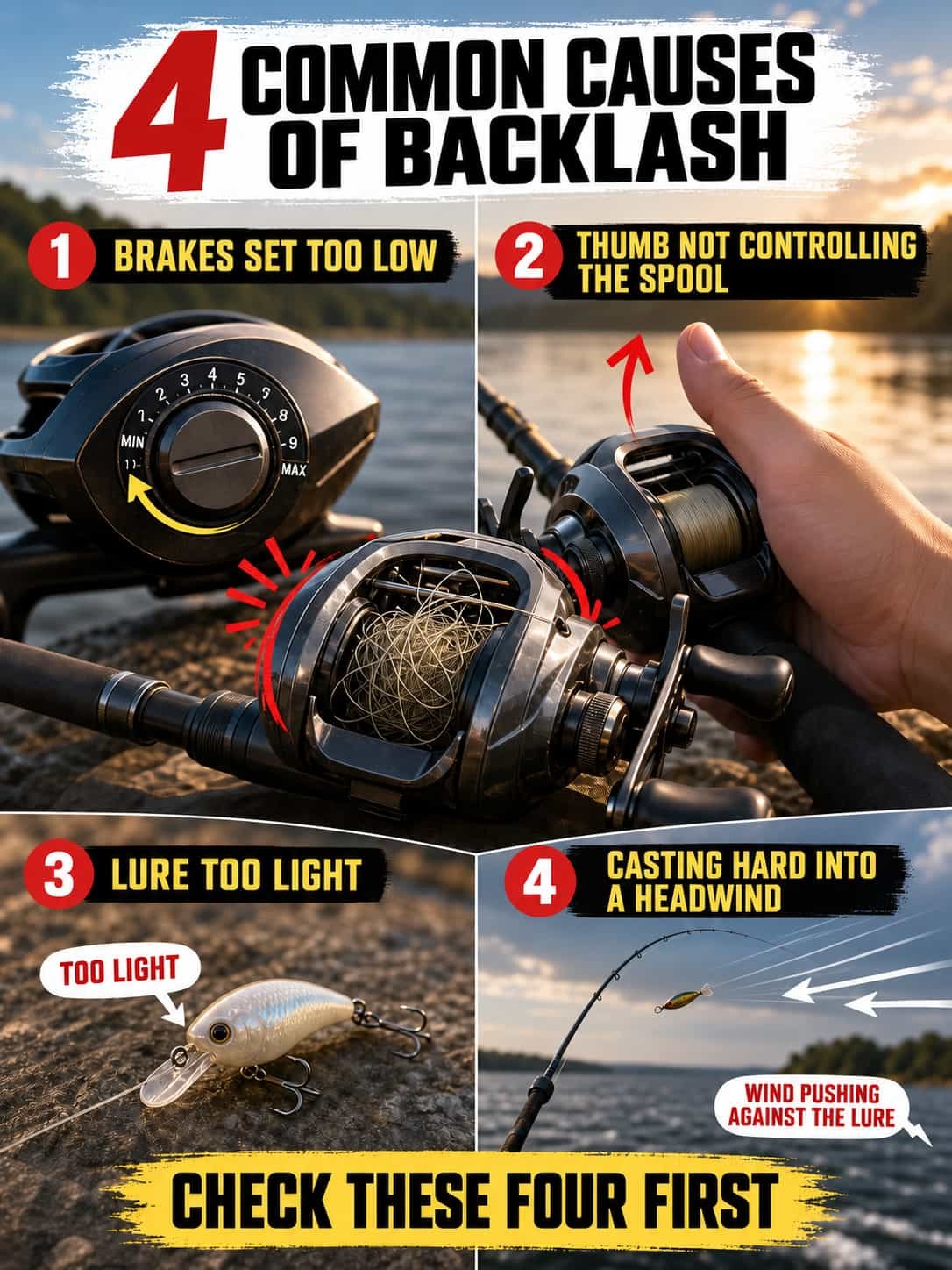
| Common Causes | Four things that can trigger a backlash | Brakes set too low; not controlling the spool with your thumb; using a lure that’s too light; casting hard into a headwind. | Adjust the brakes and thumb pressure for the lure and wind conditions. |
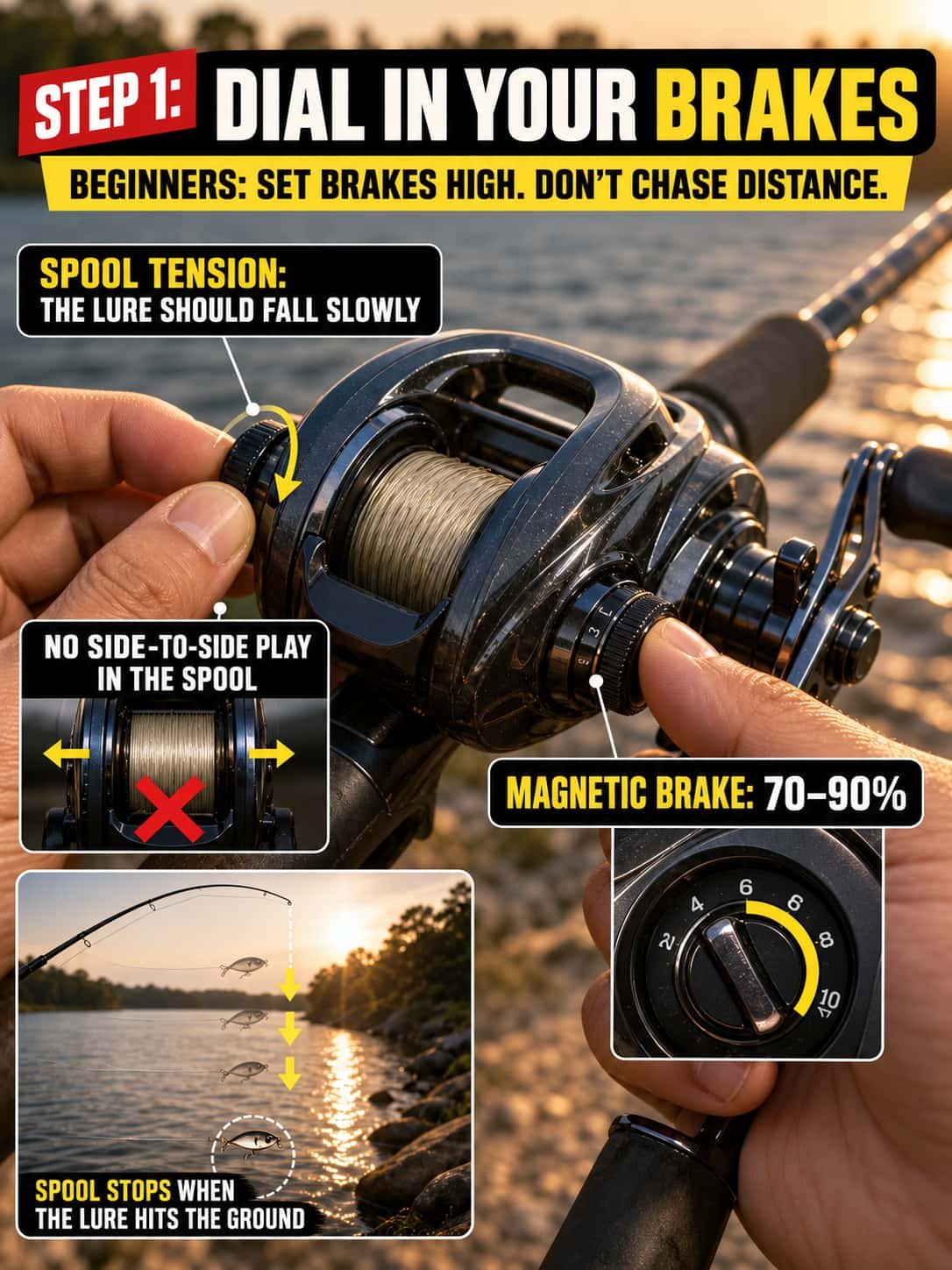
| Step 1 | Set the brakes and spool tension | Beginners should start with the brakes set high and focus on control before distance. Adjust spool tension so the lure falls slowly and the spool has no side-to-side play. | The graphic recommends setting the magnetic brake to about 70–90%. The spool should stop when the lure hits the ground. |
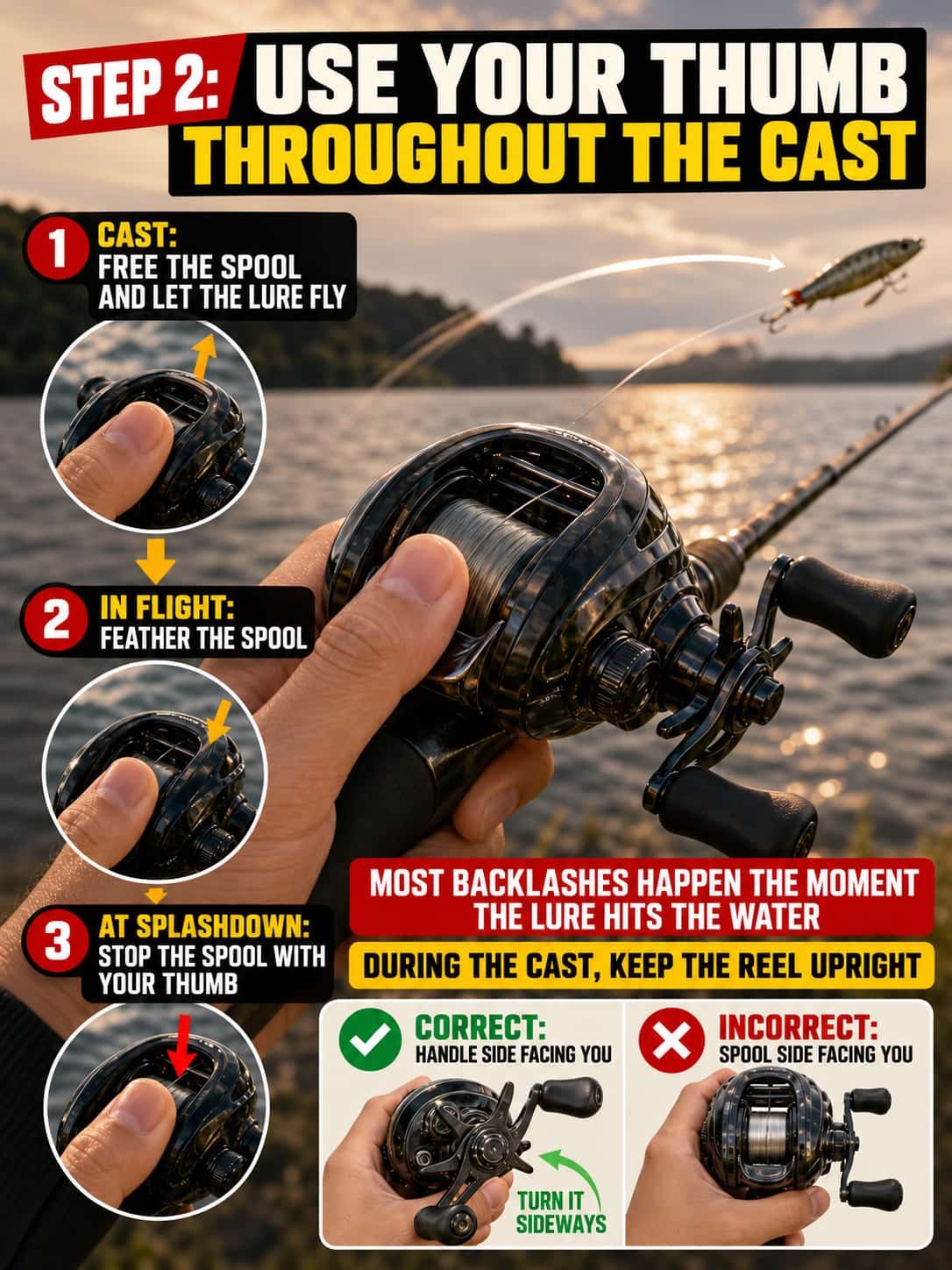
| Step 2 | Control the spool with your thumb | Free the spool to cast. Feather it with your thumb while the lure is in flight, then stop the spool with your thumb when the lure hits the water. | Backlashes often happen at splashdown if the spool keeps spinning. Keep the reel oriented with the handle side facing you. |
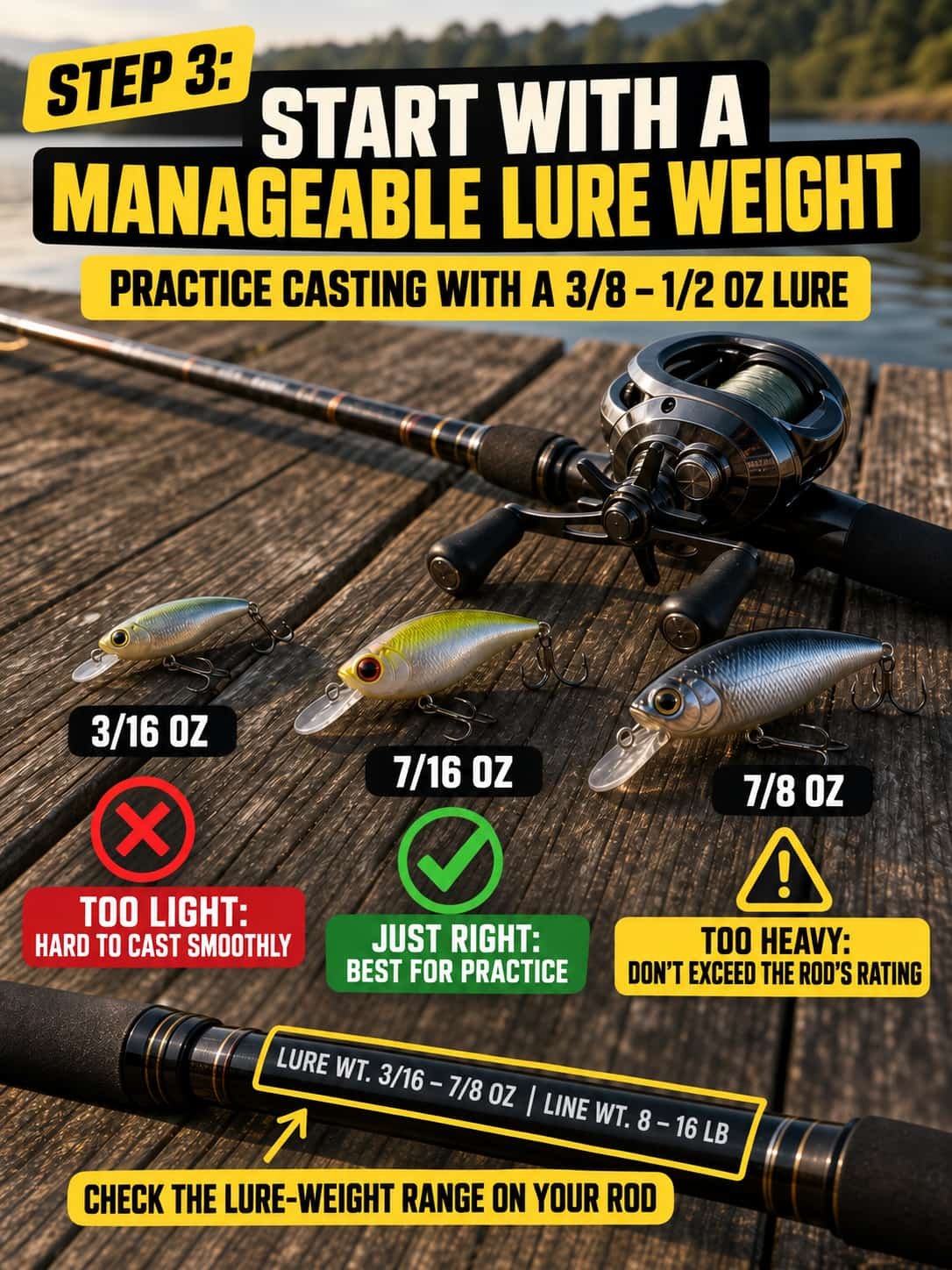
| Step 3 | Choose a practice lure weight | Start practicing with a 3/8–1/2 oz lure. The graphic compares 3/16 oz as too light, 7/16 oz as a good practice weight, and 7/8 oz as too heavy. | Check the rod’s lure-weight rating before casting. The example rod is rated for 3/16–7/8 oz lures and 8–16 lb line. |
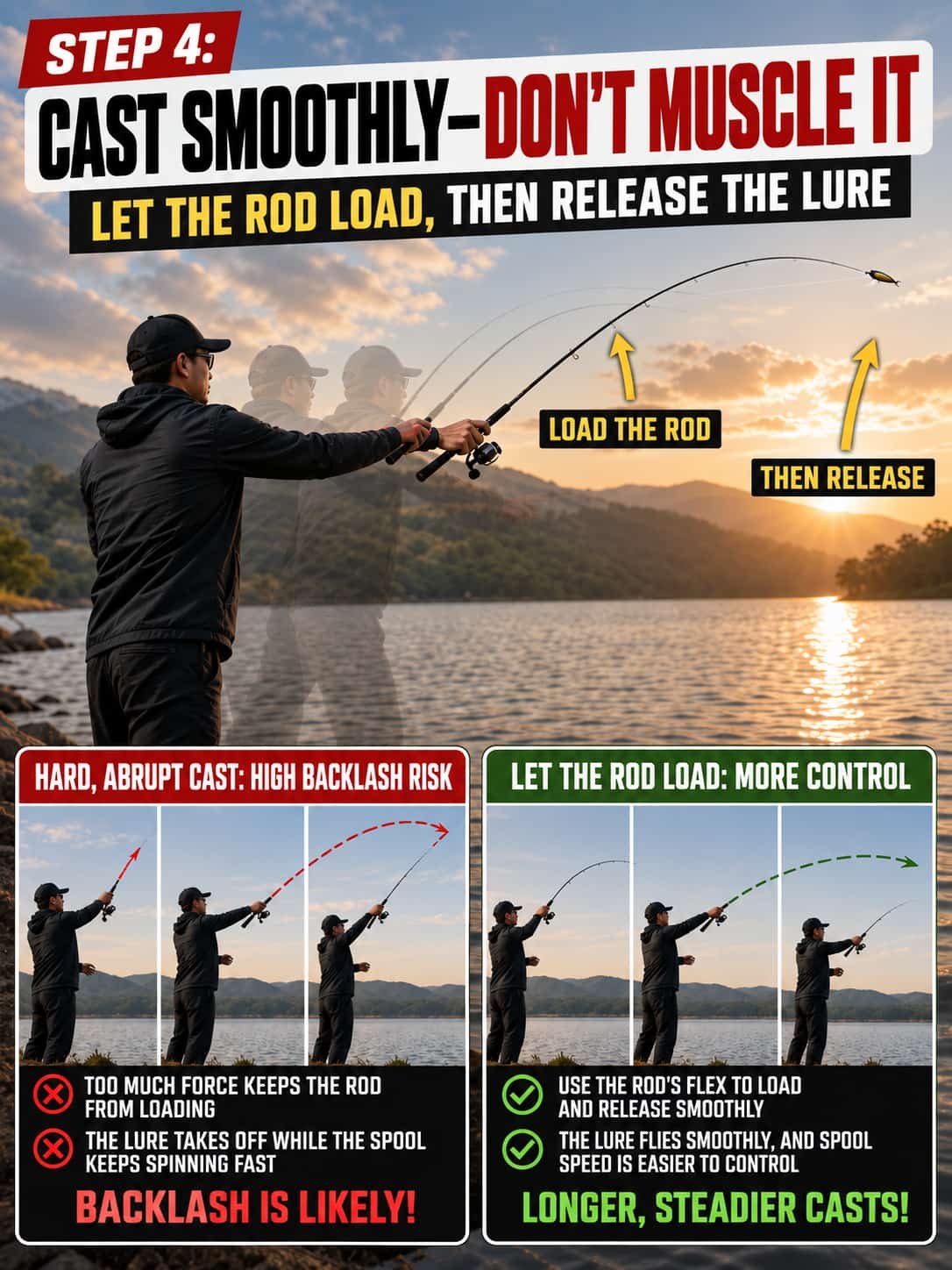
| Step 4 | Cast smoothly and let the rod load | Let the rod bend and load before releasing the lure. A hard, abrupt cast can keep the rod from loading while the lure shoots forward and the spool keeps spinning. | Use the rod’s flex for a smoother, more controlled cast. |
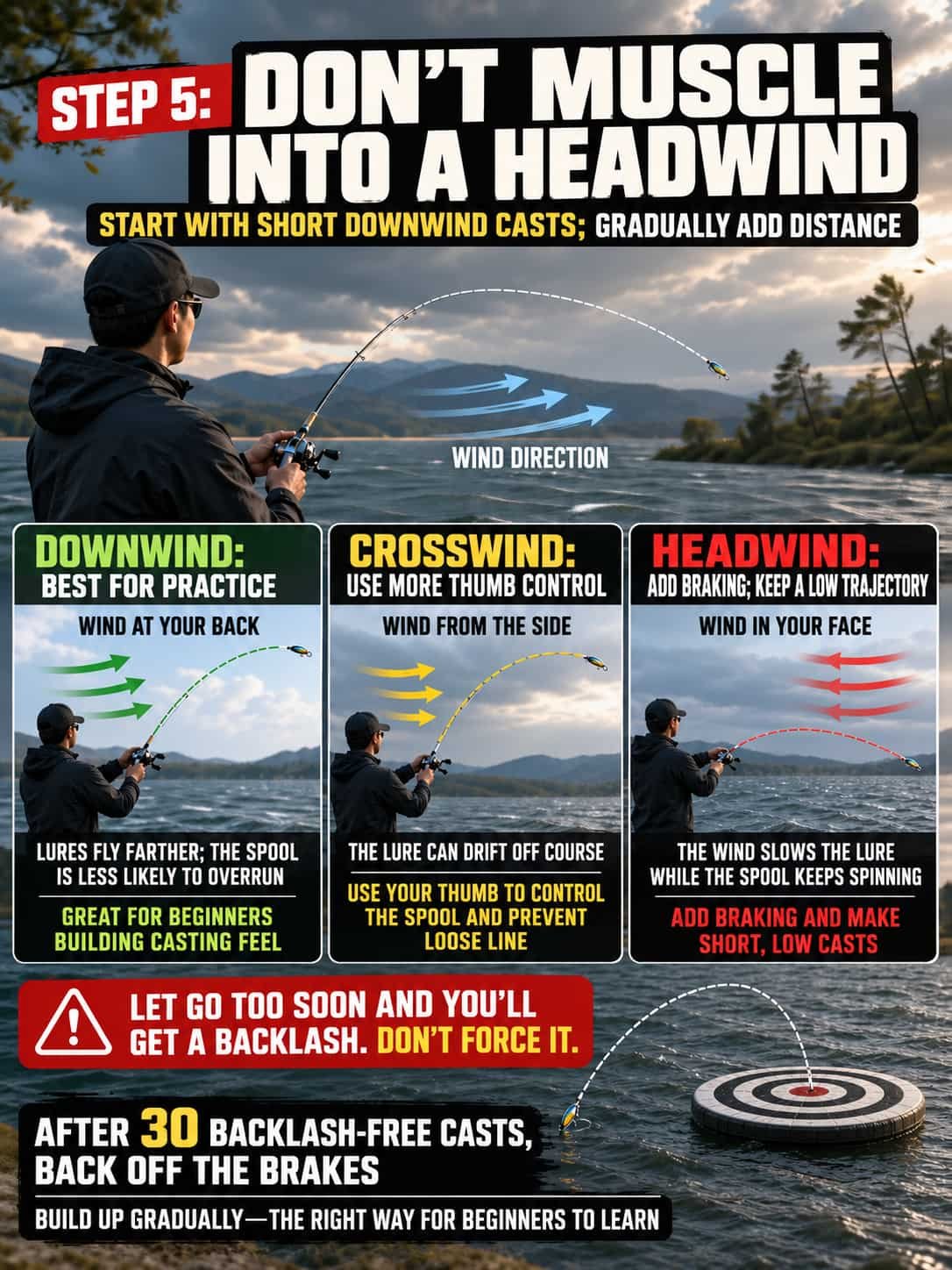
| Step 5 | Adjust your cast for the wind | Downwind is best for practice; start with short casts and gradually add distance. Crosswinds can push the lure off course, so use more thumb control. Into a headwind, add braking and make short, low casts. | The wind can slow the lure while the spool keeps spinning. After 30 backlash-free casts, ease off the brakes gradually. |
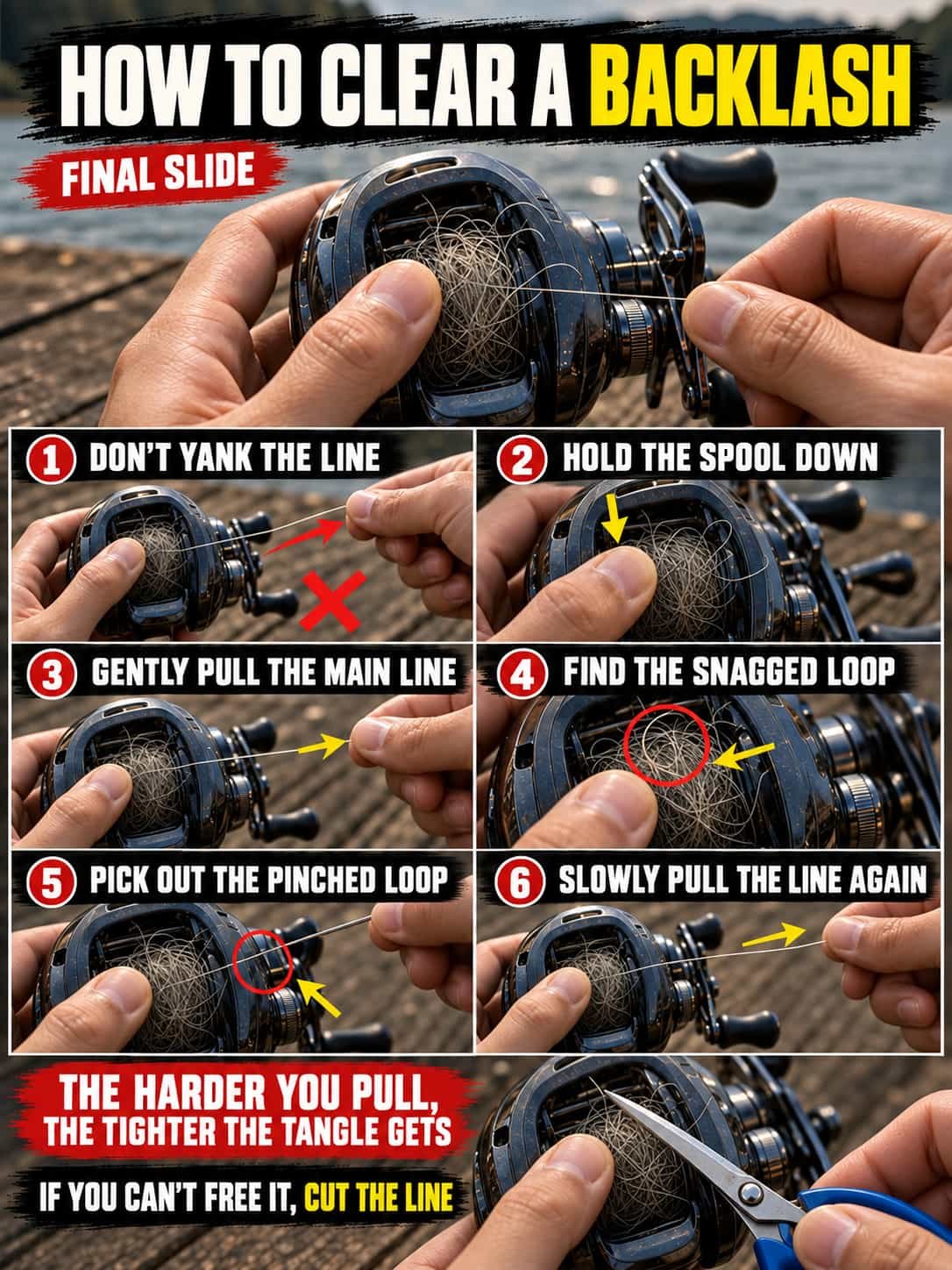
| Clearing a Backlash | Free tangled line from the spool | Don’t yank the line. Hold the spool down, gently pull the main line, find the snagged loop, pick out the pinched loop, then slowly pull the line again. | Pulling harder tightens the tangle. If you can’t free it, cut the line. |
More to Explore
Related Articles
More guides in Fishing Techniques
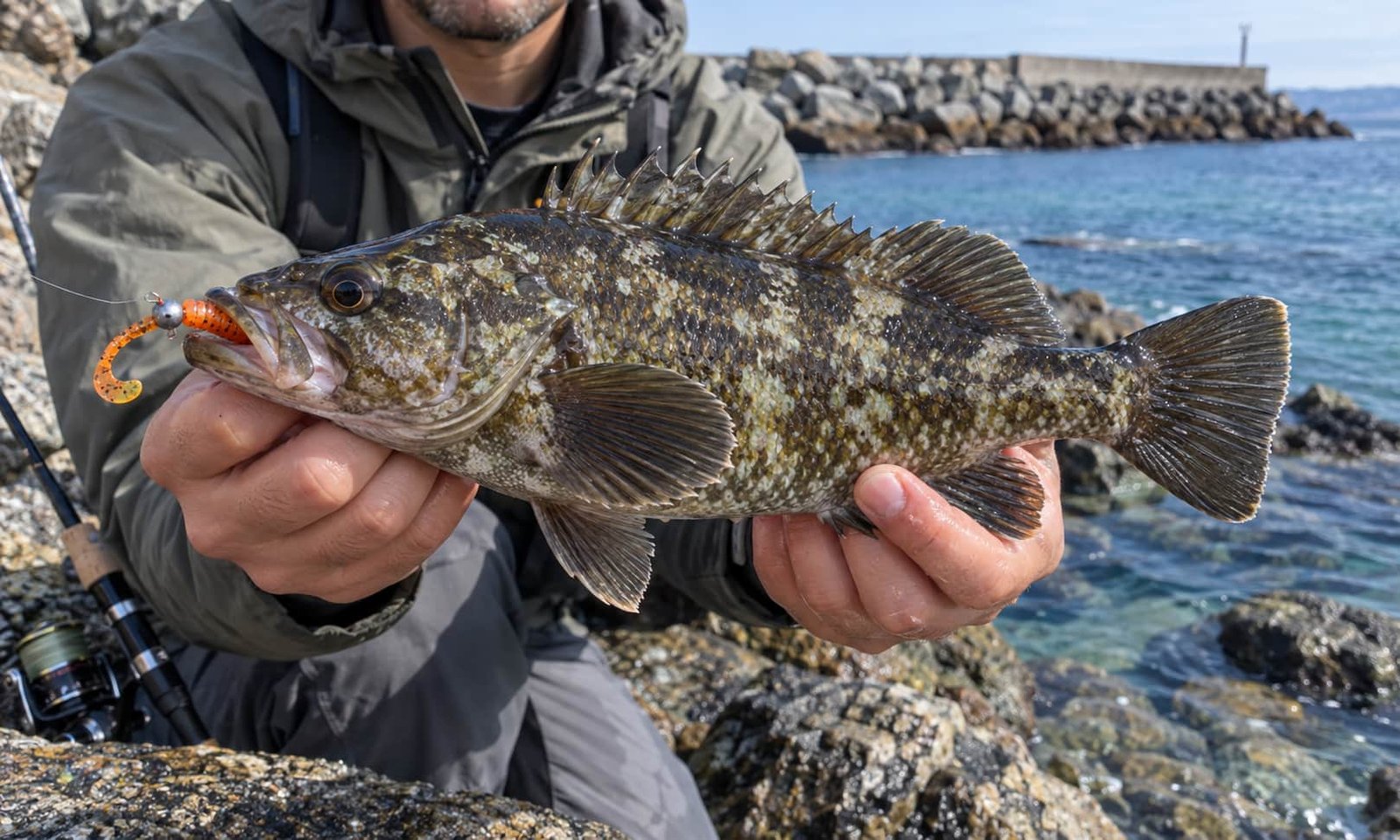
Learn how to catch rockfish from shore by reading the structure first. Target crevices, rocky edges, and the base of breakwaters, then keep your soft plastic close to the bottom where fish are likely to hold.
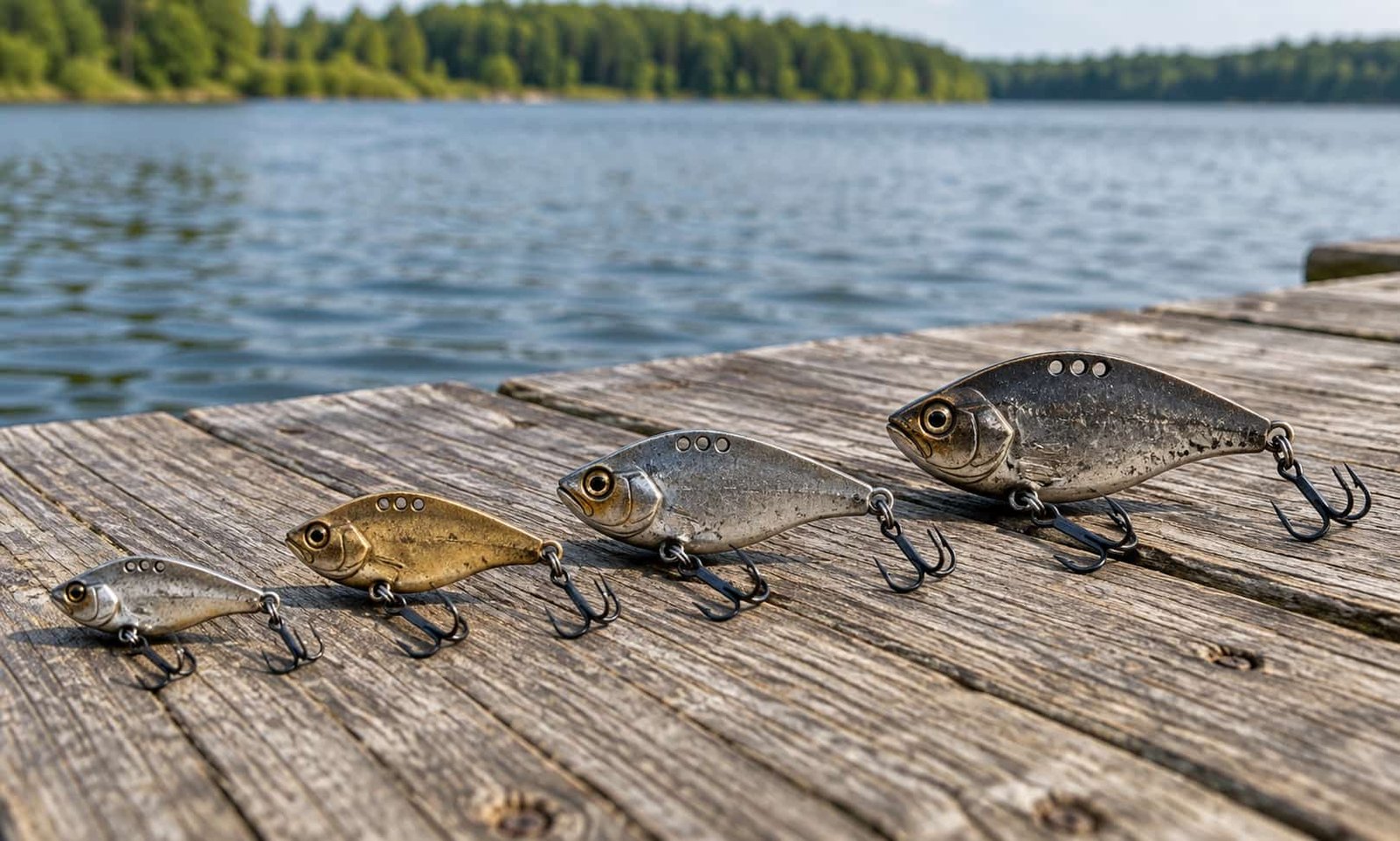
Learn how to choose a blade bait by weight, vibration, flash, and profile. See how a thin body affects the action and how to work the lure effectively.
Learn how to find fish in new water with a metal jig, a slow bottom search, and a closer look at the shallow-to-deep break.

These weird fishing rigs combine hard baits and soft plastics in unexpected ways. See how each setup is built and whether one fits your next trip.
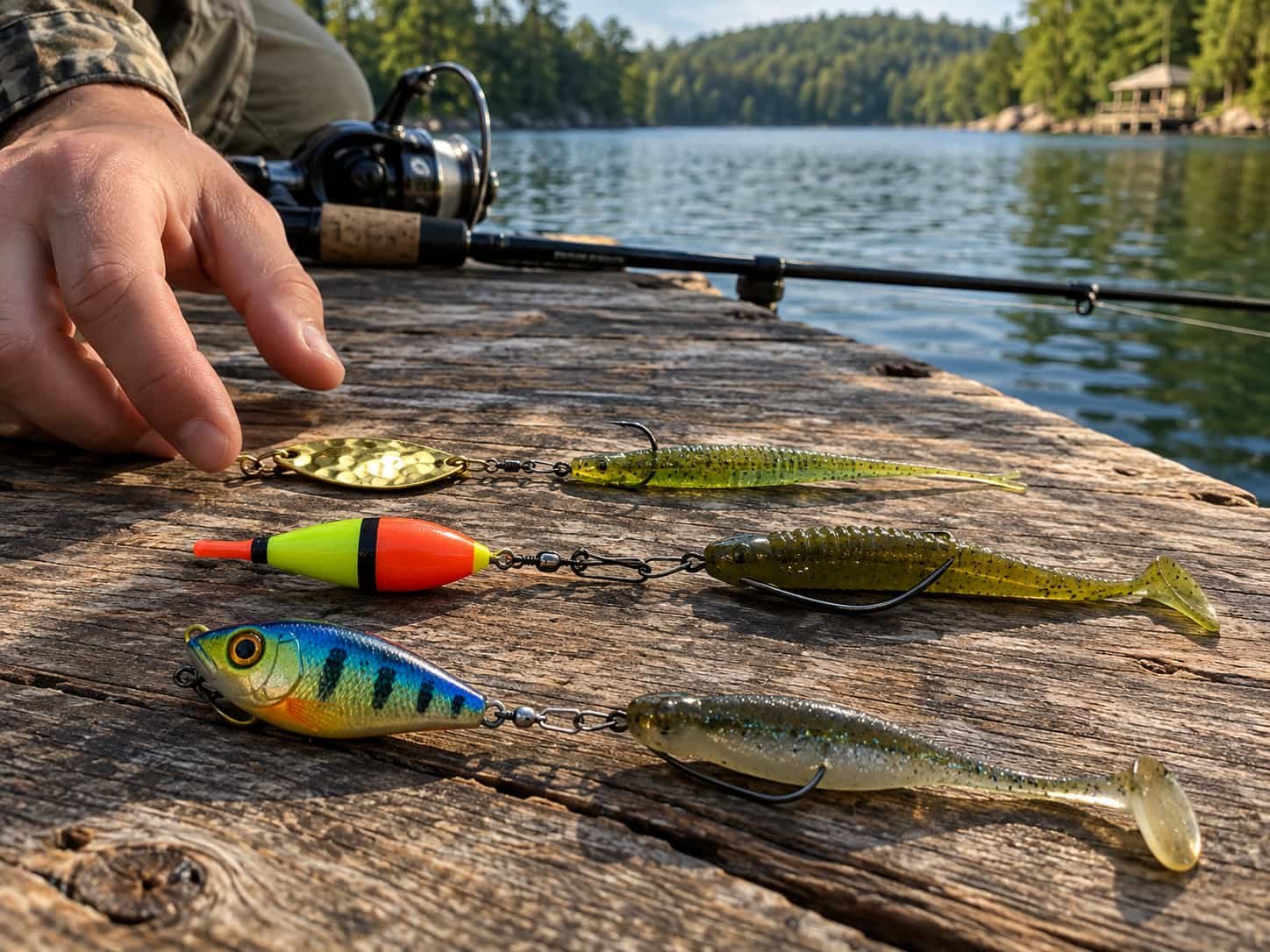
New bank, different cover? Learn lure fishing rigs for beginners and when to use a jighead, Texas rig, drop shot, Carolina rig, or minnow lure.
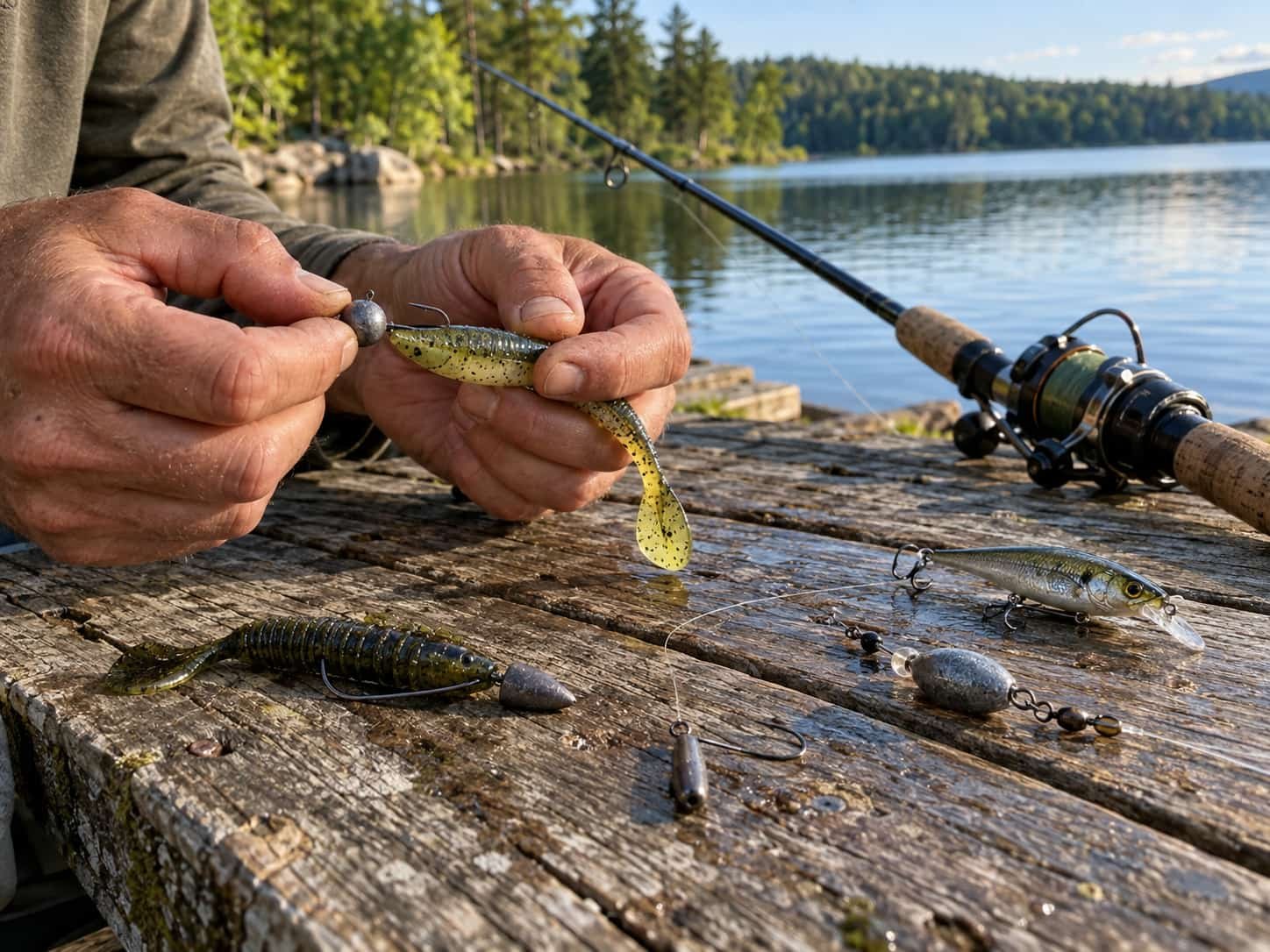
Learn how to retrieve fishing lures by reading fish behavior. From sharp jerks to slow drags, adjust your presentation and make every move count.
See how to cast a spinning reel from start to finish: hold the line, open the bail, swing forward, and use your finger to control where the lure lands.
Fall crucian carp fishing tips for choosing where to fish. See why shallow edges, vegetation, and nearby cover deserve a closer look.