Lure Fishing Rigs for Beginners and What to Tie On First
- Category
- Fishing Techniques
- Date
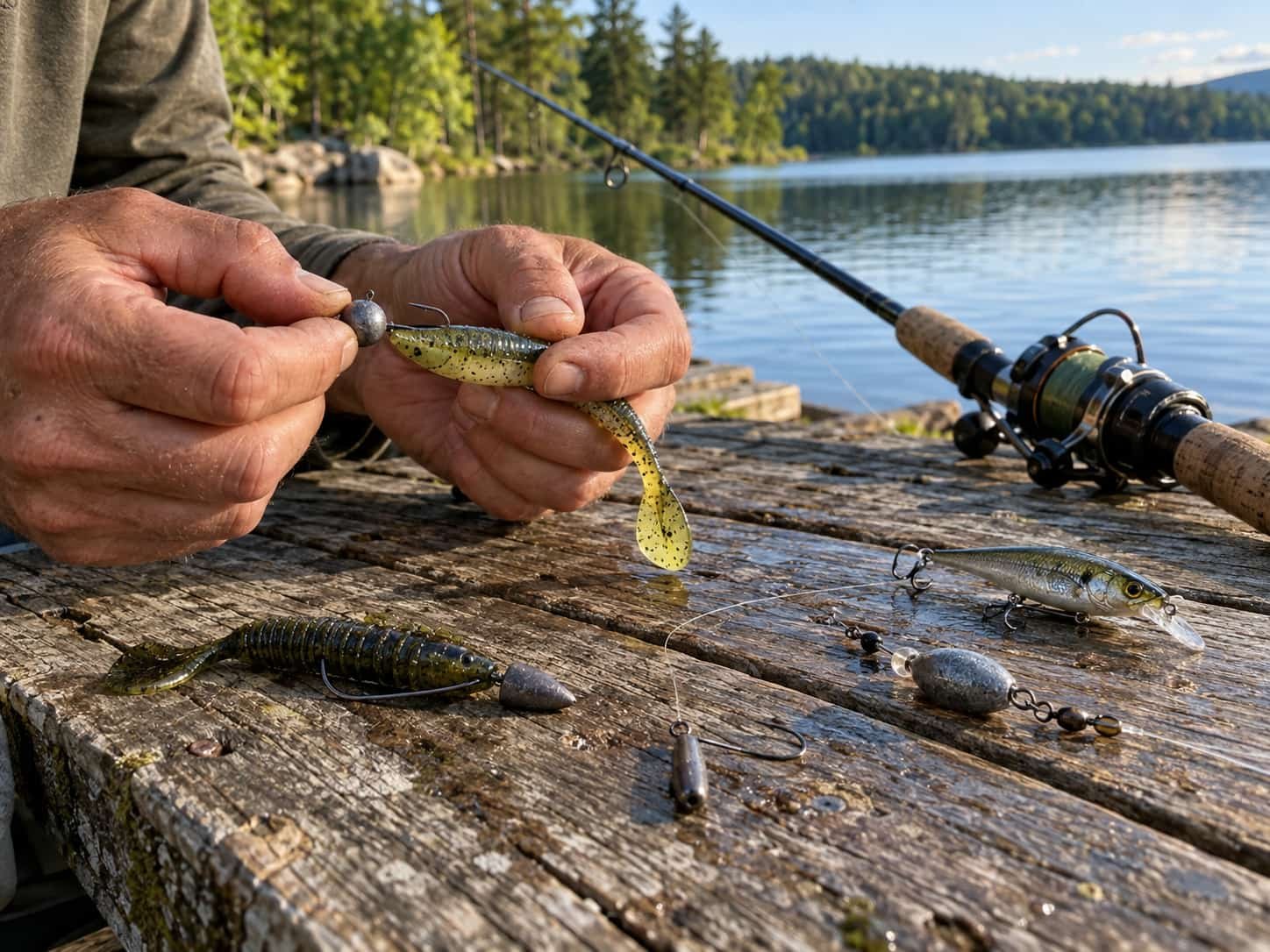
Before I tie anything on, I look at the cover, bottom composition, and the depth I need to fish. Those details usually tell me more than lure color ever will.
These lure fishing rigs for beginners give you five practical starting points: a jighead for open water, a Texas rig for weeds and wood, a drop shot for a more controlled finesse presentation, a Carolina rig for covering bottom, and a minnow-style hard bait when fish are feeding higher in the water column.
Use the guide below to see where each setup fits, then choose the one that lets you fish the water in front of you with a clear purpose.
| no | Topic | Content |
|---|---|---|
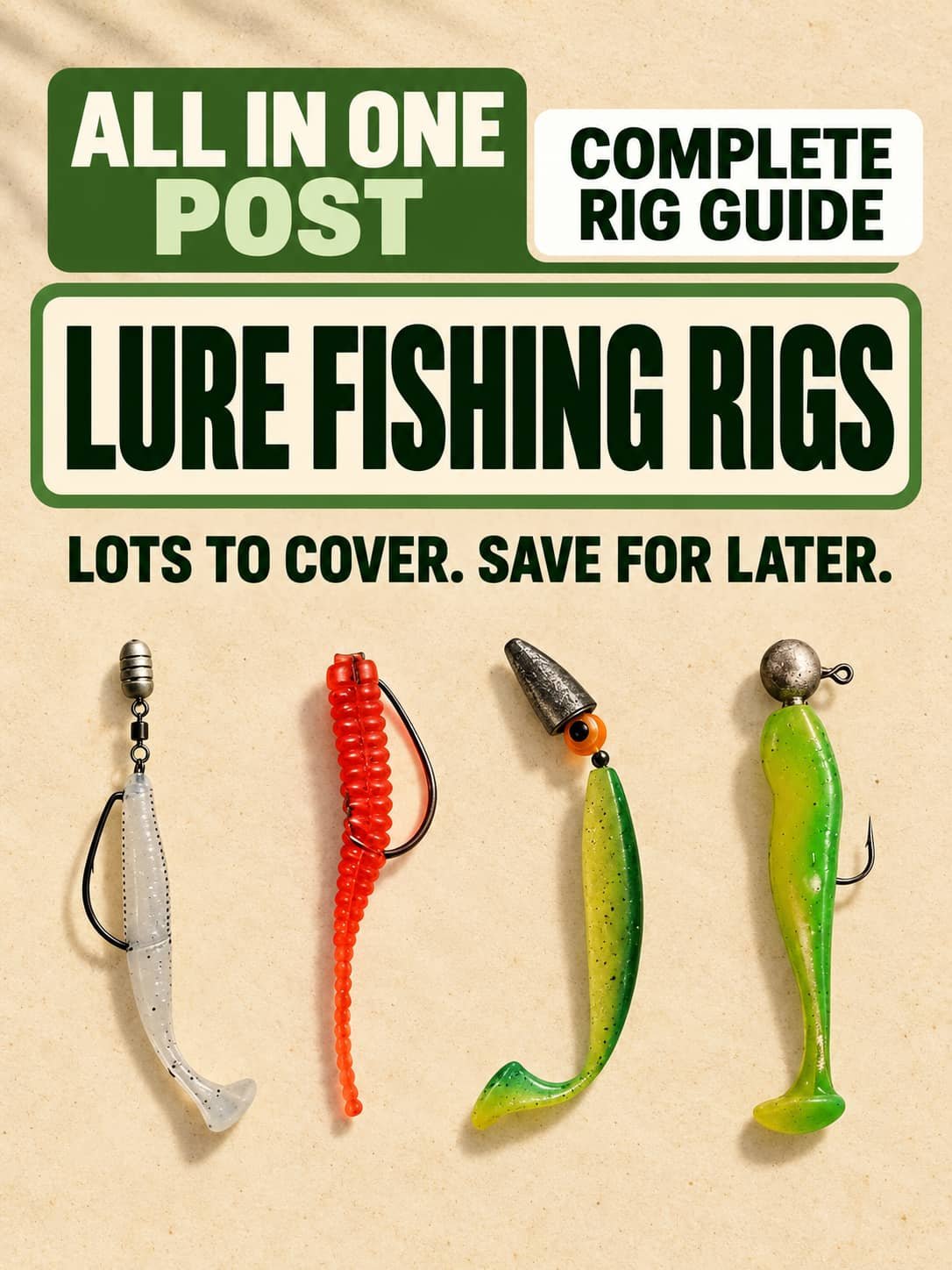
| 1 | Lure fishing rigs overview | Cover image introducing the rig collection, with four soft-plastic lure and hook illustrations. |
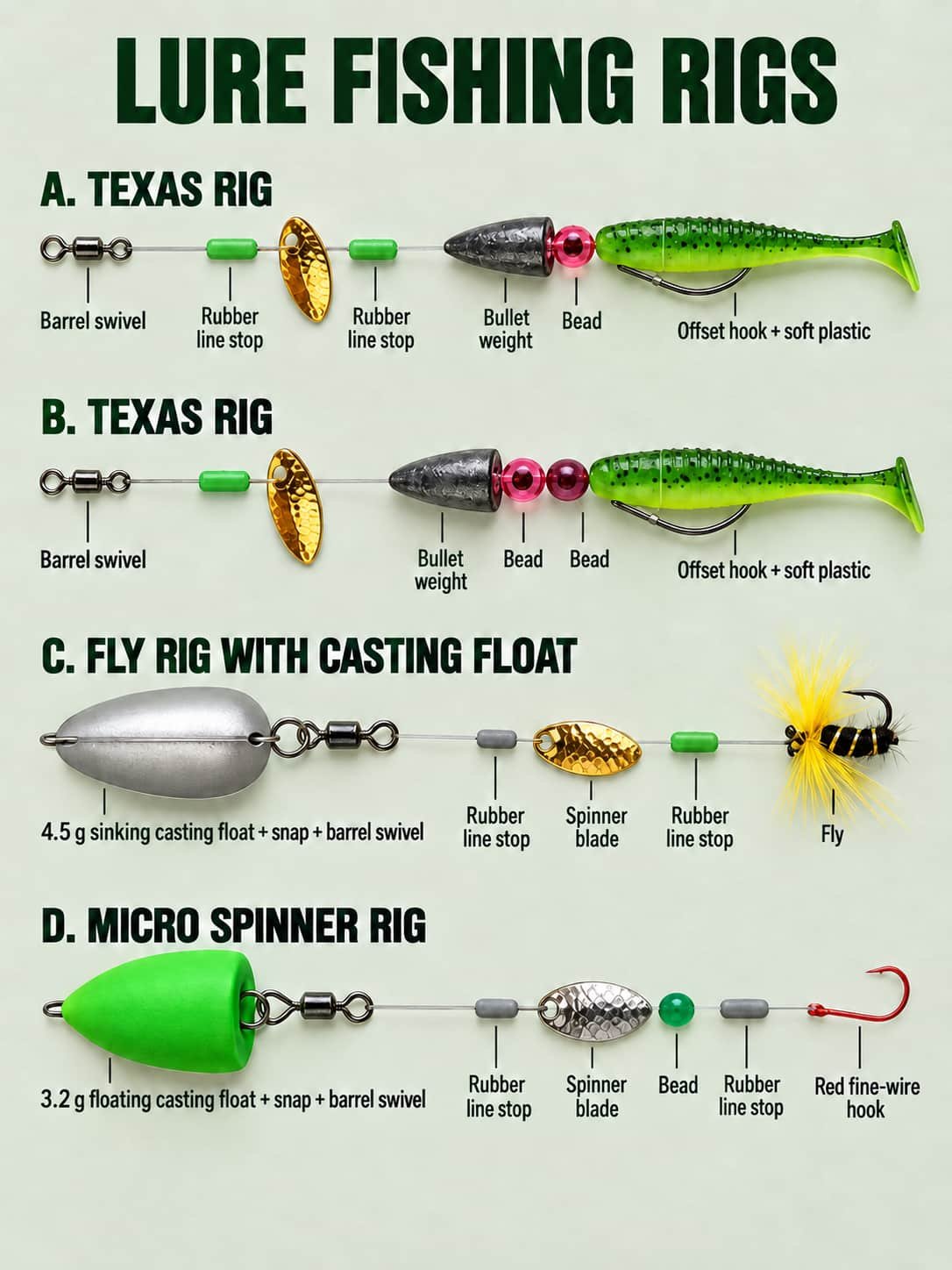
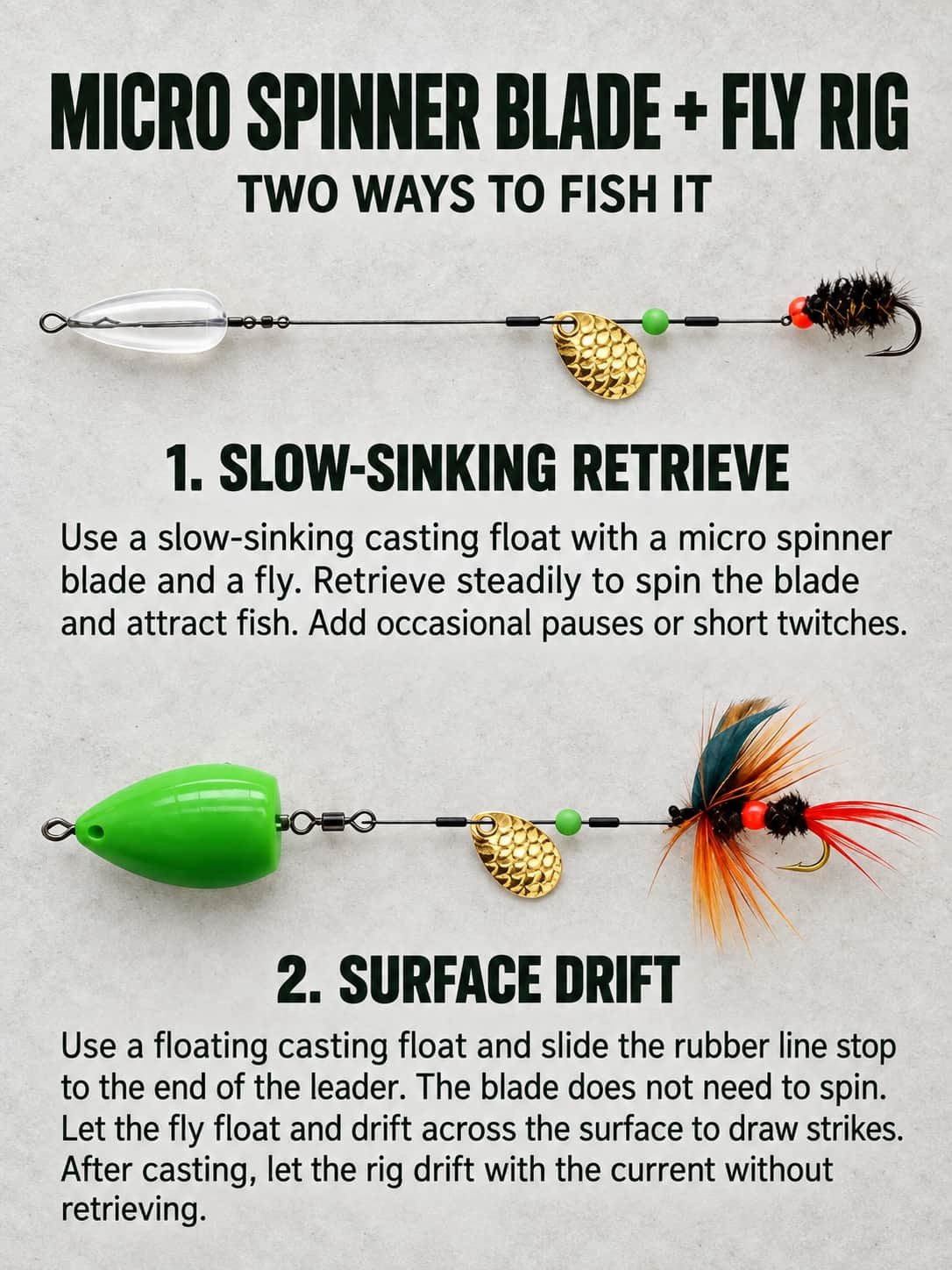
| 2 | Rig diagrams A–D | A–B: Two Texas rig variations with an offset worm hook, soft plastic, bullet weight, beads, and spinner blade. C: A fly paired with a spinner blade and a 4.5 g sinking casting float. D: A small spinner blade and single hook paired with a 3.2 g floating casting float. |
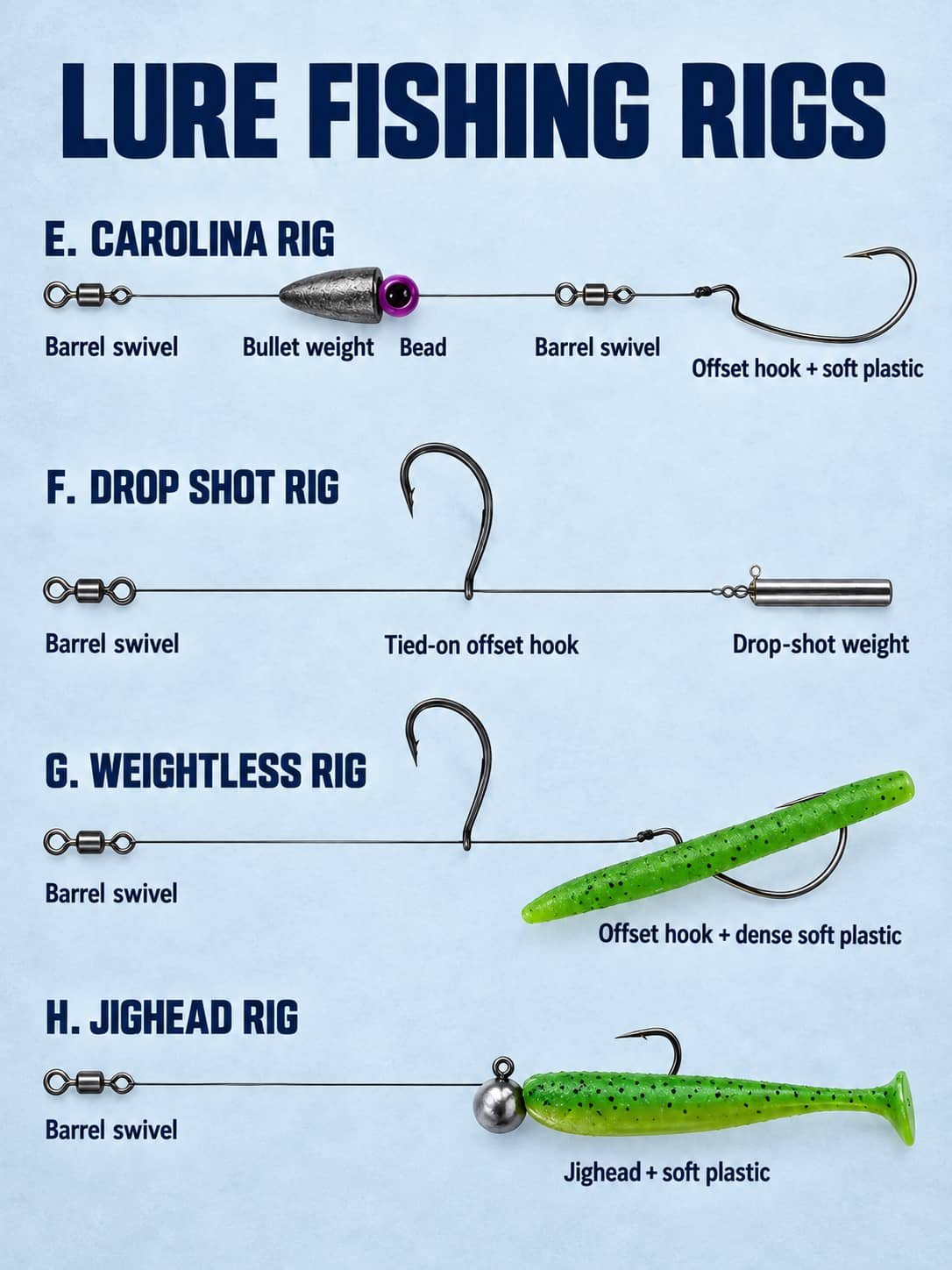
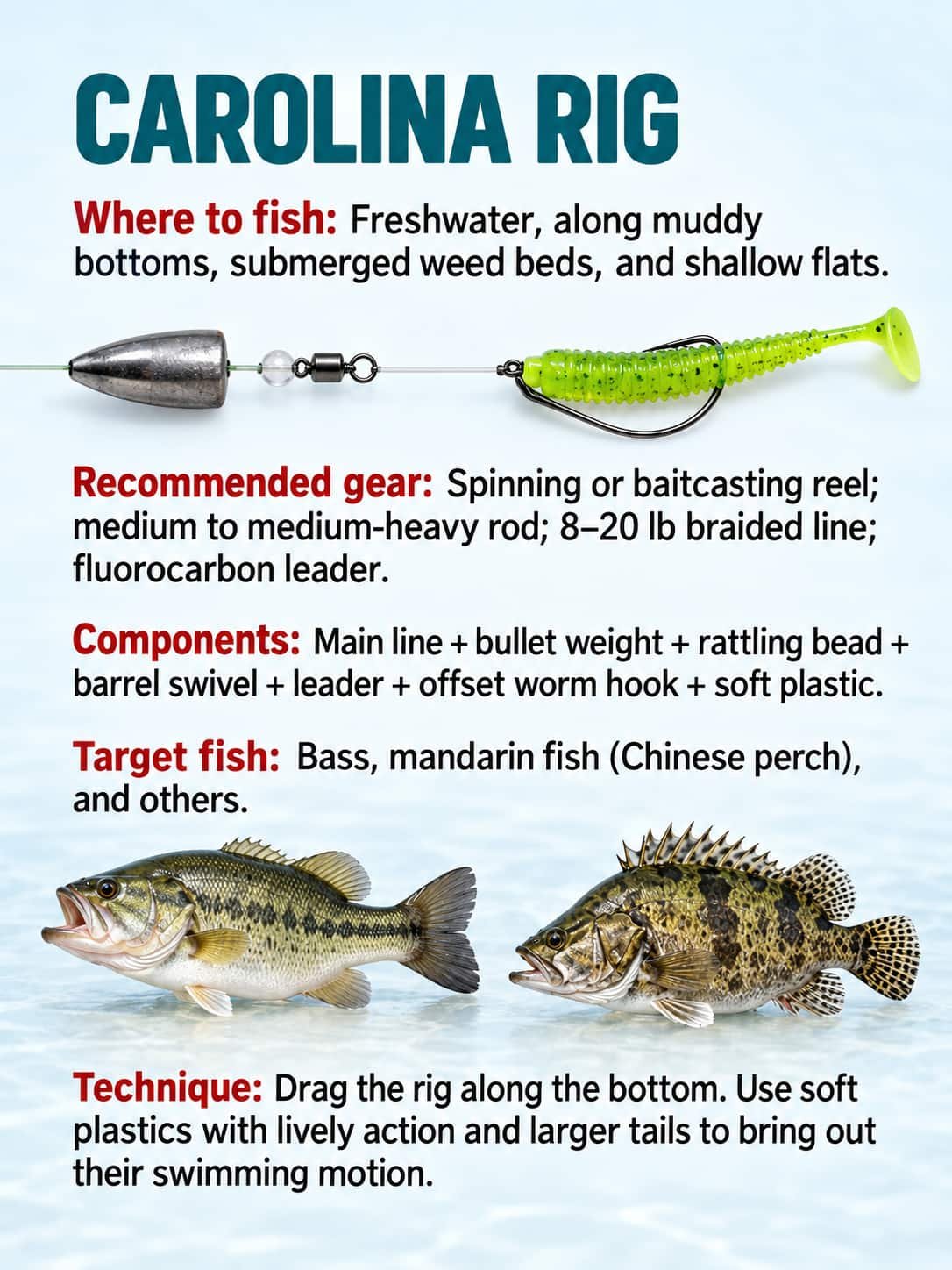
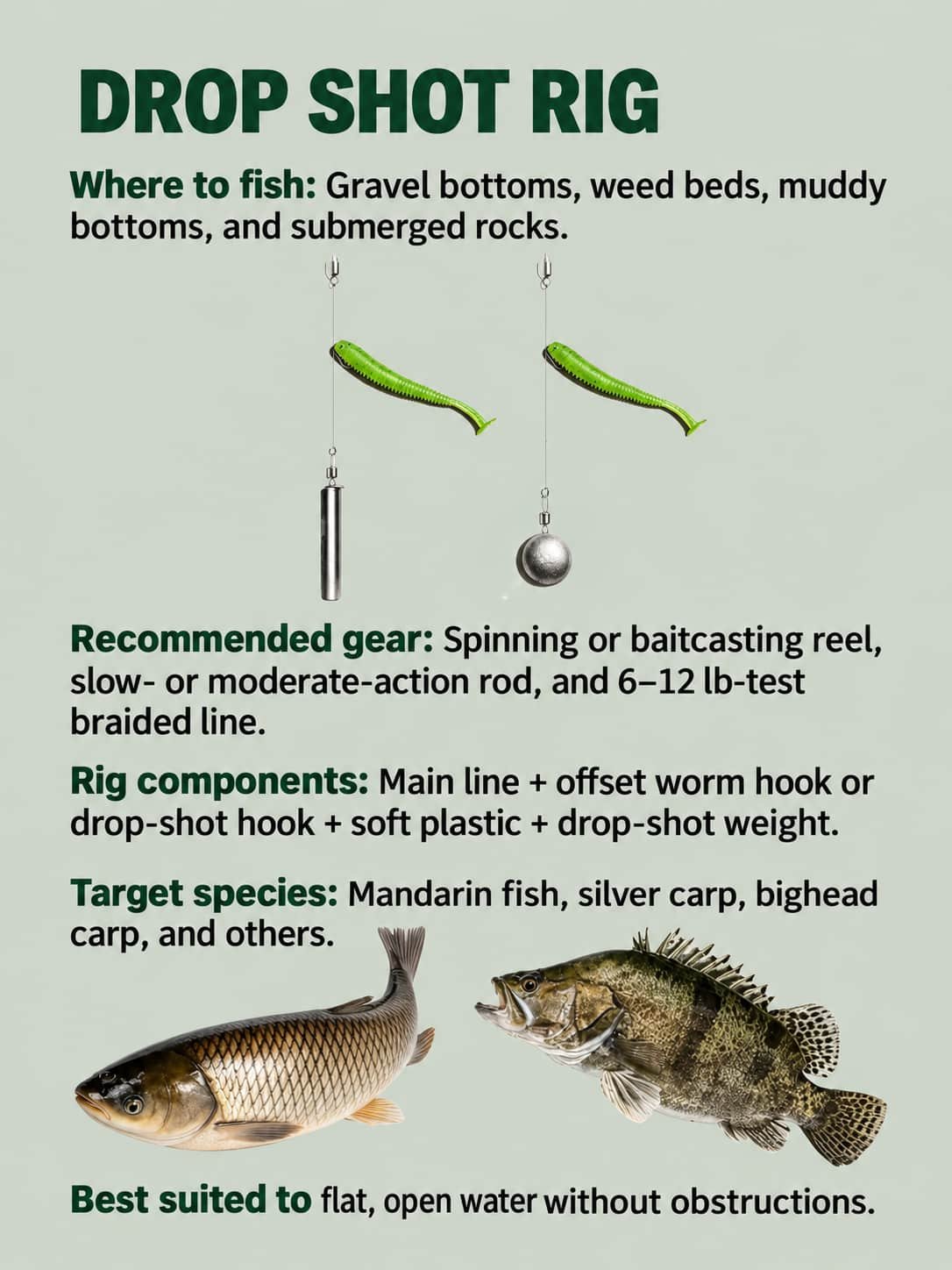
| 3 | Rig diagrams E–H | E: Carolina rig. F: Drop-shot rig. G: Weightless rig. H: Jighead rig. The diagrams show the order of the line, weight, hook, and lure. |
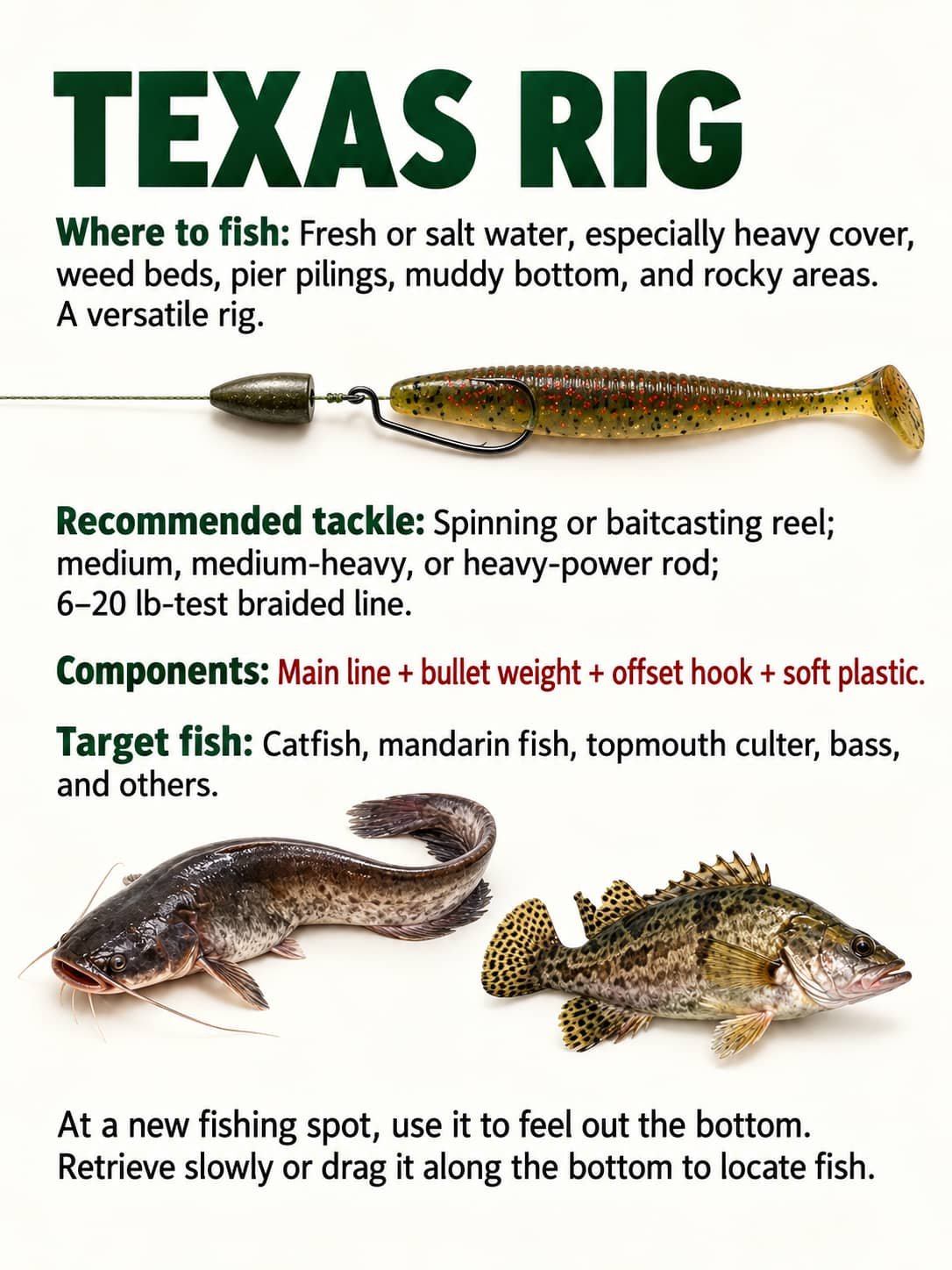
| 4 | Texas rig | For freshwater and saltwater, particularly weeds, pilings, muddy areas, and rocky bottoms. Main line + bullet weight + offset worm hook + soft plastic. The image recommends it for exploring unfamiliar water with a slow retrieve or dragging presentation. |
| 5 | Small spinner blade and fly | Method 1: Sinking casting float + spinner blade + fly. Keep retrieving; pauses and short twitches can be added. Method 2: Floating casting float + fly, without the spinner blade. Let the fly drift on the surface with the current; retrieving is optional. |
| 6 | Carolina rig | Primarily for freshwater over mud, near submerged weeds, and across fairly flat shallow areas. Main line + bullet weight + rattling bead + swivel + leader + offset worm hook + soft plastic. The image recommends dragging the rig along the bottom. |
| 7 | Drop-shot rig | The image lists sand or gravel bottoms, weeds, mud, and submerged rocks. The hook and soft plastic sit above the drop-shot weight; two weight shapes are illustrated. Its final line also recommends flat water without obstructions. |
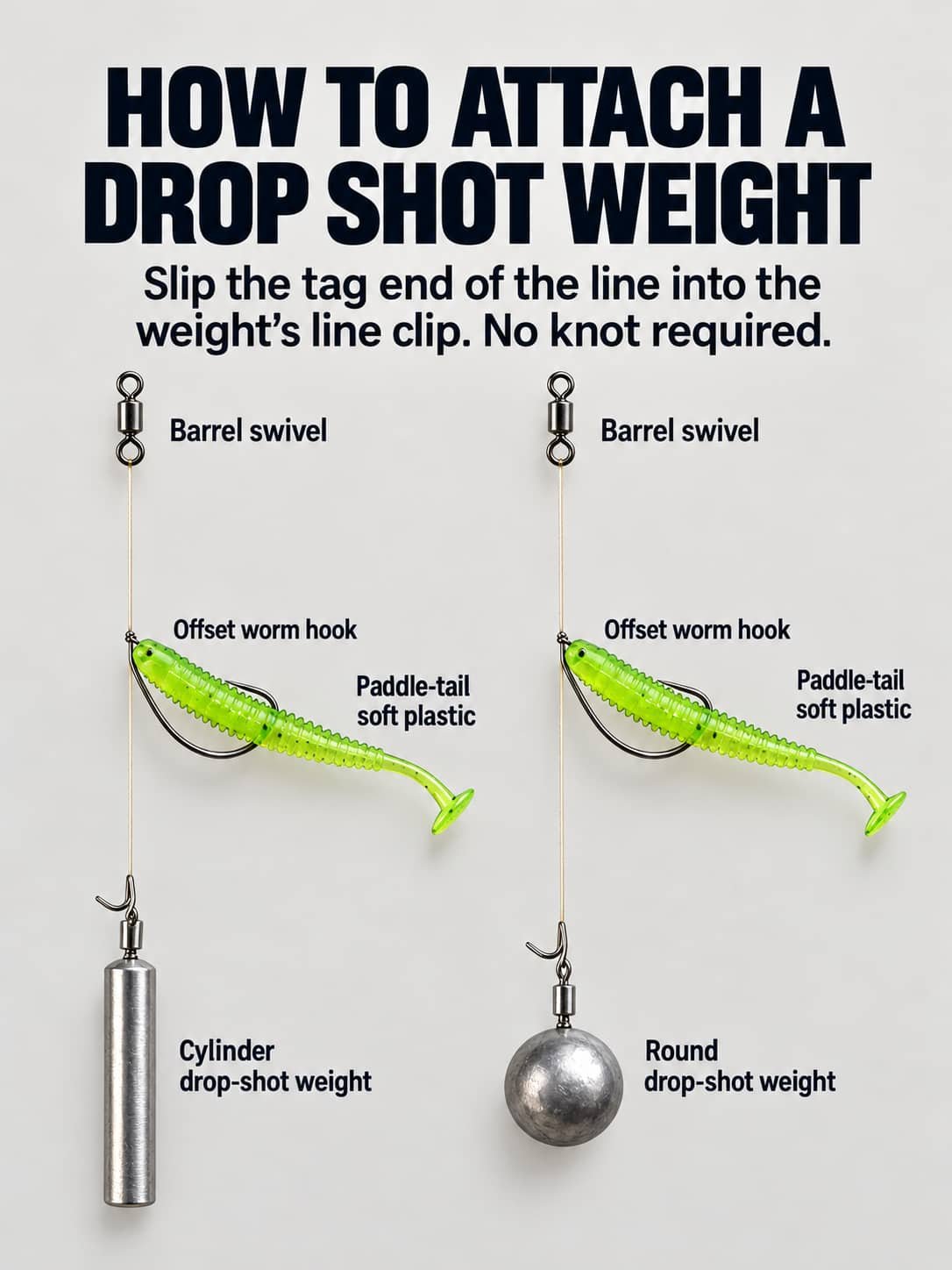
| 8 | Attaching a drop-shot weight | Clip the tag end of the line into the weight’s line clip without tying a knot. Cylindrical and round weights are shown. |
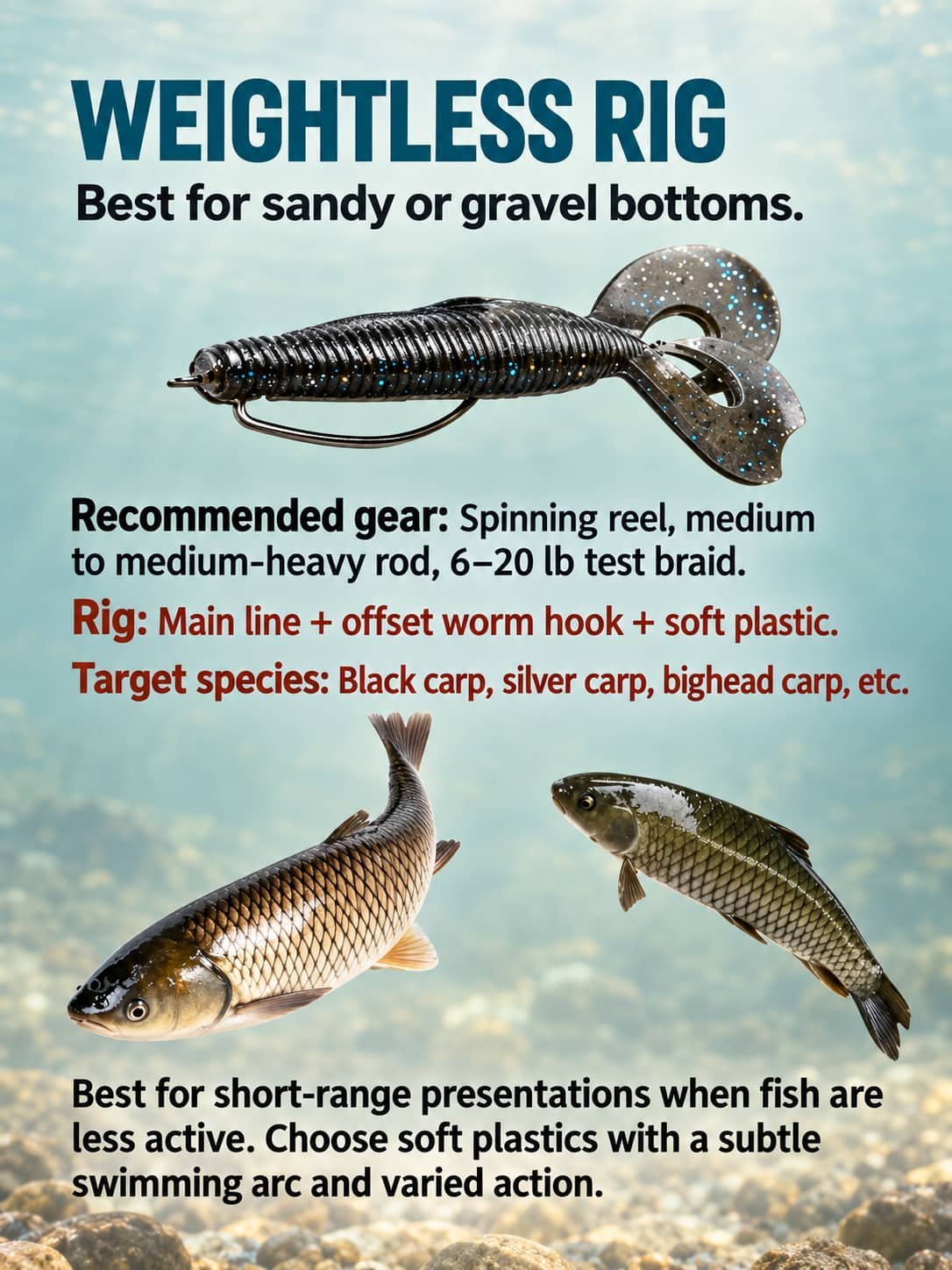
| 9 | Weightless rig | For sand or gravel bottoms. Main line + offset worm hook + soft plastic, with no added weight. Intended for short-range presentations when fish are less active; the image recommends soft plastics with subtle, varied swimming action. |
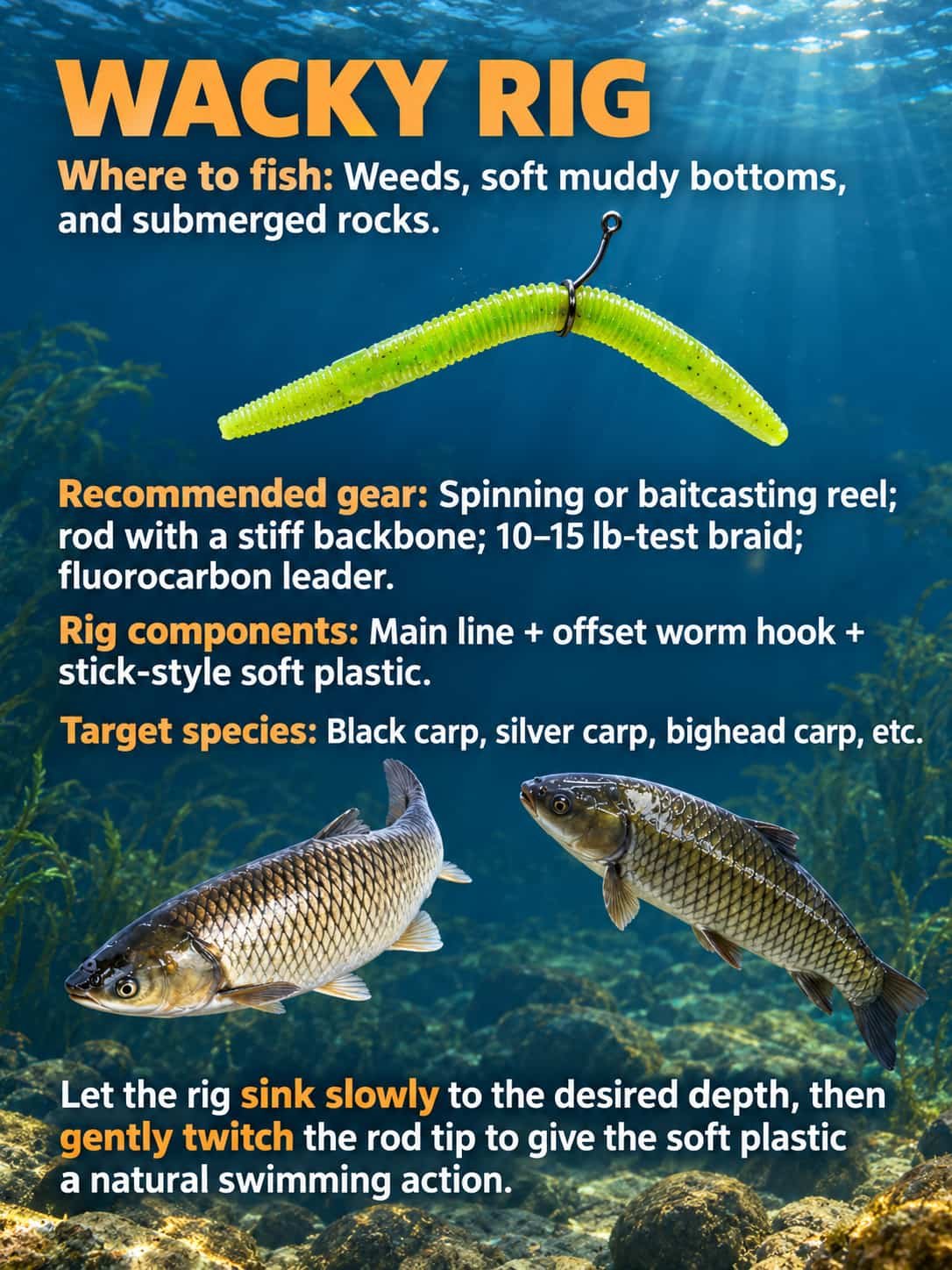
| 10 | Wacky rig | The image lists weeds, muddy bottoms, and submerged rocks. Main line + offset worm hook + stick-style soft plastic. Let the bait sink slowly to the desired depth, then lightly twitch the rod tip to give it a natural action. |
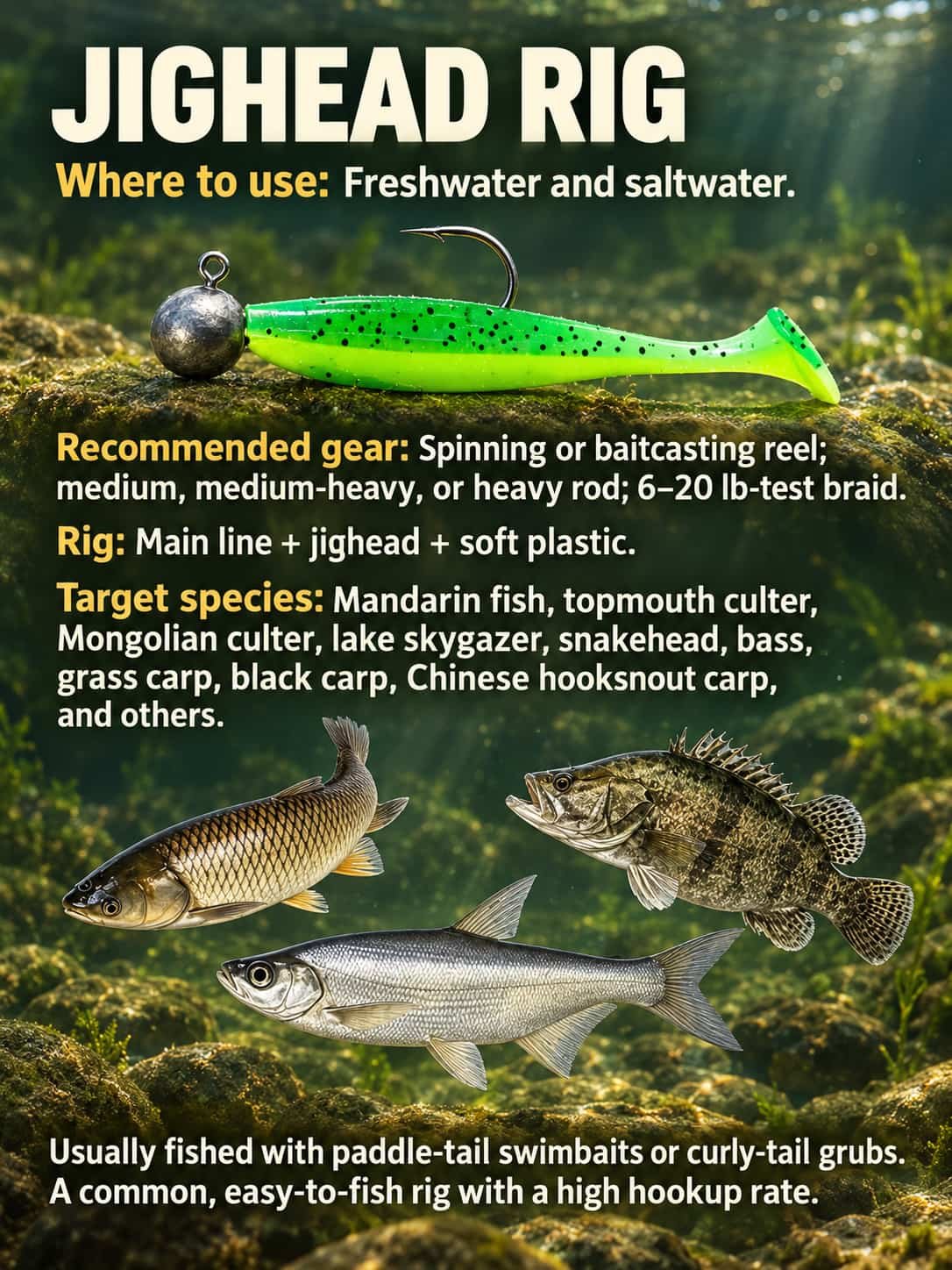
| 11 | Jighead rig | For freshwater and saltwater. Main line + jighead + soft plastic. Commonly paired with a paddle-tail swimbait or curly-tail grub; the image describes it as easy to fish with a high hookup rate. |
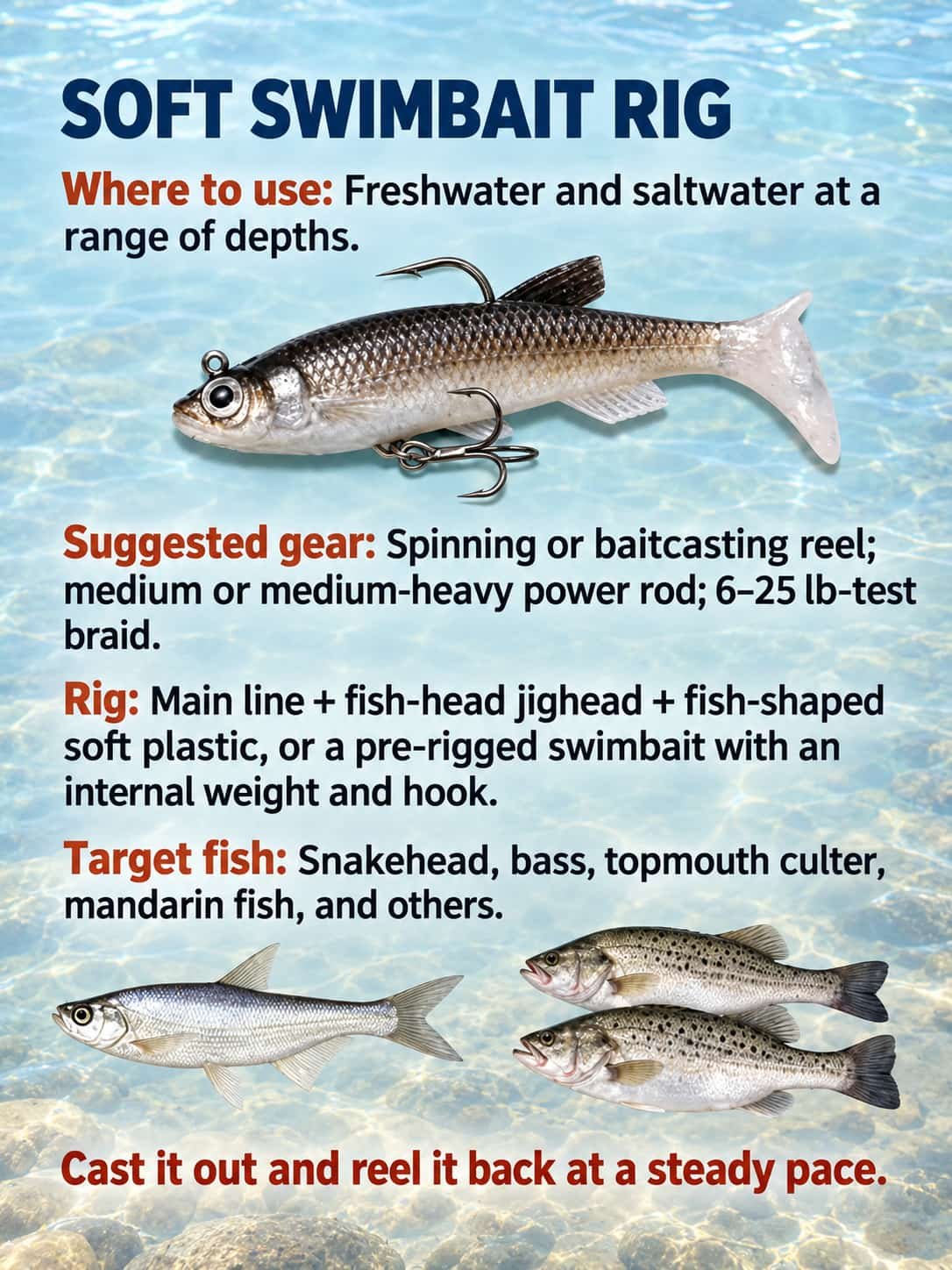
| 12 | Soft swimbait rig | For freshwater and saltwater at various depths. Use a fish-head jighead with a fish-shaped soft plastic, or a pre-rigged swimbait with an internal weight and hook. Cast it out and reel it back at a steady pace. |
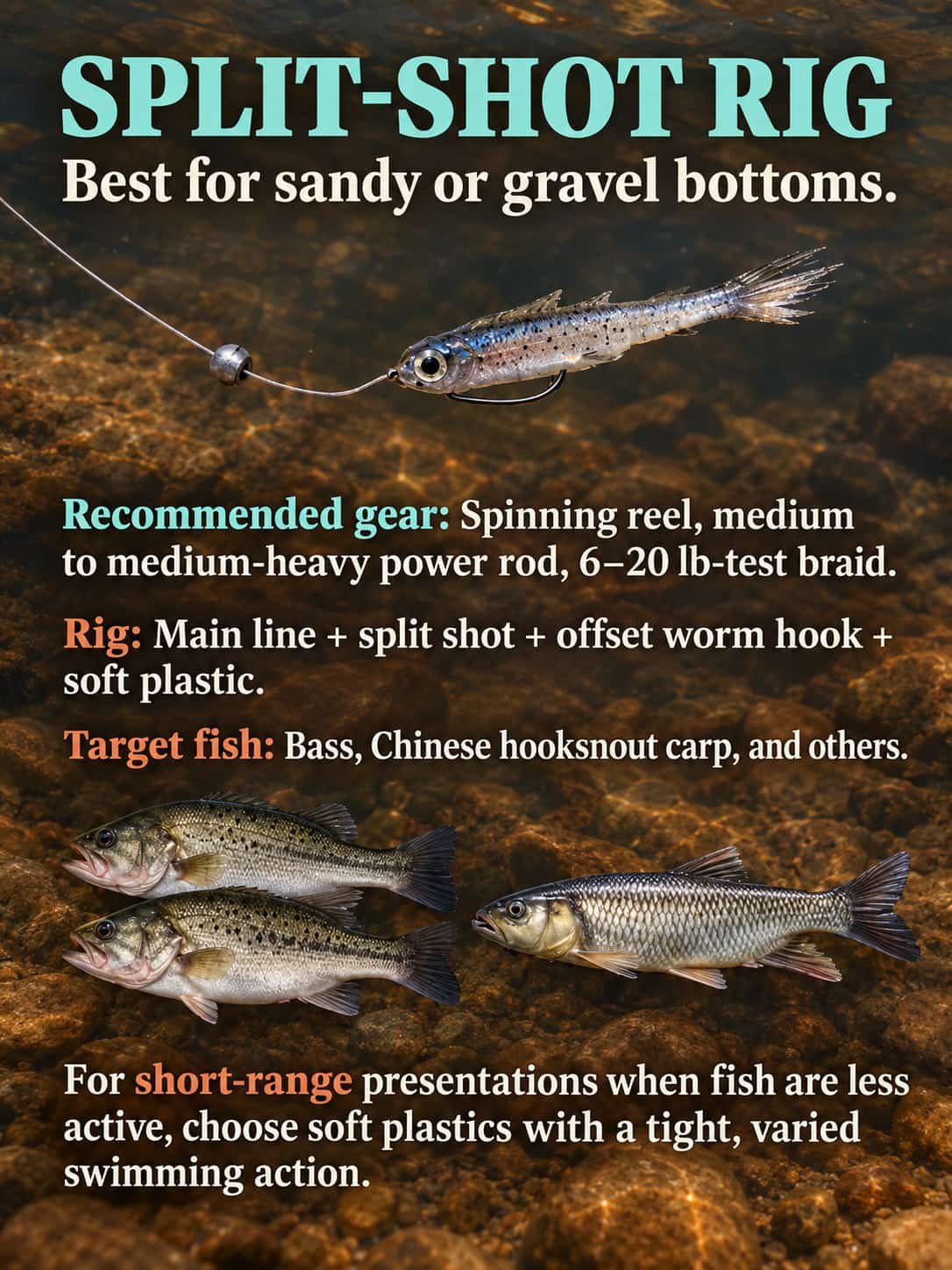
| 13 | Split-shot rig | For sand or gravel bottoms. Main line + split shot + offset worm hook + soft plastic. Intended for short-range presentations when fish are less active; the image recommends soft plastics with a tight, varied swimming action. |
| no | Recommended gear | Target fish |
|---|---|---|
| Texas rig | Spinning or baitcasting reel; medium, medium-heavy, or heavy-power rod; 6–20 lb-test braid | Bass, mandarin fish, topmouth culter, catfish |
| Carolina rig | Spinning or baitcasting reel; medium to medium-heavy rod; 8–20 lb-test braid; fluorocarbon leader recommended | Bass, mandarin fish |
| Drop-shot rig | Spinning or baitcasting reel; light or medium rod; 6–12 lb-test braid | Mandarin fish, silver carp, bighead carp |
| Weightless rig | Spinning reel; medium to medium-heavy rod; 6–20 lb-test braid | Black carp, silver carp, bighead carp |
| Wacky rig | Spinning or baitcasting reel; rod with a stiff backbone; 10–15 lb-test braid; fluorocarbon leader | Black carp, silver carp, bighead carp |
| Jighead rig | Spinning or baitcasting reel; medium, medium-heavy, or heavy-power rod; 6–20 lb-test braid | Mandarin fish, topmouth culter, Mongolian culter, lake skygazer, snakehead, bass, grass carp, black carp, Chinese hooksnout carp |
| Soft swimbait rig | Spinning or baitcasting reel; medium or medium-heavy rod; 6–25 lb-test braid | Snakehead, bass, topmouth culter, mandarin fish |
| Split-shot rig | Spinning reel; medium to medium-heavy rod; 6–20 lb-test braid | Bass, Chinese hooksnout carp |
More to Explore
Related Articles
More guides in Fishing Techniques
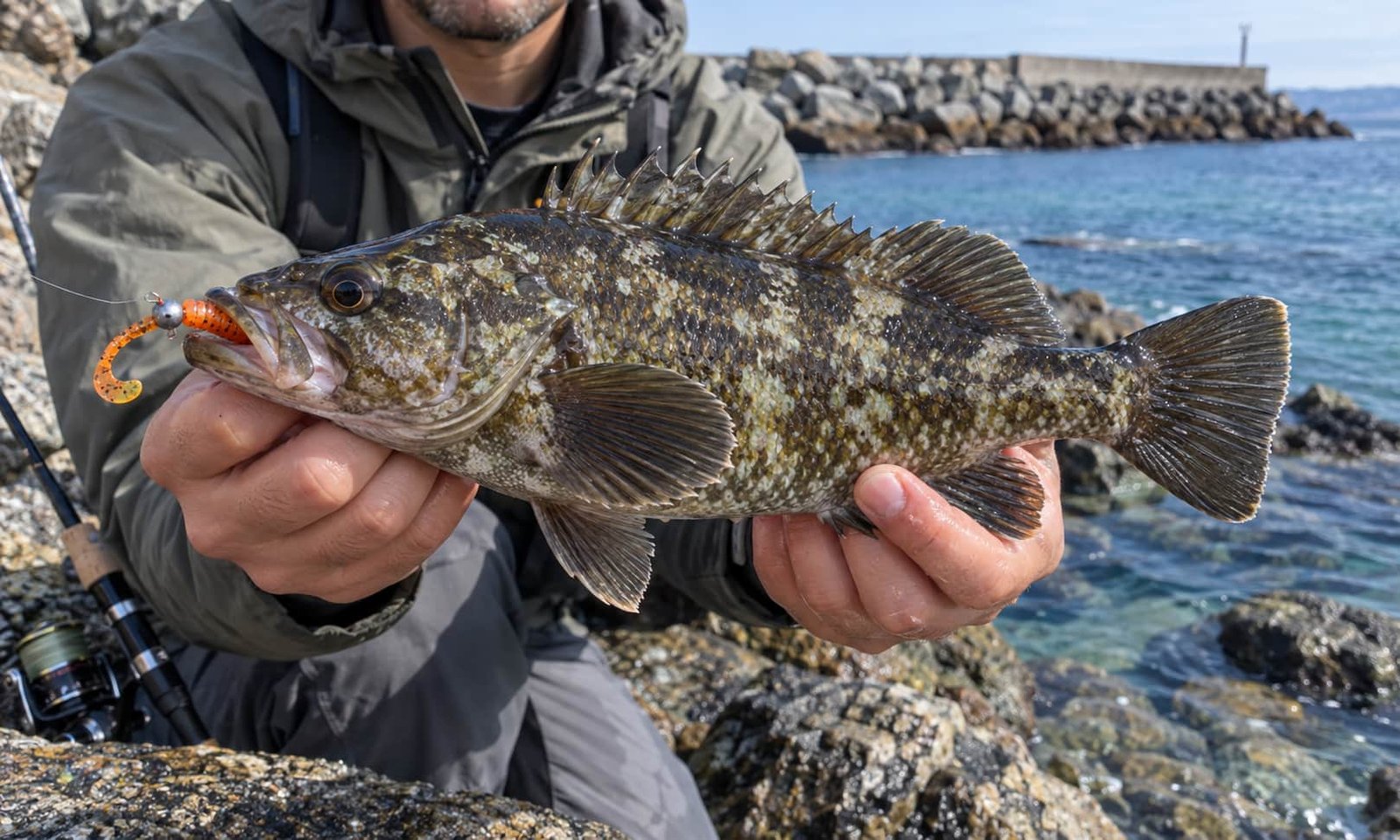
Learn how to catch rockfish from shore by reading the structure first. Target crevices, rocky edges, and the base of breakwaters, then keep your soft plastic close to the bottom where fish are likely to hold.
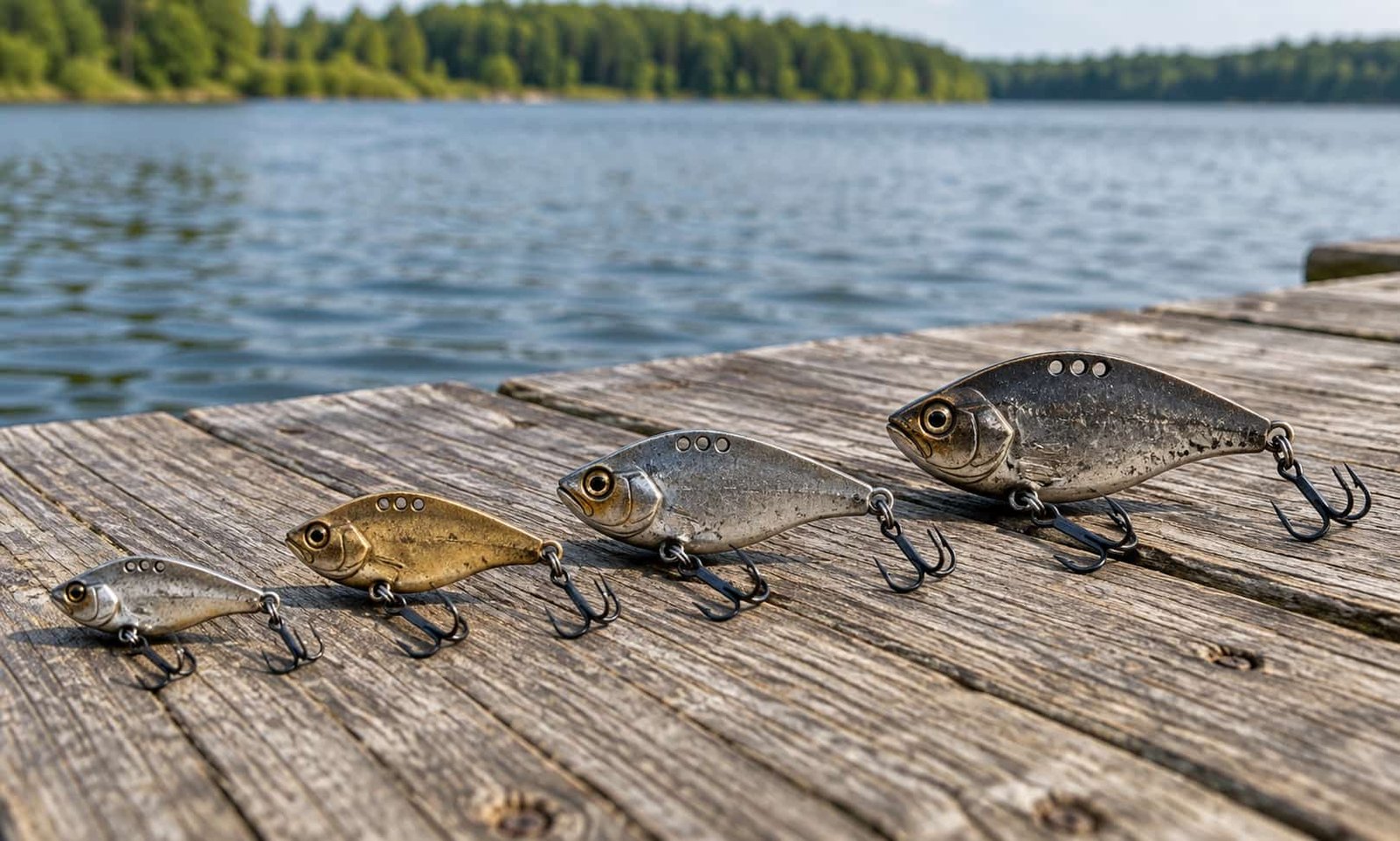
Learn how to choose a blade bait by weight, vibration, flash, and profile. See how a thin body affects the action and how to work the lure effectively.
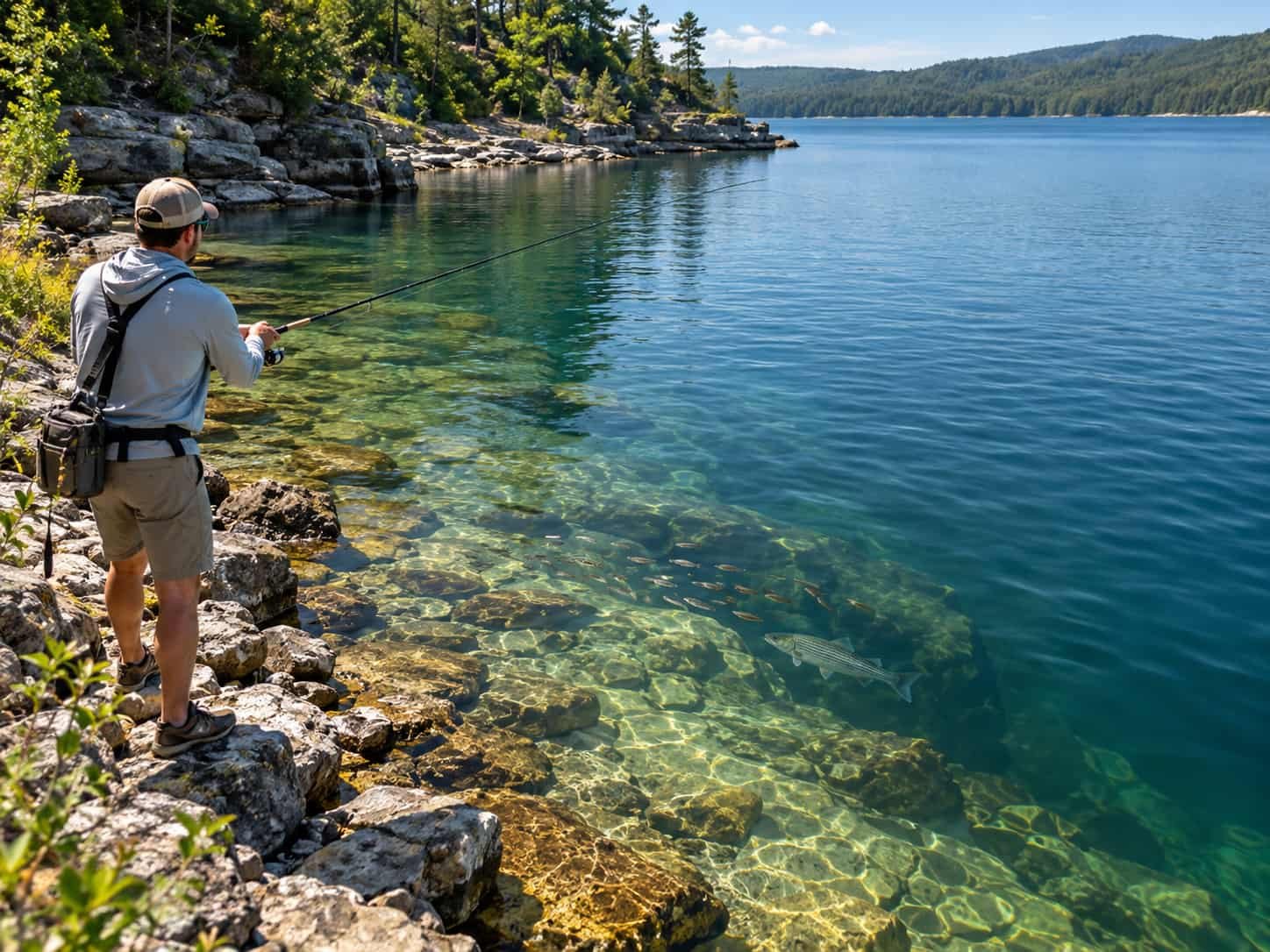
Learn how to find fish in new water with a metal jig, a slow bottom search, and a closer look at the shallow-to-deep break.
These weird fishing rigs combine hard baits and soft plastics in unexpected ways. See how each setup is built and whether one fits your next trip.
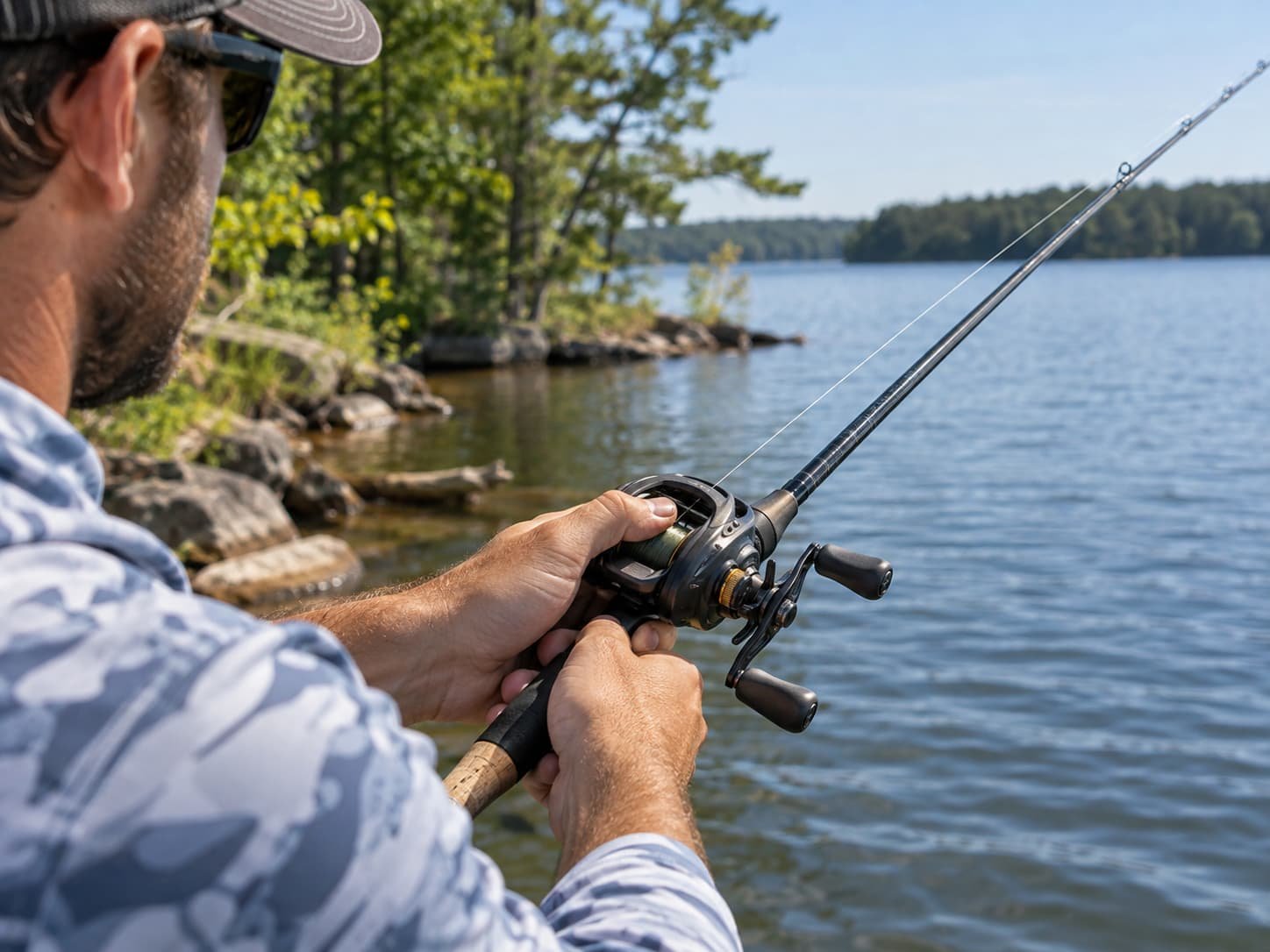
New to baitcasting? Learn how to prevent backlash on a baitcaster by setting the brakes, adjusting spool tension, and feathering the spool with your thumb.
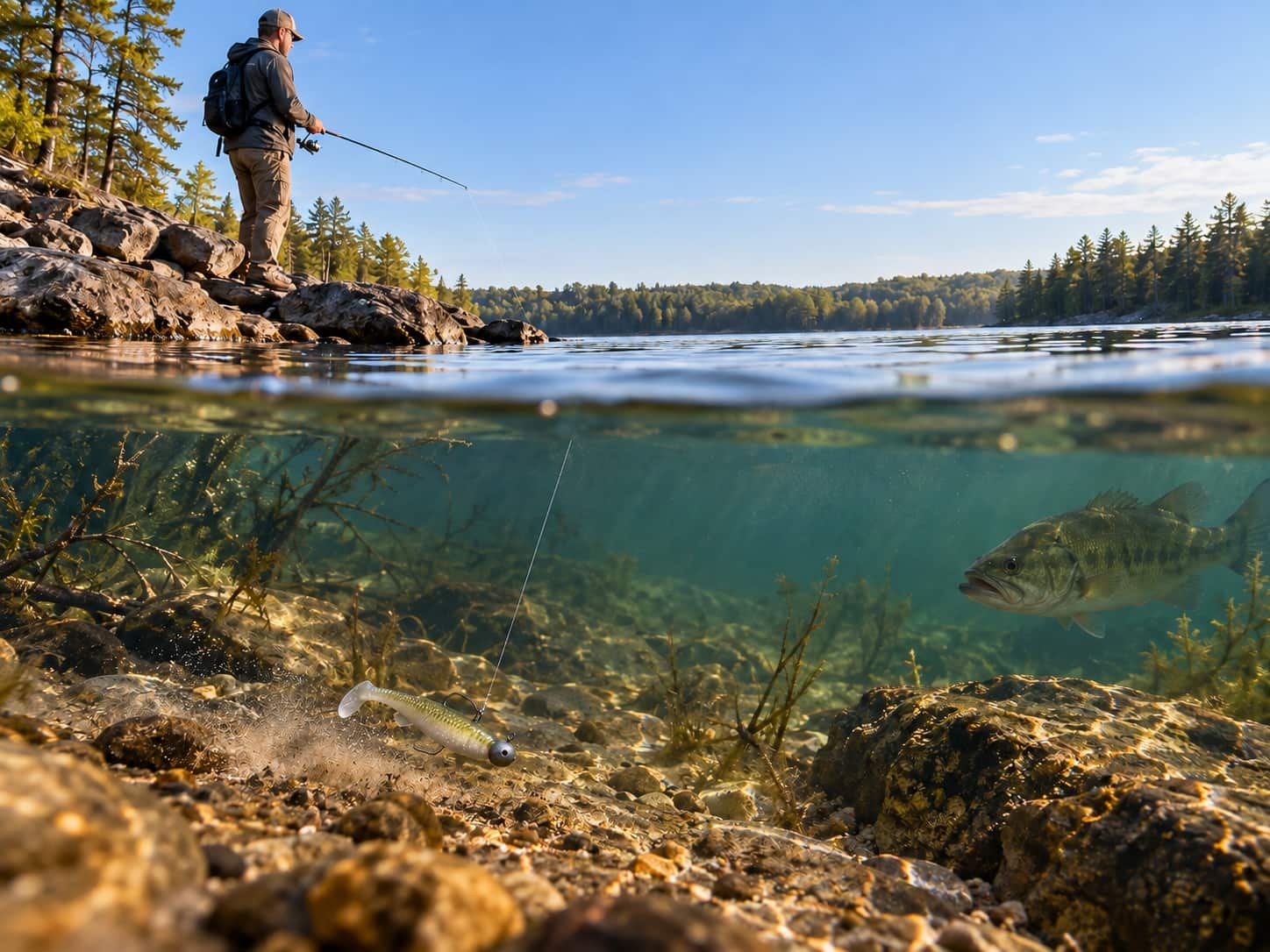
Learn how to retrieve fishing lures by reading fish behavior. From sharp jerks to slow drags, adjust your presentation and make every move count.
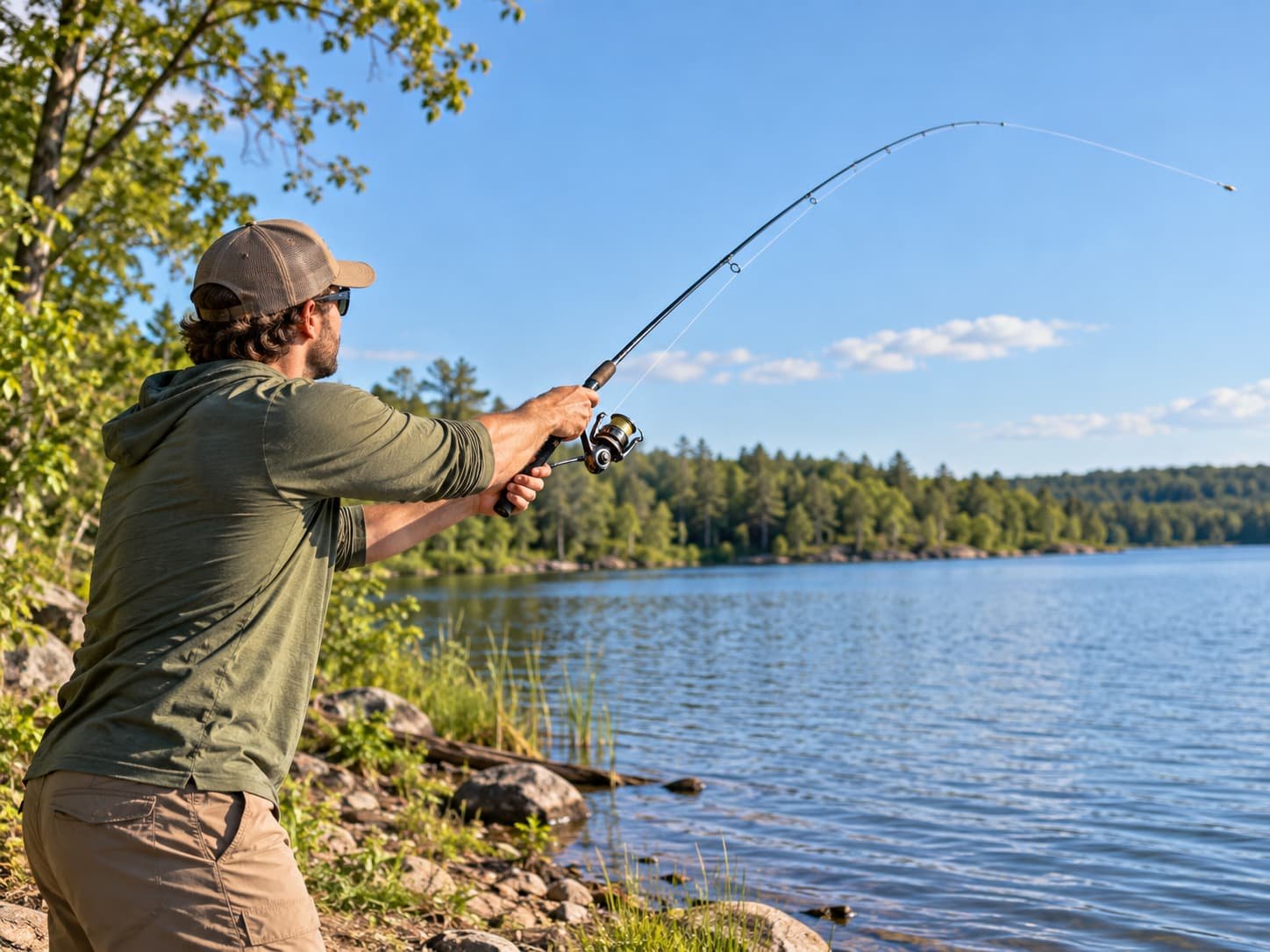
See how to cast a spinning reel from start to finish: hold the line, open the bail, swing forward, and use your finger to control where the lure lands.
Fall crucian carp fishing tips for choosing where to fish. See why shallow edges, vegetation, and nearby cover deserve a closer look.