How to Choose Soft Plastic Lures That Get More Bites

- Category
- Fishing lure
- Date
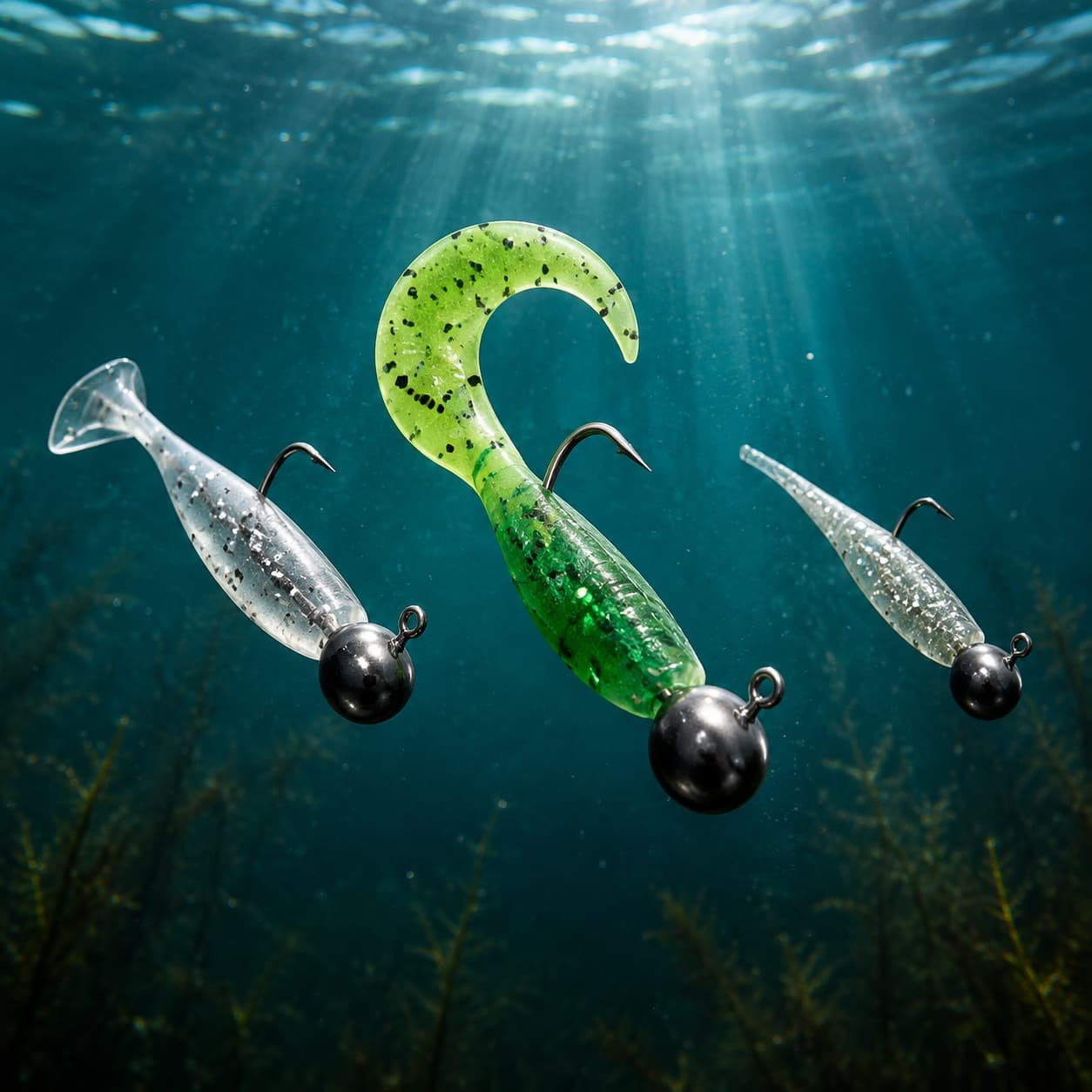
New water can make even a familiar tackle box feel confusing. You see current, grass, shade, bridge columns, and a dozen places where fish might be holding. That is when the tail on your soft plastic matters most.
A lively T-tail helps you search when fish are feeding actively. A pin tail works better when the target area is small and fish have time to inspect the bait. The curly tail is the simple all-round option when you need a natural action without overthinking the retrieve. Work each lure through the right layer of water, not just the depth you prefer to fish.
This guide shows how to choose the right soft plastic lure for the conditions in front of you. Read the signs, choose with intention, and make the next cast count.
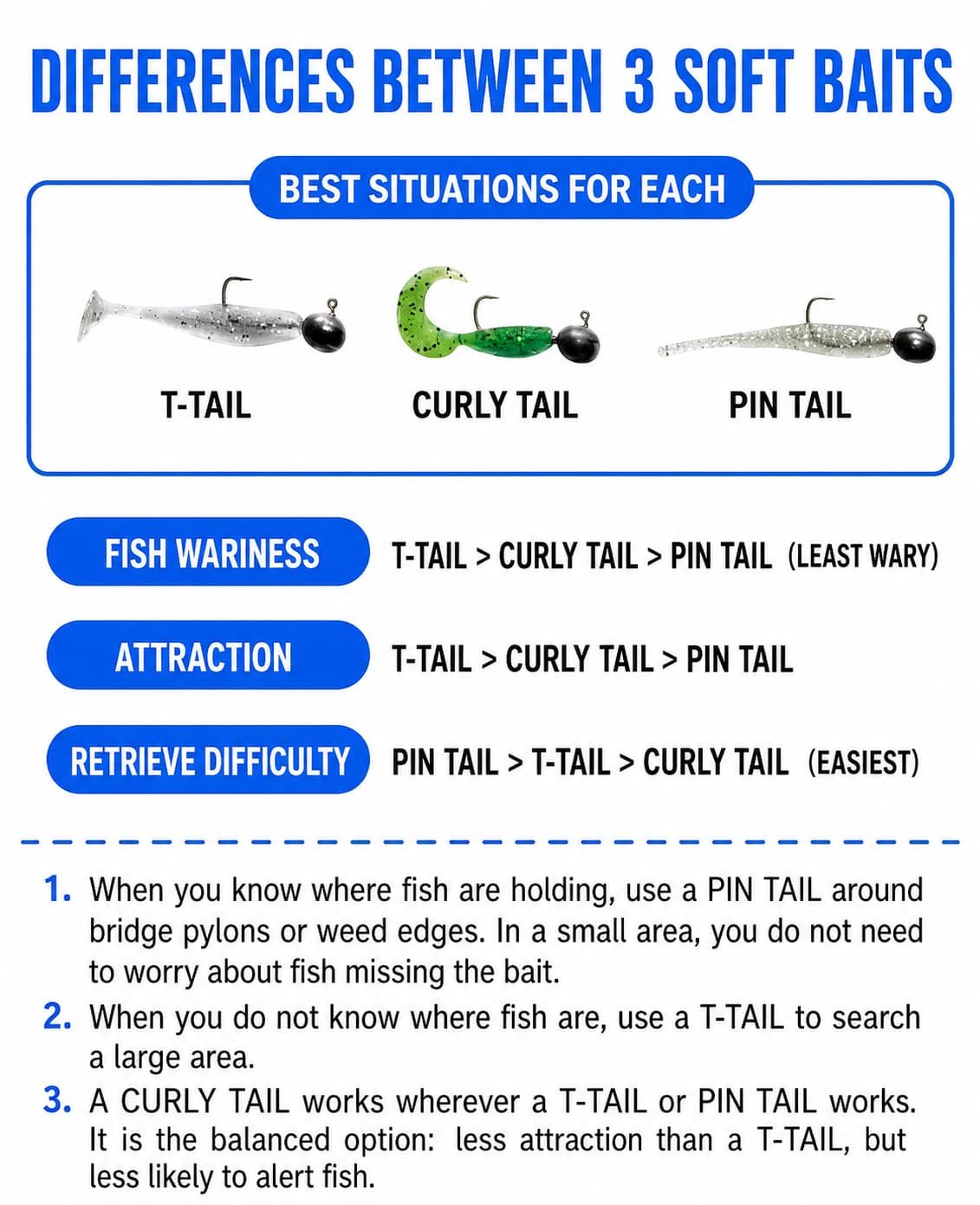
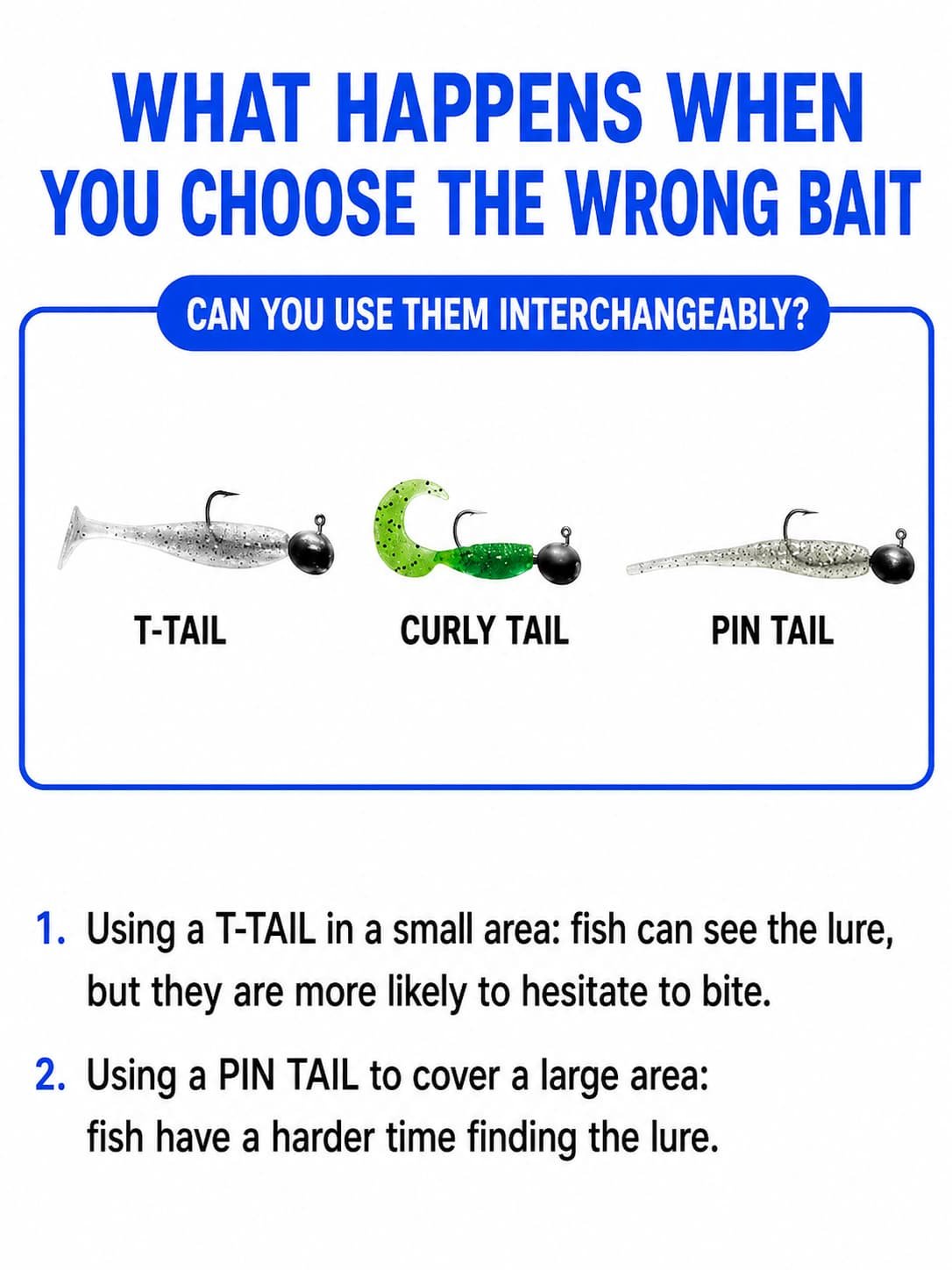
How do paddle tails, curly tails, and pin tails differ?
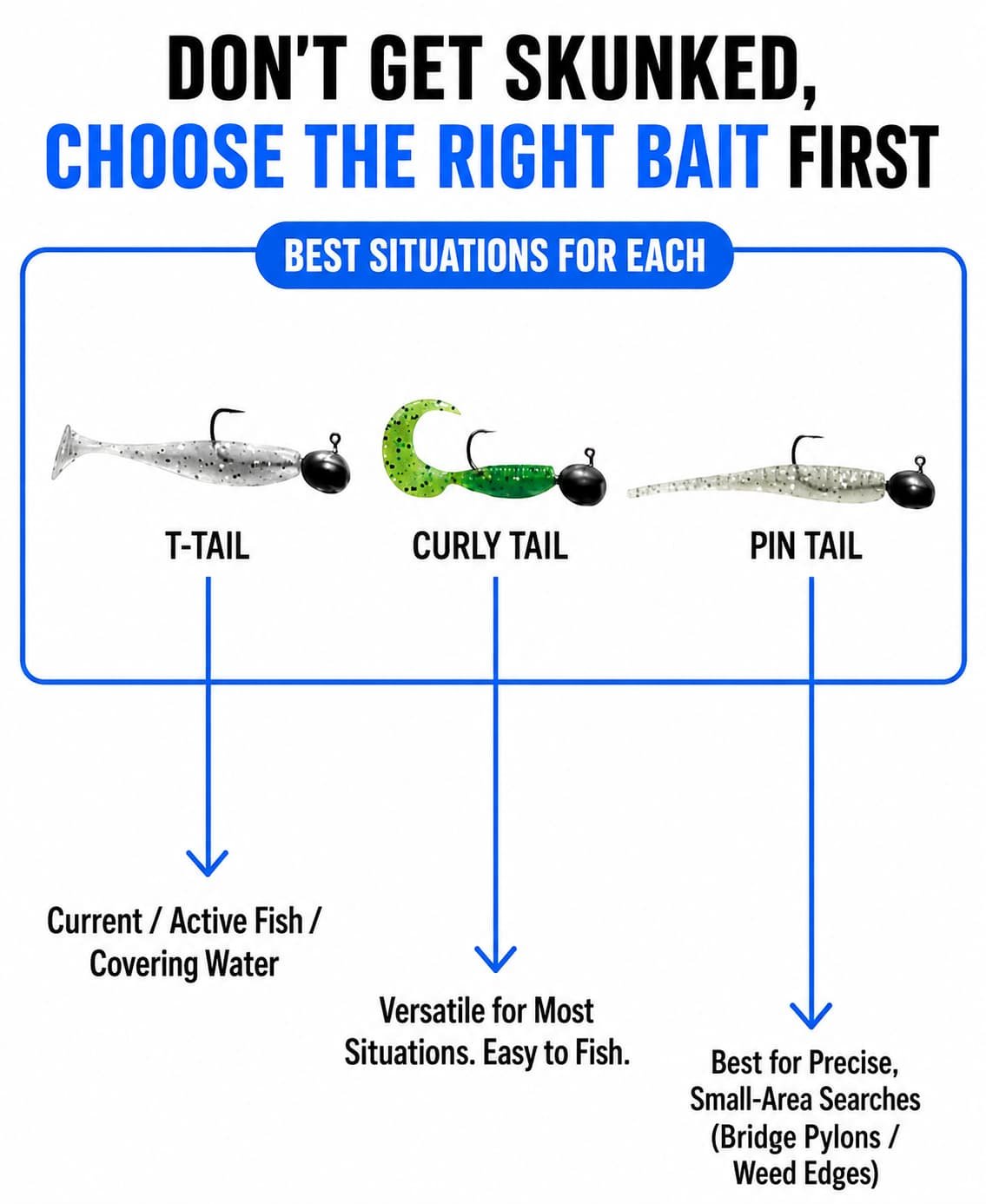
Paddle tails produce a broad swimming action, curly tails create a smaller, quicker flutter, and pin tails make compact darts with little side-to-side movement. Choose a paddle tail to search larger areas, a curly tail for a simple swimming retrieve, or a pin tail to work a specific holding spot.
A jighead is a weighted hook that carries the soft plastic and helps the lure sink. All three presentations here use a soft plastic threaded onto a jighead.
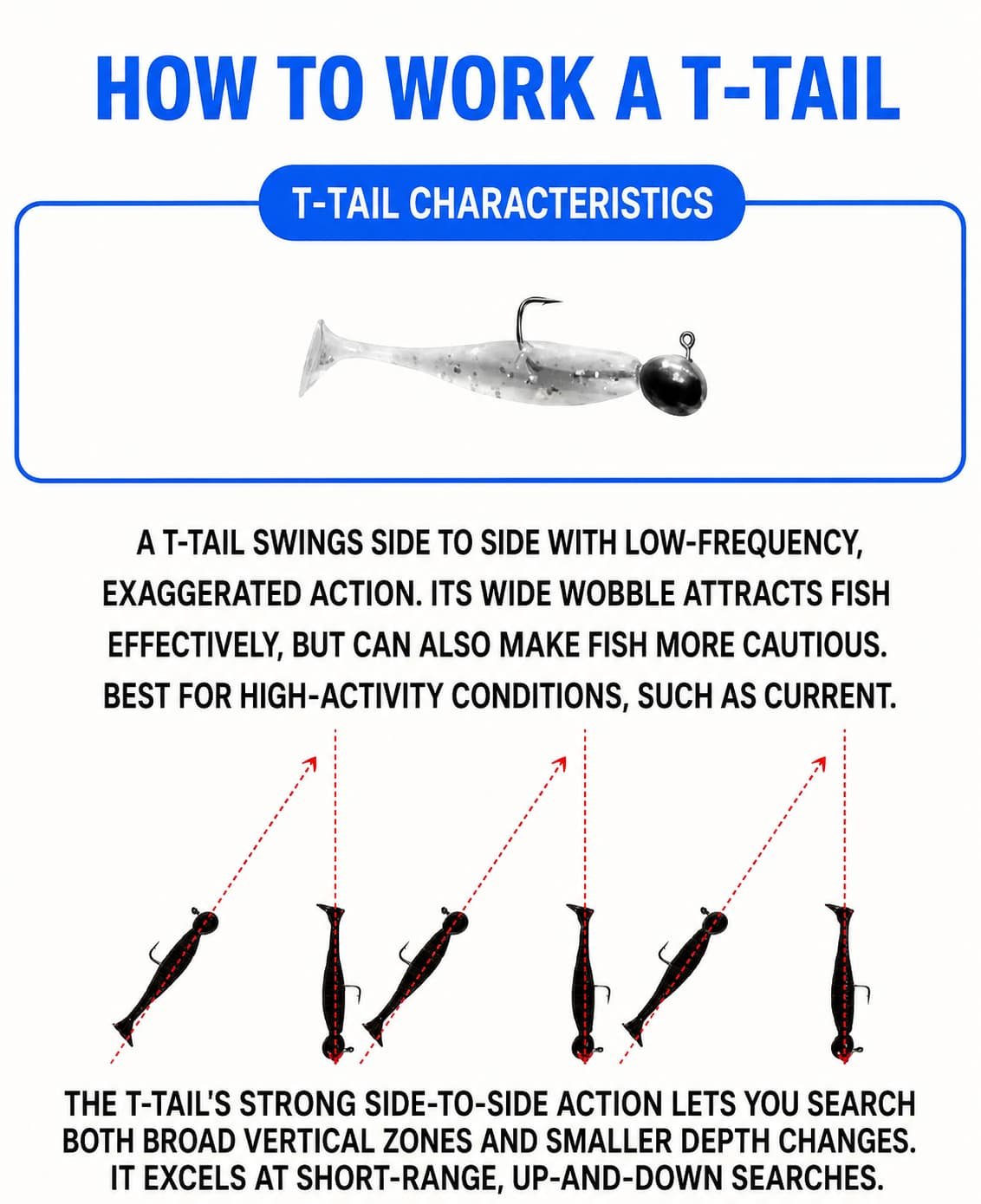
A paddle tail, also called a T-tail, ends in a flattened paddle that kicks as water passes over the tail. A curly-tail grub has a curved, flexible tail that flutters during the retrieve. A pin-tail soft plastic has a slender tail without a broad paddle or curl.
| Tail style | Main movement | Useful starting situation | Relative difficulty |
|---|---|---|---|
| Paddle tail | Broad tail kick and swimming action | Covering water, current, or active fish | Between the other two styles |
| Curly tail | Smaller, quicker tail flutter | A straightforward swimming presentation | Easiest |
| Pin tail | Short vertical darts and falls | A known spot near bridge pilings or weed edges | Most dependent on timing |
The general progression in noticeable action runs from paddle tail to curly tail to pin tail. The possibility of making hesitant fish wary can follow the same order. Treat that comparison as a starting guide, rather than a fixed rule about fish behavior.
How do you search different depths with a soft plastic?
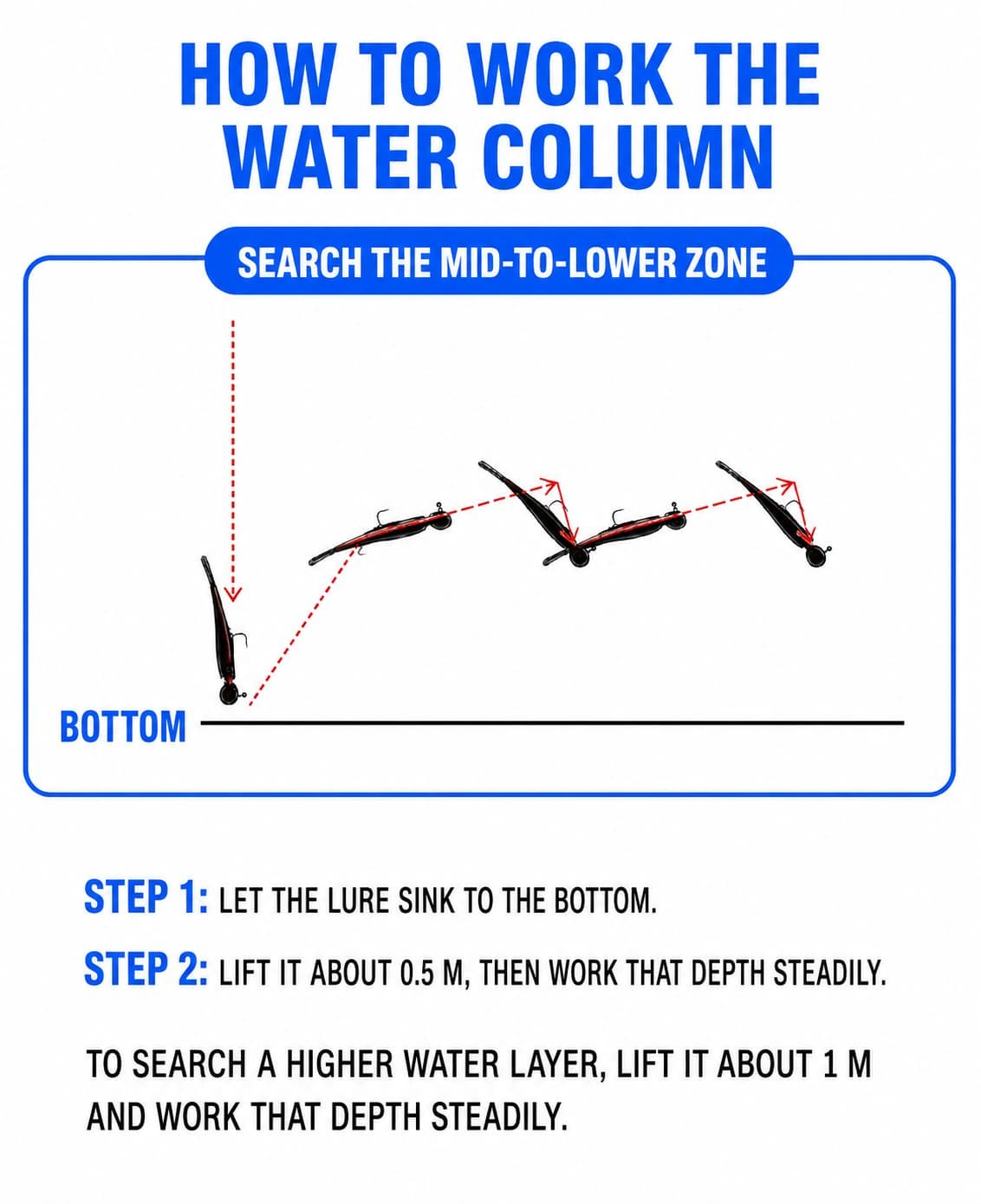
Let the jighead reach bottom, then lift the lure roughly 0.5 m, or about 20 inches, and work that zone consistently. To check higher water, use roughly 1 m, or about 3.3 feet, above bottom as the next reference. Search one depth band before moving to another.
The water column is the water between the surface and the bottom. Starting at bottom gives you a reference for searching the lower and middle portions of that space.
- Let the lure reach bottom. Establish the starting depth before working the lure.
- Work about 0.5 m above bottom. Use a controlled retrieve to examine the lower zone.
- Check about 1 m above bottom. Move to this higher target after searching the first band.
The second target sits about 1 m above bottom; do not add another meter to the first lift. Both distances describe approximate lure positions. Rod-tip travel and lure movement will not necessarily match.
How do you fish a pin-tail soft plastic around holding spots?
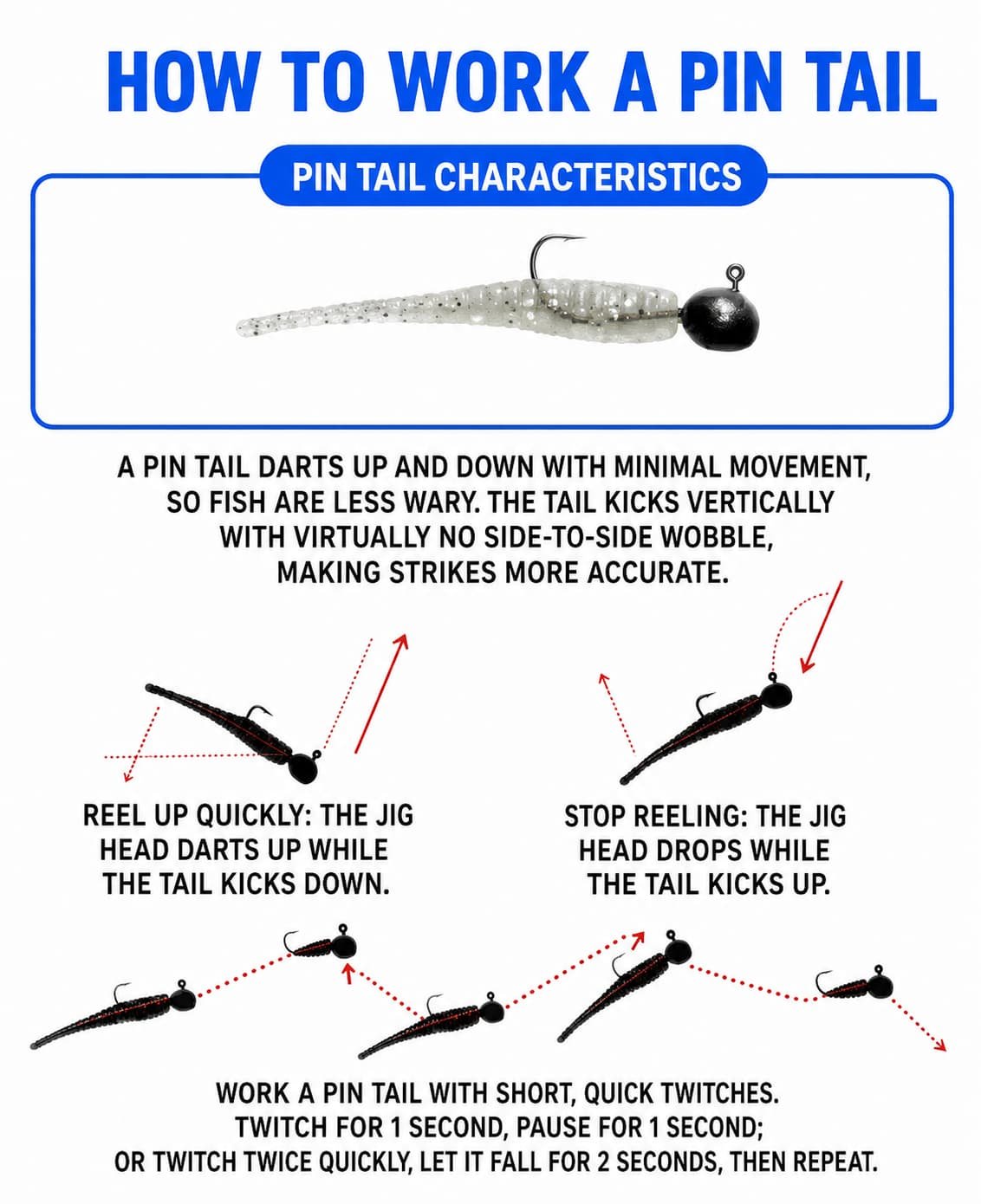
Work a pin-tail soft plastic with short, quick twitches followed by pauses near a known holding spot. Try twitching for 1 second and pausing for 1 second, or make two quick twitches and allow a 2-second fall. This controlled presentation suits small areas around bridge pilings and weed edges.
A twitch is a short, quick rod-tip movement that moves the lure. A pause means stopping the retrieve so the weighted lure can fall. That falling movement forms part of the presentation and deserves as much attention as the lift.
Quick movements raise the jighead, while pauses let the weighted head drop. The flexible tail follows those changes, producing compact up-and-down movement with limited sideways wobble. The angler supplies much of the action, which makes timing more demanding than a steady curly-tail retrieve.
Use either rhythm as a starting point:
- Twitch for 1 second, then pause for 1 second. Repeat to alternate movement with a brief fall.
- Twitch twice quickly, then allow a 2-second fall. Repeat to give the falling portion more time.
Work the pin tail around a bridge piling or short stretch of weed edge when you have a reason to concentrate on that small area.
How do you retrieve a curly-tail grub?
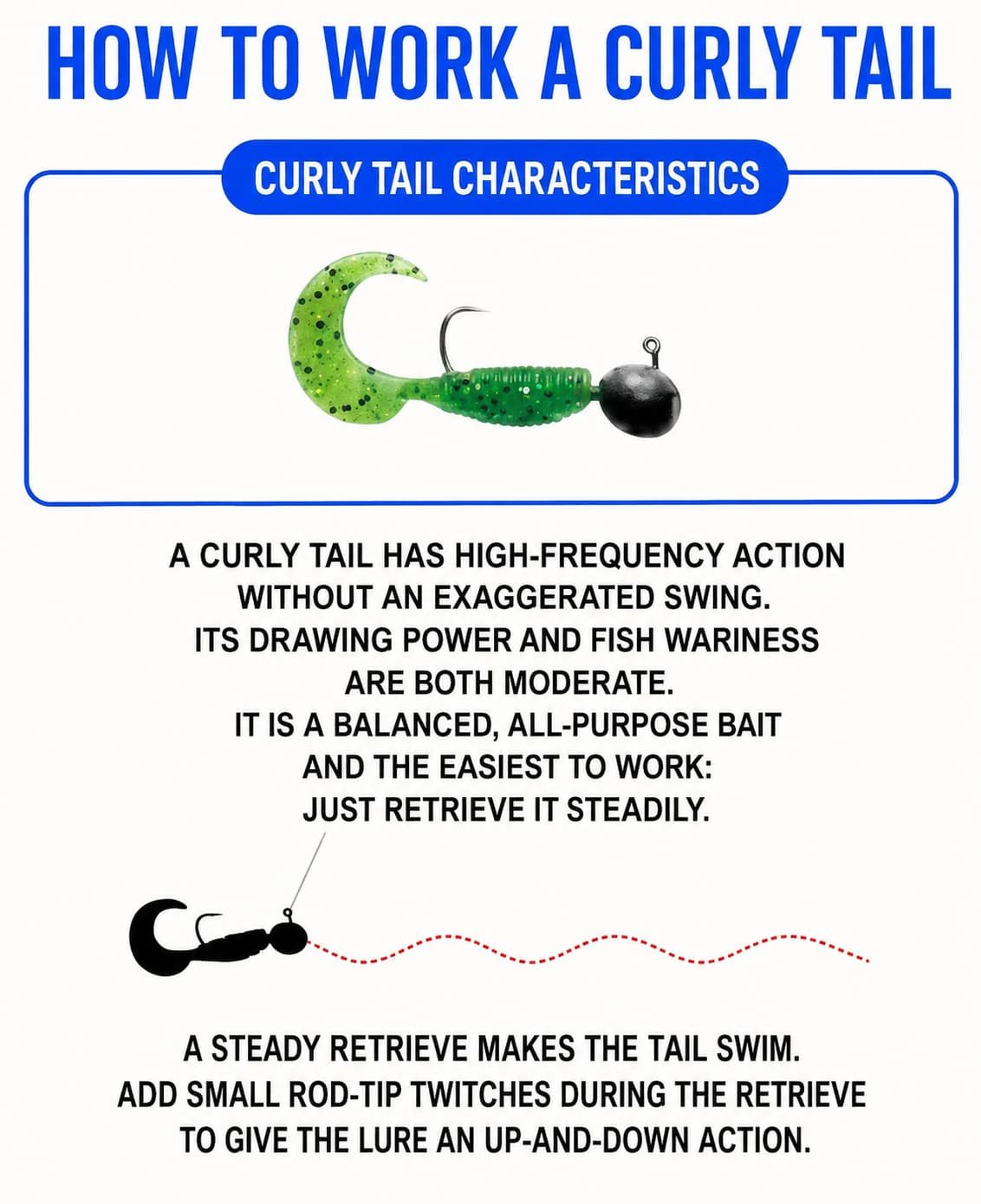
Retrieve a curly-tail grub steadily so the flexible tail can flutter as the lure moves. Add small rod-tip twitches when you want a gentle rise-and-fall movement. This straightforward retrieve makes the curly tail a useful starting choice when you want an easy presentation between a paddle tail and a pin tail.
A steady retrieve means turning the reel handle at a consistent pace. The curly tail supplies movement as you reel, so constant rod-tip action is unnecessary. Let the tail work while you concentrate on the depth you want to search.
Small twitches can interrupt the straight swimming path with gentle vertical changes. Keep those movements brief, then return to steady reeling. The basic presentation should remain easy to repeat.
Choose the curly tail when you want continuous tail movement without managing a repeated twitch-and-pause rhythm.
When should you use a paddle-tail soft plastic?
Use a paddle-tail soft plastic when you need to search a larger area, fish current, or present a noticeable swimming action to active fish. Work the jighead with controlled lifts and falls to check different depths. The pronounced tail kick gives this presentation more movement than either a curly tail or pin tail.
The broad tail action helps draw attention across a search area when you have not located fish.
Controlled lifts and falls also let you examine a section of the water column. Raise the jighead, allow the lure to fall, and repeat through the depth range you want to check. Keep the movements deliberate enough to recognize which band you are fishing.
Current and active fish are useful starting conditions for this stronger action. Around hesitant fish, however, the same movement may attract attention without producing a strike. Judge the paddle tail by the job you need the lure to do.
What happens when you choose the wrong tail style?
A paddle tail can create more movement than you need in a small holding area, while a pin tail can be too subtle for a broad search. Match the presentation to the job: draw attention while locating fish, then consider restrained movement when working a specific spot where fish may hold.
If hesitant fish avoid a paddle tail around one small spot, a pin tail offers a quieter presentation. The purpose of the change is to reduce the action while continuing to work the same area.
If a pin tail provides too little movement for a broad search, a paddle tail gives you a more conspicuous presentation.
A curly tail keeps the retrieve simple when you want a middle choice. Work a defined depth and make each change for a clear reason.
More to Explore
Related Articles
More guides in Fishing lure
Favorite lure color not getting bites? Learn how to choose lure colors for water clarity, light, and fish activity, from bright soft plastics to natural baitfish patterns.
Compare the best lures for trophy fish in plain English. See how six options move, where they work best, and which ones fit your next trip.
Learn how to fish a popper lure, from picking a weight for shallow or open water to working the surface with short twitches and pauses.
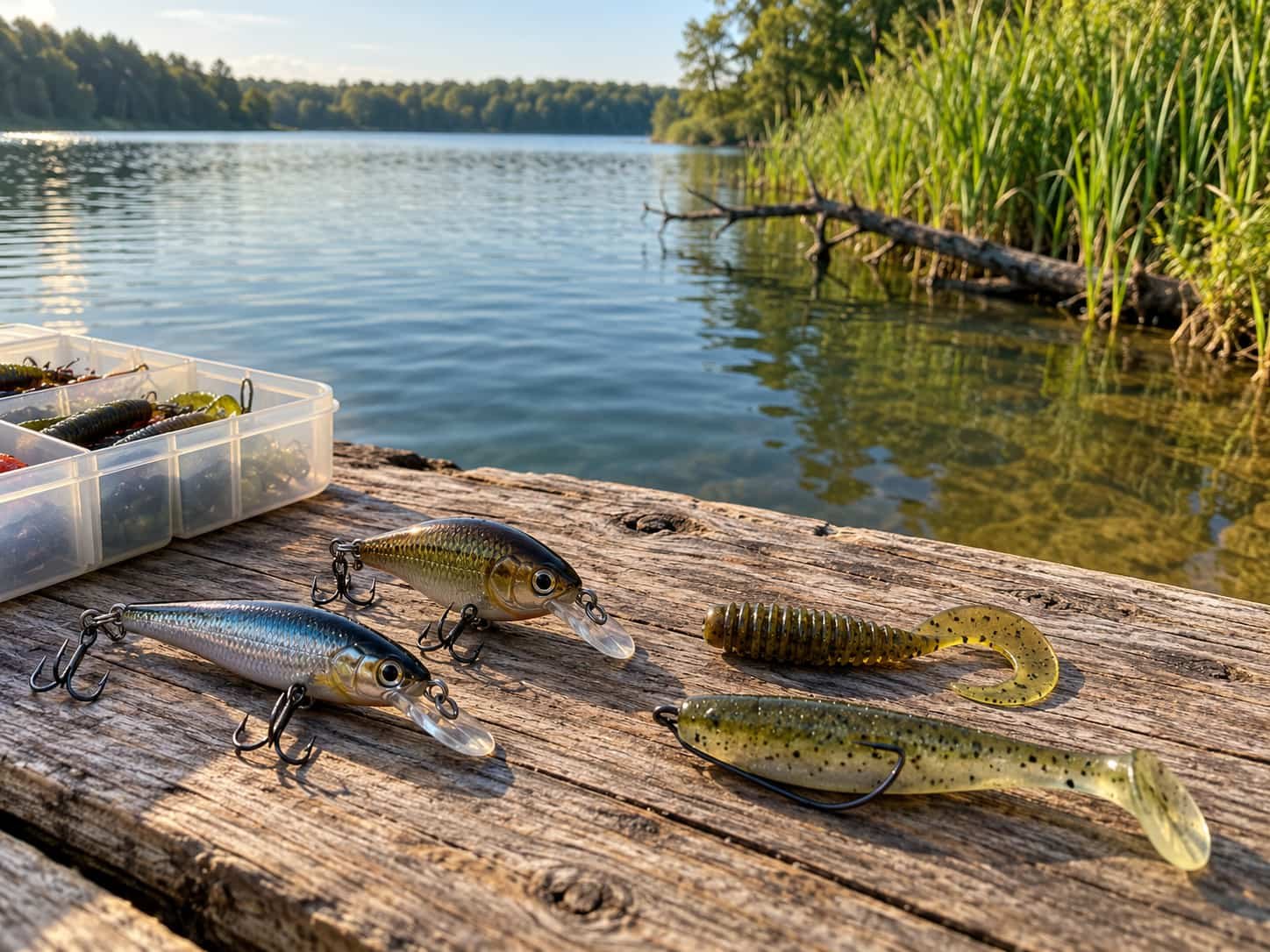
Hard baits vs soft baits explained through four fishing situations. See what to cast in open water, heavy cover, or murky water.
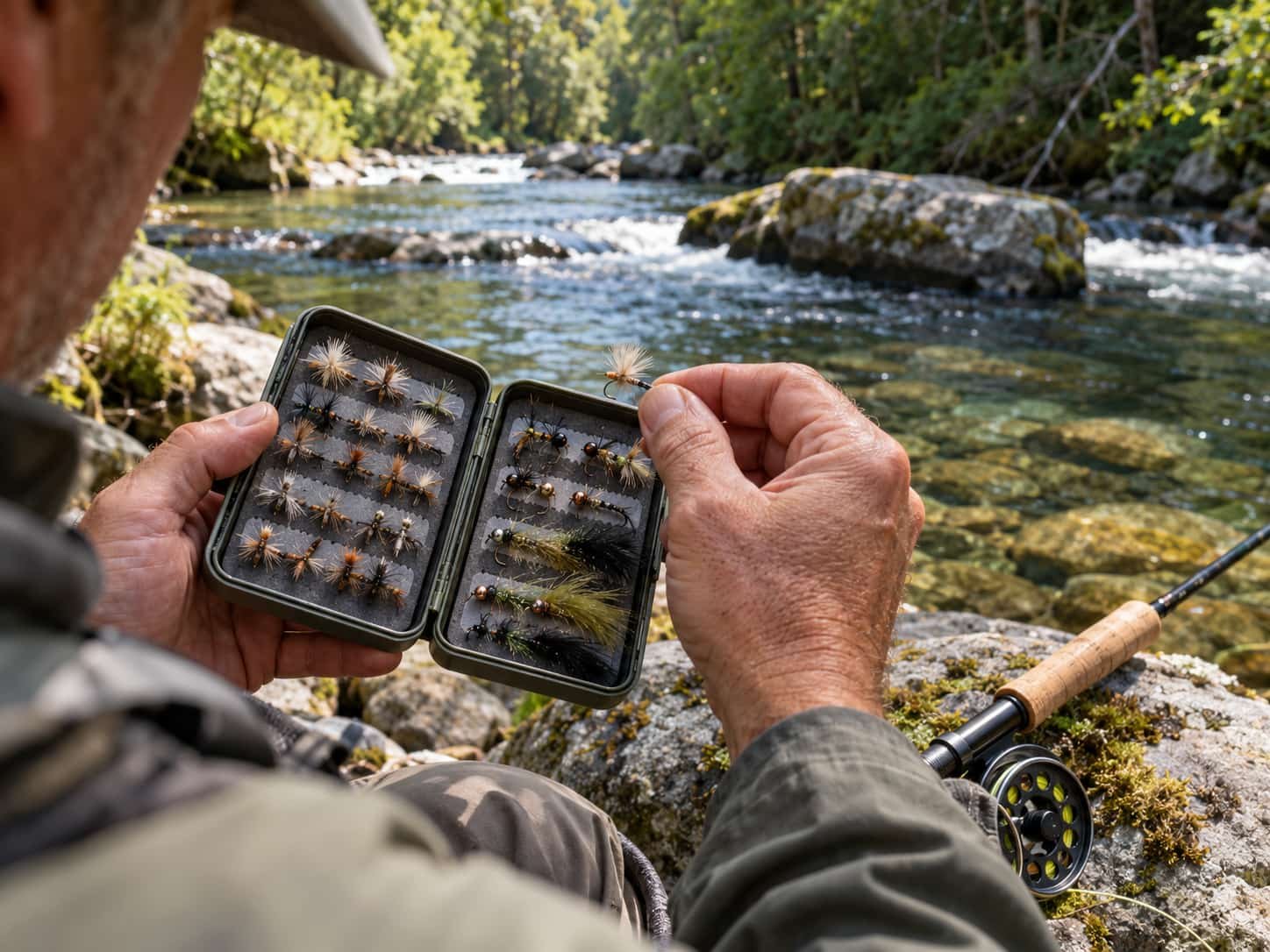
Learn how to choose flies for fly fishing by reading the water, matching the hatch, and picking the right fly size and color for each situation.
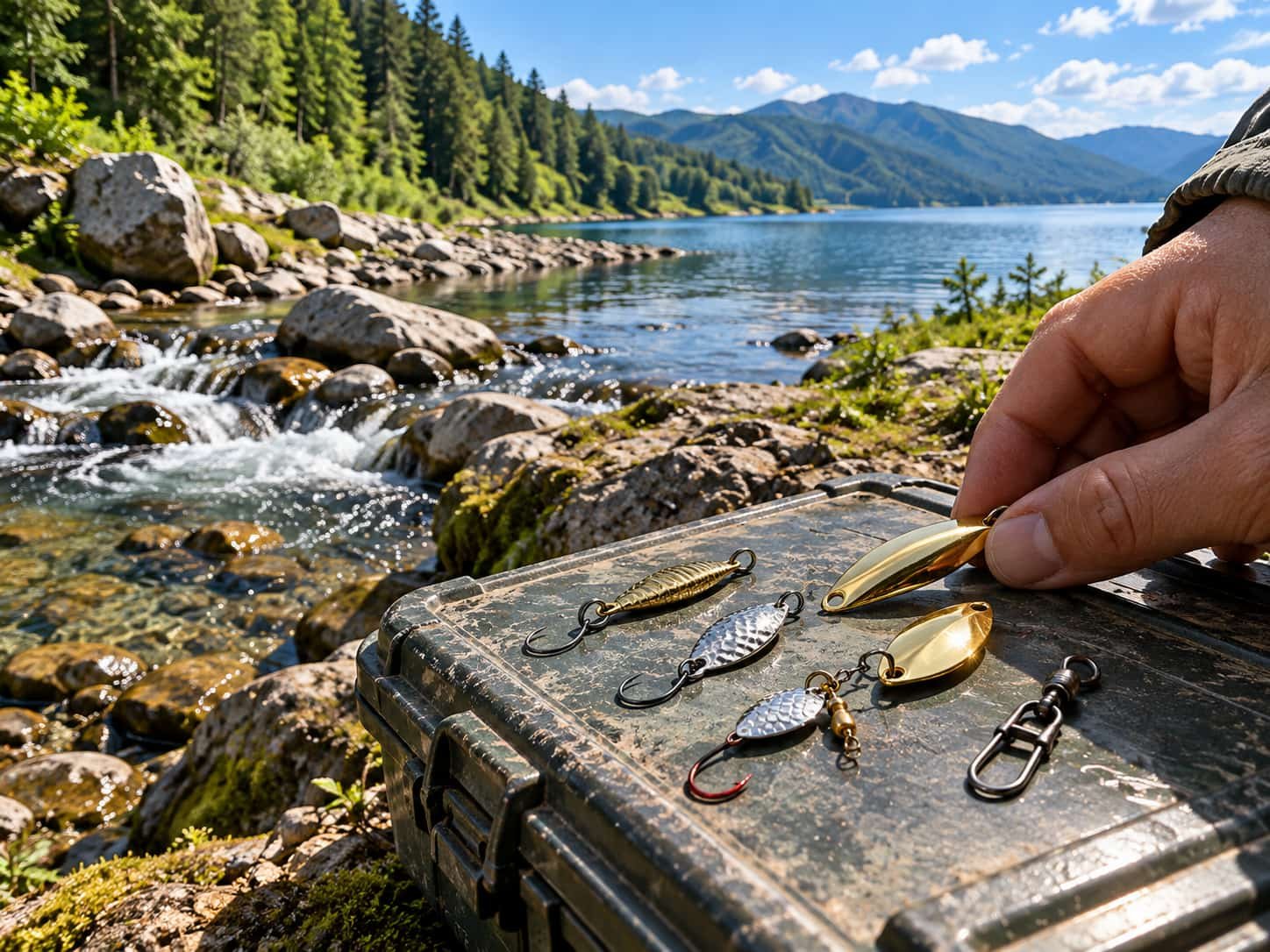
Learn how to choose micro spoons by shape, depth, and current so you can match your lure to the water before your first cast.
See how the best micro fishing lures compare, from versatile metal jigs to more technical options that take a little practice. Learn where each lure fits best and choose your next one with more confidence.
Not sure which lure to start with? This guide breaks down the best fishing lures for beginners and explains four simple, proven options that are easy to learn and worth keeping in your tackle box.