How to Choose Flies for Fly Fishing by Reading the Water
- Category
- Fishing lure
- Date
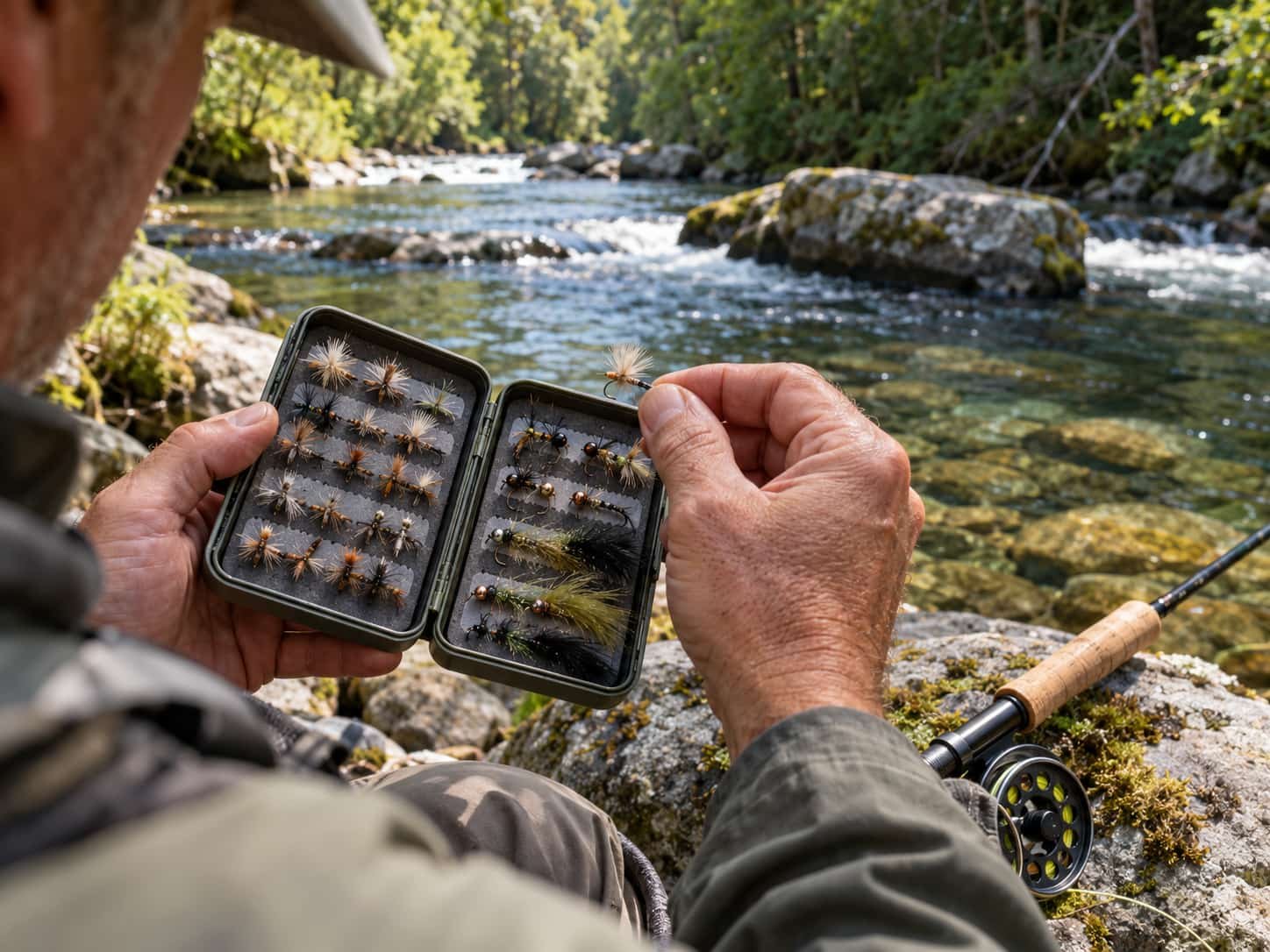
Start with the fish you want to catch and the part of the water column you need to reach. Small dry flies and nymphs are better suited to many stream situations, while larger poppers and streamers make more sense for bass and other predatory fish.
Learning how to choose flies for fly fishing means looking beyond color alone. Fly size, hook size, profile, and whether the pattern floats, suspends, or sinks all affect how naturally it fishes.
The examples below break down those choices so you can match the fly to your target species, the depth, and the water in front of you.
| Topic | Details |
|---|---|
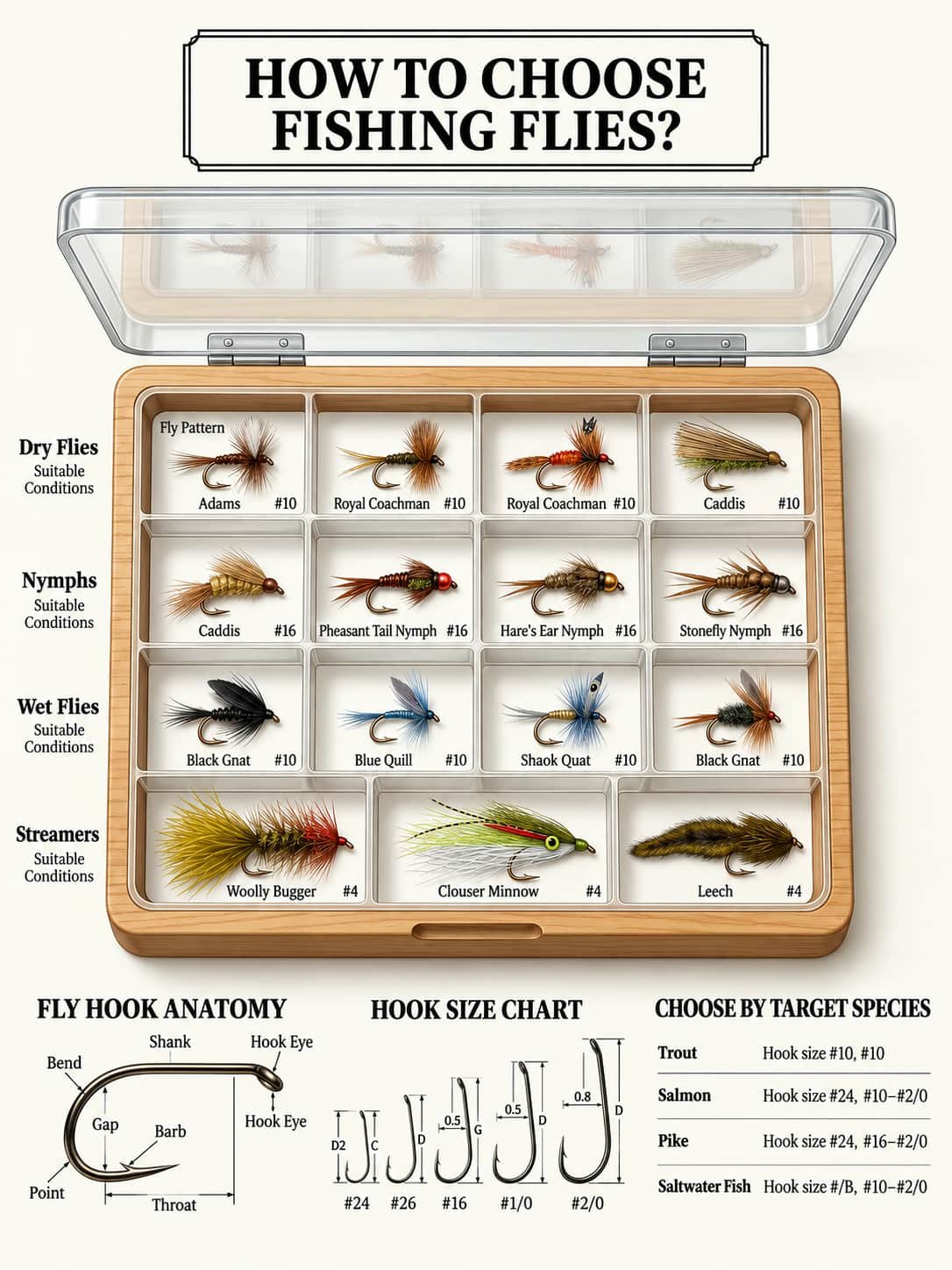
| Dry flies | Adams #10; Royal Coachman #10; Royal Coachman #10; Caddis #10. |
| Nymphs | Caddis #16; Pheasant Tail Nymph #16; Hare’s Ear Nymph #16; Stonefly Nymph #16. |
| Wet flies | Black Gnat #10; Blue Quill #10; Shaok Quat #10; Black Gnat #10. |
| Streamers | Woolly Bugger #4; Clouser Minnow #4; Leech #4. |
| Hook anatomy | Bend, shank, hook eye, gap, barb, point, and throat. |
| Illustrated hook sizes | #24, #26, #16, #1/0, #2/0. |
| Trout | Hook sizes shown: #10, #10. |
| Salmon | Hook sizes shown: #24, #10–#2/0. |
| Pike | Hook sizes shown: #24, #16–#2/0. |
| Saltwater fish | Hook sizes shown: #/B, #10–#2/0. |
| Fly type | What it imitates | Presentation and key characteristics |
|---|---|---|
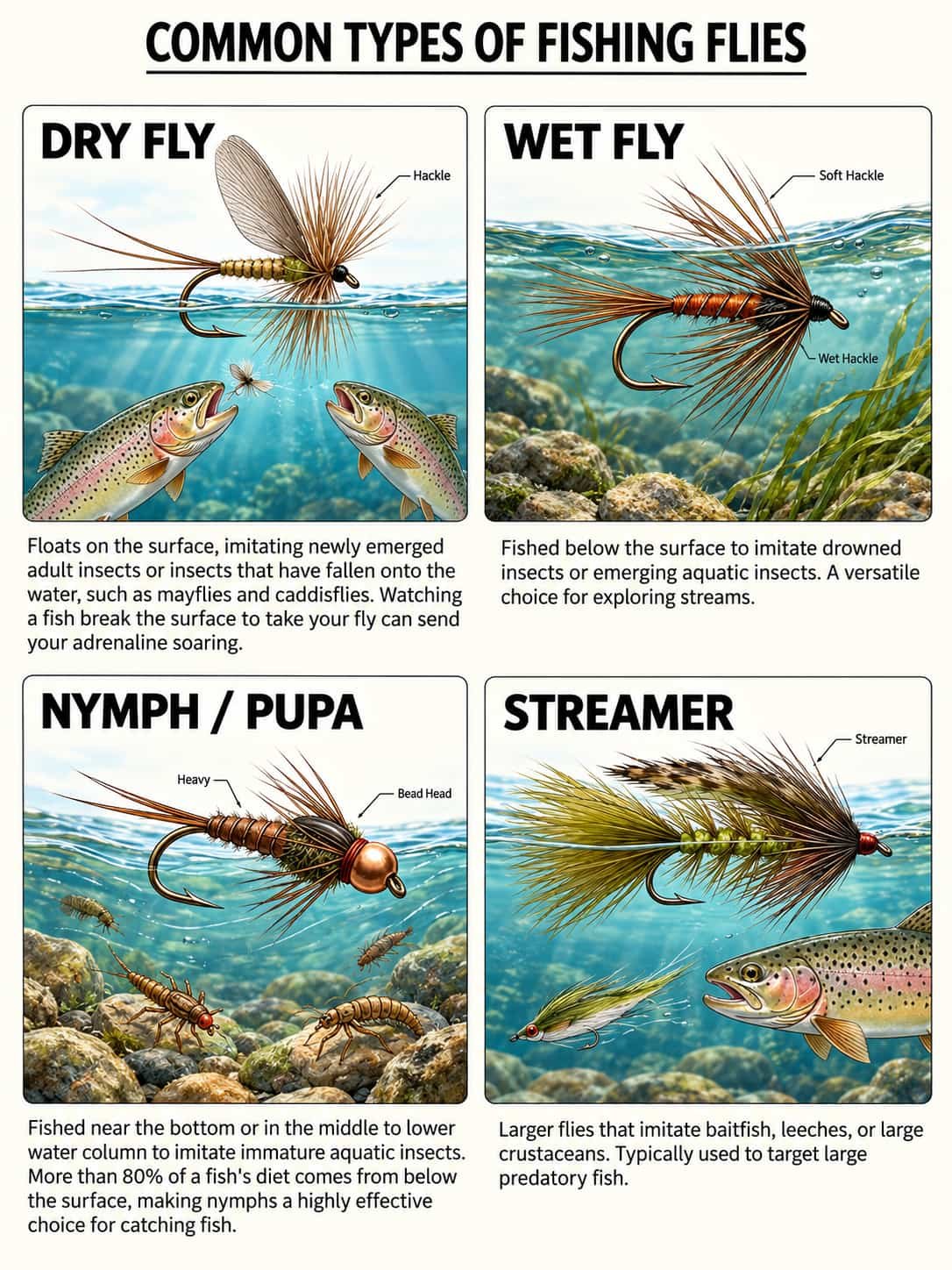
| Dry fly | Newly emerged adult insects or insects that have fallen onto the water, such as mayflies and caddisflies. | Floats on the surface, allowing the angler to watch fish rise to take the fly. |
| Wet fly | Drowned insects or emerging aquatic insects. | Fished below the surface; a versatile choice for exploring streams. |
| Nymph / pupa | Immature stages of aquatic insects. | Fished near the bottom or in the middle to lower water column. The image states that more than 80% of a fish’s diet comes from below the surface. |
| Streamer | Baitfish, leeches, or large crustaceans. | Generally larger patterns, typically used to target large predatory fish. |
| Target group | Species listed | Main guidance |
|---|---|---|
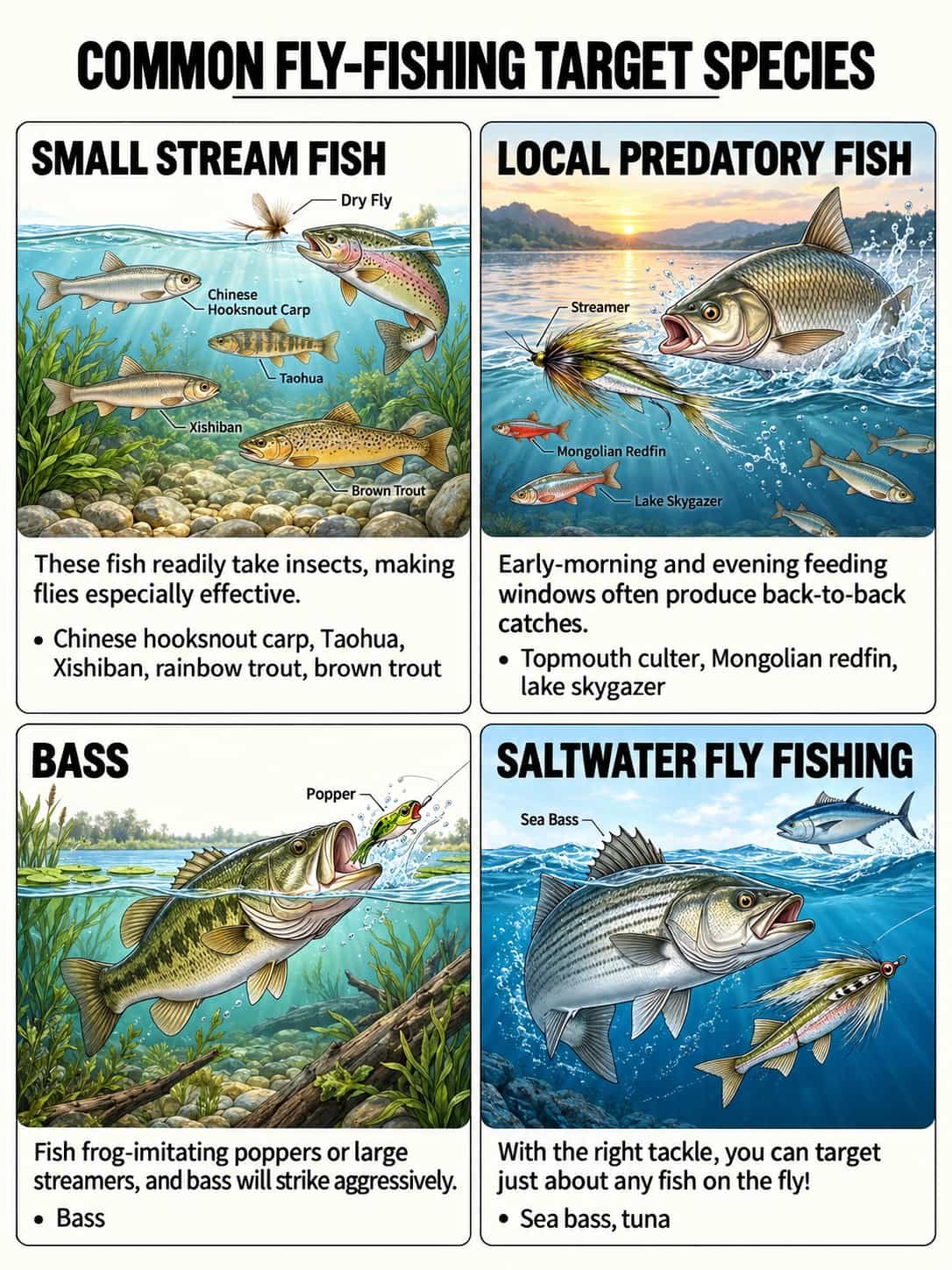
| Small stream fish | Chinese hooksnout carp, Taohua, Xishiban, rainbow trout, brown trout. | These fish readily take insects, making flies especially effective. |
| Local predatory fish | Topmouth culter, Mongolian redfin, lake skygazer. | Early-morning and evening feeding windows can produce back-to-back catches. |
| Bass | Bass. | Use frog-imitating poppers or large streamers to trigger strikes. |
| Saltwater fish | Sea bass, tuna. | The image emphasizes that suitable tackle expands the range of species anglers can target on the fly. |
| Target group | Species | Hook sizes s | Practical guidance |
|---|---|---|---|
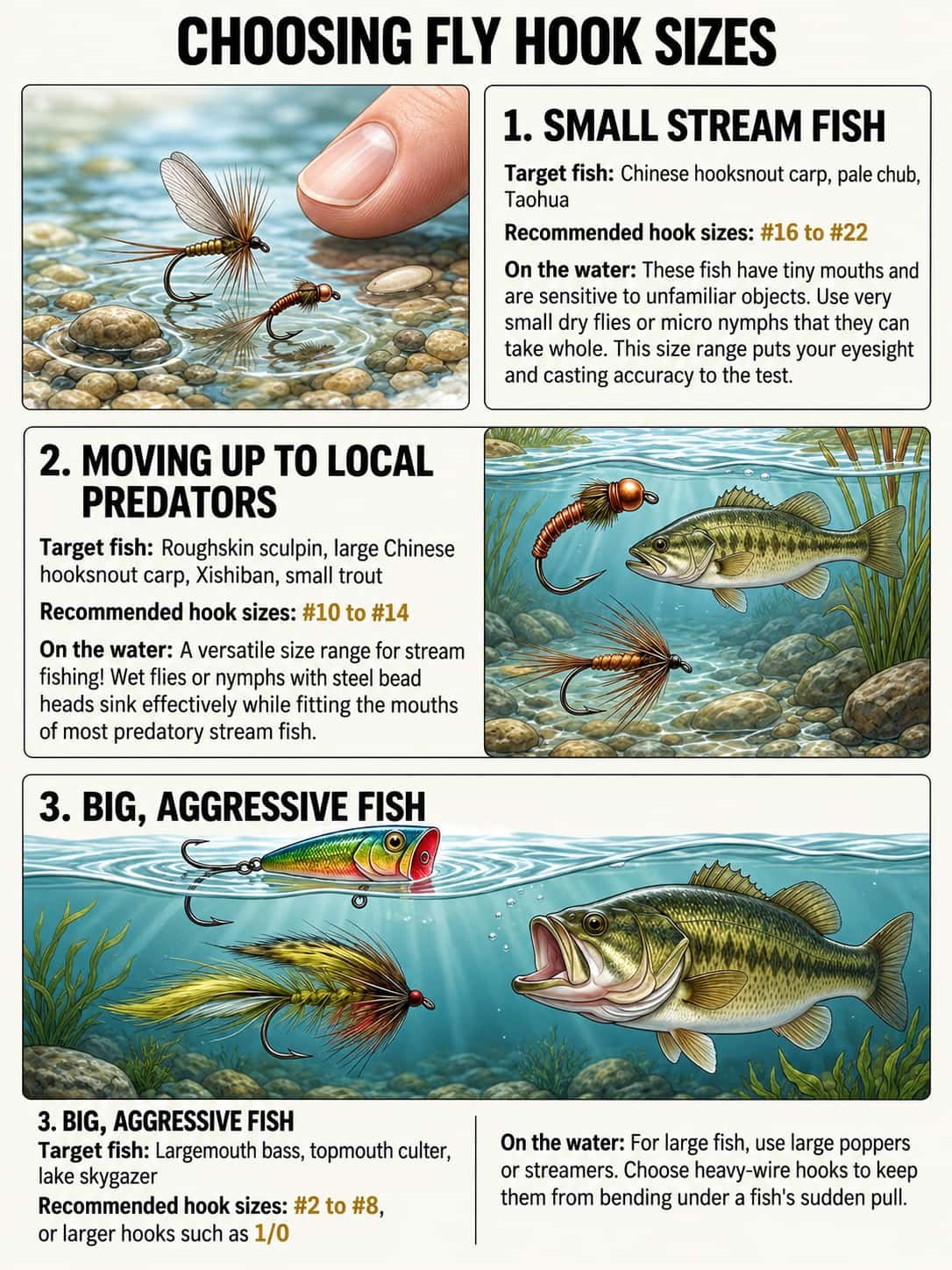
| Small stream fish | Chinese hooksnout carp, pale chub, Taohua. | #16–#22 | Use very small dry flies or micro nymphs that fish can take whole. Focus on spotting fish and making accurate casts. |
| Local predatory fish | Roughskin sculpin, large Chinese hooksnout carp, Xishiban, small trout. | #10–#14 | A versatile size range for stream fishing. Use wet flies or nymphs with steel bead heads to get below the surface while matching the mouth size of the target fish. |
| Large, aggressive fish | Largemouth bass, topmouth culter, lake skygazer. | #2–#8, or larger hooks such as 1/0 | Use large poppers or streamers. Choose heavy-wire hooks to resist bending under a powerful fish’s pull. |
| Topic | Conditions or location | Guidance |
|---|---|---|
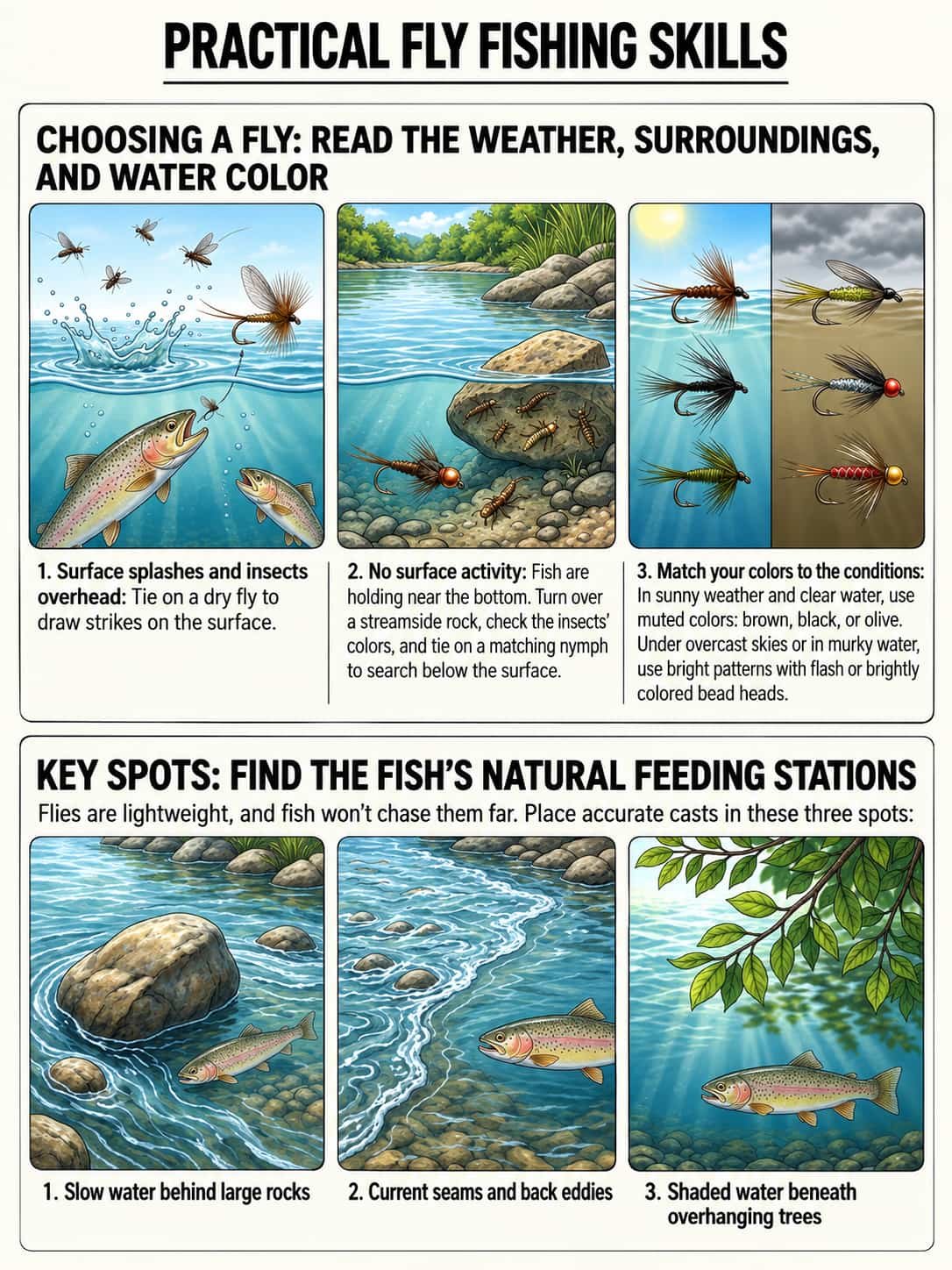
| Choosing a dry fly | Fish breaking the surface with insects flying overhead. | Tie on a dry fly to draw surface strikes. |
| Choosing a nymph | No visible surface activity. | The image states that fish are holding near the bottom. Turn over a streamside rock, check the insects’ colors, and fish a matching nymph below the surface. |
| Choosing muted colors | Sunny weather and clear water. | Use brown, black, or olive patterns. |
| Choosing bright colors | Overcast skies or murky water. | Use patterns with flash or brightly colored bead heads. |
| First target spot | Slow water behind large rocks. | Place accurate casts into the slower water. |
| Second target spot | Current seams and back eddies. | Target the boundaries between fast and slow water, along with areas of reverse-flowing water. |
| Third target spot | Shaded water beneath overhanging trees. | Cast into the shaded water under the branches. |
| Casting accuracy | All three target spots. | The image emphasizes precise placement, stating that flies are lightweight and fish will not chase them far. |
More to Explore
Related Articles
More guides in Fishing lure
Favorite lure color not getting bites? Learn how to choose lure colors for water clarity, light, and fish activity, from bright soft plastics to natural baitfish patterns.
Compare the best lures for trophy fish in plain English. See how six options move, where they work best, and which ones fit your next trip.
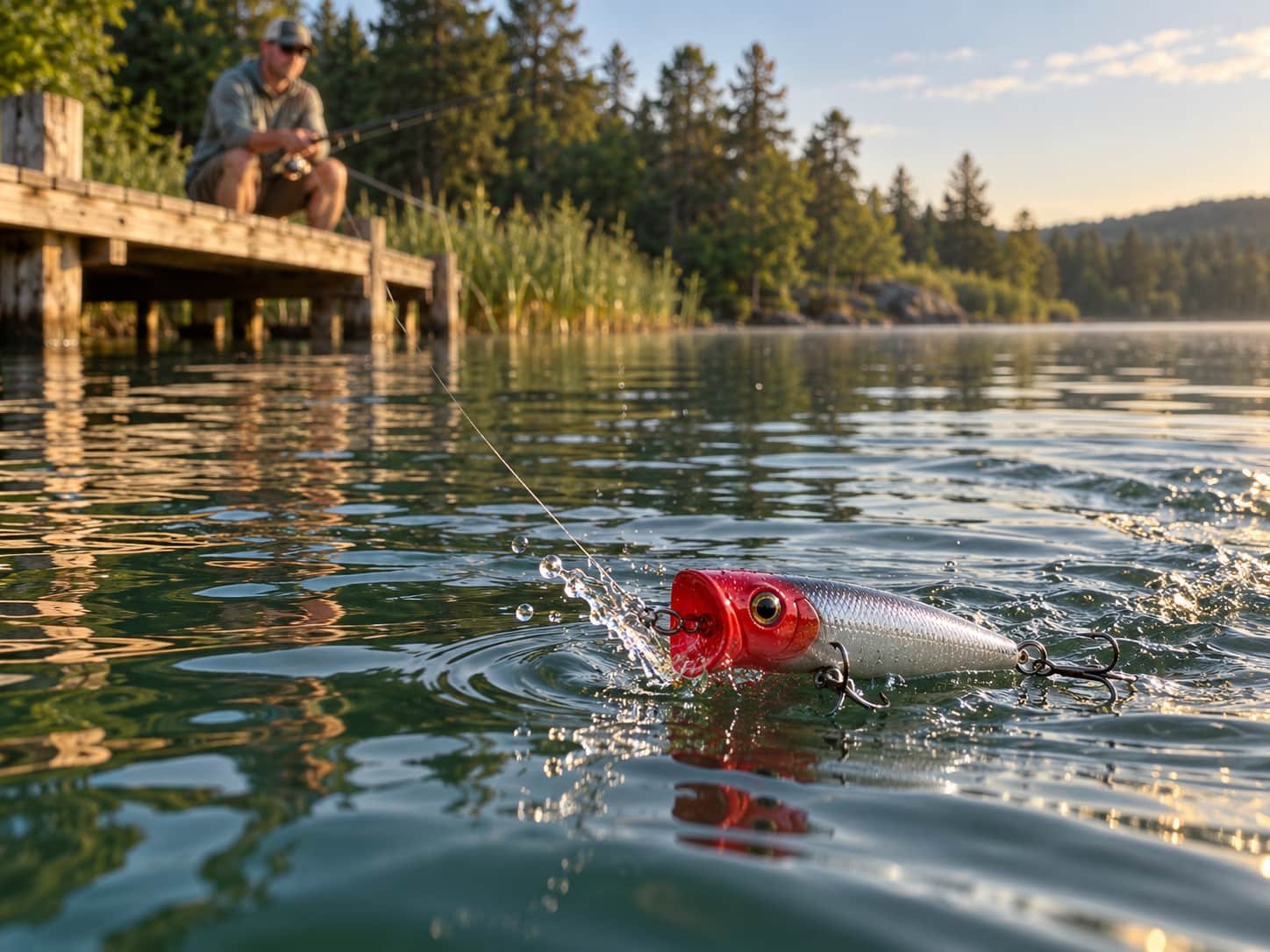
Learn how to fish a popper lure, from picking a weight for shallow or open water to working the surface with short twitches and pauses.
Hard baits vs soft baits explained through four fishing situations. See what to cast in open water, heavy cover, or murky water.
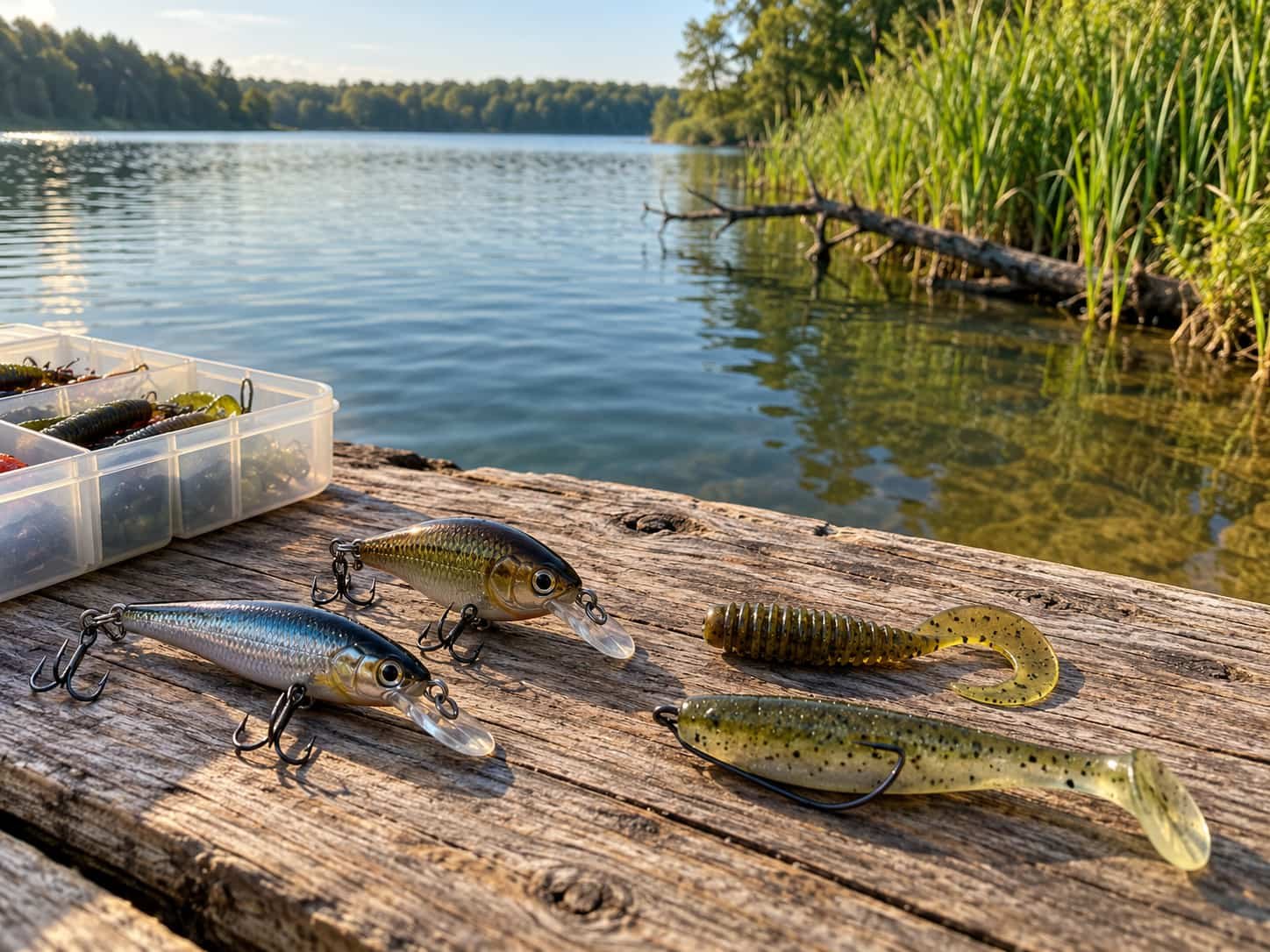
Learn how to choose micro spoons by shape, depth, and current so you can match your lure to the water before your first cast.
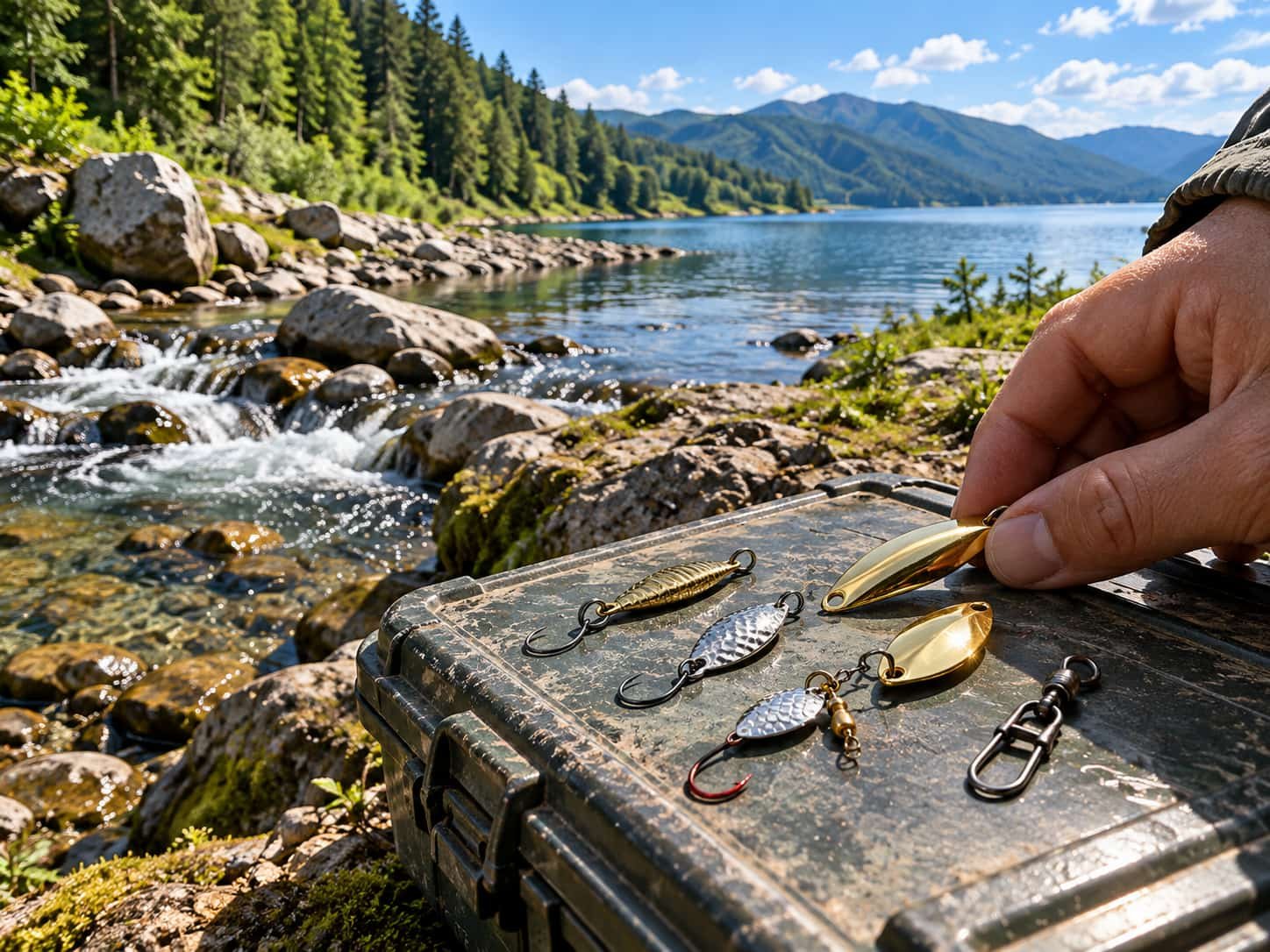
See how the best micro fishing lures compare, from versatile metal jigs to more technical options that take a little practice. Learn where each lure fits best and choose your next one with more confidence.
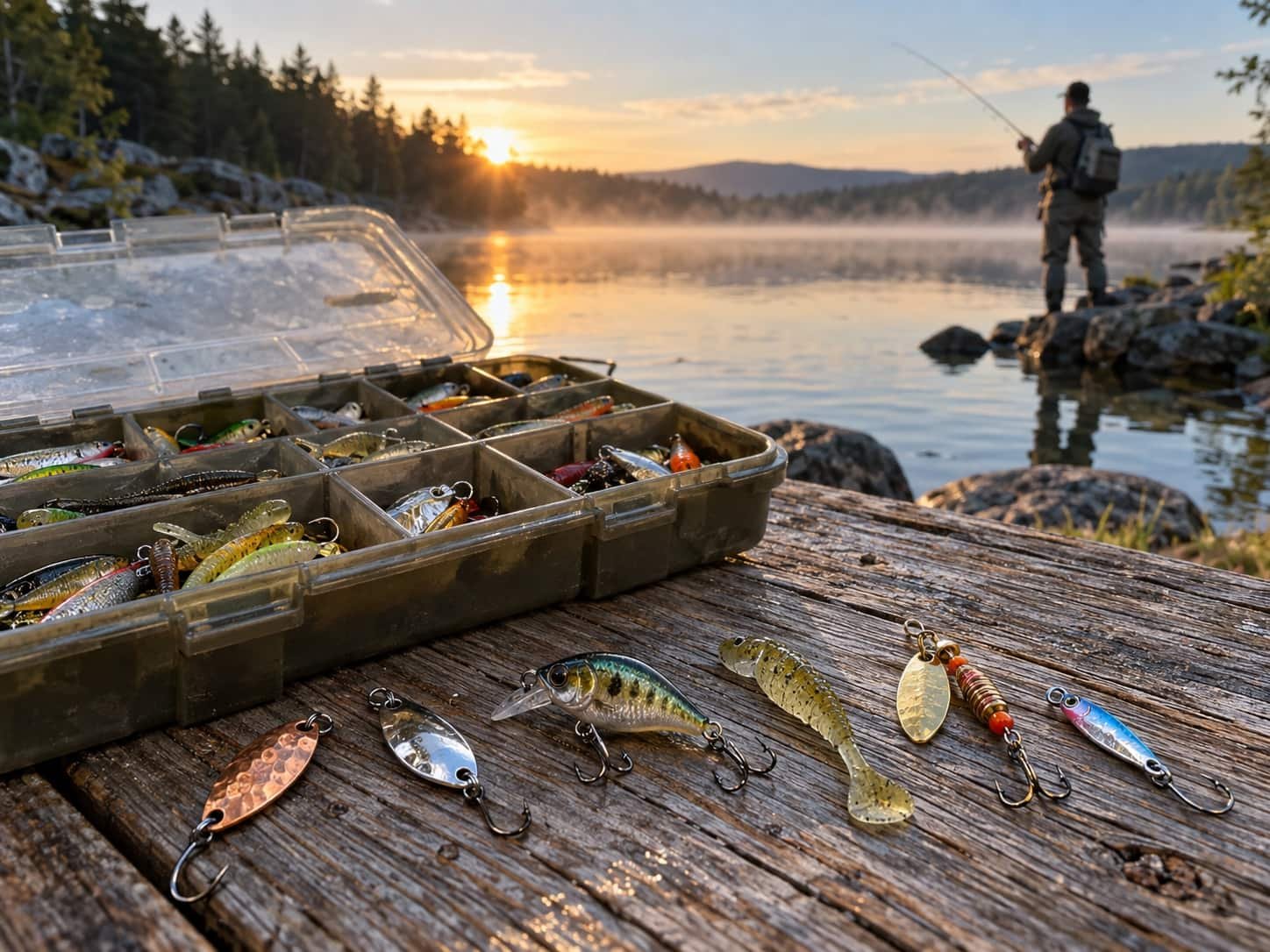
Not sure which lure to start with? This guide breaks down the best fishing lures for beginners and explains four simple, proven options that are easy to learn and worth keeping in your tackle box.
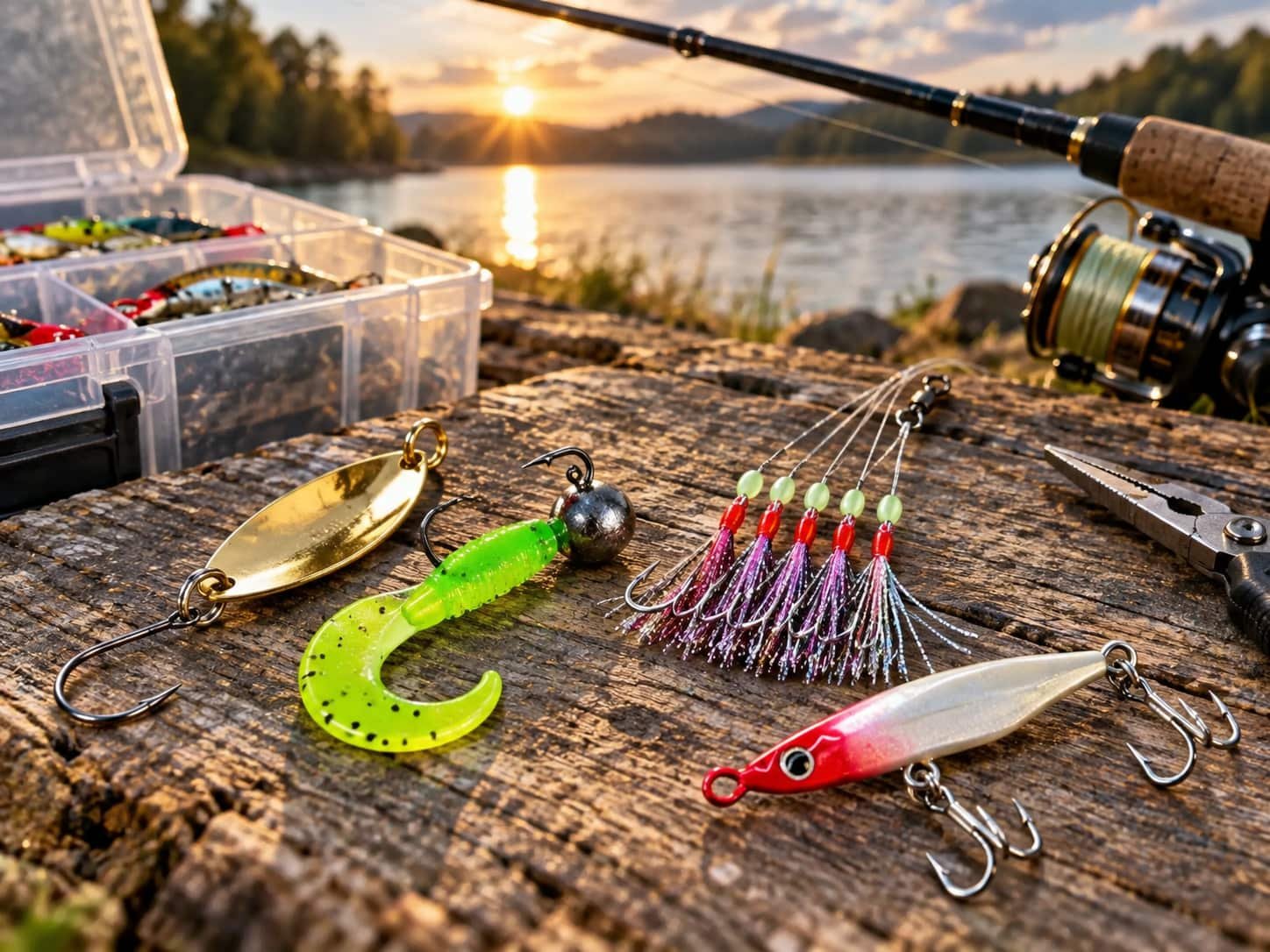
Learn how to choose the right metal jig weight for changing wind, current, depth, and casting distance so your jig reaches the target zone and stays there longer.