How to Fish a Popper Lure When Fish Won’t Commit
- Category
- Fishing lure
- Date
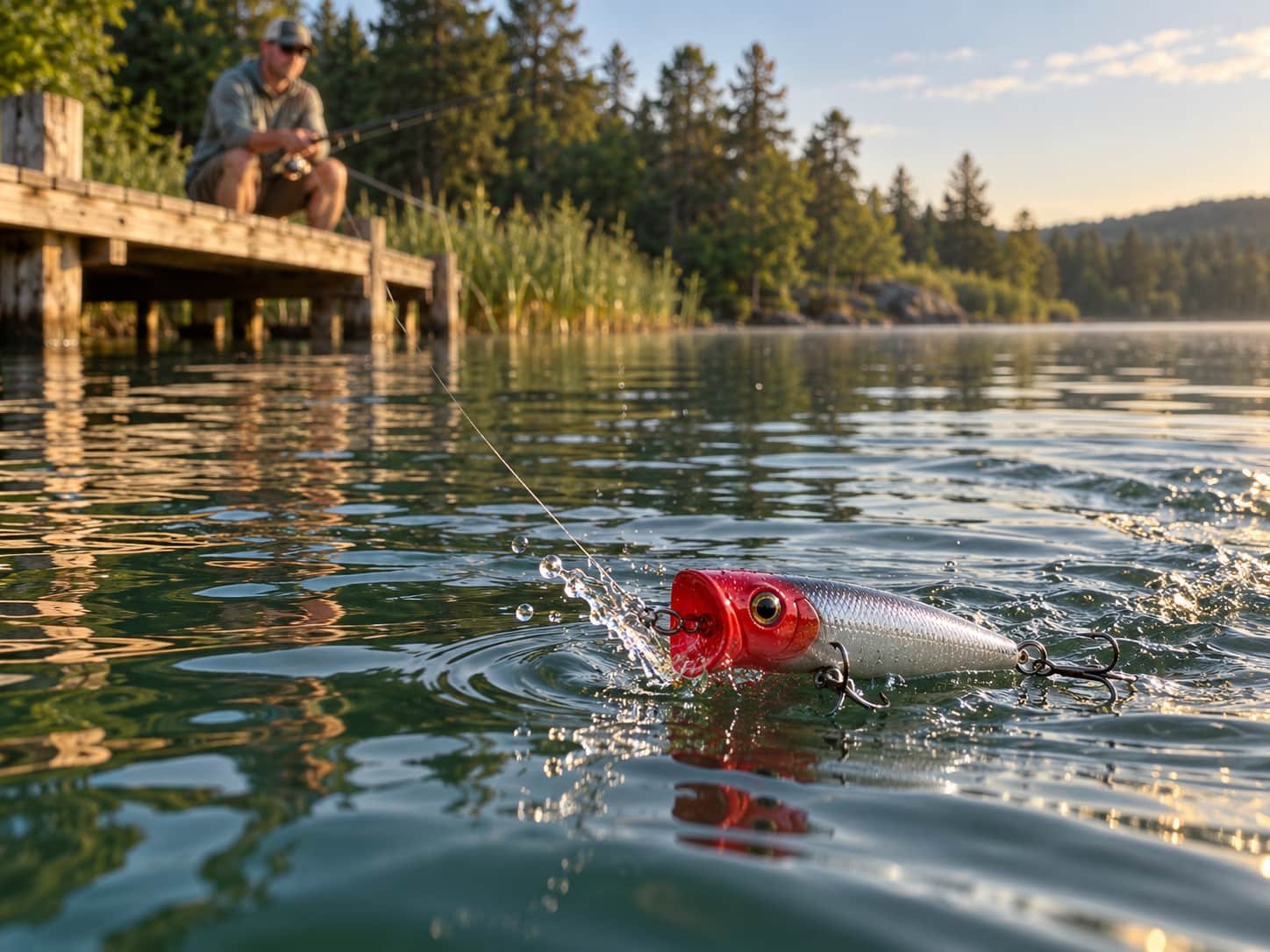
Learning how to fish a popper lure starts with matching your retrieve to the fish’s activity level. When fish are aggressive, quick rod-tip pops and a faster cadence can help you cover water and trigger reaction strikes. When they are reluctant to chase, slow things down with a pop-and-pause retrieve that leaves the lure sitting in the strike zone longer.
The guide below breaks down both approaches and explains how popper weight affects casting and presentation, giving you a practical starting point for your next trip.
| No. | Topic | Popper Features and Fishing Techniques |
|---|---|---|
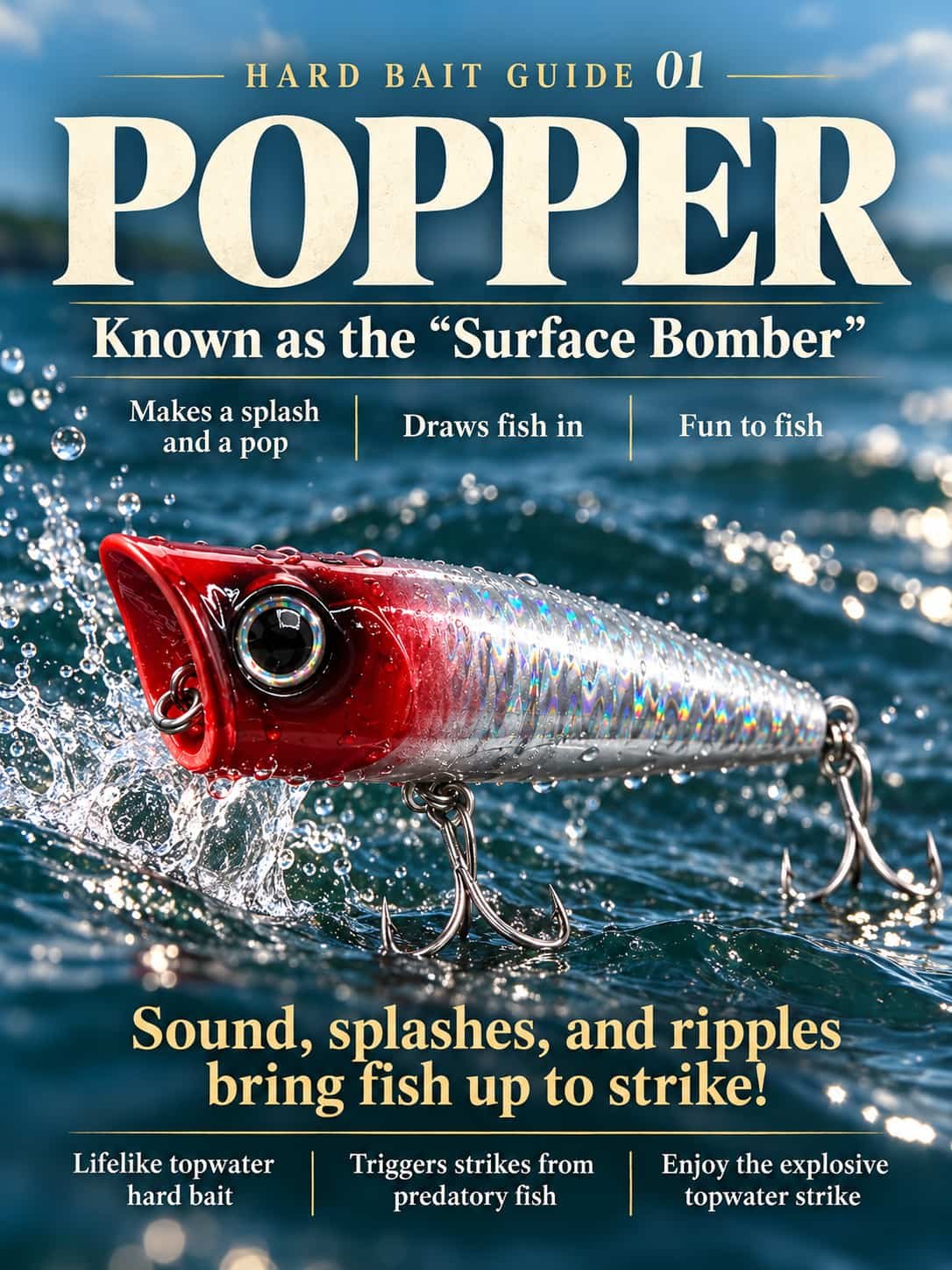
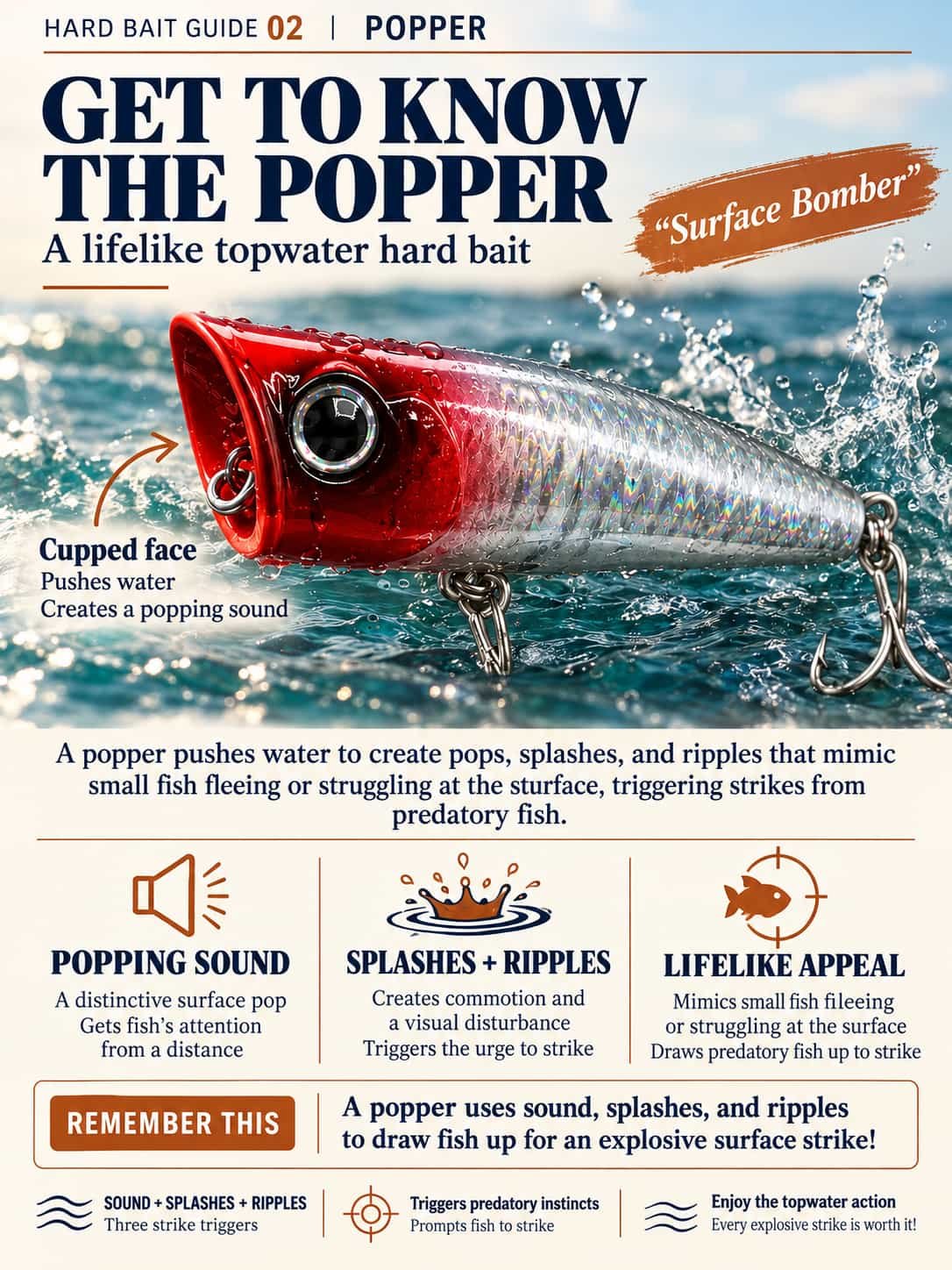
| 1 | Introduction to Popper Lures | A popper is a topwater hard bait. It creates popping sounds, splashes, and ripples to draw predatory fish up to strike. Explosive surface strikes are a big part of its appeal. |
| 2 | How Poppers Attract Fish | The cupped face pushes water, creating pops, splashes, and ripples. These disturbances mimic small fish fleeing or struggling at the surface, triggering strikes from predatory fish. The sound draws attention from a distance, while splashes and ripples create a visible surface disturbance. |
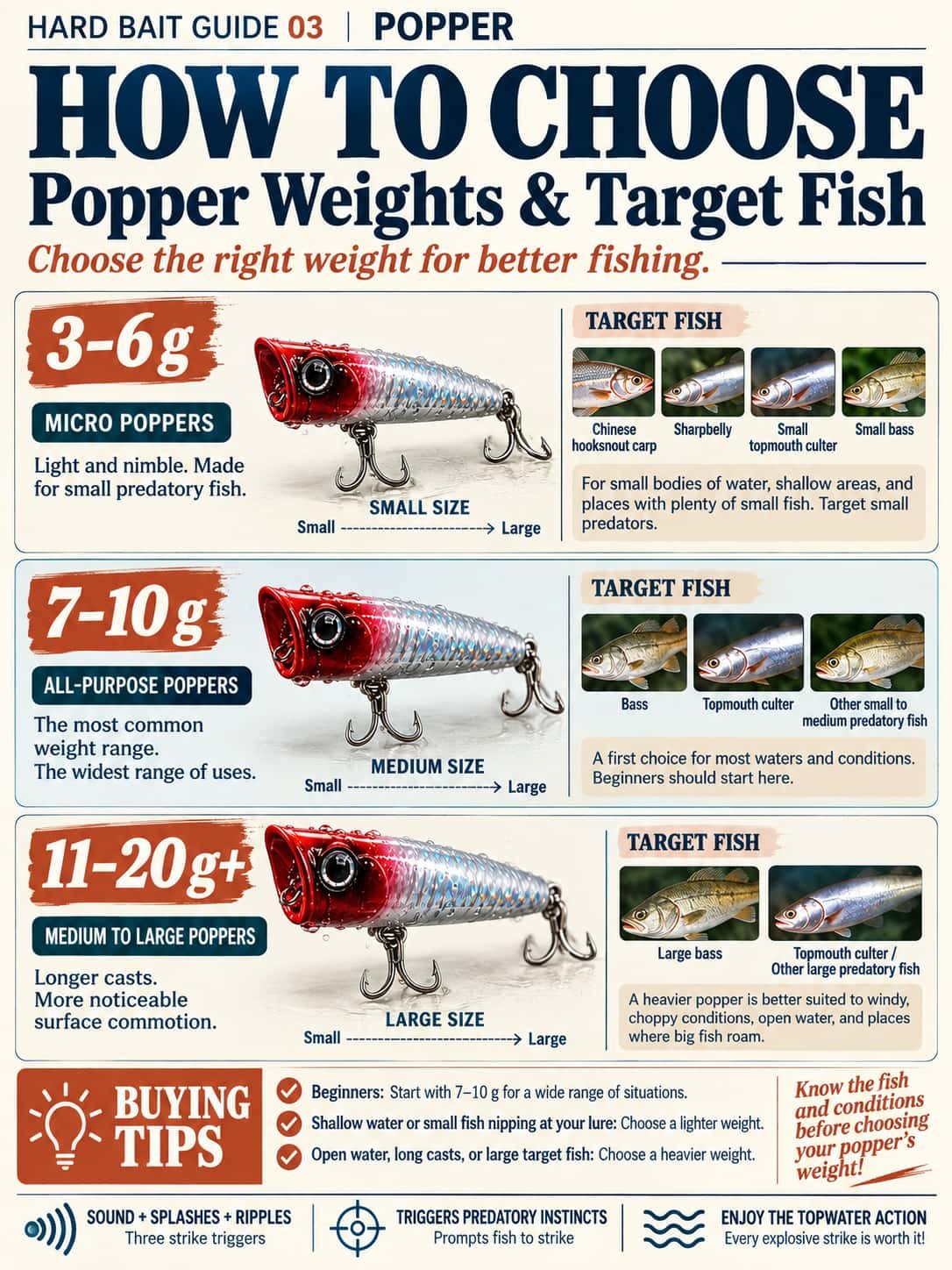
| 3 | 3–6 g: Micro Poppers | Light and nimble, these poppers target small predatory fish. They suit small bodies of water, shallow areas, and places with plenty of small fish. The species shown are Chinese hooksnout carp, sharpbelly, small topmouth culter, and small bass. |
| 4 | 7–10 g: All-Purpose Poppers | The most common weight range, suitable for a wide range of waters and conditions. This is a useful starting point for beginners. Target fish include bass, topmouth culter, and other small to medium predatory fish. |
| 5 | 11–20 g+: Medium to Large Poppers | These poppers offer longer casts and more noticeable surface commotion. They suit windy, choppy conditions, open water, and areas where larger fish are present. Target fish include large bass, topmouth culter, and other large predators. |
| 6 | Choosing Popper Weight | Beginners: start with 7–10 g. Choose a lighter popper for shallow water or when small fish keep nipping at the lure. Choose a heavier popper for open water, longer casts, or larger target fish. Consider the fish and conditions before selecting the weight. |
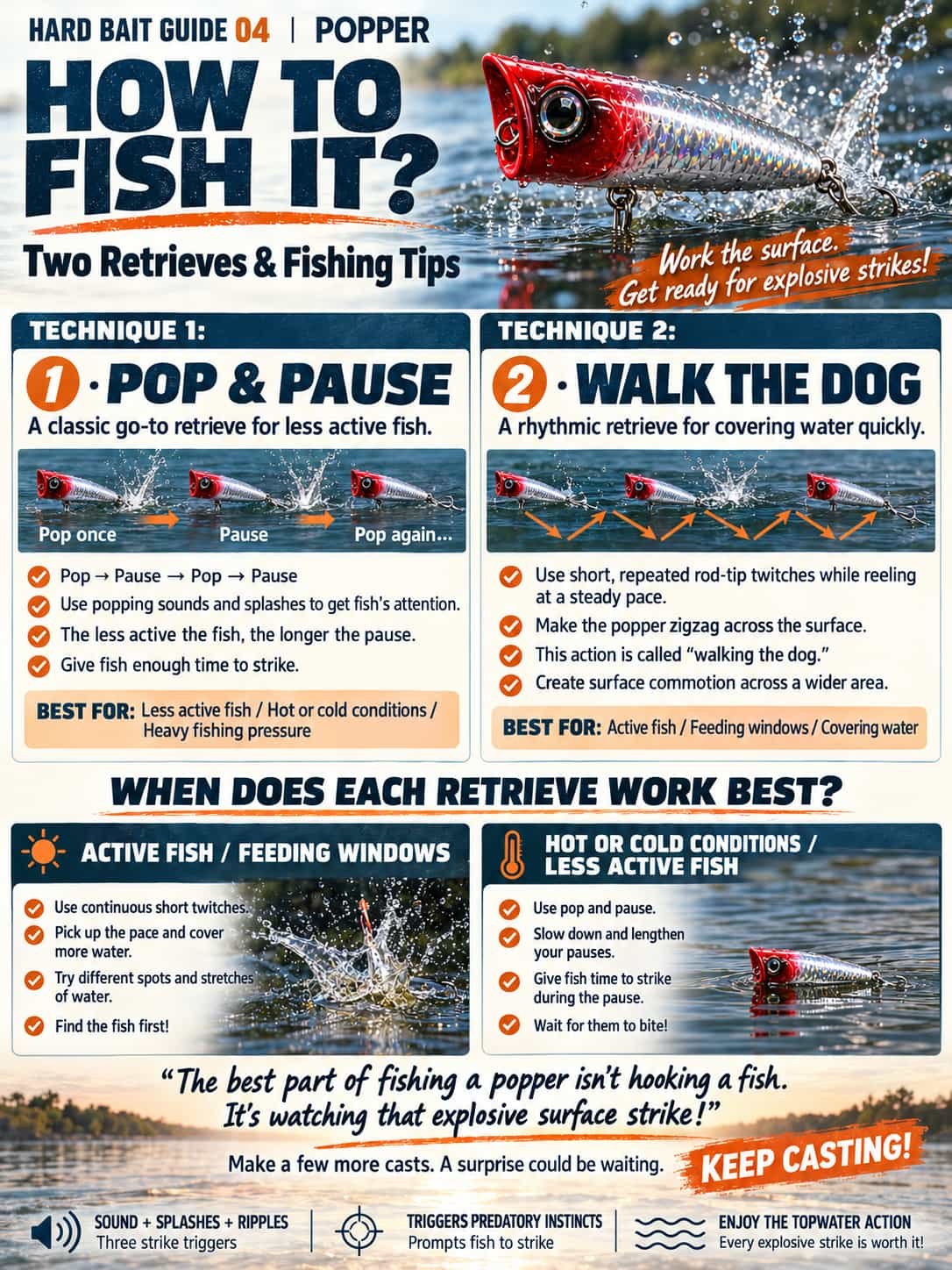
| 7 | Pop & Pause Retrieve | Follow a pop → pause → pop → pause rhythm. Use popping sounds and splashes to attract attention. The less active the fish, the longer the pause, giving them enough time to strike. This retrieve suits less active fish, hot or cold conditions, and heavily fished waters. |
| 8 | Walk-the-Dog Retrieve | Use short, repeated rod-tip twitches while reeling steadily to make the popper zigzag across the surface. This retrieve creates surface commotion over a wider area and helps cover water quickly. Use it for active fish, during feeding windows, or when searching larger areas. |
| 9 | When Fish Are Active | Use repeated short twitches, pick up the pace, and cover more water. Try different spots and stretches of water to locate fish first. |
| 10 | When Fish Are Less Active or Conditions Are Hot or Cold | Use Pop & Pause, slow the retrieve, and lengthen the pauses. Give fish time to approach and strike, and wait for the bite. |
| 11 | The Popper Fishing Experience | The thrill comes from watching a fish smash the lure at the surface. Make a few more casts—you may be rewarded with an unexpected strike. Keep casting! |
More to Explore
Related Articles
More guides in Fishing lure
Favorite lure color not getting bites? Learn how to choose lure colors for water clarity, light, and fish activity, from bright soft plastics to natural baitfish patterns.
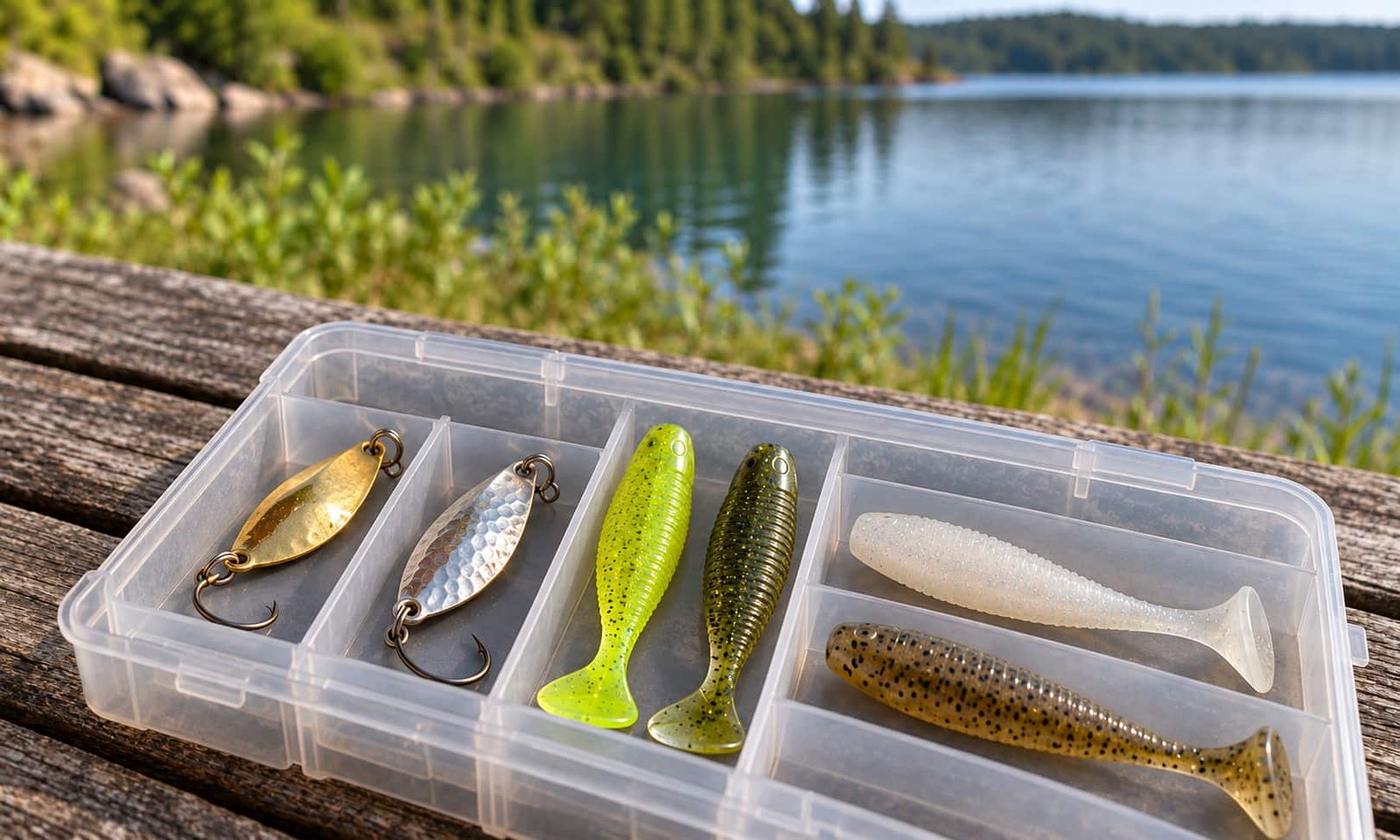
Compare the best lures for trophy fish in plain English. See how six options move, where they work best, and which ones fit your next trip.
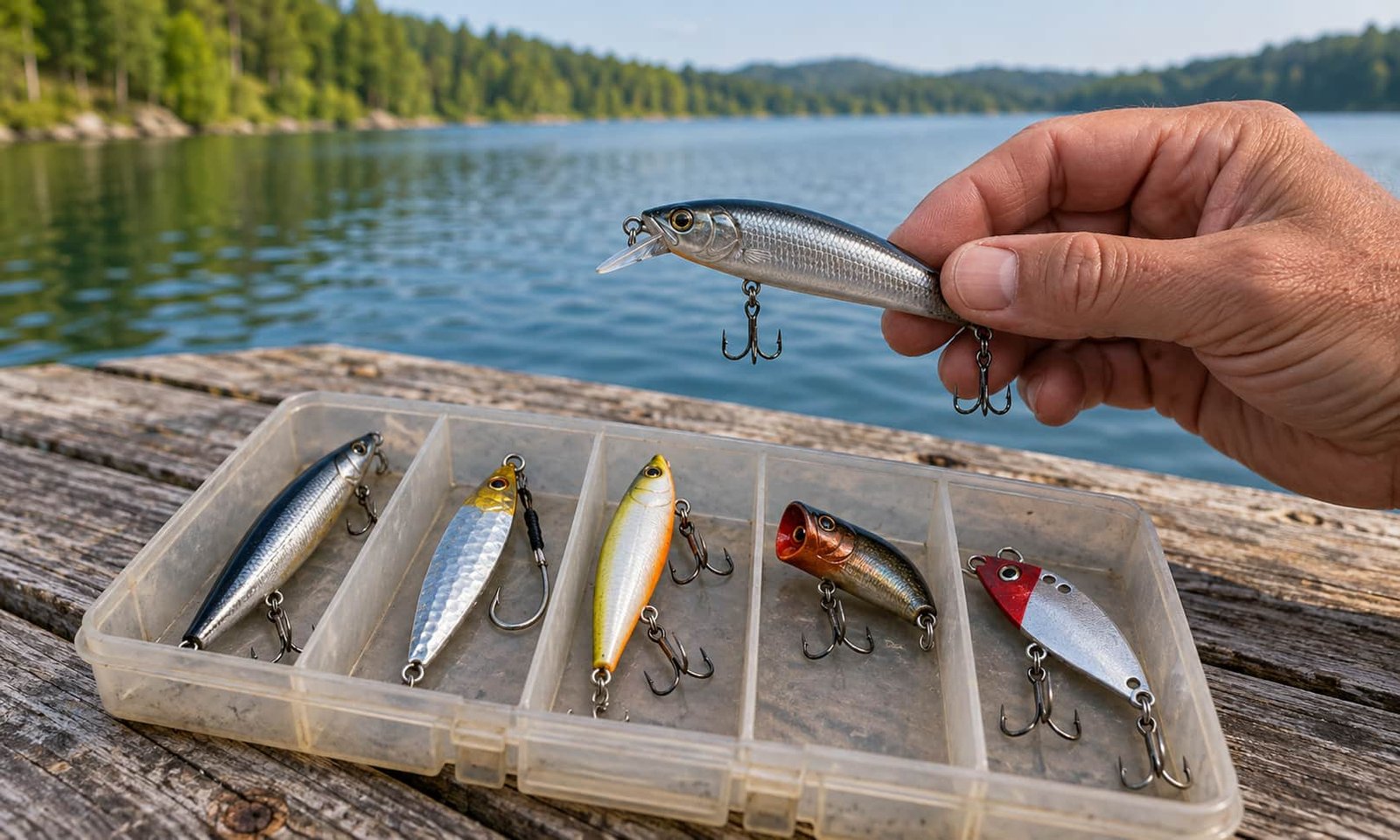
Hard baits vs soft baits explained through four fishing situations. See what to cast in open water, heavy cover, or murky water.
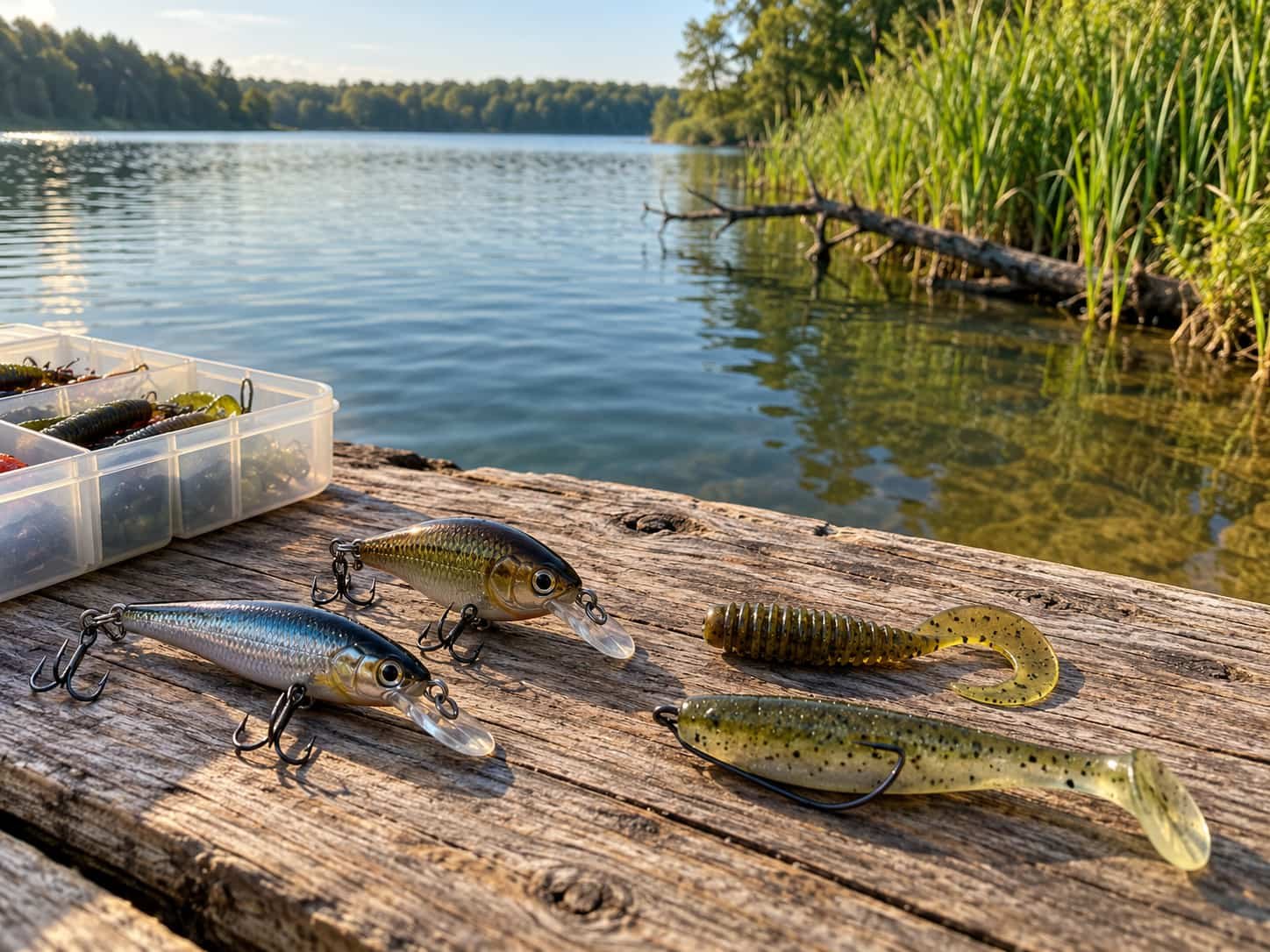
Learn how to choose flies for fly fishing by reading the water, matching the hatch, and picking the right fly size and color for each situation.
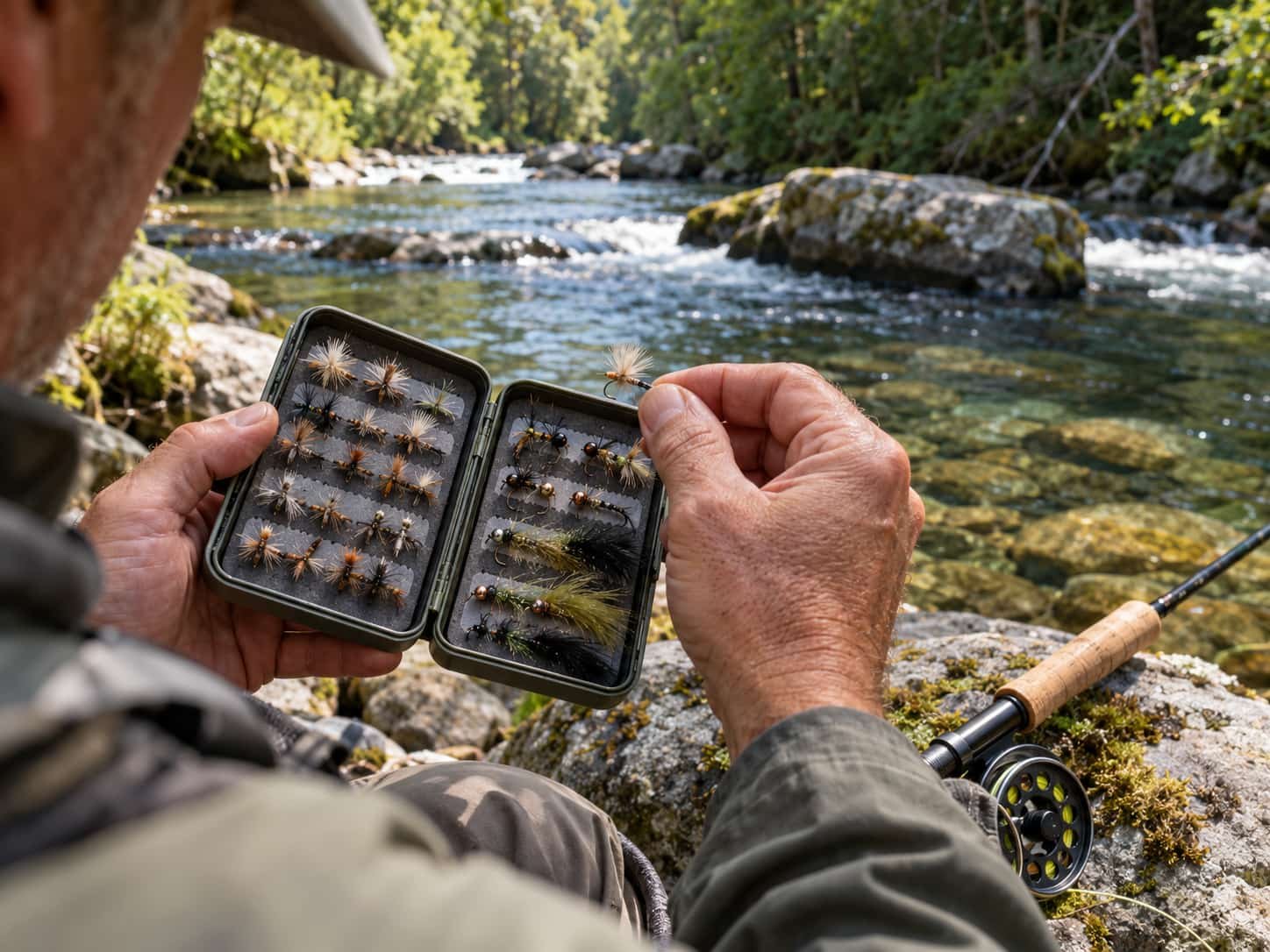
Learn how to choose micro spoons by shape, depth, and current so you can match your lure to the water before your first cast.
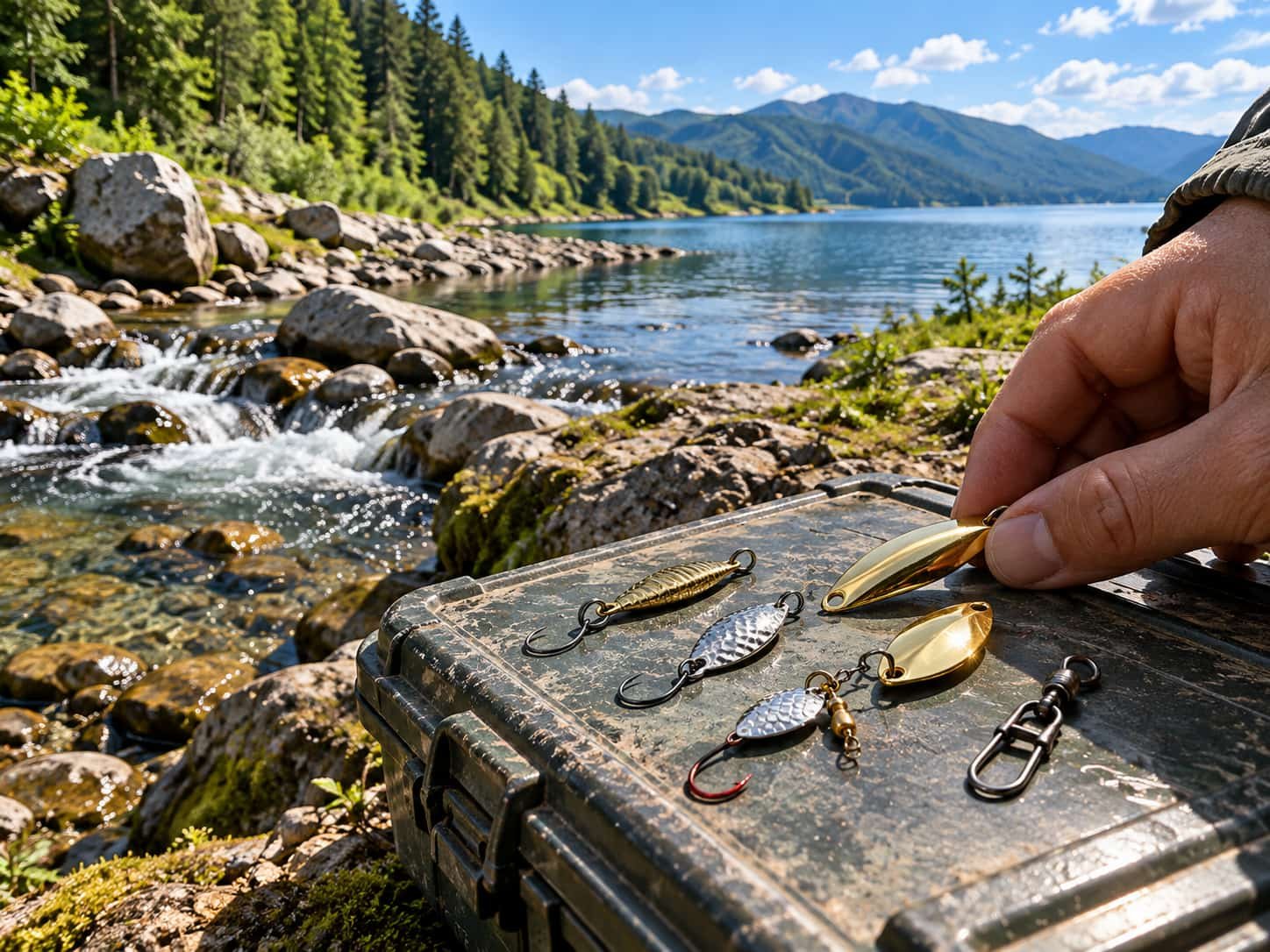
See how the best micro fishing lures compare, from versatile metal jigs to more technical options that take a little practice. Learn where each lure fits best and choose your next one with more confidence.
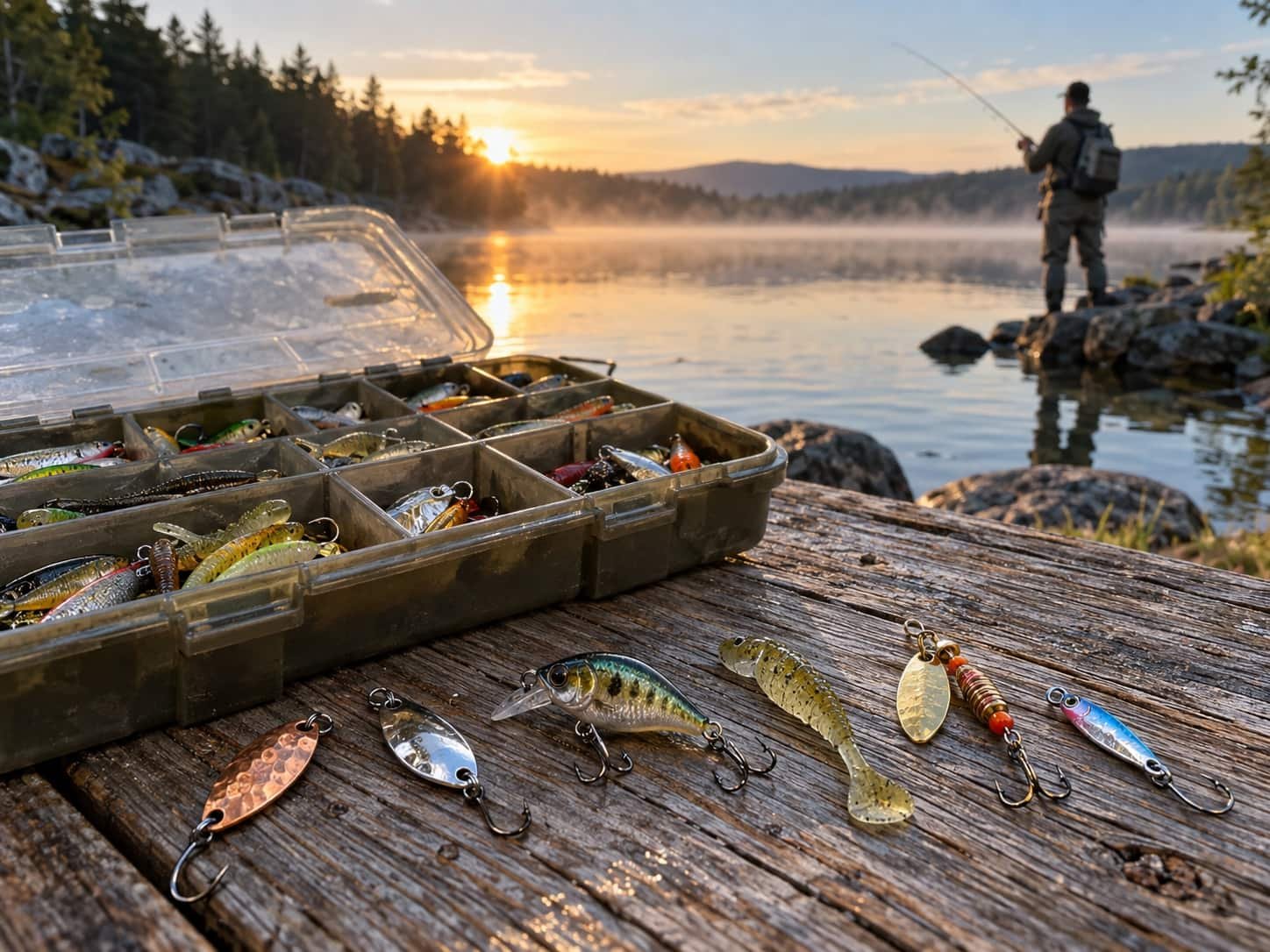
Not sure which lure to start with? This guide breaks down the best fishing lures for beginners and explains four simple, proven options that are easy to learn and worth keeping in your tackle box.
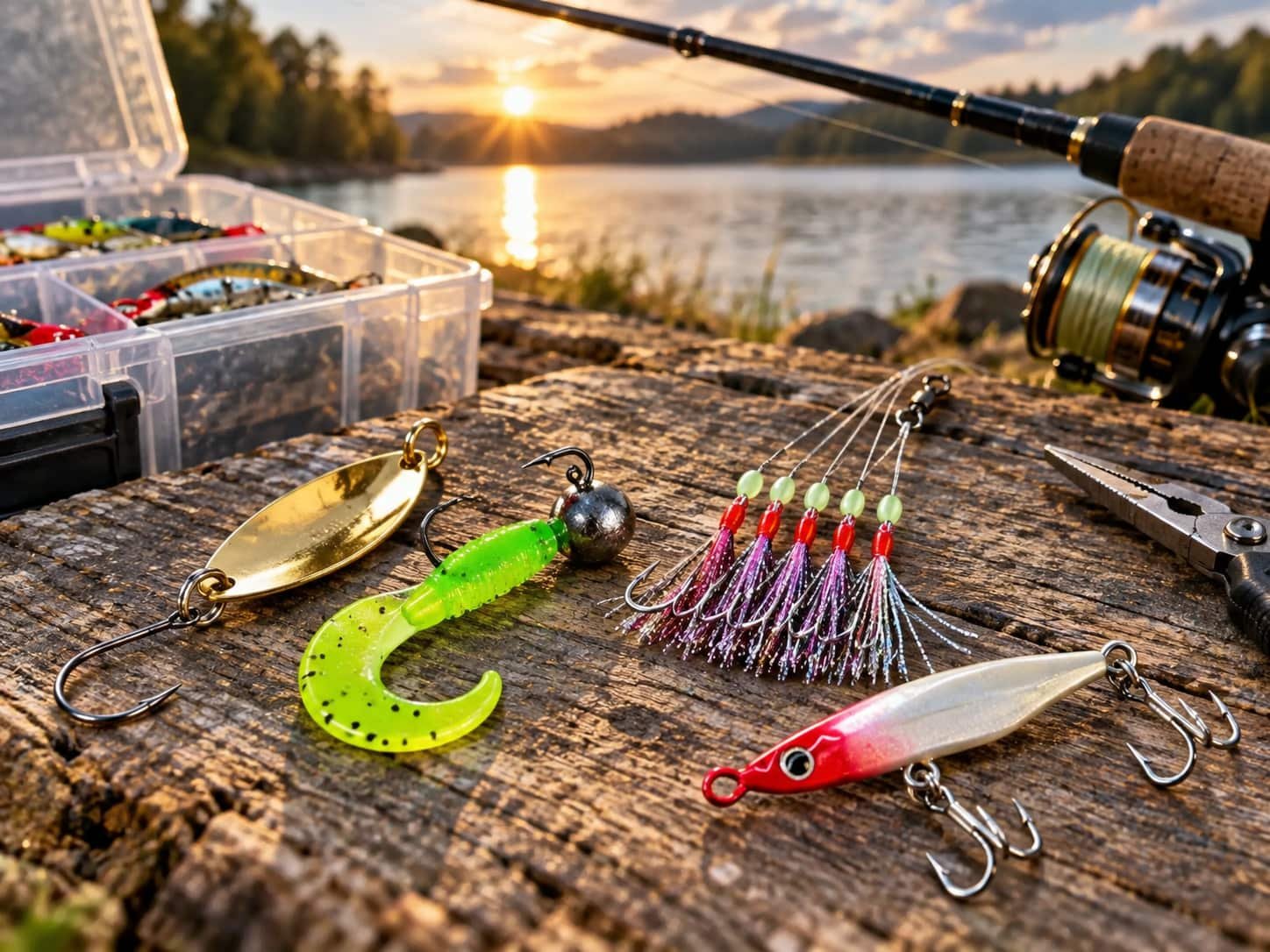
Learn how to choose the right metal jig weight for changing wind, current, depth, and casting distance so your jig reaches the target zone and stays there longer.