How to Fish Lures in High Wind for More Strikes

- Category
- Fishing Techniques
- Date
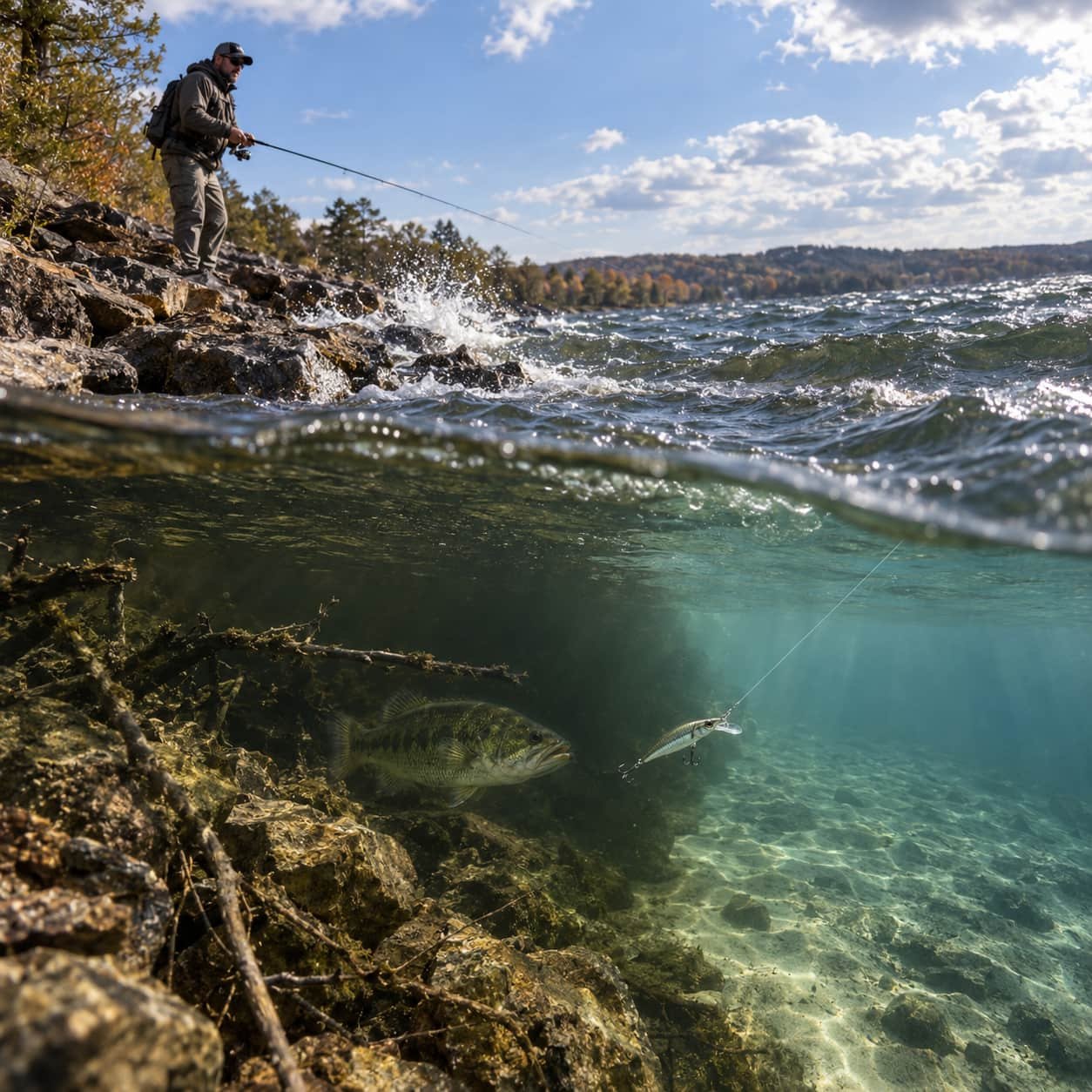
I used to look for calm, sheltered bays whenever the lake got rough, until I realized the real action happens right where the waves crash. Wind drives small fish into the bank, creating a natural feeding frenzy along the murky water margins. With a few quick adjustments to your casting angle, you can keep your lure right in the strike zone. Check out the practical lure fishing techniques for windy days below and make your next windy trip count.
| STT | Description | Meaning / Fishing Technique |
|---|---|---|
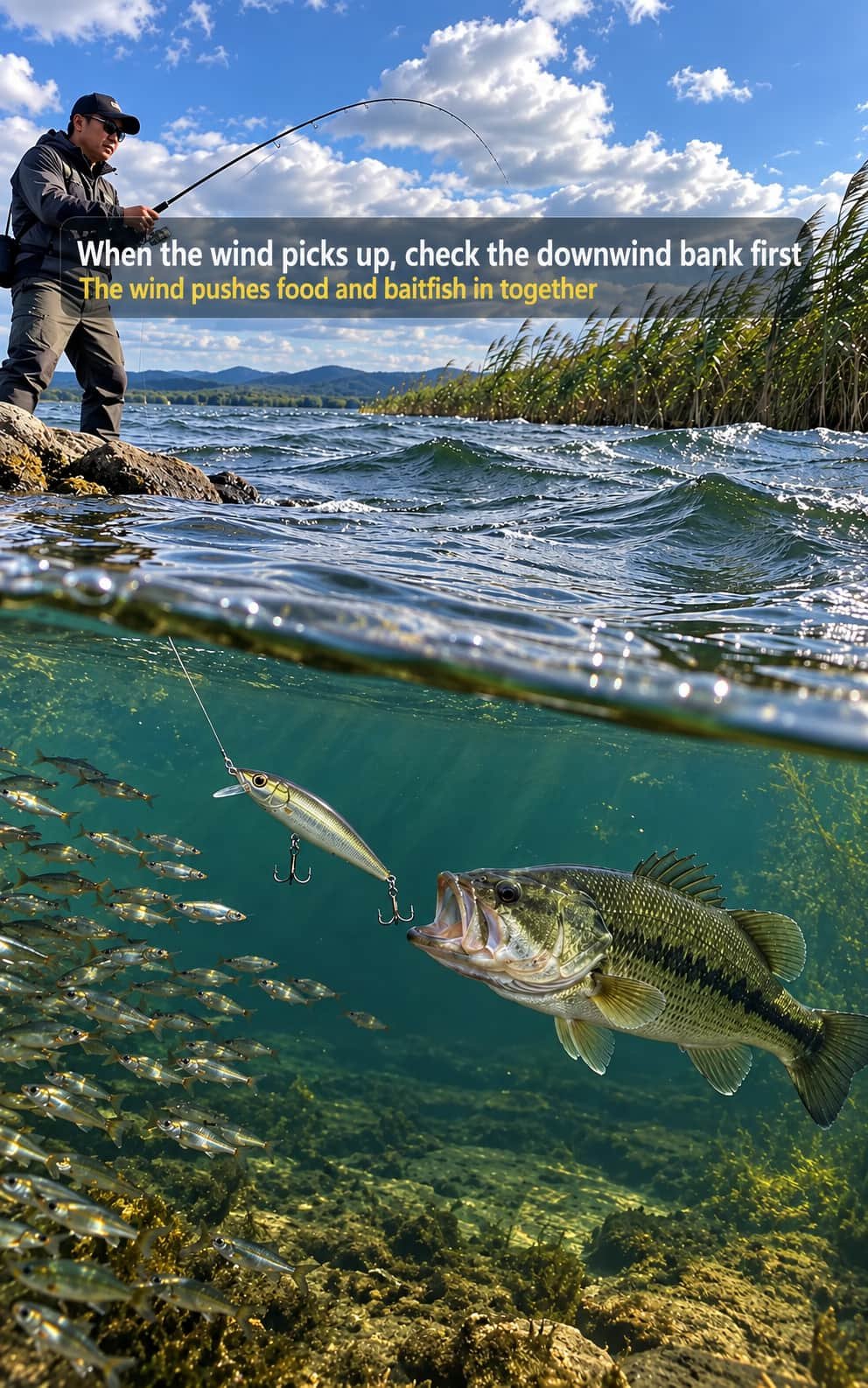
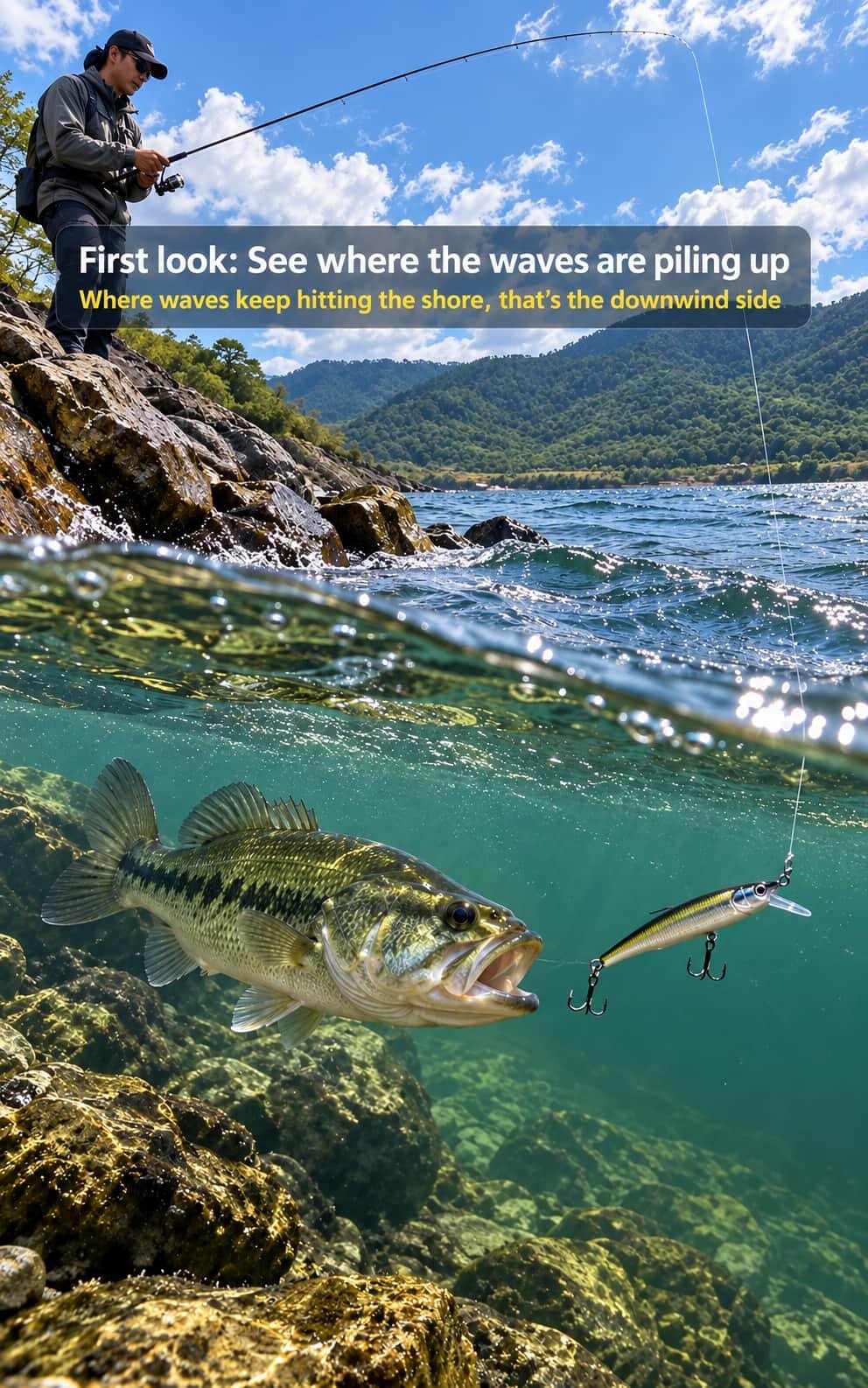
| 1 | When the wind picks up, check the downwind bank first because the wind pushes food and baitfish in together. | When the wind increases, the downwind bank can become a productive area because wind-driven current may concentrate food and baitfish there, attracting predatory fish. |
| 2 | First, look for where the waves are piling up. The shoreline that waves keep hitting is usually the downwind side. | Use wave direction to identify the downwind bank. Repeated wave action along a shoreline can help reveal where wind is pushing water and potential forage. |
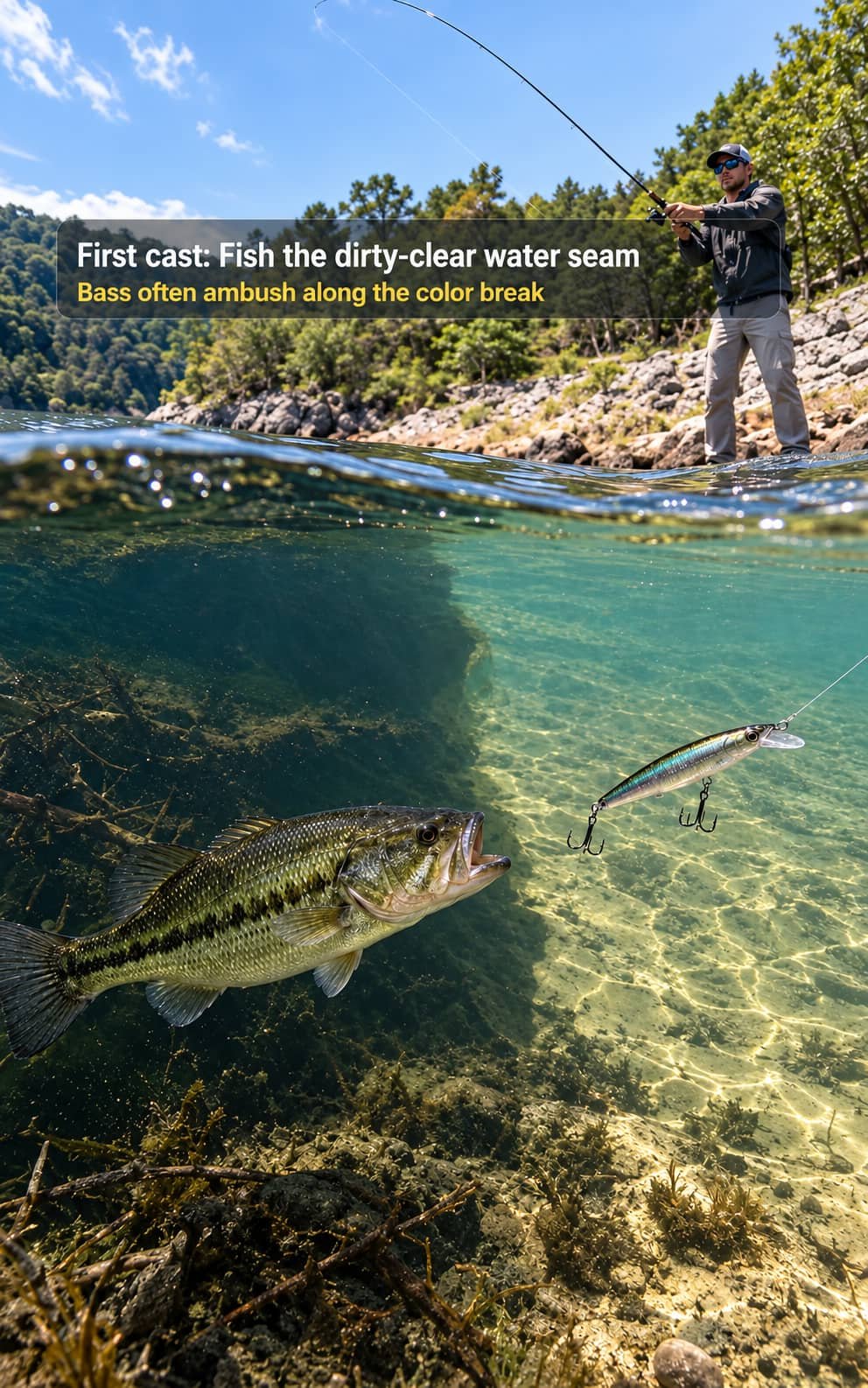
| 3 | For your first cast, work the seam between dirty and clear water because bass often ambush prey along the color break. | Target the transition between stained and clear water. Bass may use this visibility change as cover while waiting to strike passing prey. |
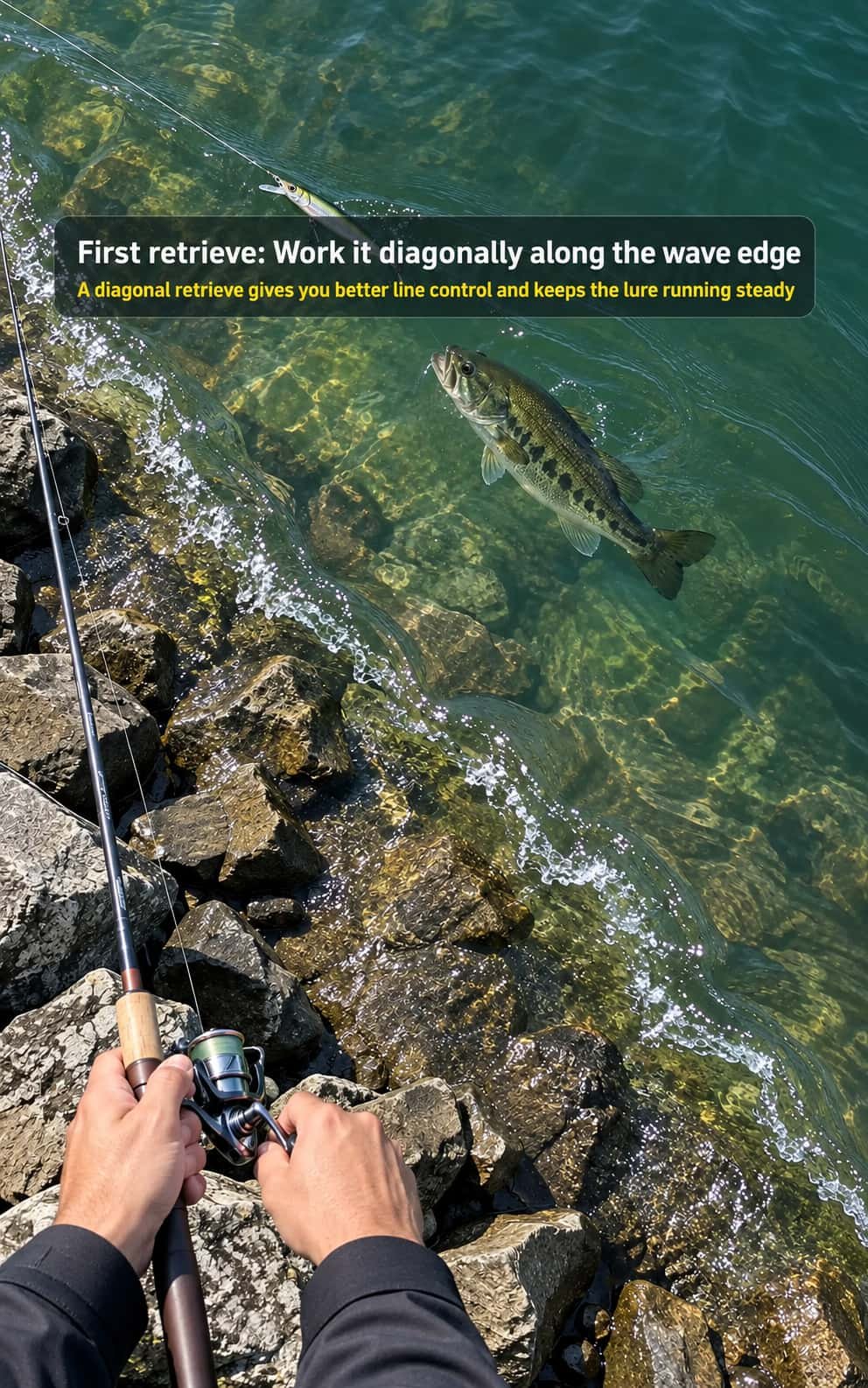
| 4 | On your first retrieve, work the lure diagonally along the wave edge because this angle gives you better line control and helps keep the lure running steadily. | A diagonal retrieve can reduce excess line movement caused by wind and waves, giving the angler better control while maintaining a more consistent lure action. |
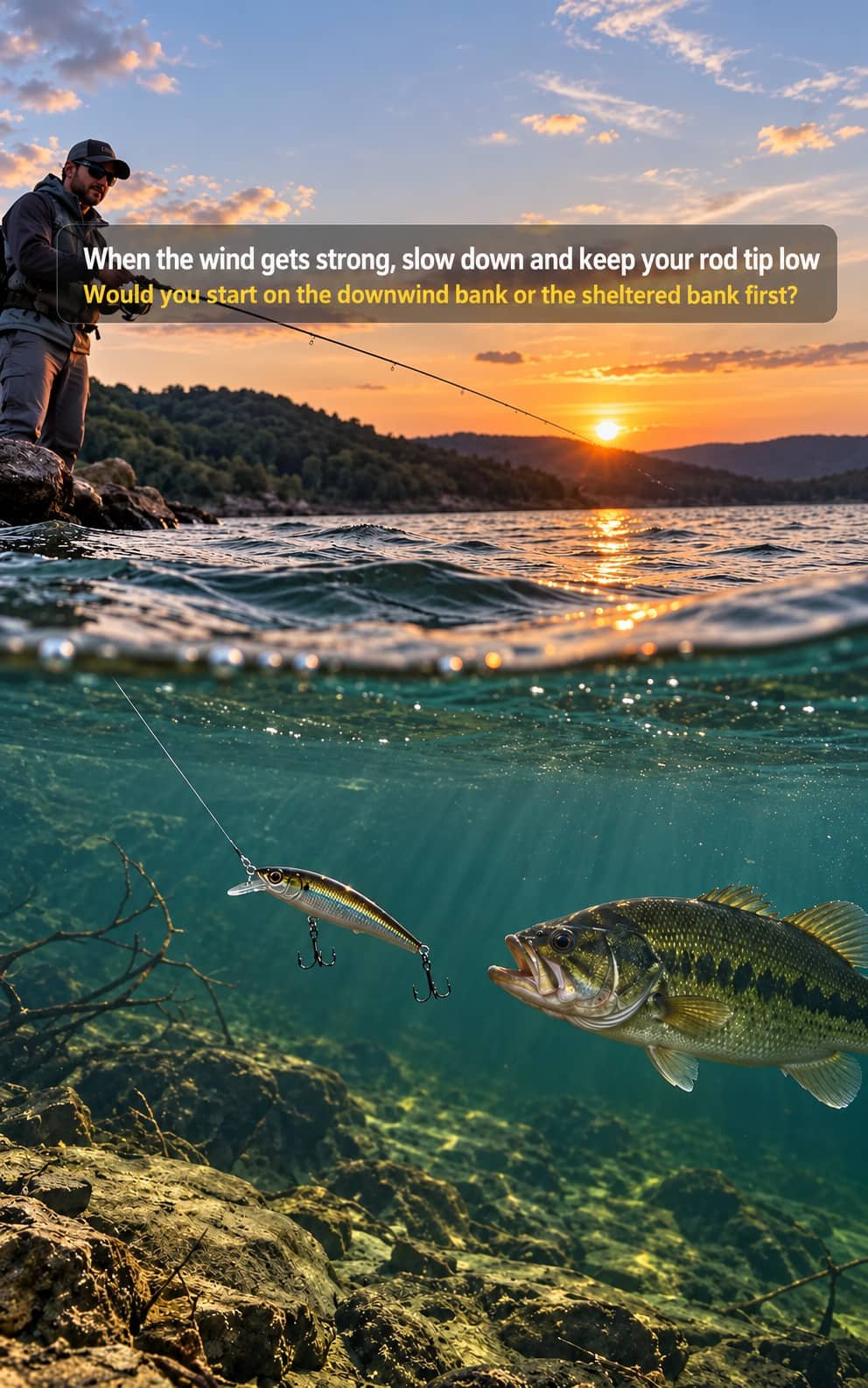
| 5 | When the wind gets strong, slow down and keep your rod tip low, then decide whether to begin on the downwind bank or the more sheltered bank. | In stronger wind, lowering the rod tip and slowing the retrieve can improve line and lure control. The choice between the downwind and sheltered bank depends on wave intensity, fish activity, and how effectively the lure can be presented. |
More to Explore
Related Articles
More guides in Fishing Techniques
A simple guide to lure fishing techniques and bait methods, showing how to work common lures with better rhythm, depth control and confidence

Avoid beginner lure fishing mistakes that cost you bites, from mismatched gear and fast retrieves to casting without first reading the water.