Fall Fishing Tips to Find Fish Before You Change Lures
- Category
- Fishing Conditions
- Date
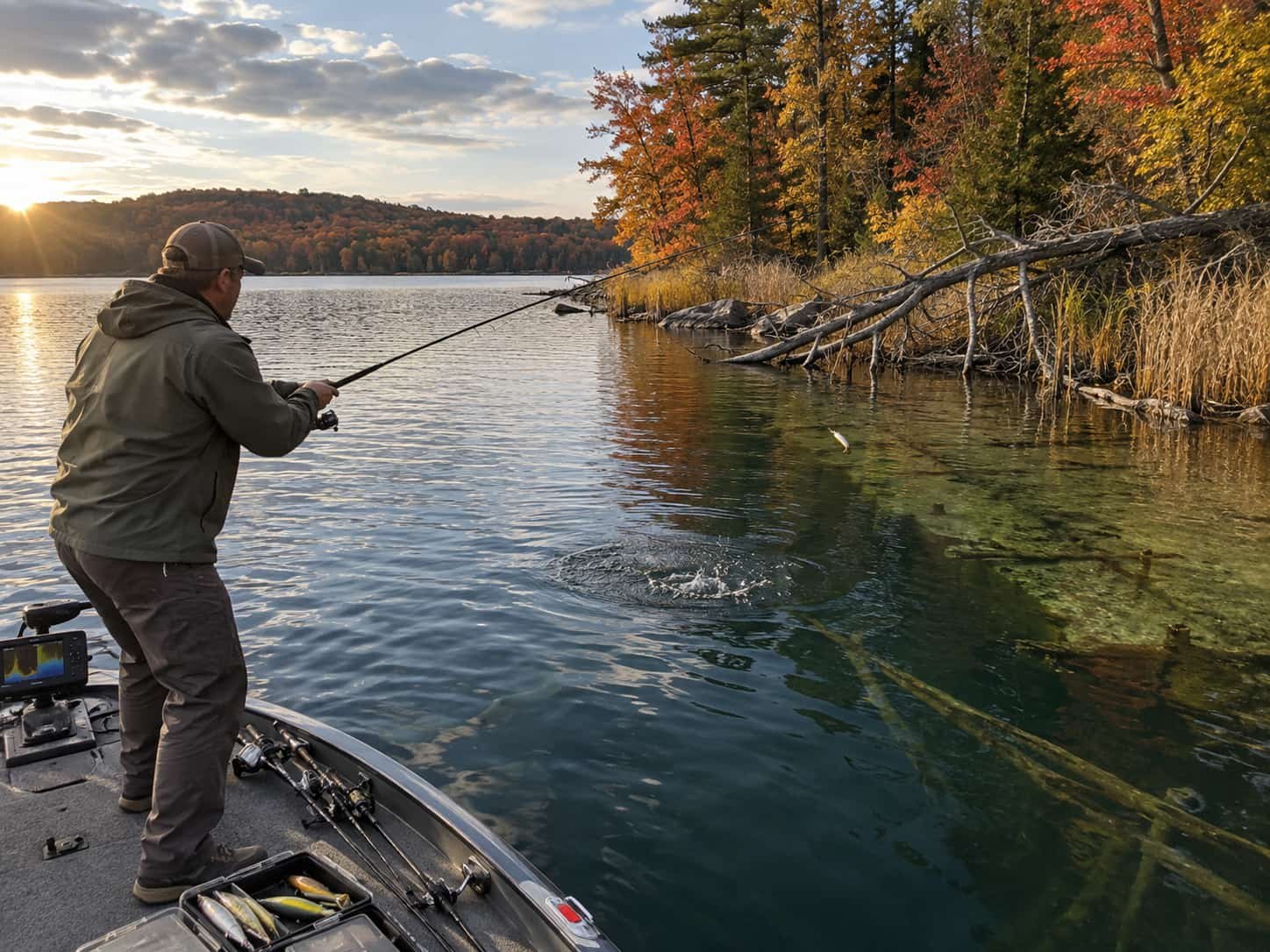
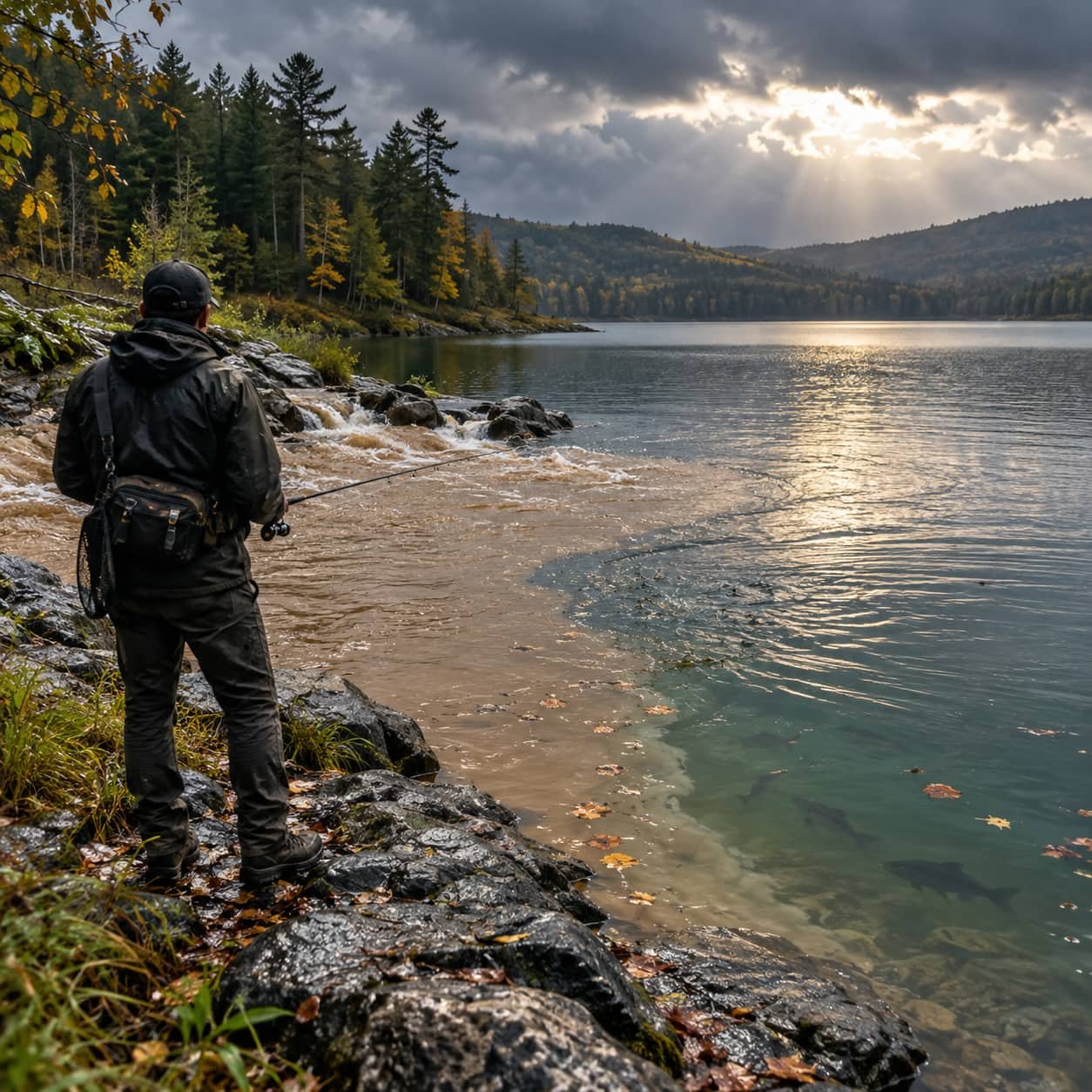
Fall fishing tips matter most when cooling water begins changing where fish feed, travel, and hold. A bank that produced in early fall can go quiet just a few weeks later as baitfish move, fish shift depth, and seasonal patterns develop.
Instead of covering every piece of water, start by reading the conditions. Find the baitfish, look for productive structure and cover, then figure out the depth fish are using. Once you know those three things, choosing the right lure becomes much easier.
The guide below breaks down early, mid, and late fall patterns, where to look for fish, and how to adjust lure choice, retrieve, and color as conditions change. Use it to fish with a clearer plan and give every cast a reason.
| No. | Topic | Main Content | Key Takeaway |
|---|---|---|---|
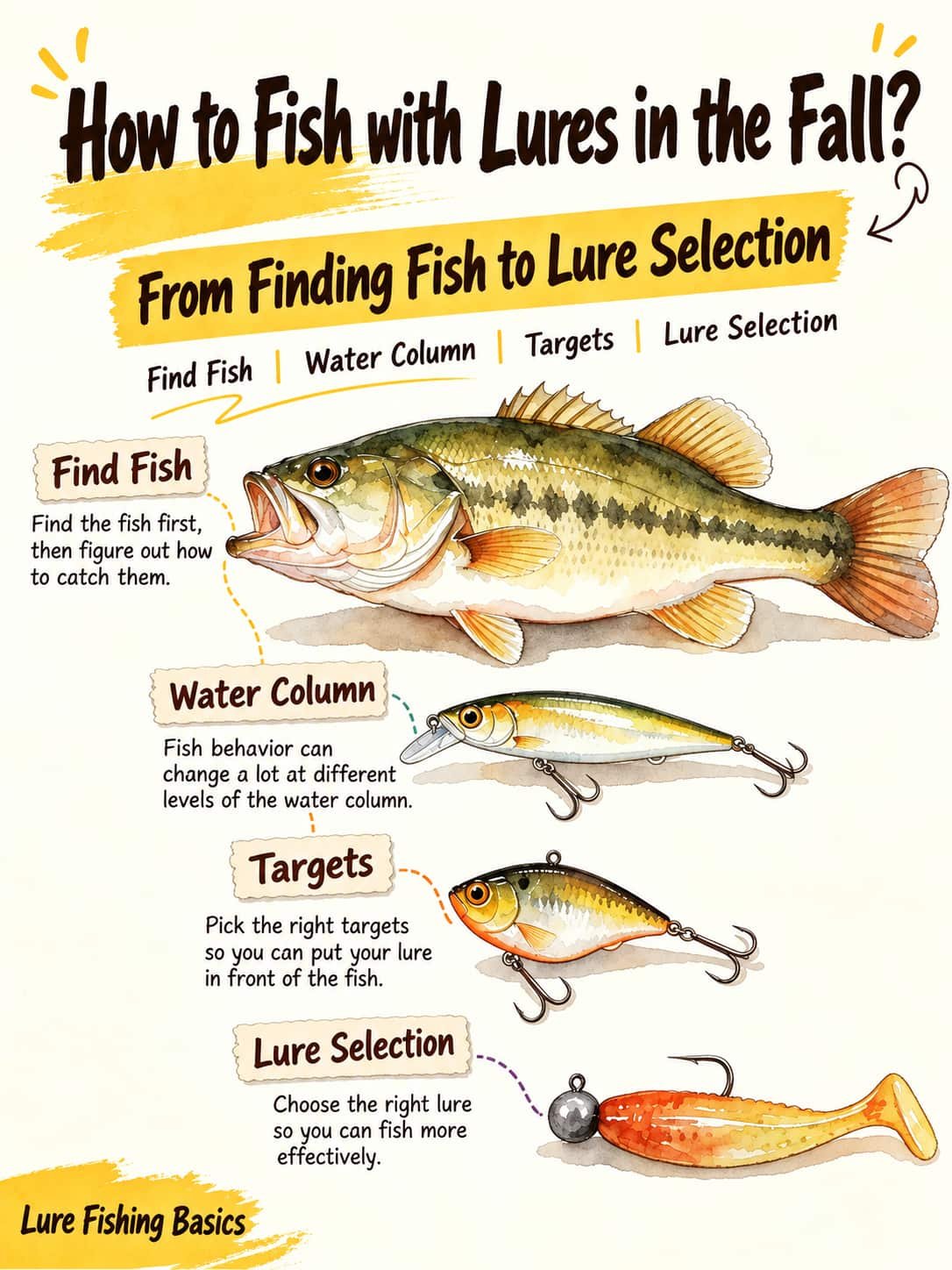
| 1 | Fall Lure Fishing Fundamentals | Follow a basic sequence: Find Fish → Identify the Water Column → Target Key Areas → Select the Lure. Locate fish first, determine the depth they are holding at, identify productive targets, then choose the appropriate lure. | Avoid random casting. Find the fish and establish the productive depth before choosing a lure. |
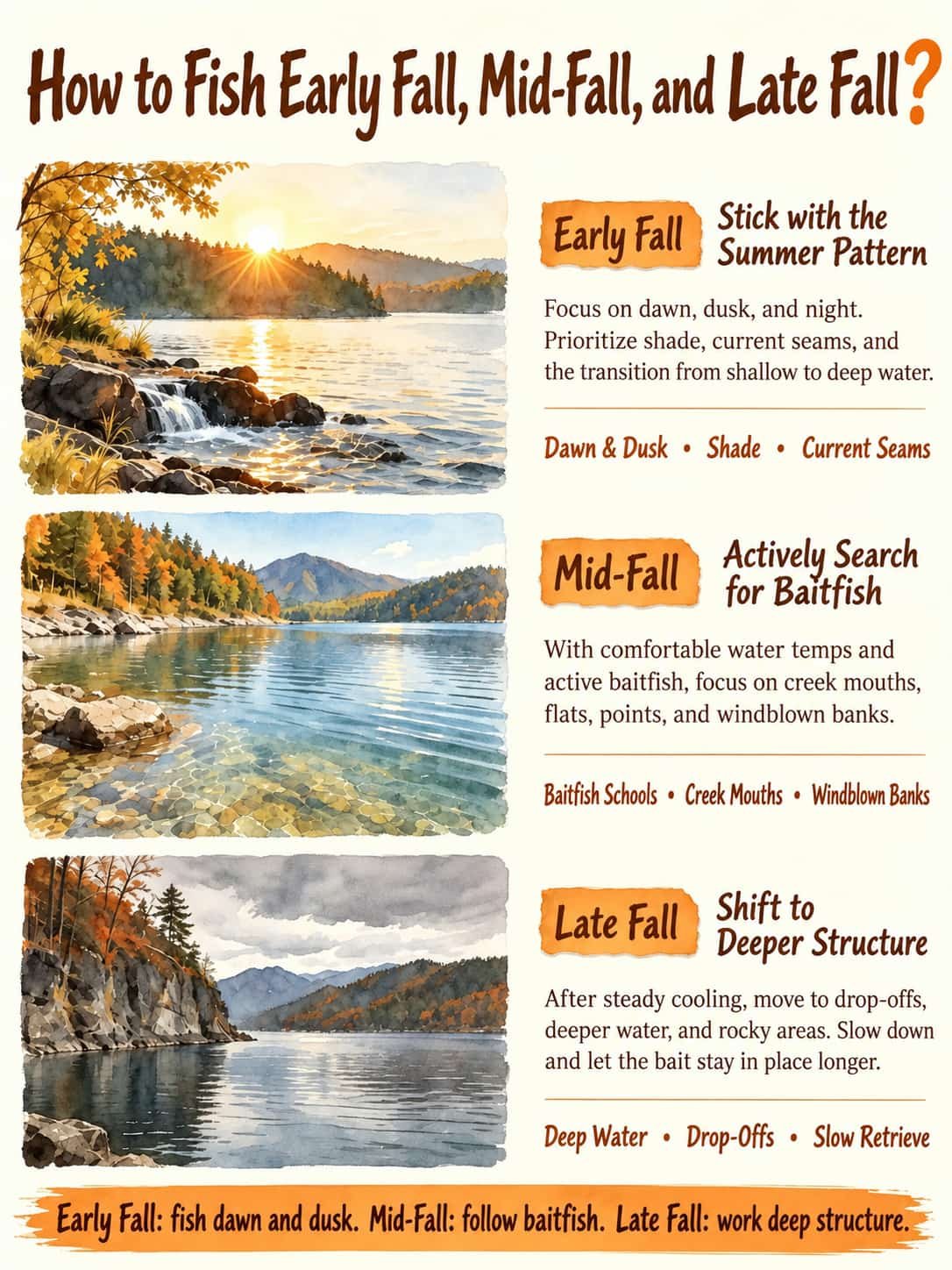
| 2 | Early, Mid, and Late Fall Fishing Patterns | Early Fall: Stay with summer patterns and focus on dawn, dusk, nighttime, shade, current seams, and shallow-to-deep transitions. Mid-Fall: Follow active baitfish and target creek mouths, flats, points, and windblown banks. Late Fall: Shift toward deeper structure, drop-offs, and rocky areas while slowing down your retrieve. | Early Fall: fish low-light periods. Mid-Fall: follow the baitfish. Late Fall: work deeper structure and slow down. |
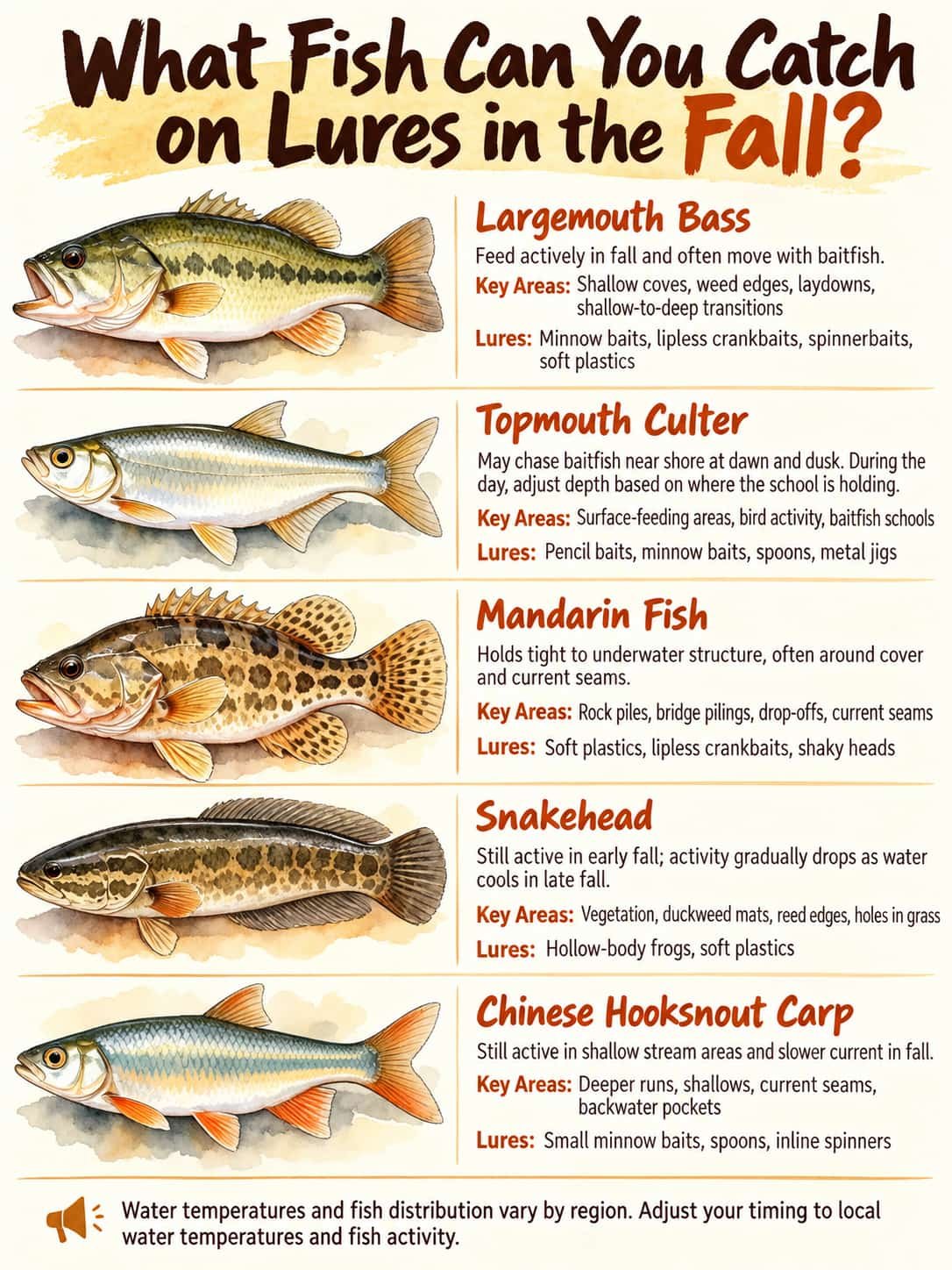
| 3 | Fall Target Species | Largemouth Bass: shallow coves, weed edges, laydowns, and shallow-to-deep transitions. Topmouth Culter: surface-feeding areas and baitfish schools. Mandarin Fish: rock piles, bridge pilings, drop-offs, and current seams. Snakehead: vegetation, reed edges, and holes in grass. Chinese Hooksnout Carp: deeper runs, shallows, current seams, and backwater areas. | Different species hold around different types of cover, structure, and depth. Adjust your approach to local water temperature and fish activity. |
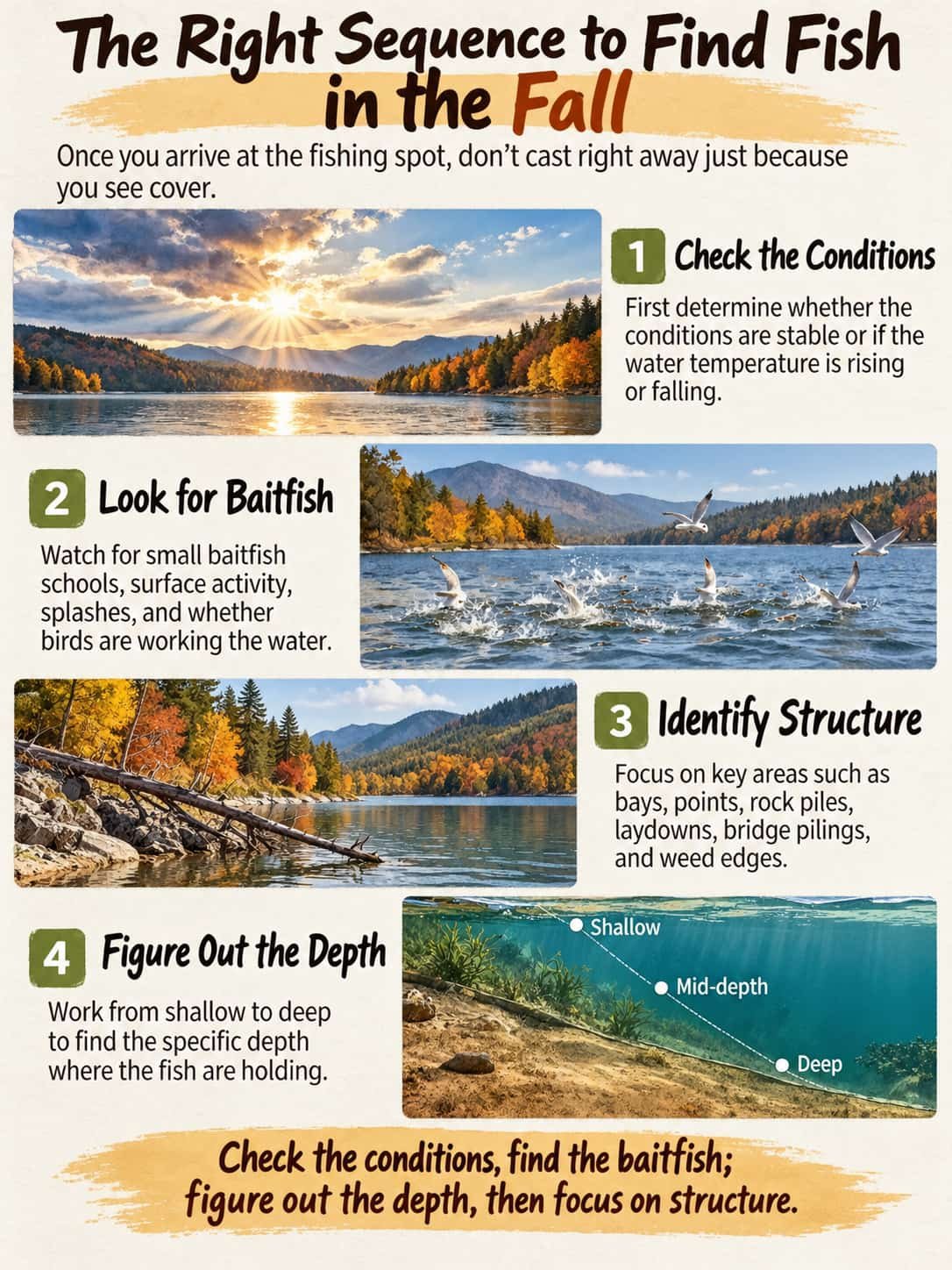
| 4 | How to Find Fish in the Fall | 1. Check Conditions: Pay attention to weather stability and whether water temperatures are rising or falling. 2. Look for Baitfish: Watch for baitfish schools, surface activity, splashes, and working birds. 3. Identify Structure and Cover: Check bays, points, rock piles, laydowns, bridge pilings, and weed edges. 4. Determine the Depth: Search from shallow to deep until you establish where fish are holding. | Conditions → Baitfish → Depth → Structure/Cover. Don’t start casting just because you see visible cover. |
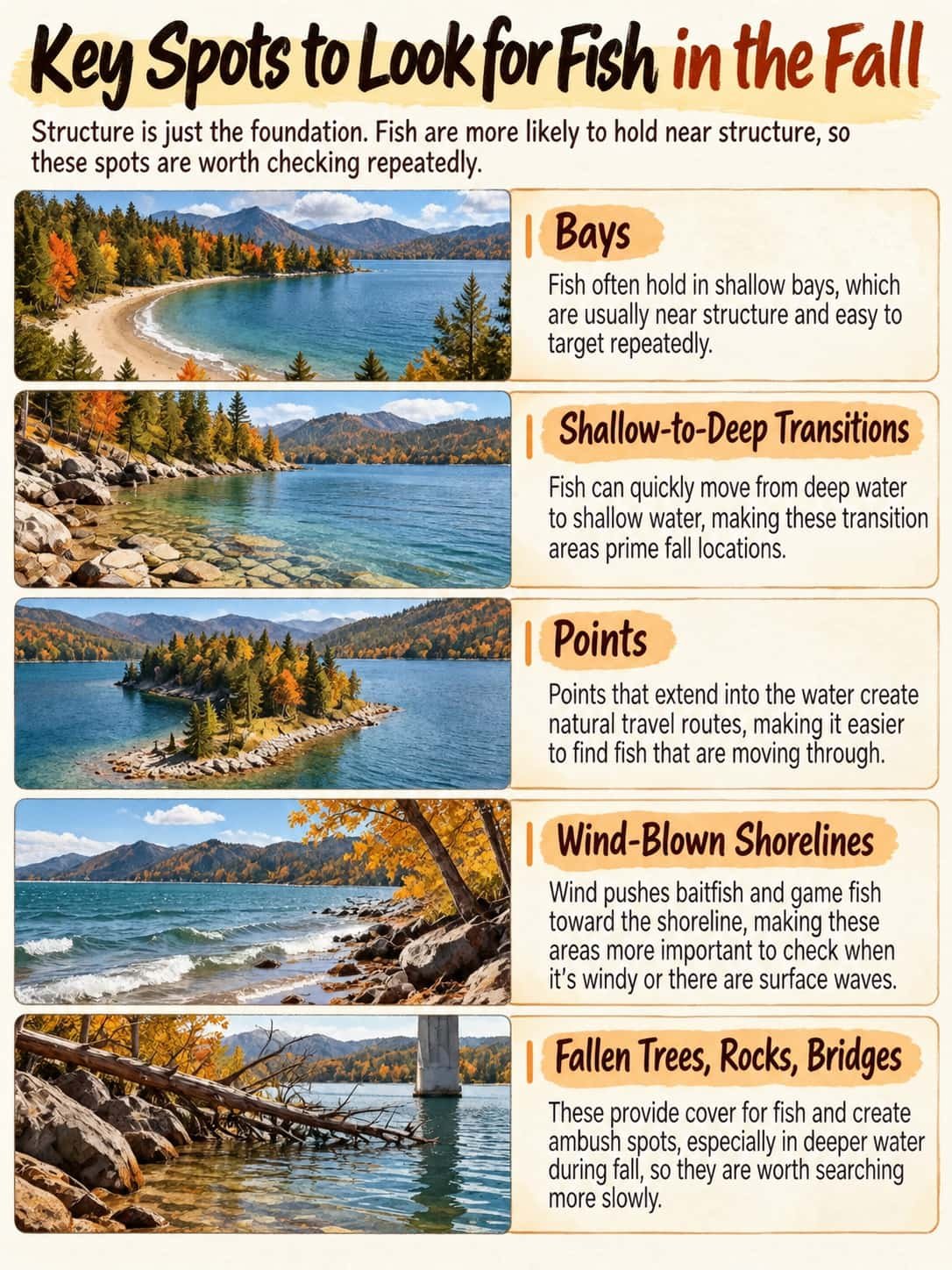
| 5 | Key Fall Fishing Areas | Bays: Fish often move into productive shallow areas. Shallow-to-Deep Transitions: Give fish easy access between feeding and deeper holding water. Points: Serve as natural travel routes. Windblown Banks: Wind can concentrate baitfish along the shoreline. Laydowns, Rocks, and Bridge Pilings: Provide cover and ambush opportunities. | Structure alone does not guarantee fish. Prioritize areas where structure or cover overlaps with baitfish or visible fish activity. |
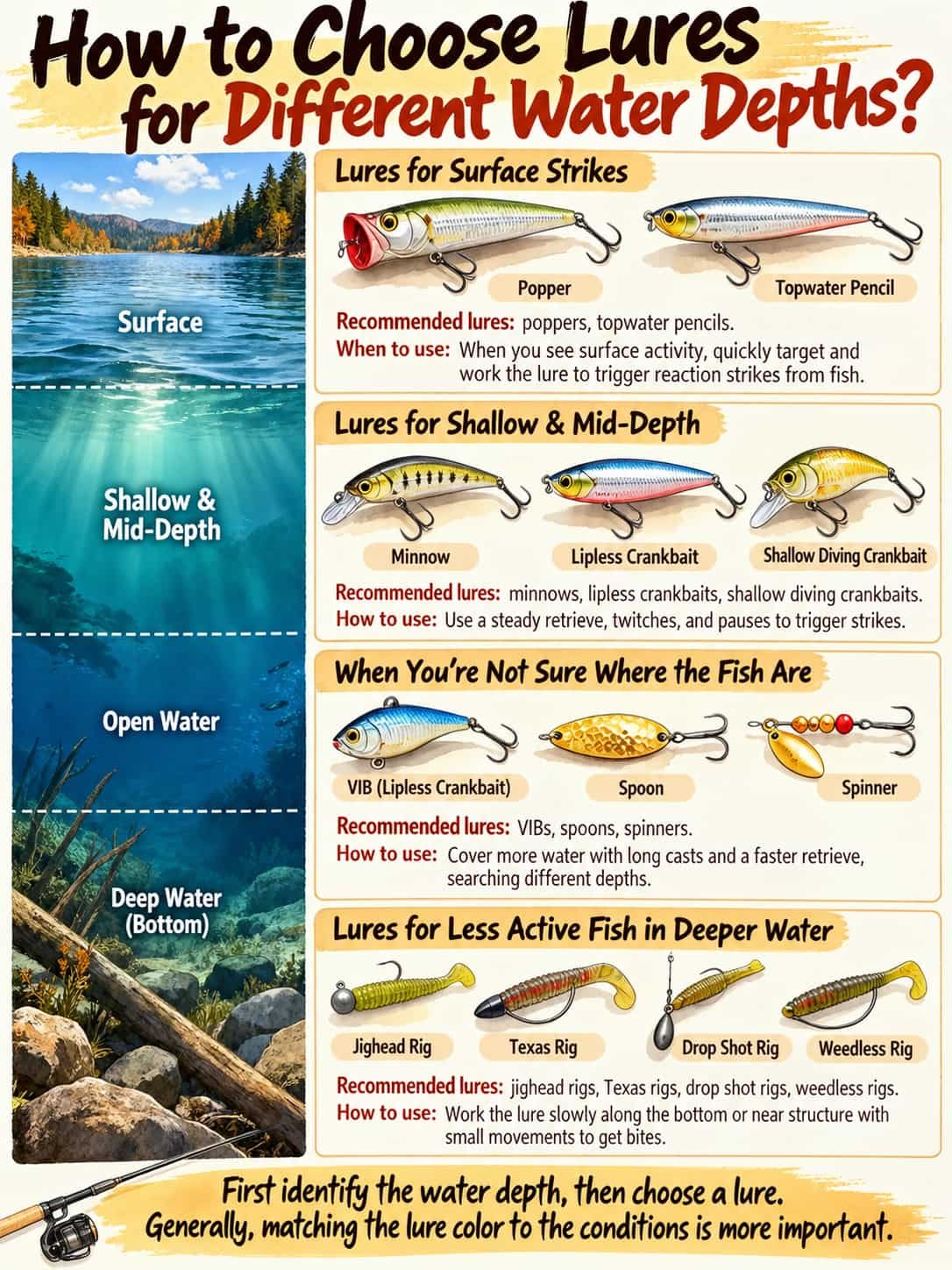
| 6 | Choosing Lures by Water Depth | Surface: Poppers and walking baits. Shallow to Mid-Depth: Minnow-style jerkbaits, lipless crankbaits, and shallow-diving crankbaits. When Fish Location Is Unknown: Lipless crankbaits, spoons, and inline spinners can help cover water and search different depths. Deep Water or Less-Active Fish: Jighead rigs, Texas rigs, drop-shot rigs, and weedless soft-plastic presentations. | Establish the productive depth first, then choose a lure that can efficiently work that part of the water column. |
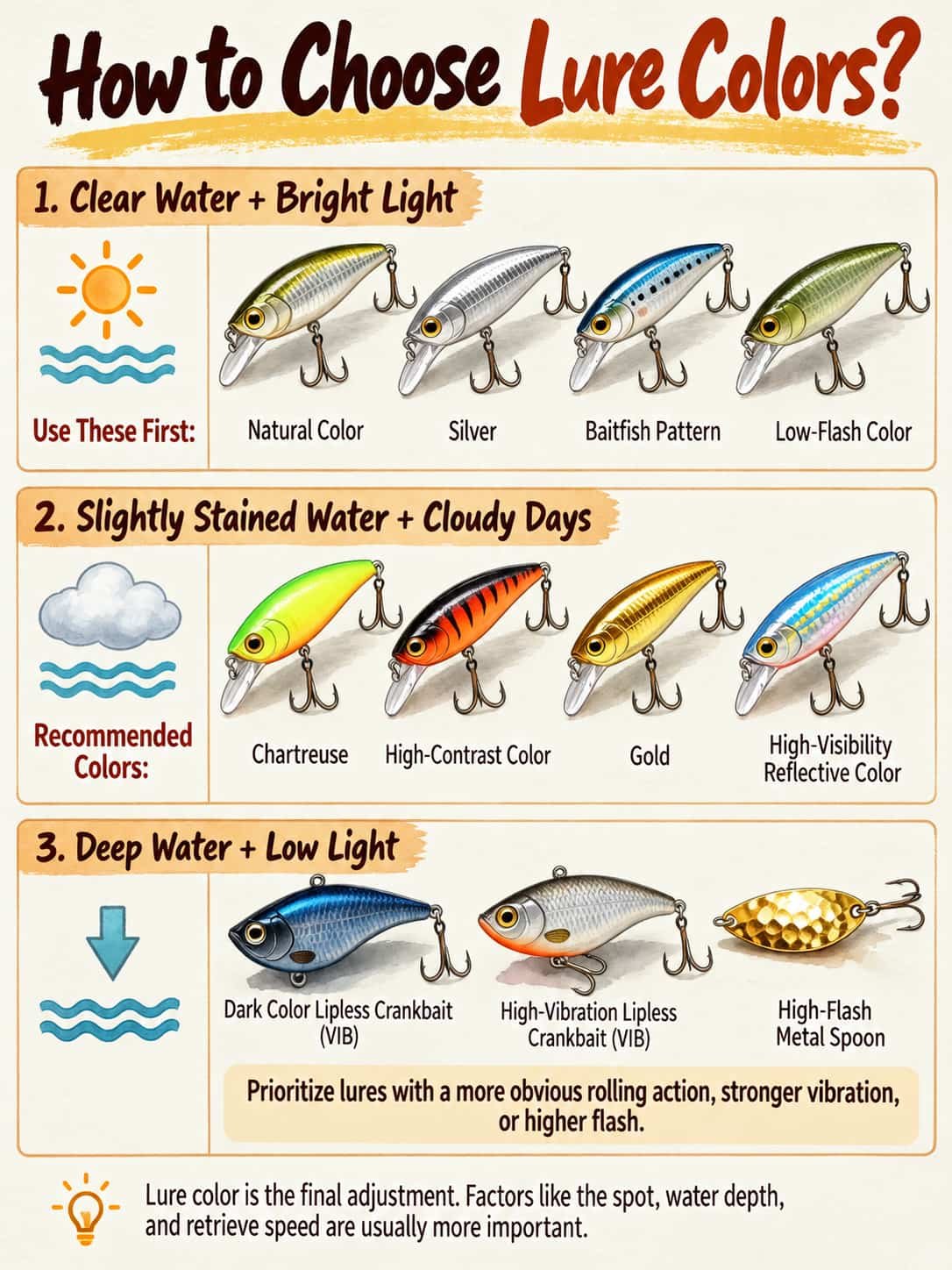
| 7 | Choosing Lure Colors | Clear Water + Bright Light: Natural colors, silver, baitfish patterns, and subtle low-flash finishes. Slightly Stained Water + Cloudy Conditions: Chartreuse, high-contrast patterns, gold, and reflective finishes. Deep Water + Low Light: Darker colors, high-vibration lipless crankbaits, and high-flash metal spoons. | Lure color is usually a final adjustment. Location, depth, presentation, and retrieve speed generally matter more. |
More to Explore
Related Articles
More guides in Fishing Conditions
Find the best time to fish with lures. See how the season, water temperature, wind, and barometric pressure affect the bite.
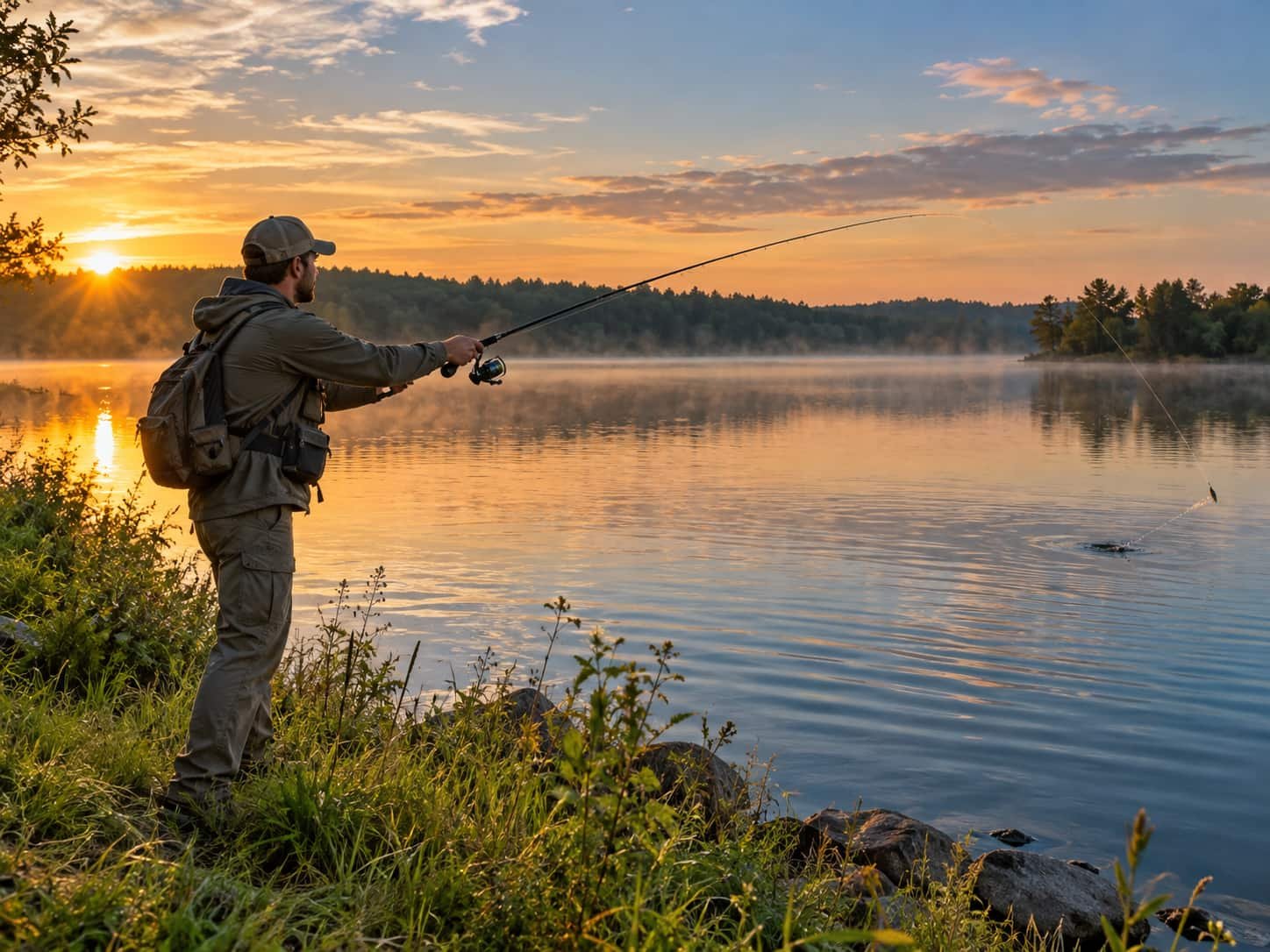
Fishing in the rain is not about luck. Read the bite before a storm, fish the short post-rain window, and leave when water keeps rising.