Best Time to Fish with Lures by Season and Weather
- Category
- Fishing Conditions
- Date
Trying to figure out the best time to fish with lures? Fish activity can shift with the time of day, season, water temperature, barometric pressure, and wind. The guide below shows you what signs to watch so you can choose better fishing windows and plan your next trip with more confidence.
| no. | Topic | North American English |
|---|---|---|
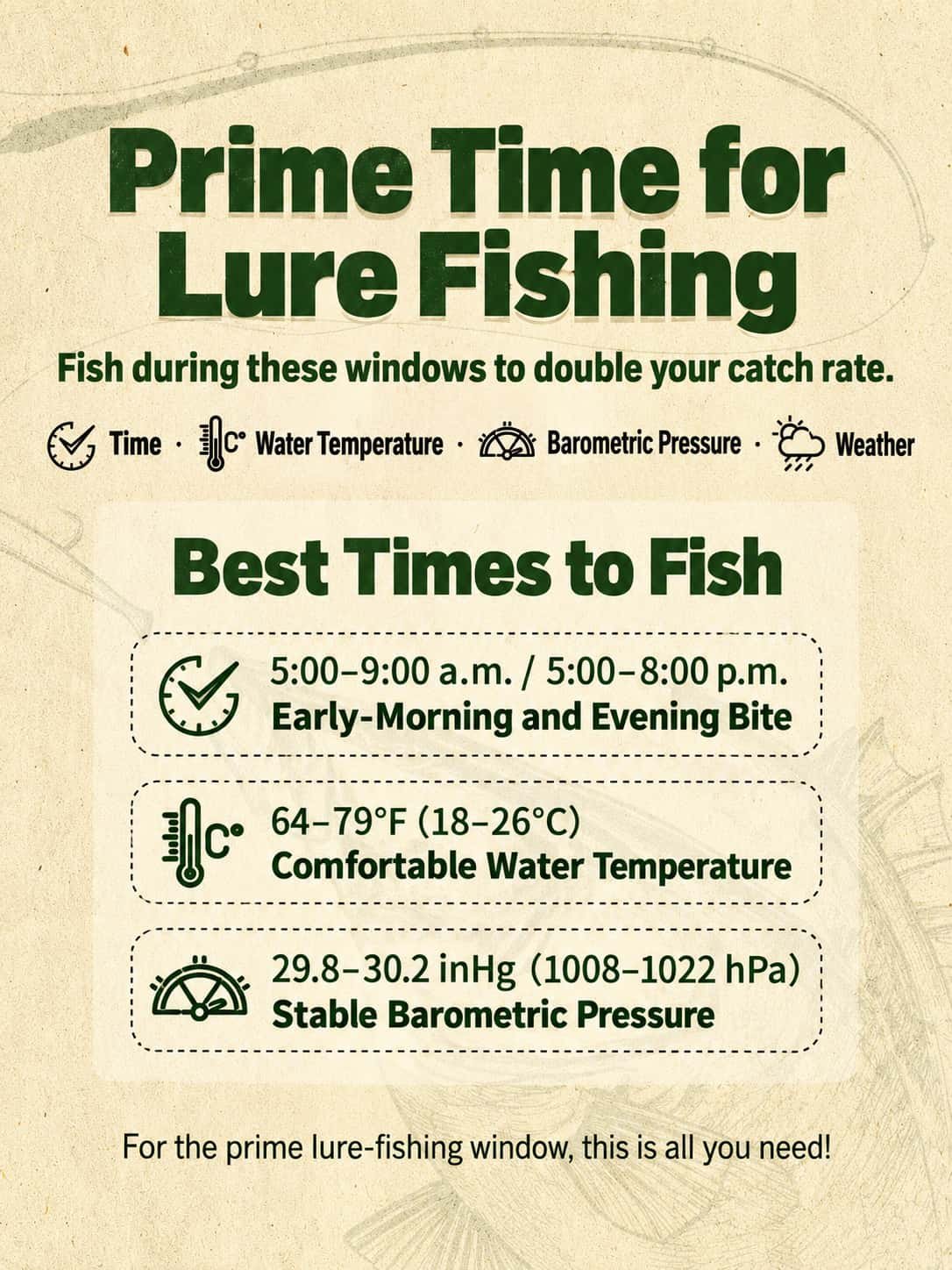
| 1 | Prime Bite Windows for Fishing with Lures | General bite windows: 5:00–9:00 AM and 5:00–8:00 PM. The graphic says fishing during these windows can double your catch rate. A favorable water temperature is 64–79°F (18–26°C), with stable barometric pressure at 29.77–30.18 inHg (1,008–1,022 hPa). Timing, water temperature, barometric pressure, and weather can all affect the bite. |
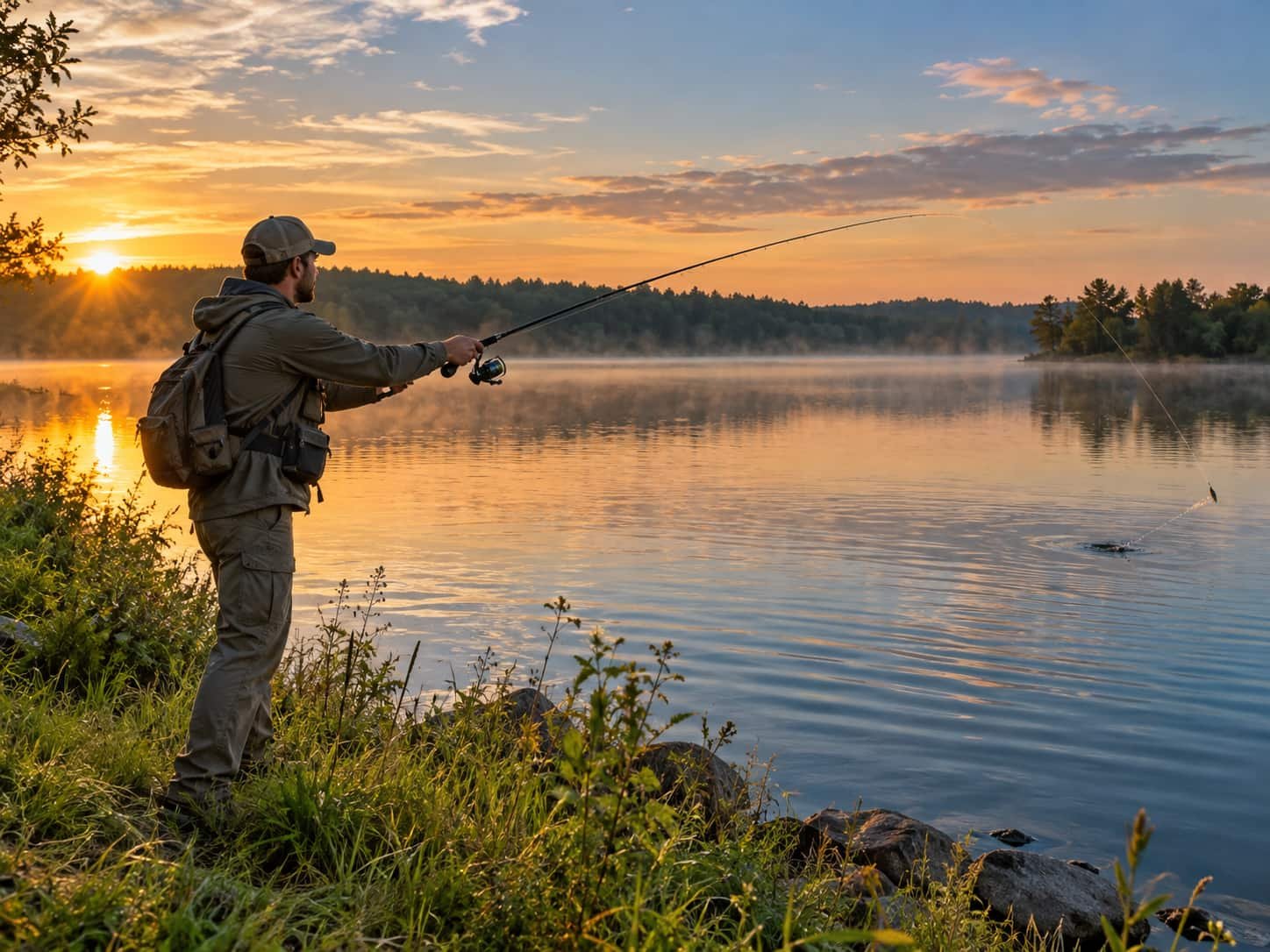
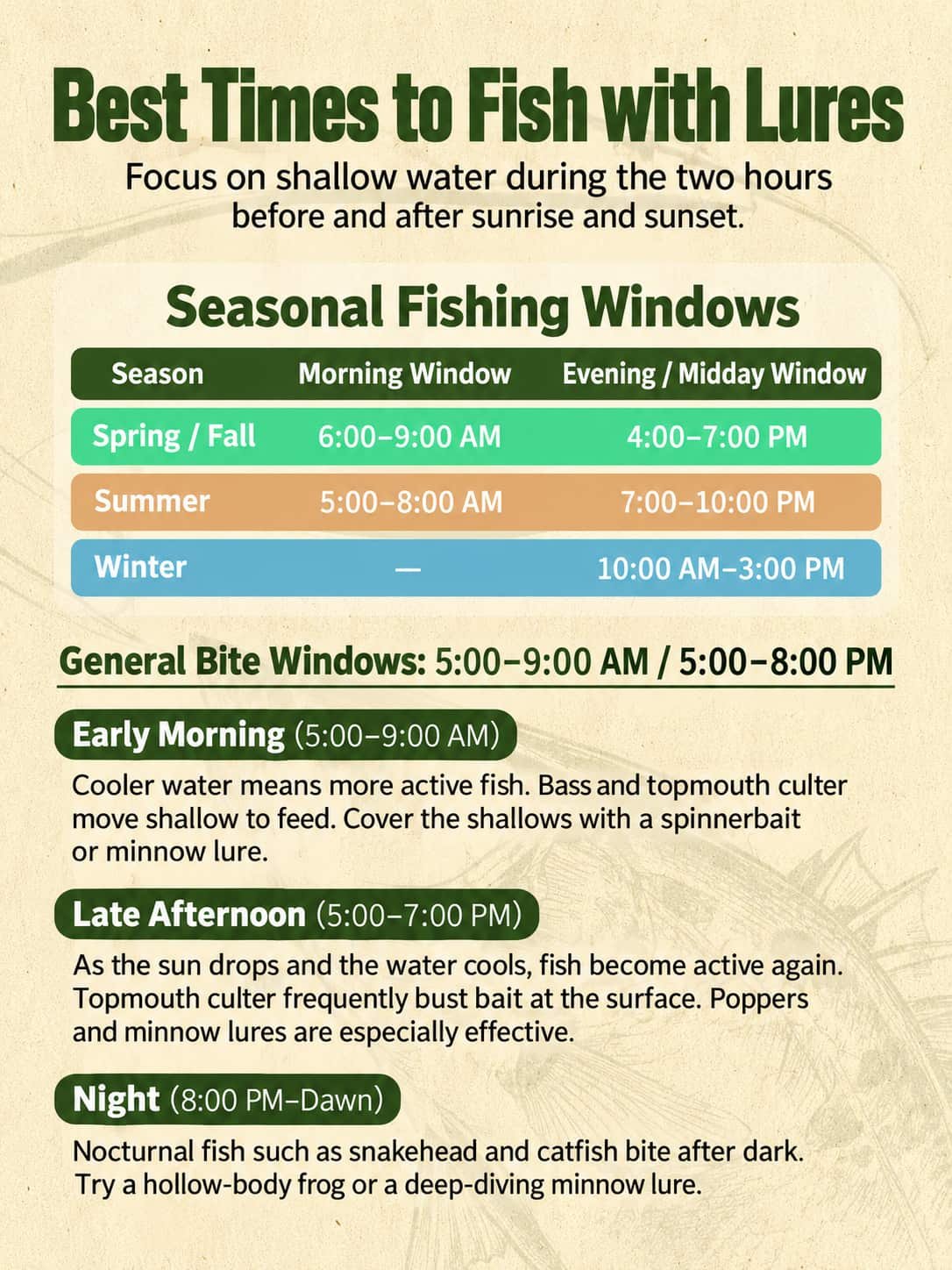
| 2 | Seasonal Bite Windows | Focus on shallow water during the two hours before and after sunrise and sunset. Spring/Fall: 6:00–9:00 AM and 4:00–7:00 PM. Summer: 5:00–8:00 AM and 7:00–10:00 PM. Winter: no morning window listed; 10:00 AM–3:00 PM. General bite windows: 5:00–9:00 AM and 5:00–8:00 PM. In the early morning, bass and topmouth culter move shallow to feed; try a spinnerbait or minnow plug. In the late afternoon, topmouth culter may bust bait at the surface; try poppers or minnow plugs. At night, snakehead and catfish may bite; try a hollow-body frog or a deep-diving minnow plug. |
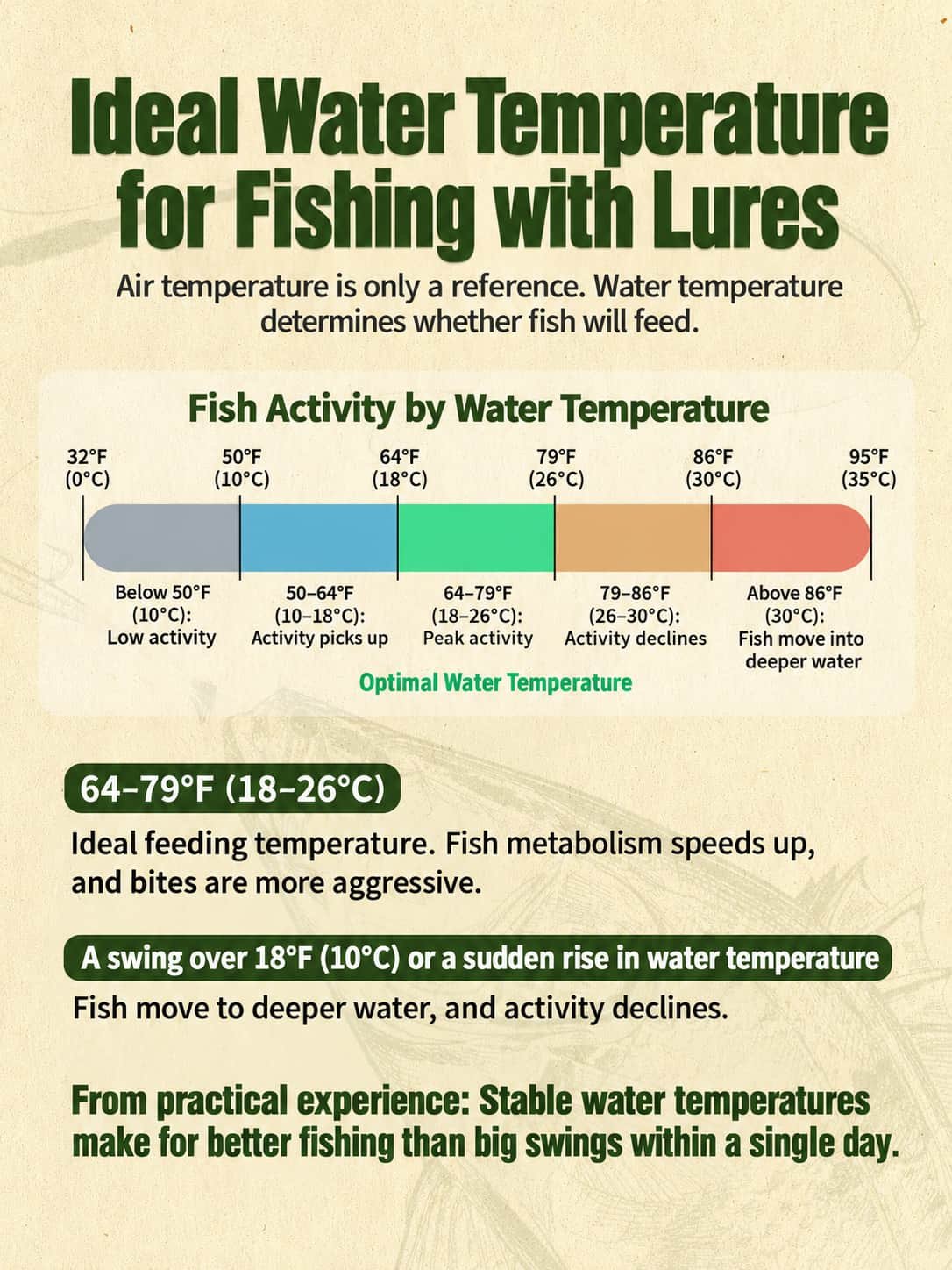
| 3 | Water Temperature and Fish Activity | Below 50°F (10°C): low activity. 50–64°F (10–18°C): activity picks up. 64–79°F (18–26°C): peak activity and the best feeding range; fish metabolism speeds up and bites become more aggressive. 79–86°F (26–30°C): activity declines. Above 86°F (30°C): fish move into deeper water. A temperature swing over 18°F (10°C) or a sudden rise in water temperature can push fish deeper and reduce activity. The graphic says steady water temperatures usually fish better than sharp swings within a day. |
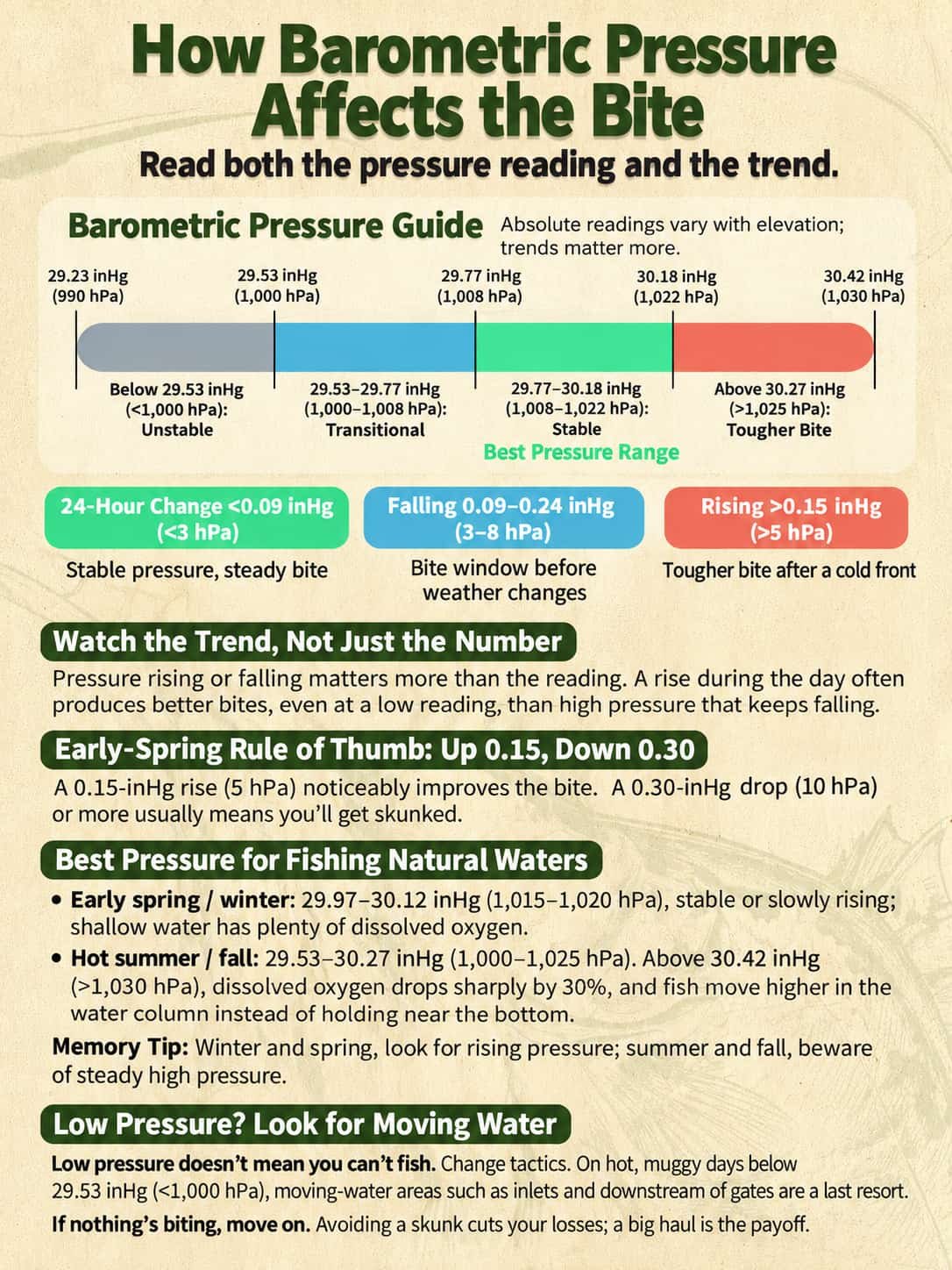
| 4 | Barometric Pressure and the Bite | Pressure scale: 29.23 inHg (990 hPa), 29.53 (1,000), 29.77 (1,008), 30.18 (1,022), and 30.42 (1,030). Absolute readings vary with elevation; the trend matters more. Below 29.53 inHg (1,000 hPa): unstable. 29.53–29.77 (1,000–1,008 hPa): transitional. 29.77–30.18 (1,008–1,022 hPa): stable and the best range. Above 30.27 (>1,025 hPa): tougher bite. A change under 0.09 inHg (3 hPa) in 24 hours means stable pressure and a steady bite. A drop of 0.09–0.24 inHg (3–8 hPa) may create a bite window before the weather changes. A rise over 0.15 inHg (5 hPa) is associated with a tougher bite after a cold front. The graphic says rising pressure during the day can improve the bite, even at a low reading, compared with high pressure that keeps falling. Early-spring rule: a 0.15-inHg (5-hPa) rise improves the bite; a 0.30-inHg (10-hPa) drop or more often means getting skunked. For fishing natural waters, the suggested range is 29.97–30.12 inHg (1,015–1,020 hPa) in early spring and winter, with stable or slowly rising pressure. In hot summer and fall, it is 29.53–30.27 inHg (1,000–1,025 hPa). The graphic says above 30.42 inHg (1,030 hPa) dissolved oxygen drops by 30% and fish move higher in the water column instead of holding near the bottom. Its rule of thumb: look for rising pressure in winter and spring; watch for steady high pressure in summer and fall. On hot, muggy days below 29.53 inHg (1,000 hPa), try moving water around inlets or downstream of gates. If nothing is biting, move on. Avoiding a skunk cuts your losses; a big haul is the payoff. |
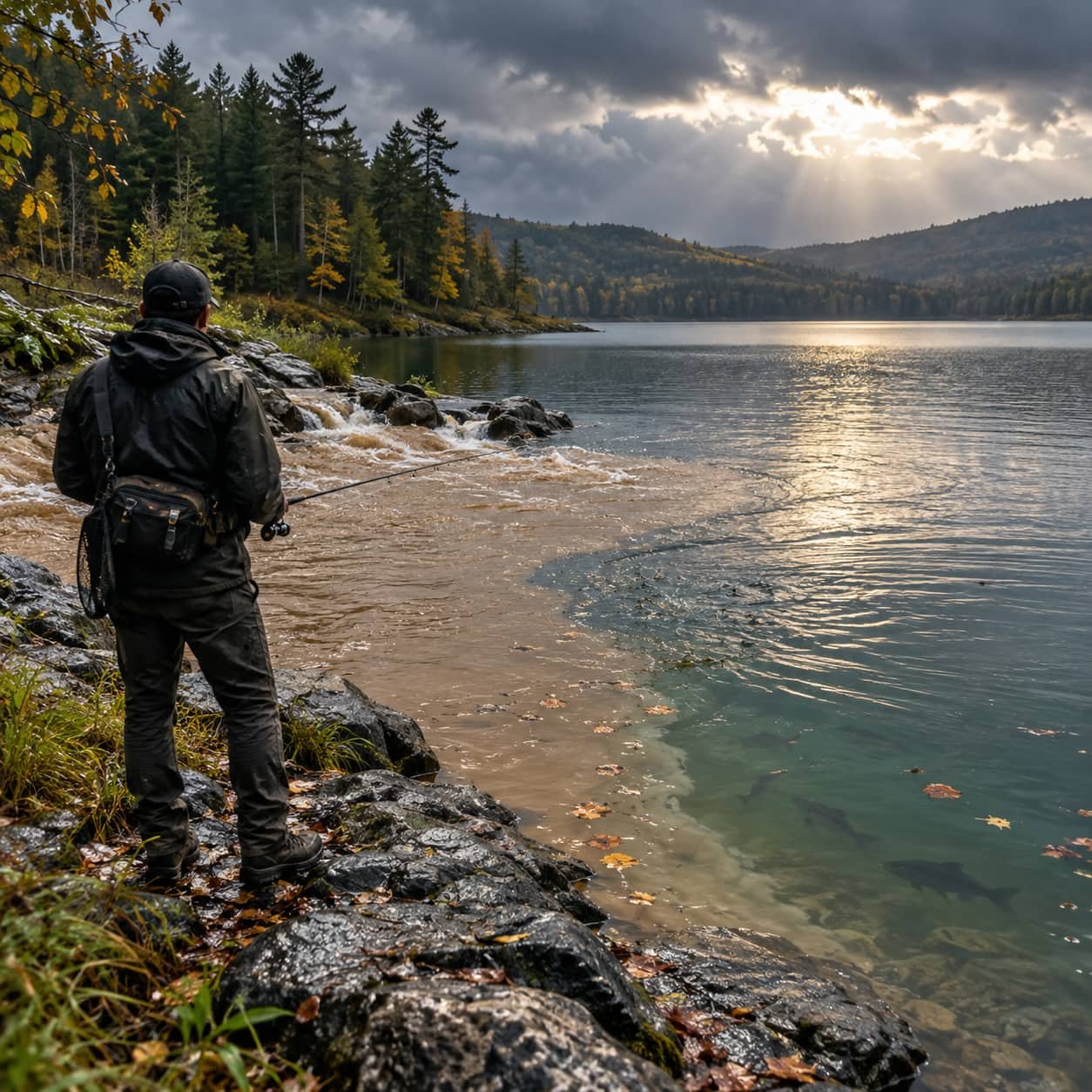
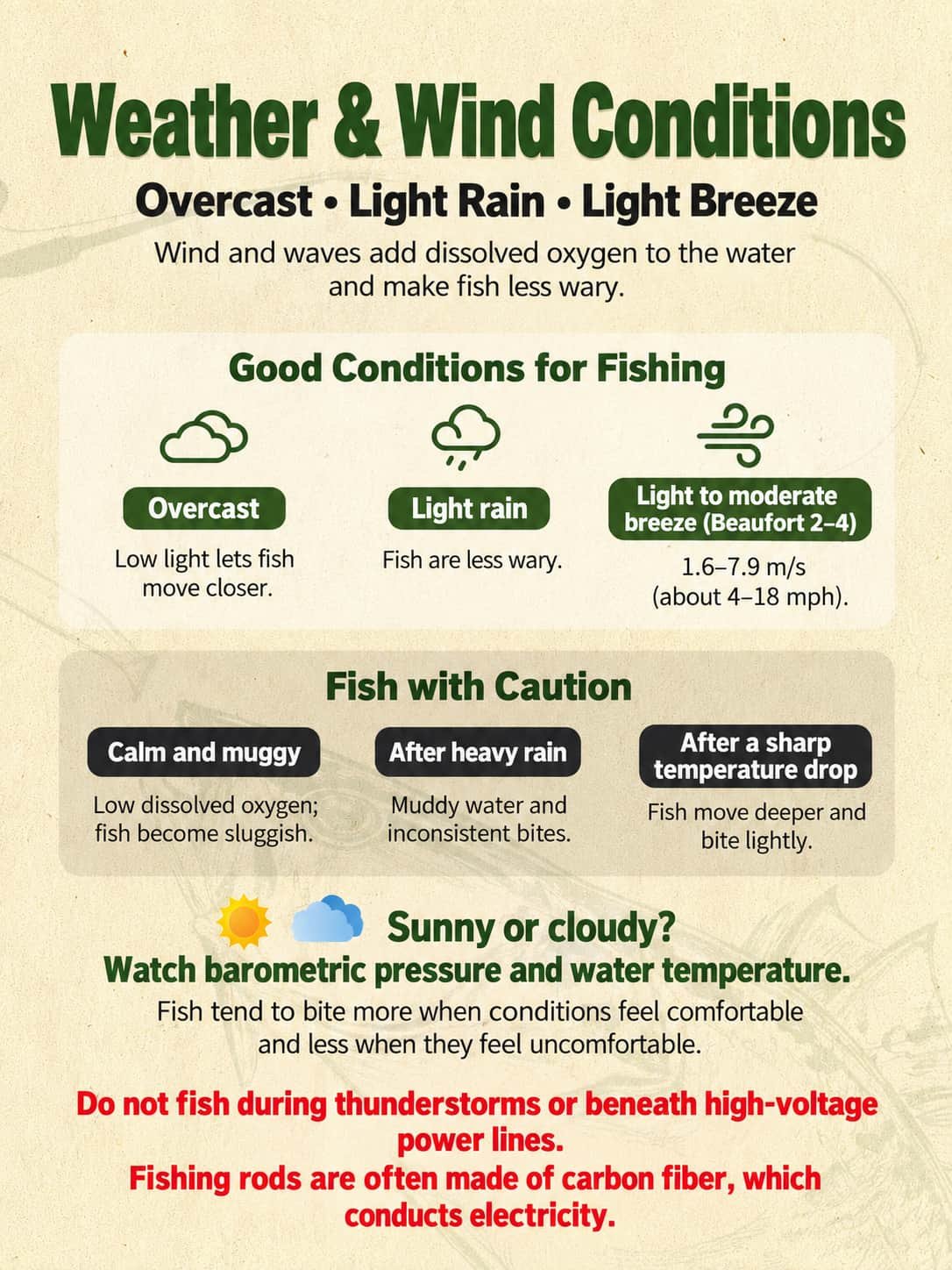
| 5 | Weather and Wind Conditions | Overcast skies, light rain, and a light breeze are presented as favorable. Wind and waves add dissolved oxygen and make fish less wary. Low light can bring fish closer; light rain makes them less wary. The suggested wind range is Beaufort 2–4: 1.6–7.9 m/s (about 4–18 mph). Fish with caution in calm, muggy weather, when low dissolved oxygen can make fish sluggish; after heavy rain, when water is muddy and bites are inconsistent; and after a sharp temperature drop, when fish move deeper and give light bites. In sunny or cloudy conditions, watch barometric pressure and water temperature. The graphic says fish bite more when conditions feel comfortable and less when they feel uncomfortable. Safety: Do not fish during thunderstorms or beneath high-voltage power lines. Fishing rods are often made of carbon fiber, which conducts electricity. |
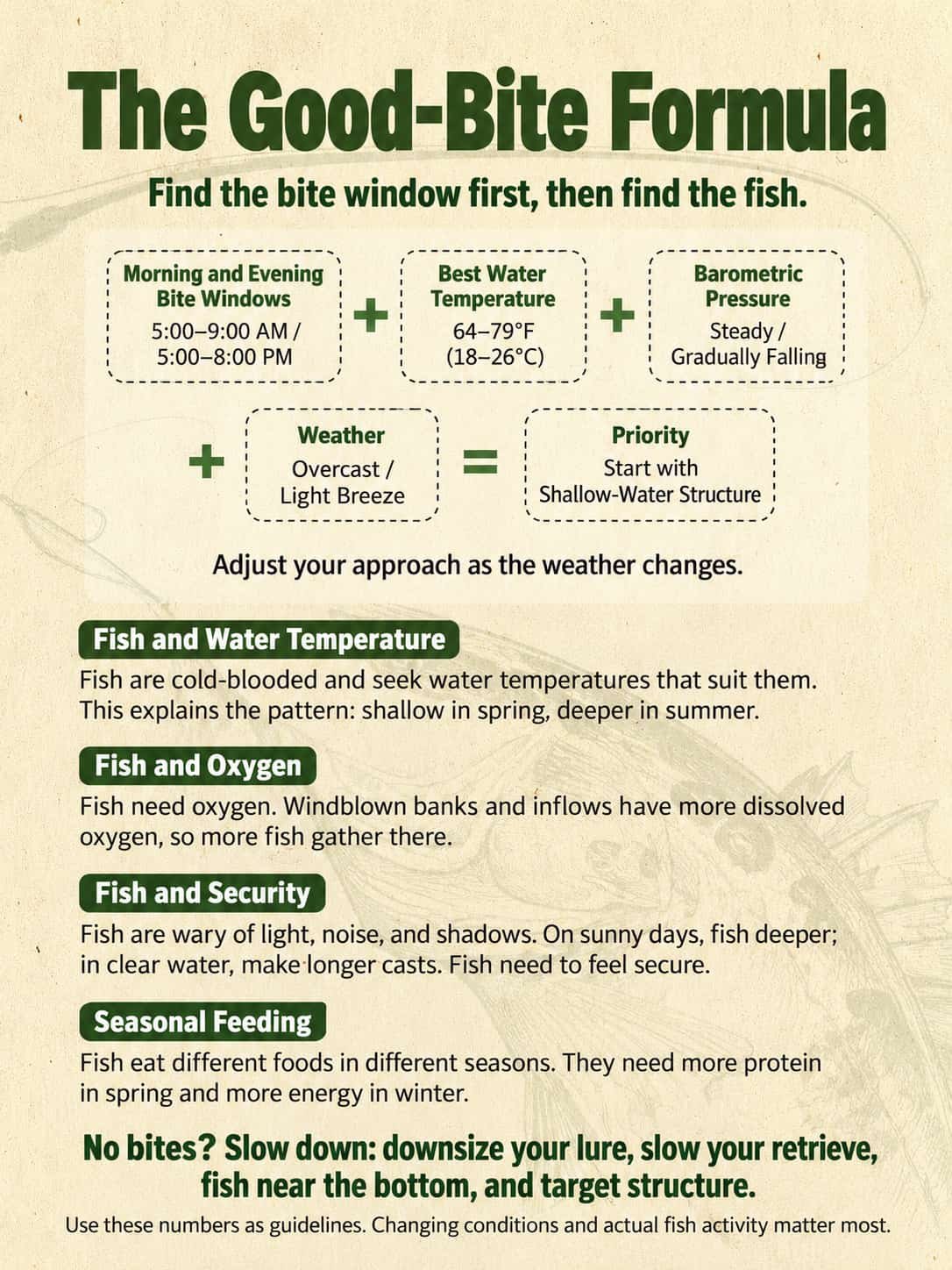
| 6 | The Good-Bite Formula | Find the bite window first, then find the fish: 5:00–9:00 AM / 5:00–8:00 PM + 64–79°F (18–26°C) water + steady or gradually falling barometric pressure + overcast skies and a light breeze = start with shallow-water structure. Adjust your approach as the weather changes. Fish are cold-blooded and seek suitable water temperatures, which helps explain the pattern “shallow in spring, deeper in summer.” Windblown banks and inflows have more dissolved oxygen, so more fish gather there. Fish are wary of light, noise, and shadows; fish deeper on sunny days and make longer casts in clear water. Fish eat different foods by season: more protein in spring and more energy in winter. If there are no bites, slow down: downsize your lure, slow your retrieve, fish near the bottom, and target structure. Treat the numbers as guidelines; changing conditions and actual fish activity matter most. |
More to Explore
Related Articles
More guides in Fishing Conditions
Learn practical fall fishing tips for locating fish, targeting key structure, and matching your lure to the depth and conditions you find.
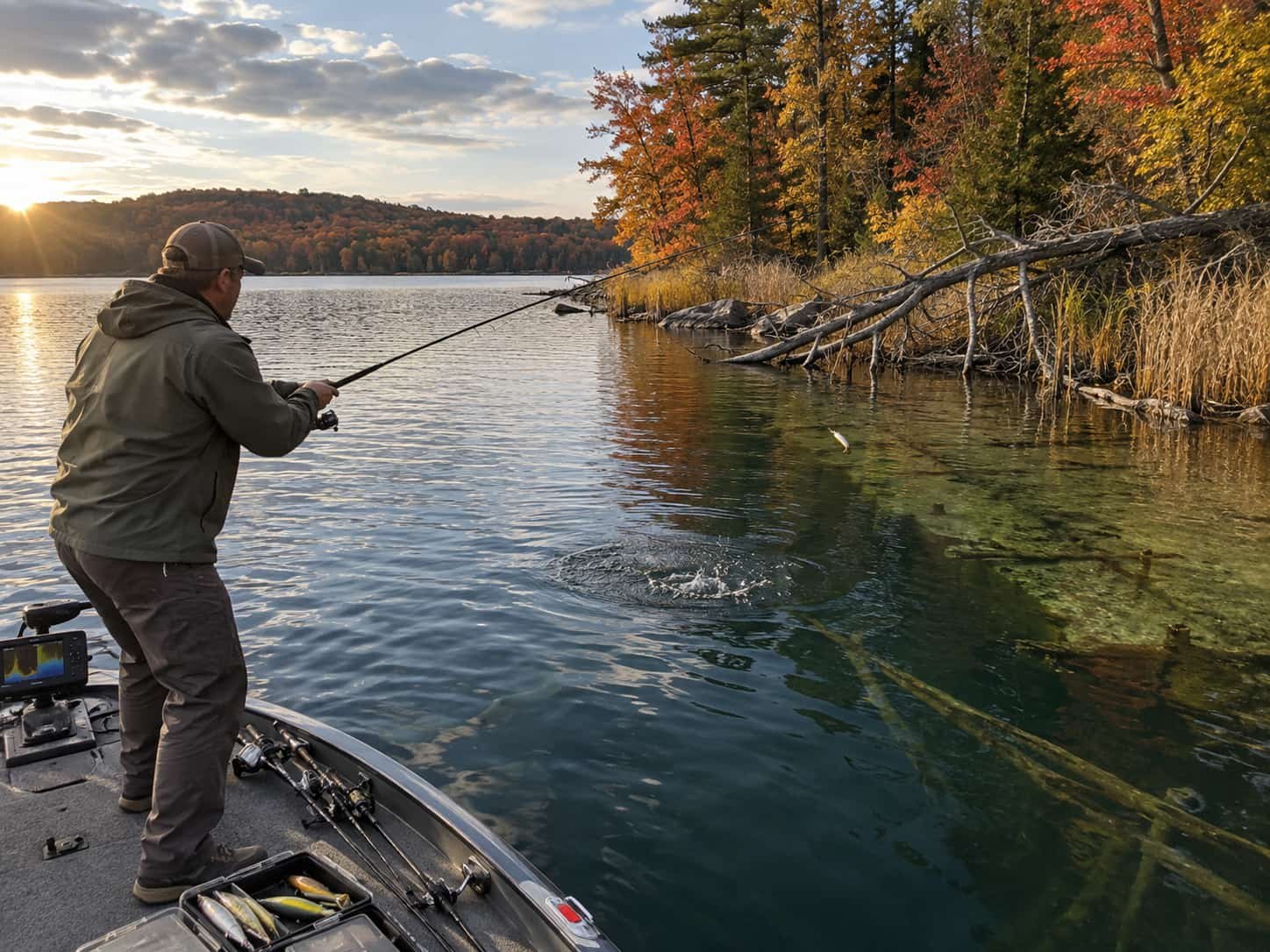
Fishing in the rain is not about luck. Read the bite before a storm, fish the short post-rain window, and leave when water keeps rising.