How to catch striped bass in the fall

- Category
- Freshwater Fishing
- Date
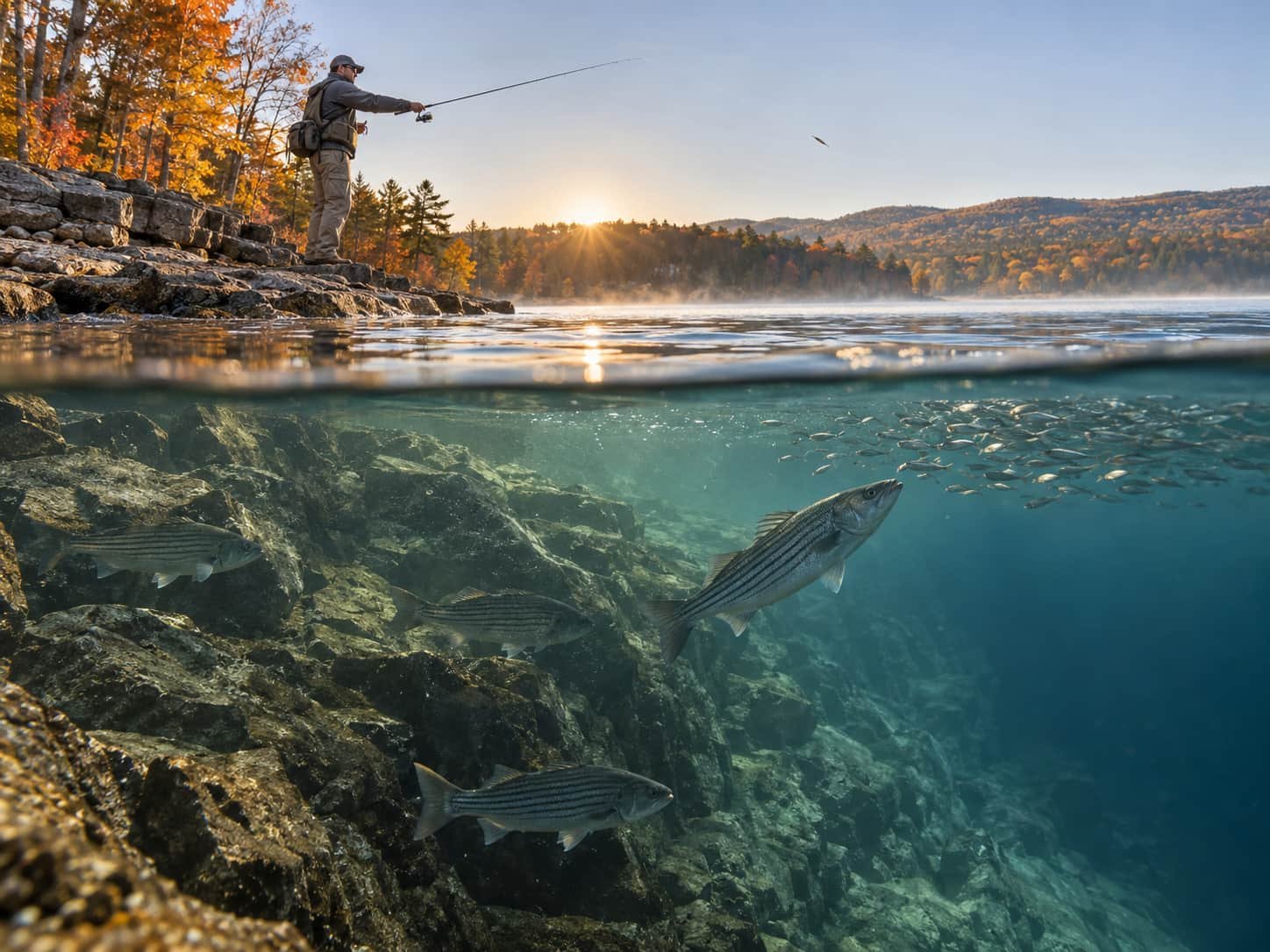
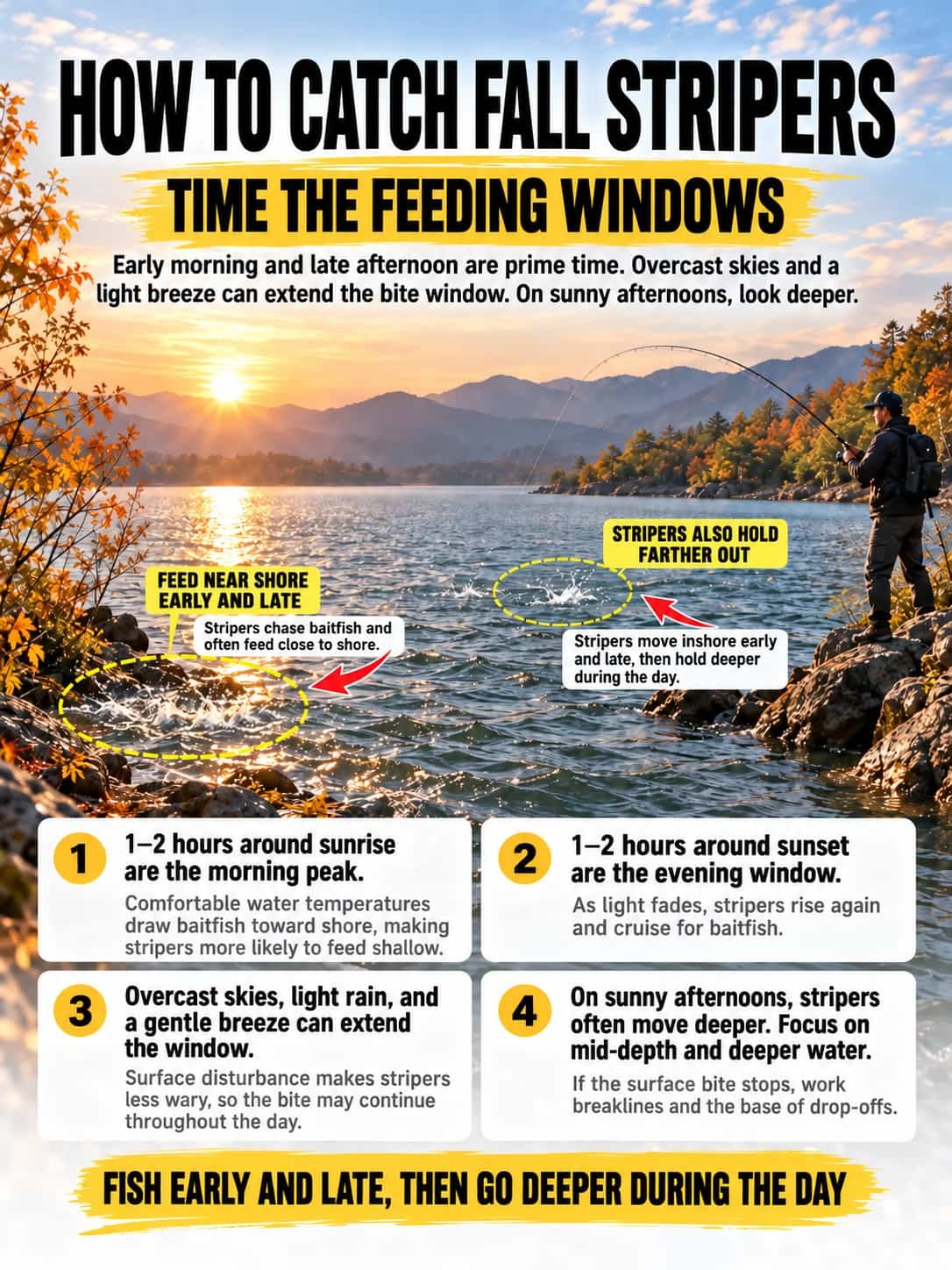
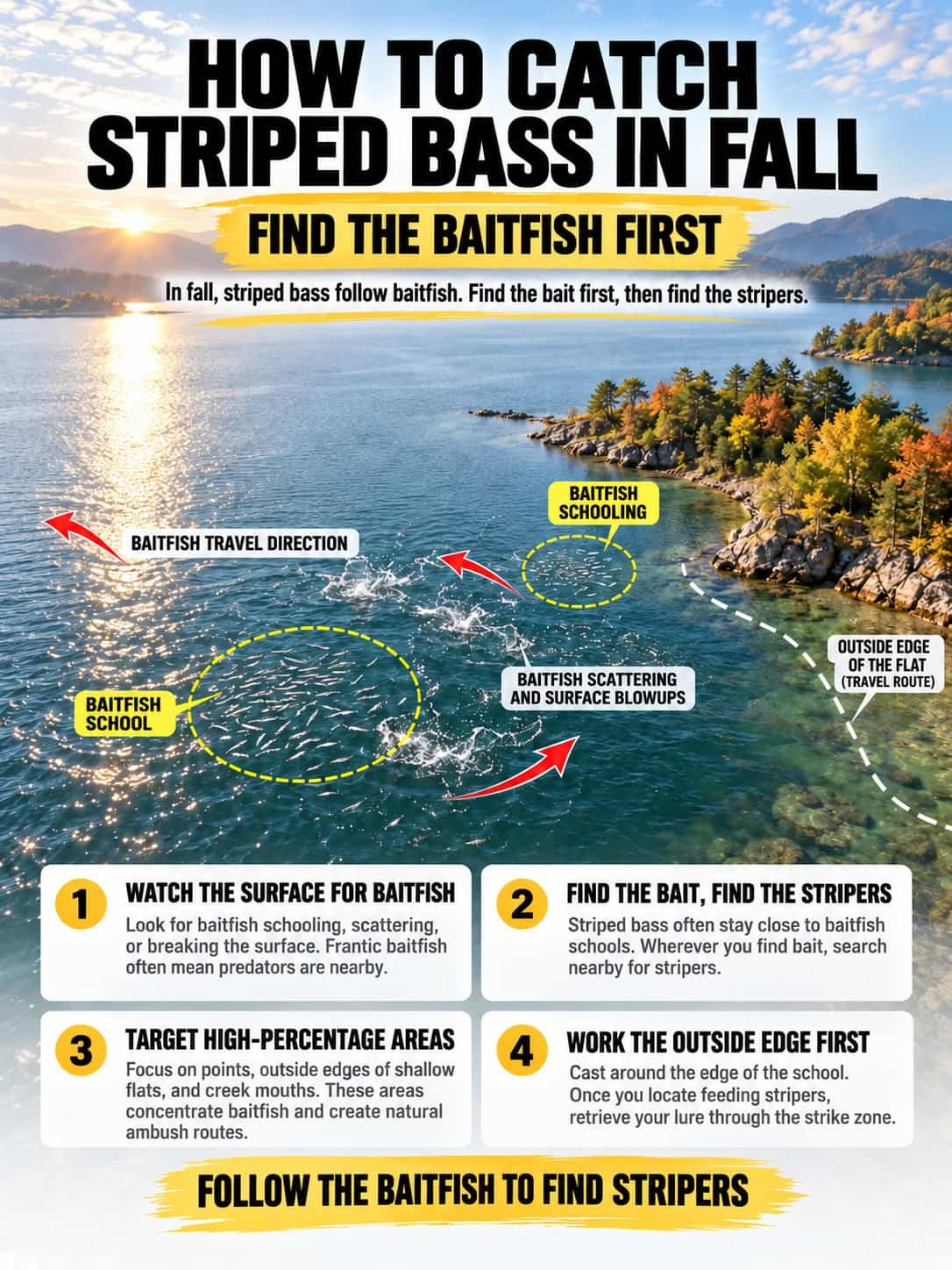
Learning how to catch striped bass in the fall starts with understanding how the fish move. Early and late in the day, stripers often follow baitfish into shallow water. As the sun climbs, they may slide toward points, drop-offs, creek mouths, and deeper channel edges.
Instead of changing lures after every empty cast, find the baitfish and identify the depth where striped bass are feeding. The guide below explains when to fish, where to look, and which lures can help you cover each part of the water column.
| No. | Topic | Signs and Conditions to Watch | Priority Areas | How to Fish It | Recommended Lures |
|---|---|---|---|---|---|
| 1 | Fall Striped Bass Overview | Striped bass follow baitfish and change depth throughout the day | Baitfish schools, depth changes, and fish-holding structure | Do not start by blindly making long casts. First identify the right time, depth, location, and lure | Match your lure to the depth and activity level of the fish |
| 2 | Find the Baitfish First | Baitfish clustering, scattering, or jumping from the water often indicates nearby predators | Outer edges of flats, points, creek mouths, and baitfish travel routes | Watch the direction the baitfish are moving. Look for striped bass near the school or along its outside edge | Choose a lure that matches the size and profile of the local forage |
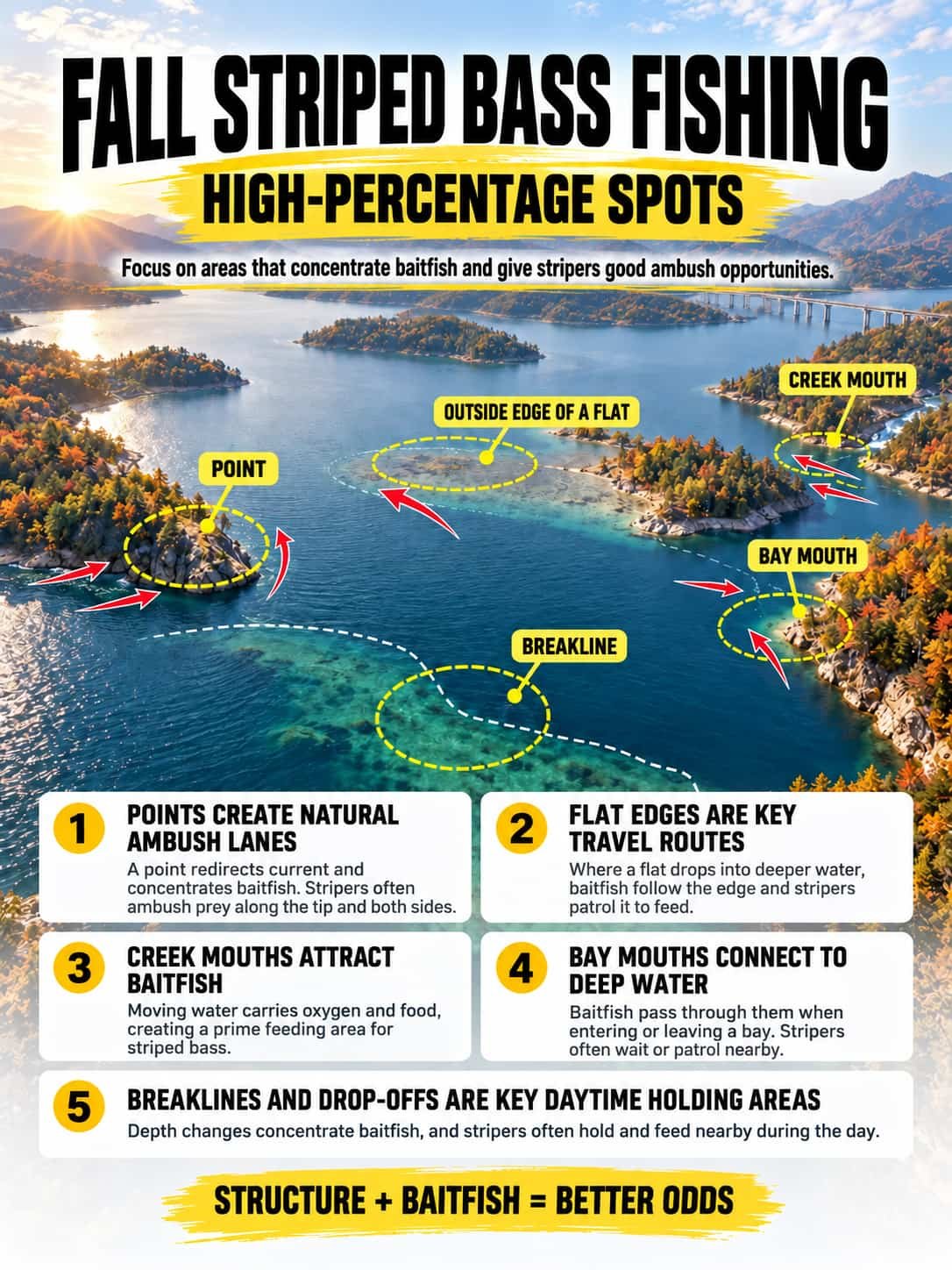
| 3 | Target High-Percentage Spots | Striped bass often ambush prey where baitfish gather or where current and depth change | Points, outside edges of flats, creek mouths, bay entrances, drop-offs, and the base of ledges | Fish both sides of a point, along flat edges, around creek mouths, and parallel to depth breaks | Use a lure that stays at the target depth and tracks close to structure |
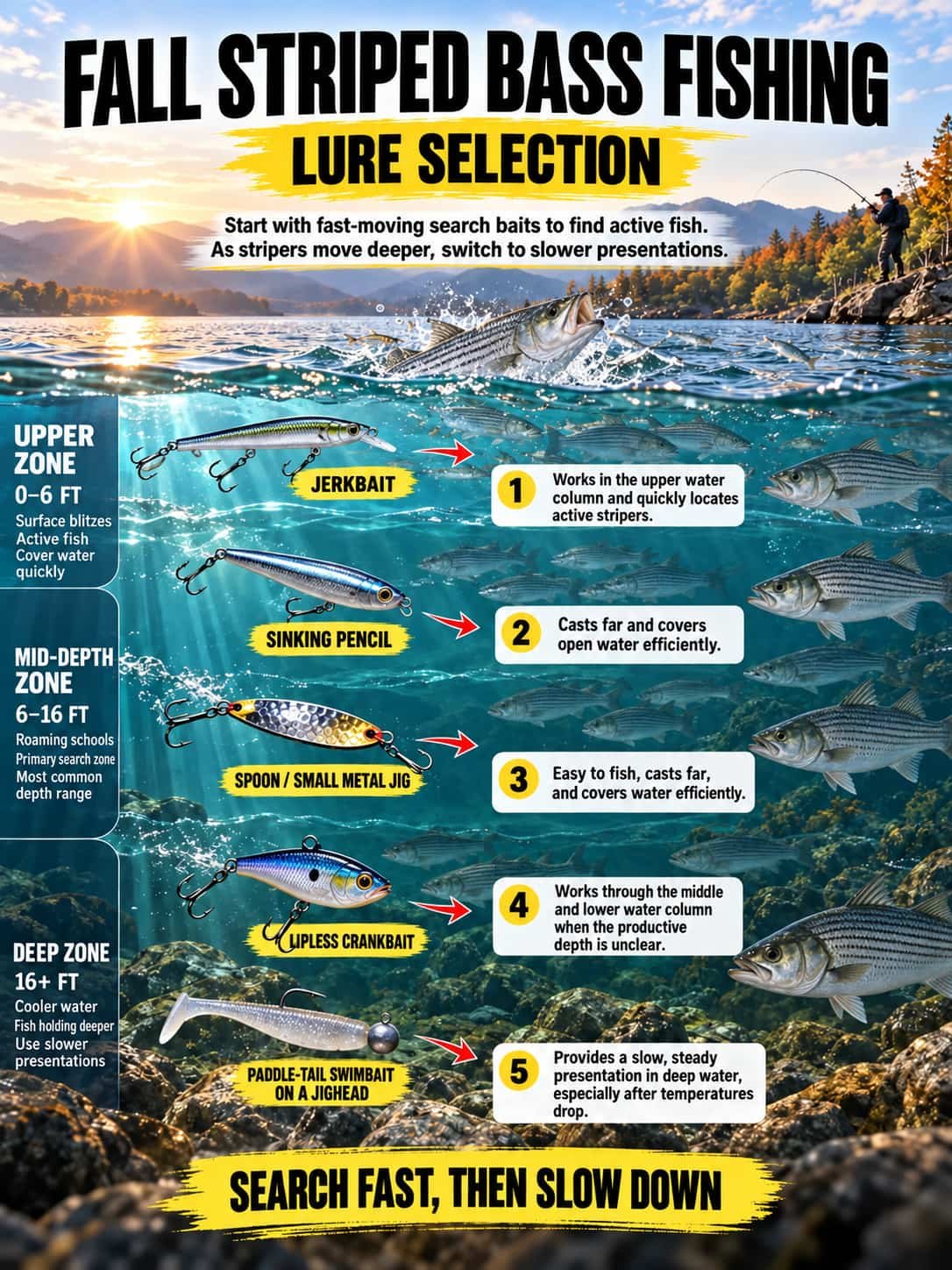
| 4 | Choose Lures by Depth | Fish usually become less active as they move deeper or as the water cools | Surface to 6 feet; mid-depth from 6 to 16 feet; deeper than 16 feet | Start with a fast-moving search bait. Once you locate the fish, switch to a more controlled presentation | Shallow: jerkbait or sinking pencil bait. Mid-depth: spoon or blade bait. Deep: lipless crankbait or metal jig. Cold water: jighead paddle-tail swimbait |
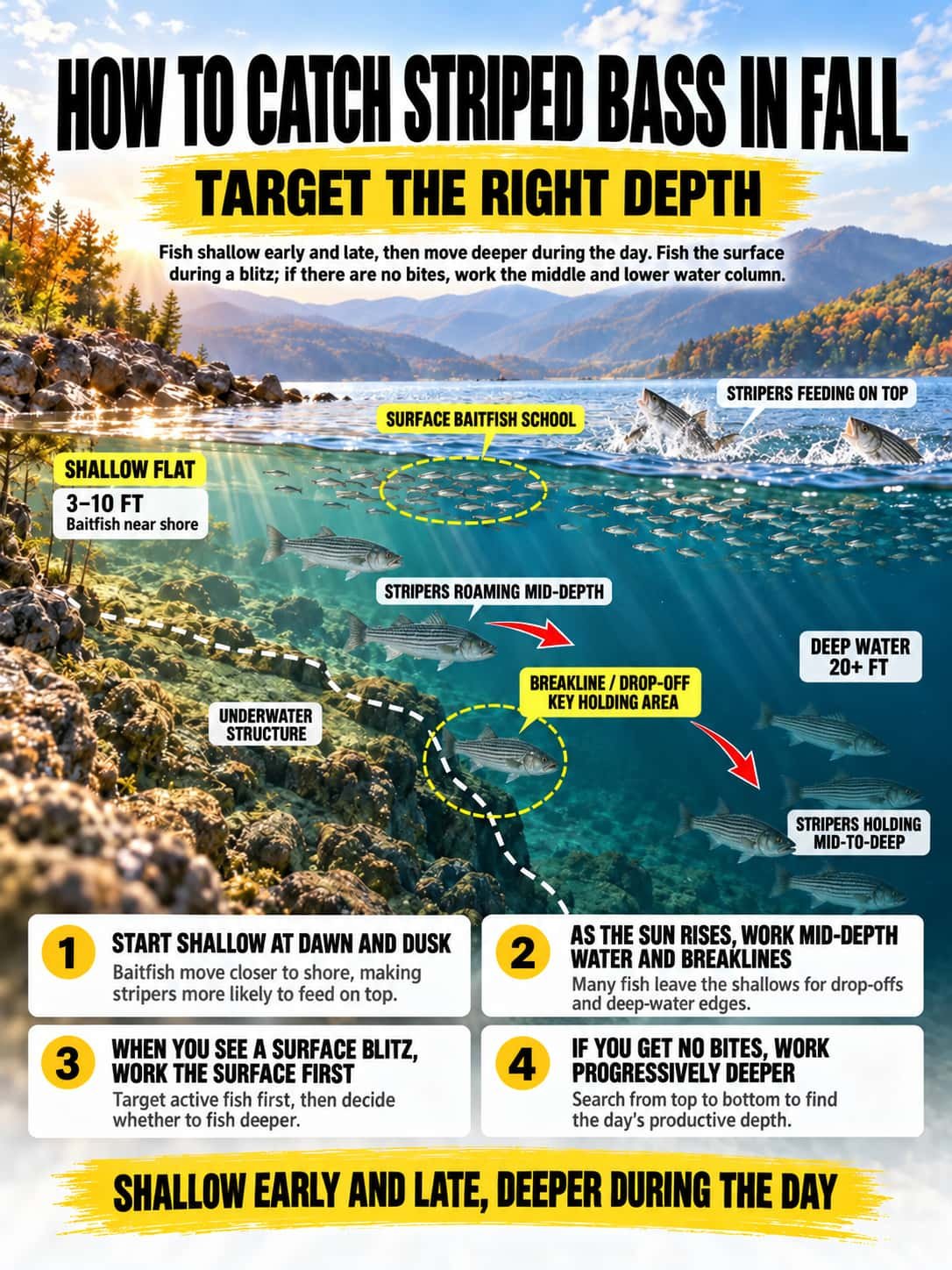
| 5 | Locate the Fish in the Water Column | Baitfish often move shallow early, while striped bass may drop toward mid-depth water and ledges after the sun rises | Shallow water from 3 to 10 feet, drop-offs, and water deeper than 20 feet | Fish shallow and near the surface early and late. During the day, target mid-depth water, depth transitions, and the base of ledges | Use a surface or subsurface lure when fish are feeding high. Move to mid-depth or deep-running lures when surface activity stops |
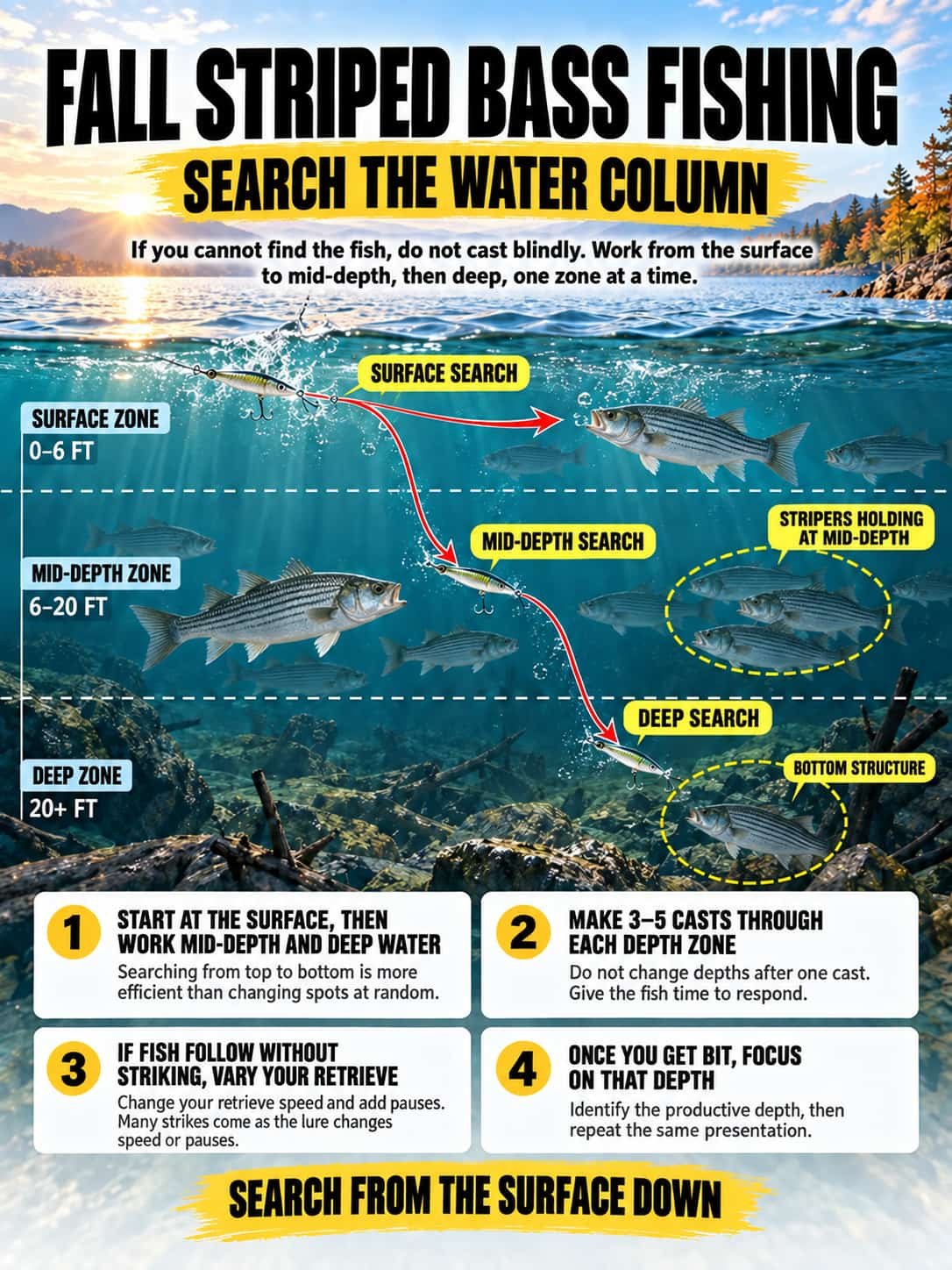
| 6 | Search Each Depth Zone | Use this method when you cannot determine where the fish are holding or when repeated casts produce no bites | Surface to 6 feet; mid-depth from 6 to 20 feet; water deeper than 20 feet and bottom structure | Start near the surface, then work through the middle and lower water column. Make 3–5 casts at each depth before moving down | Adjust lure style, retrieve speed, and sink time to cover each depth effectively |
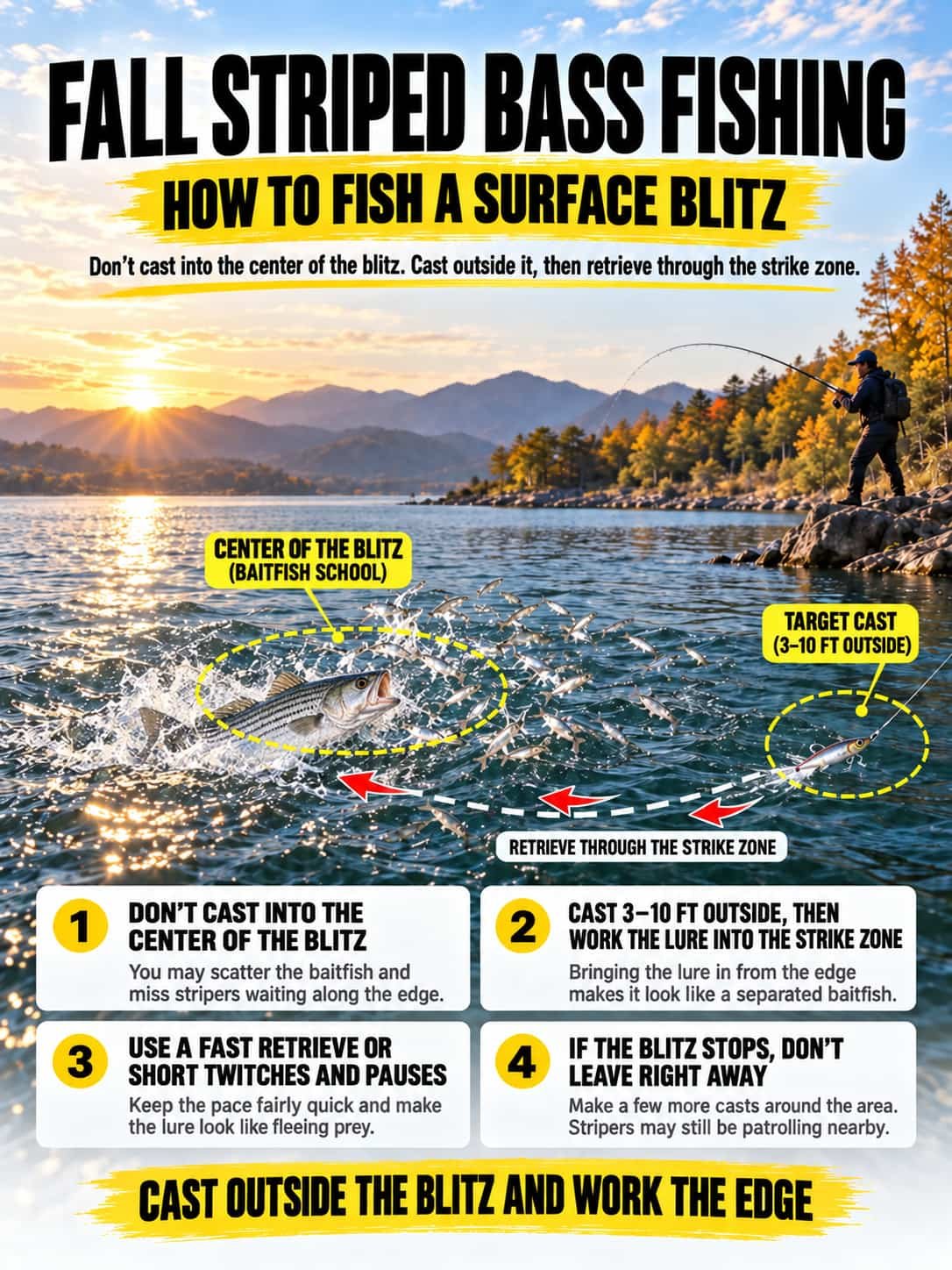
| 7 | Fish a Surface Blitz | Baitfish jumping, churning water, and repeated strikes indicate actively feeding striped bass | The outside edge of the bait school and the direction predators are pushing the forage | Do not cast into the center. Land the lure 3–10 feet beyond the outside edge and retrieve it through the strike zone. Keep fishing nearby after the surface activity stops | Jerkbait, sinking pencil bait, spoon, or another fast-moving baitfish imitation |
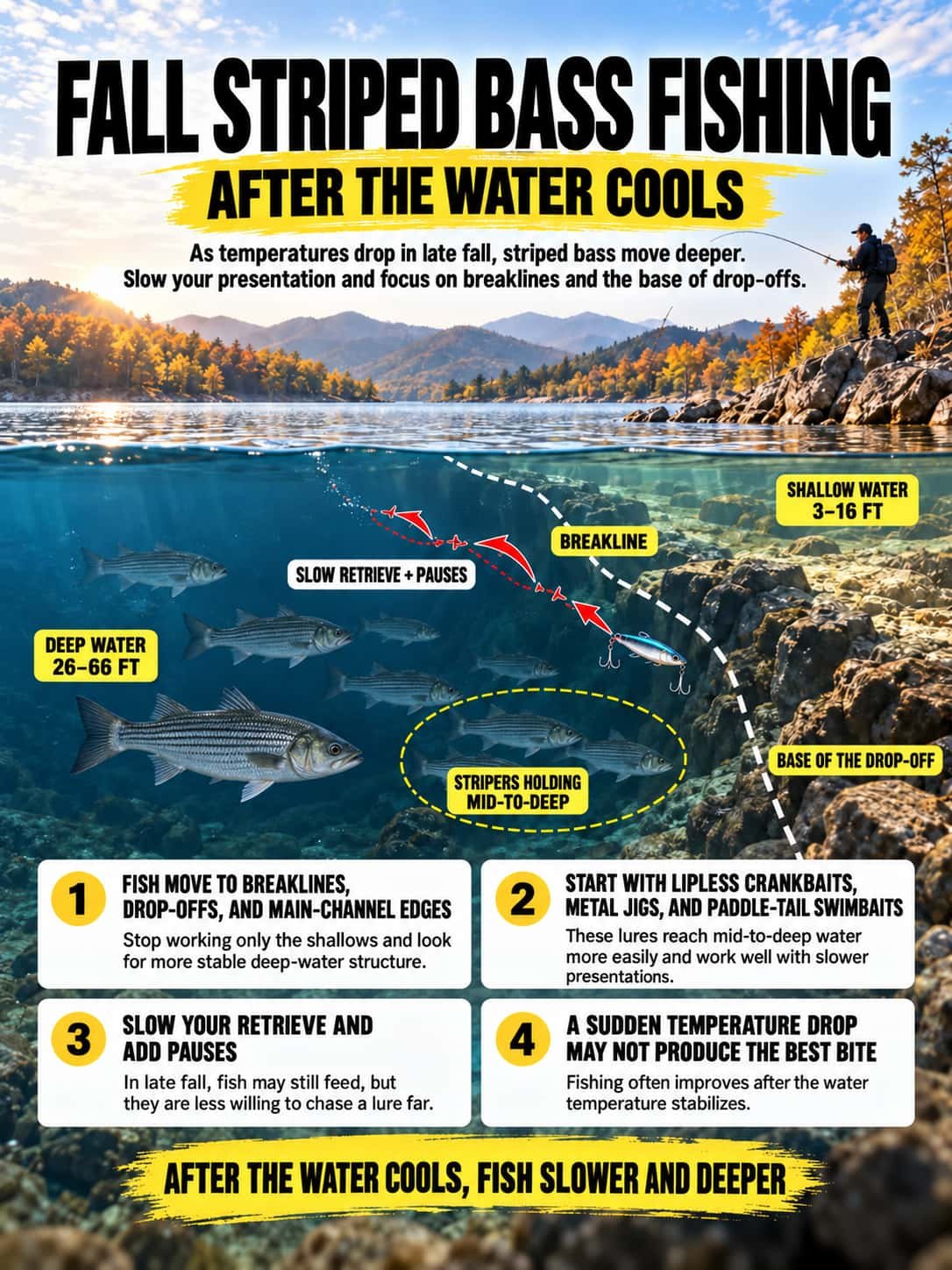
| 8 | Fishing After a Cold Front | Falling temperatures can push striped bass deeper, slow their movement, and shorten their pursuit distance | Drop-offs, the base of ledges, main-channel edges, and stable deep water | Slow the retrieve, add pauses, and keep the lure in the strike zone longer. Leave shallow water if it shows no signs of fish | Lipless crankbait, blade bait, metal jig, or jighead paddle-tail swimbait |
More to Explore
Related Articles
More guides in Freshwater Fishing
Not sure where to cast? See where seven freshwater fish feed or hold, then match each spot with a lure that fits the water.