Best Lure Fishing Spots I Look for on New Water
- Category
- Fishing Spots
- Date
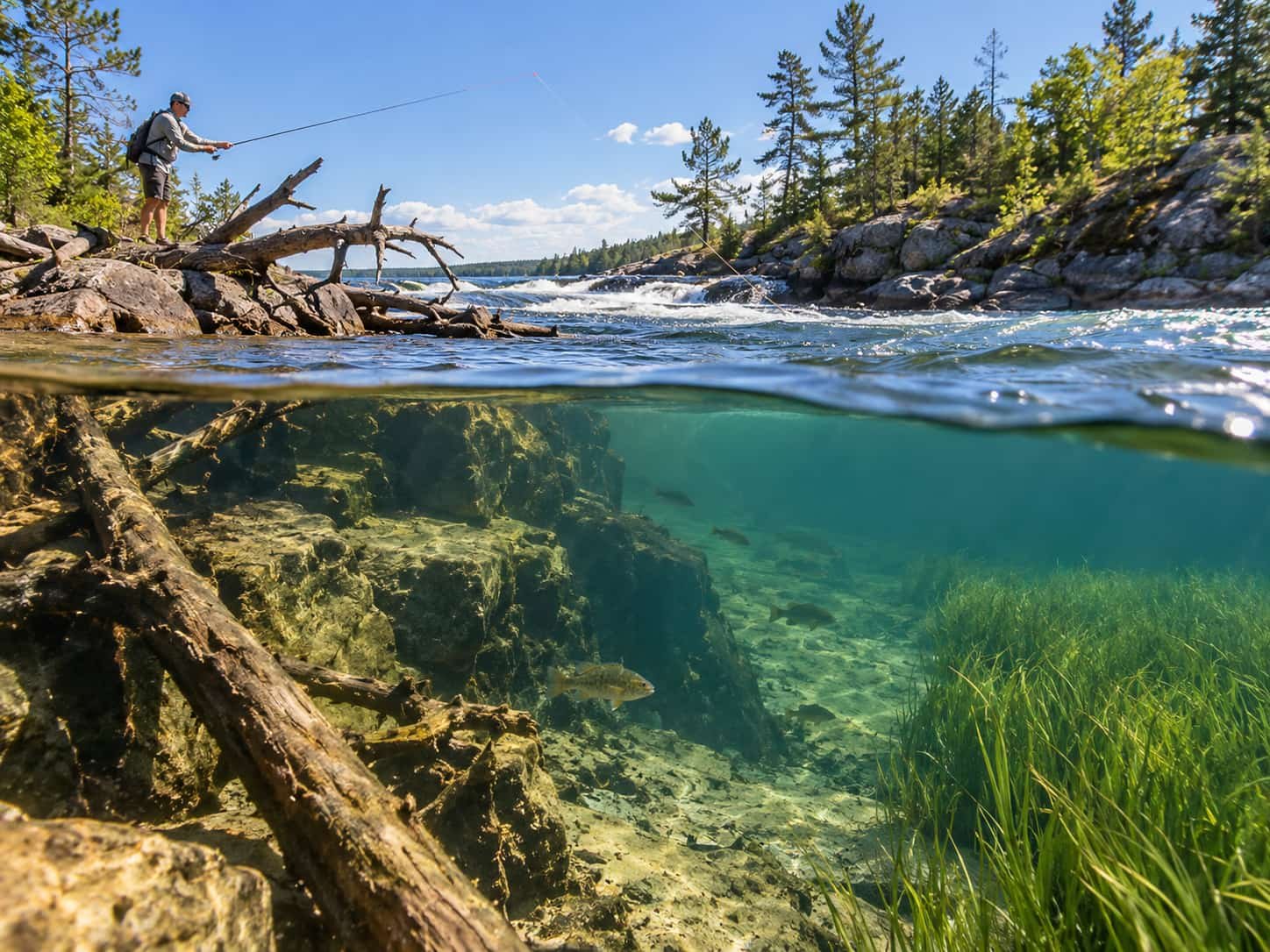
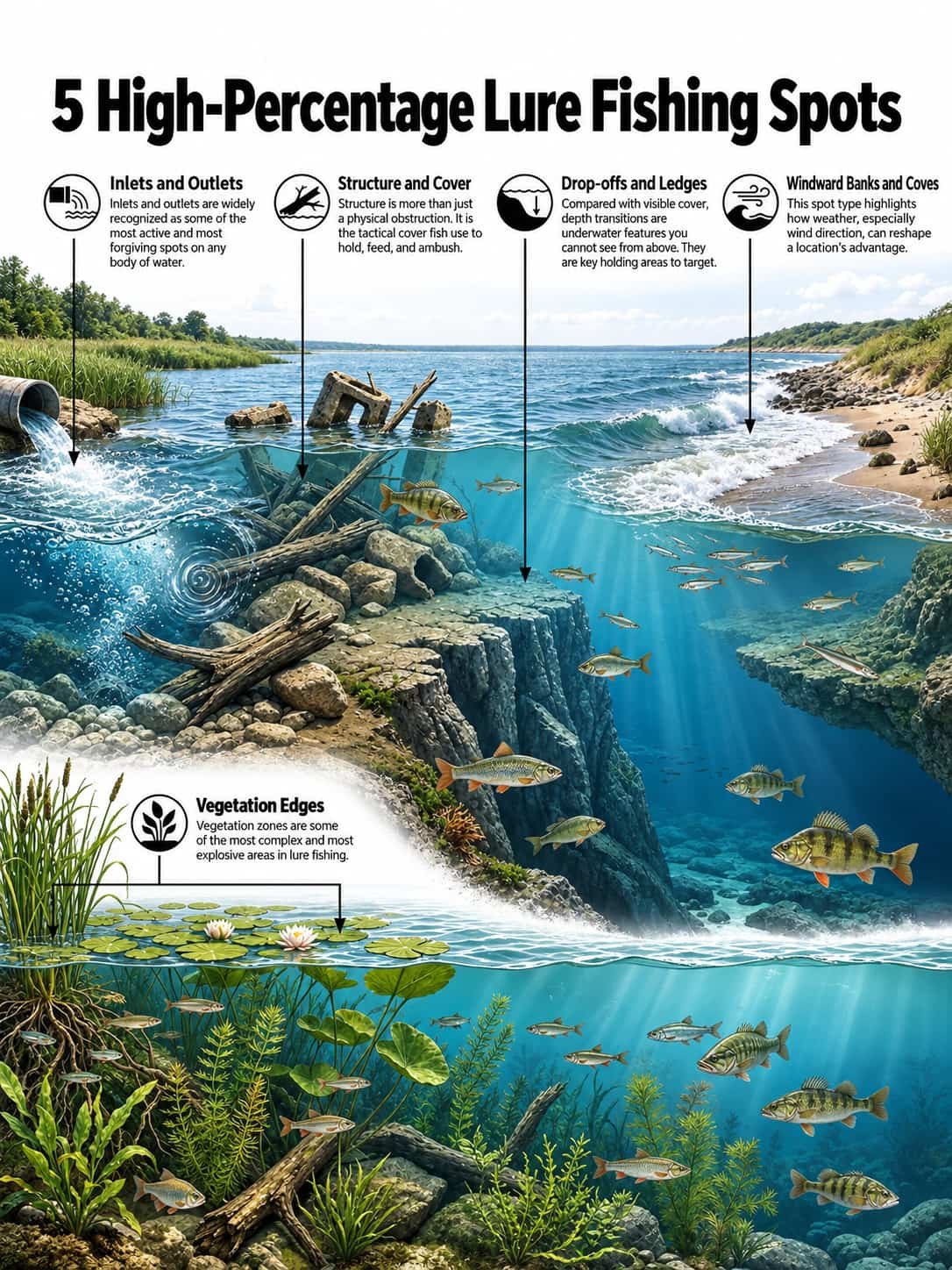
Finding the best lure fishing spots gets much easier once you understand where fish naturally hold, feed, and move. Instead of casting at random, focus on places that give fish a clear reason to be there, such as inlets and outlets, submerged cover, drop-offs, windblown banks, and vegetation edges.
Each spot offers something different, whether it is food, current, depth, shade, or protection. Learn how to recognize these five high-percentage areas below, then use what you see to decide where your first casts should go.
| No. | Area / Topic | Why Fish Hold There | What to Look For | Good Lure Choices | How to Fish It |
|---|---|---|---|---|---|
| 1 | 5 High-Percentage Lure Fishing Spots | These five areas can concentrate fish because of current, forage, cover, depth changes, and vegetation | Inlets/outlets, cover, drop-offs, windblown banks, vegetation edges | Match the lure to the type of structure and conditions | Read the water first, then focus on areas that combine multiple fish-holding features |
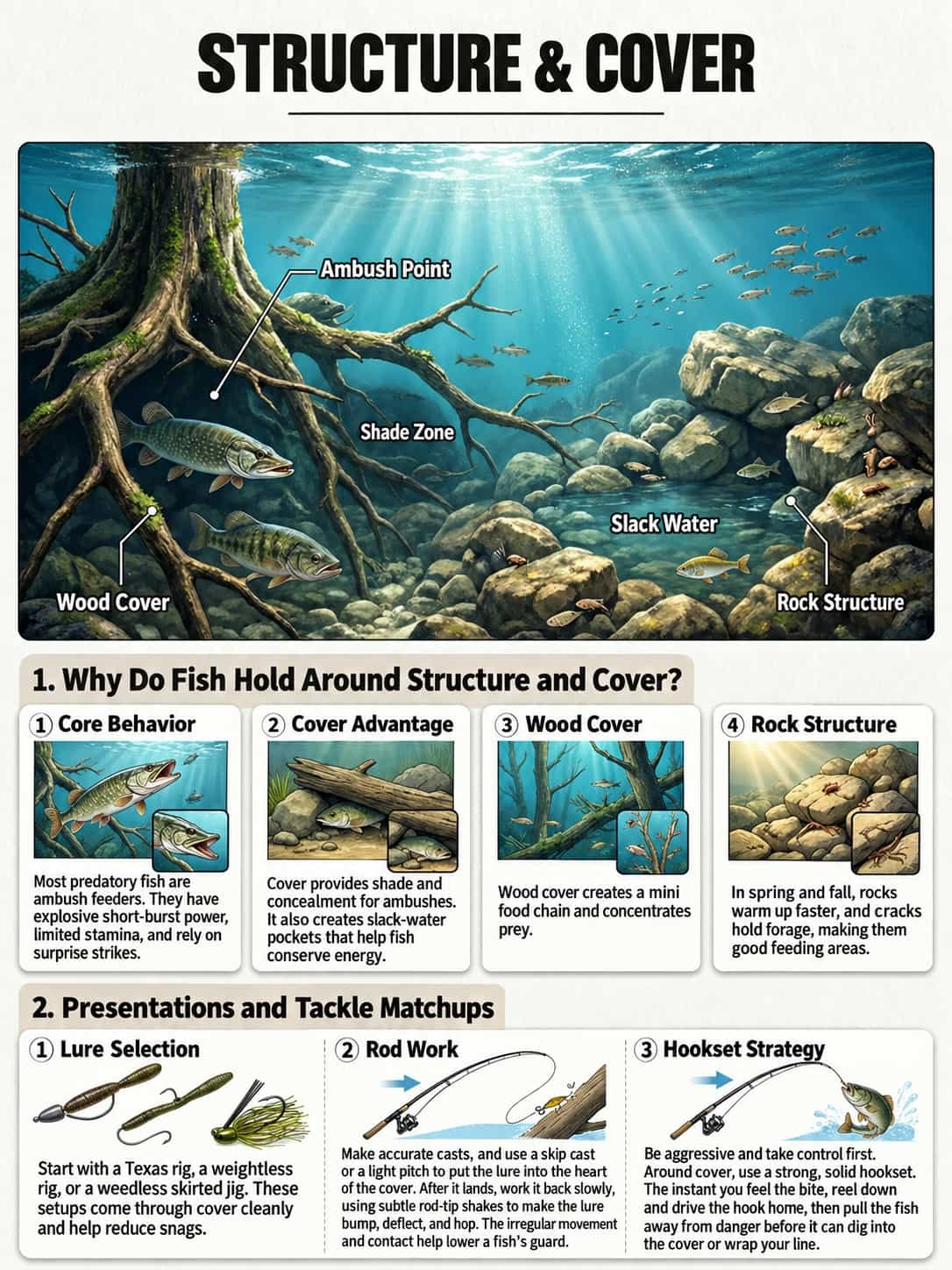
| 2 | Structure & Cover | Wood, rocks, shade, and submerged cover give predatory fish places to hide, ambush prey, and conserve energy | Laydowns, submerged timber, boulders, rock piles, shade, slack water | Texas rig, weightless rig, weedless jig | Cast tight to cover, work the lure through the strike zone, and be ready to pull fish away from snags |
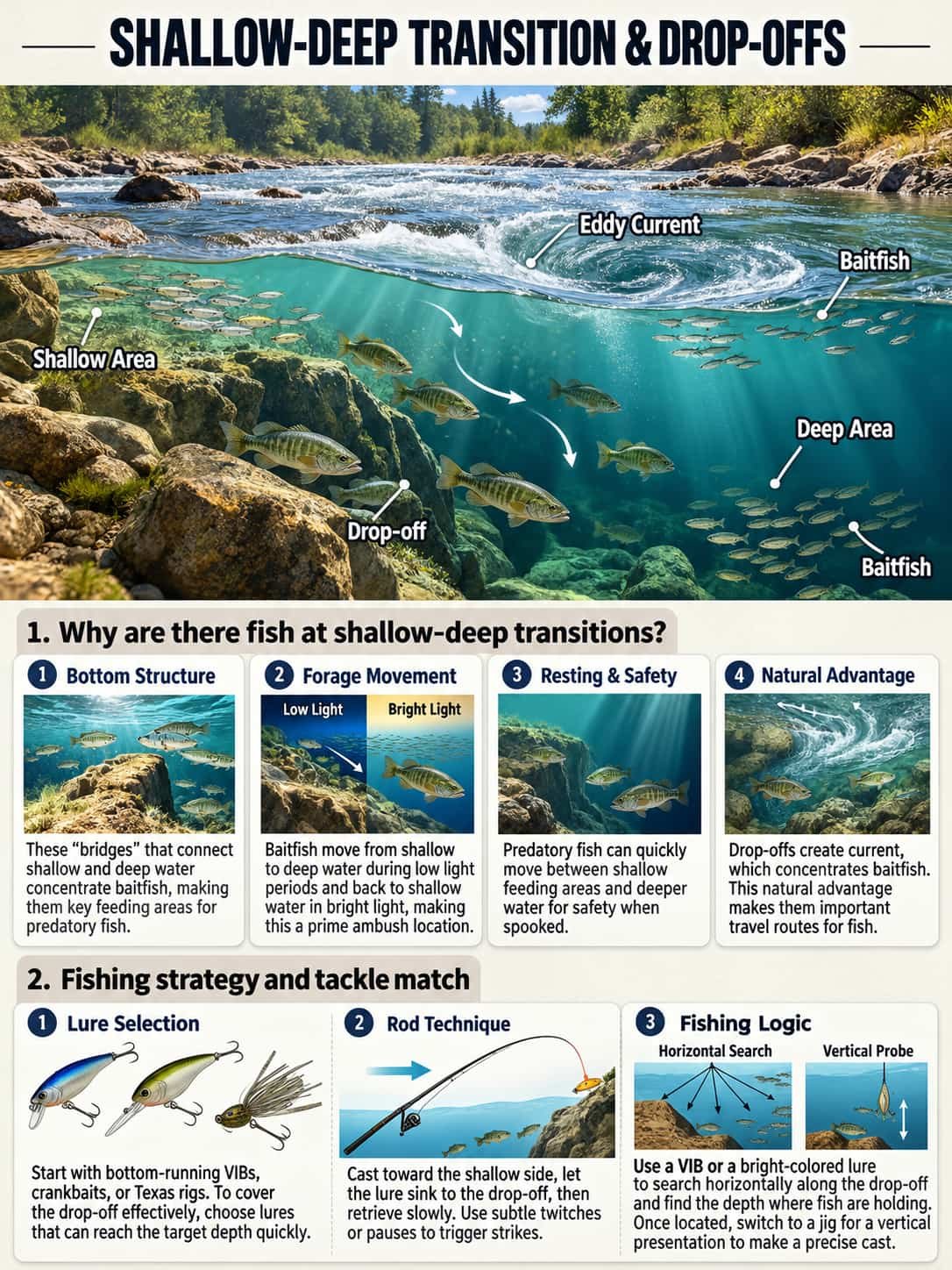
| 3 | Shallow-to-Deep Transitions & Drop-Offs | Drop-offs connect shallow feeding areas with deeper water, creating travel routes and feeding zones | Drop-offs, ledges, breaklines, baitfish, eddies | VIBs, crankbaits, Texas rigs, jigs | Search horizontally to find the depth fish are using, then keep your lure in that depth zone |
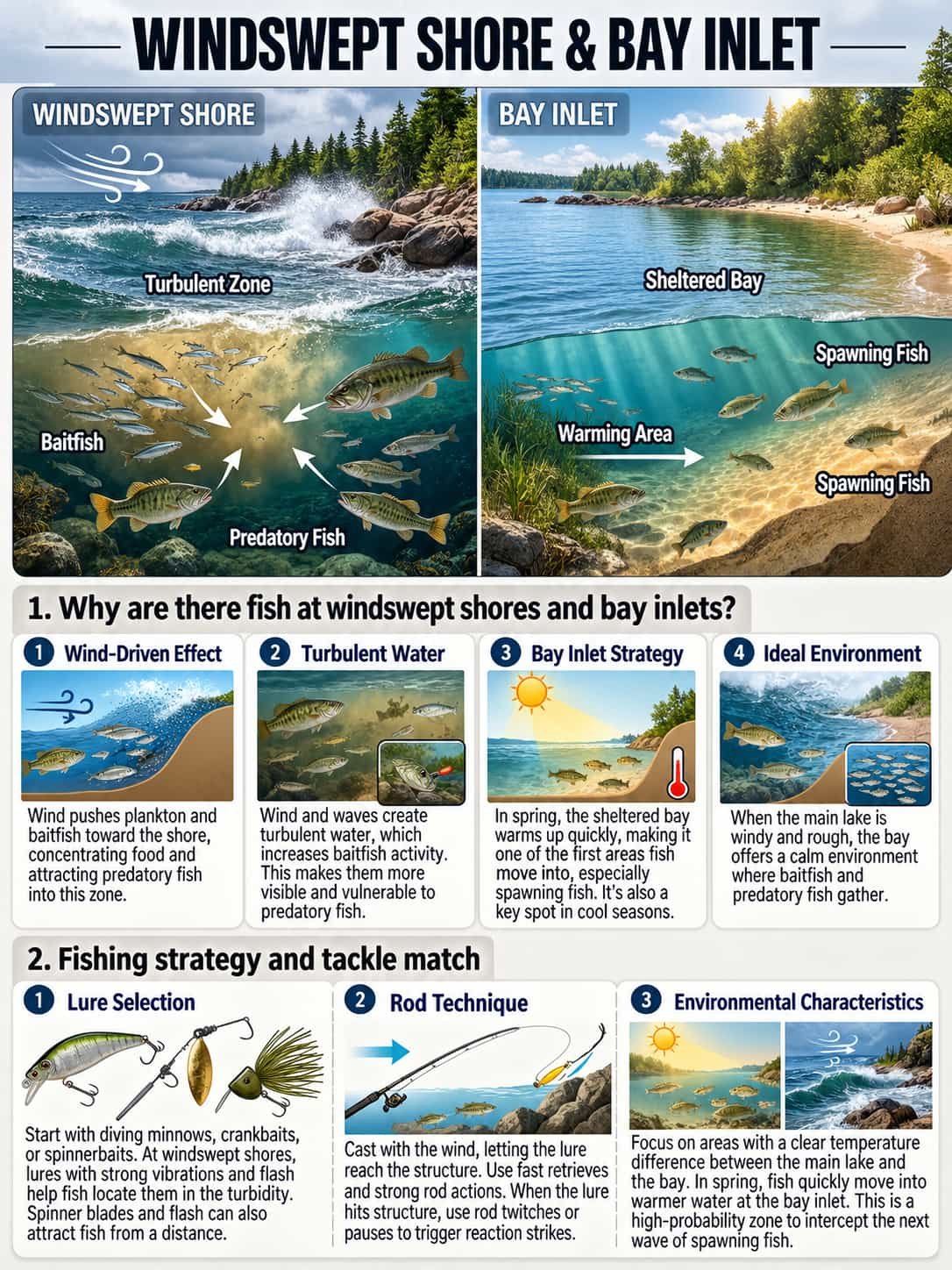
| 4 | Windblown Banks & Bay Inlets | Wind pushes forage and baitfish toward shore, while protected bays can offer calmer, warmer water, especially in spring | Windblown banks, turbulent water, sheltered bays, warming water | Crankbaits, spinnerbaits, minnow-style lures | Use vibration and flash on windblown banks; in protected bays, focus on temperature changes and calmer water |
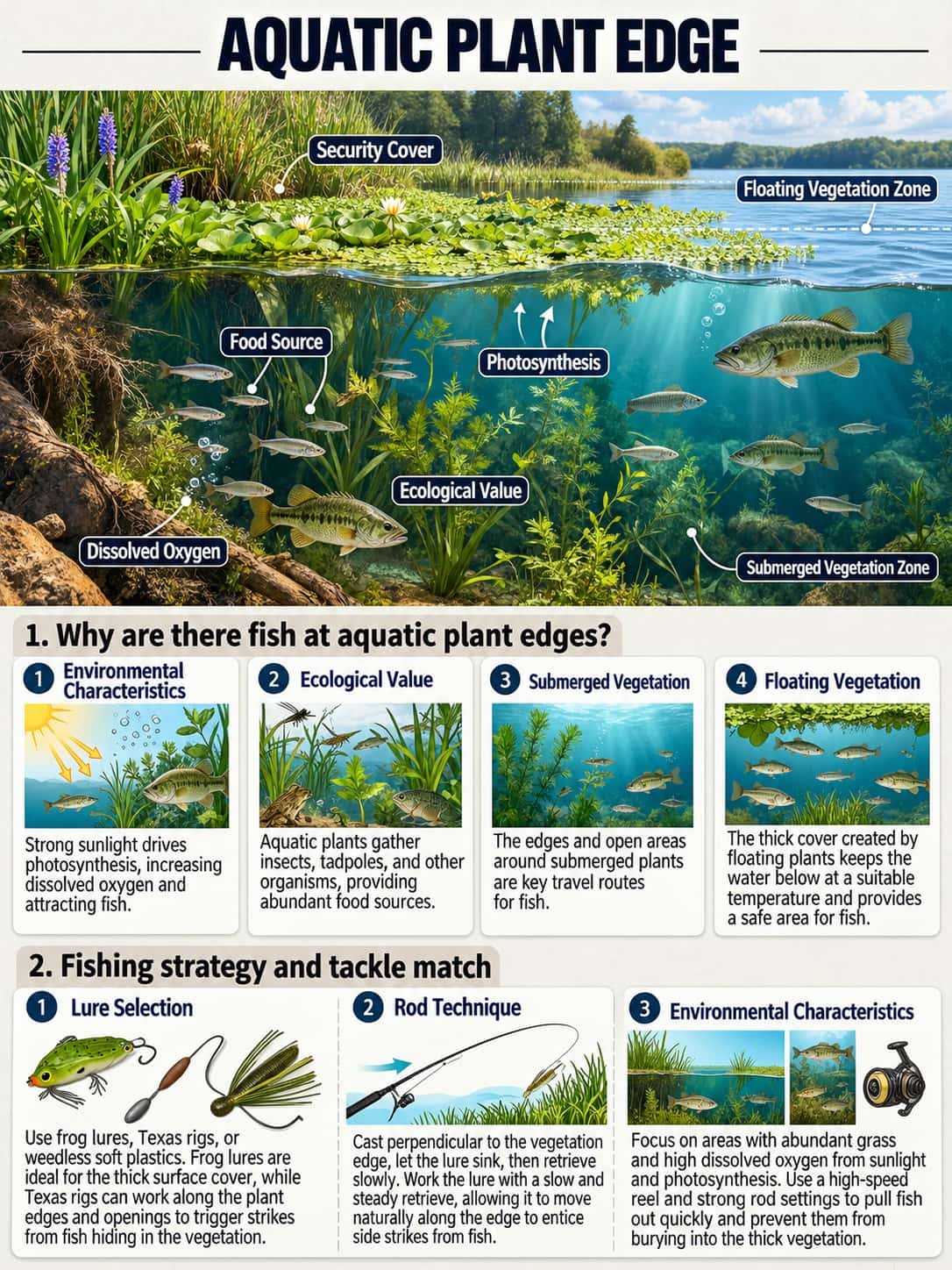
| 5 | Aquatic Vegetation Edges | Vegetation provides cover, forage, oxygen, and travel lanes for fish | Grass lines, weed edges, openings, floating vegetation, submerged grass | Frogs, Texas rigs, weedless soft plastics | Work the outside grass edge and openings; use heavier tackle when fishing thick vegetation |
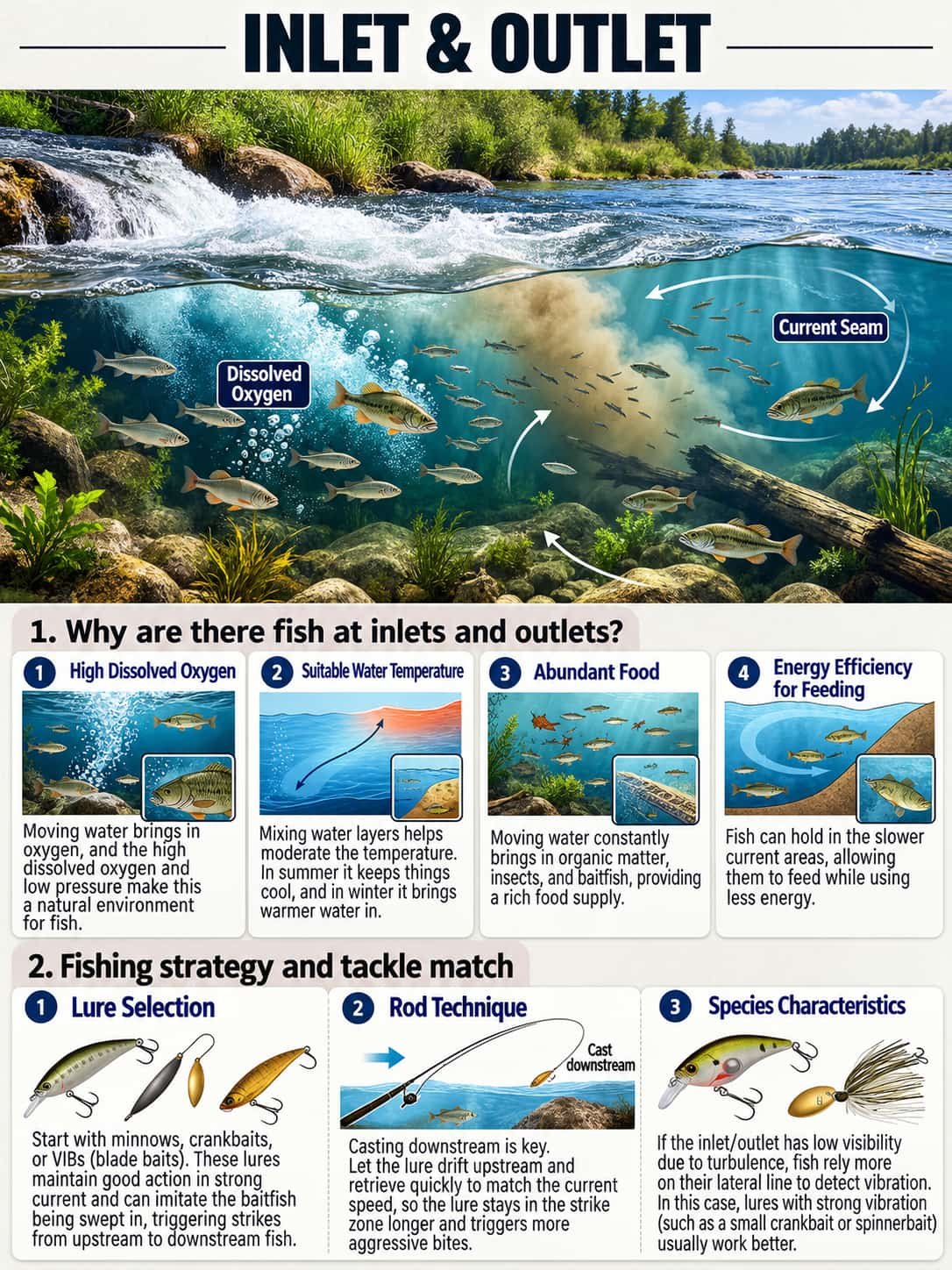
| 6 | Inlets & Outlets | Moving water brings oxygen and food while creating current seams and slack-water areas where fish can feed efficiently | Current seams, eddies, slack water, baitfish, oxygen-rich water | Minnow-style lures, crankbaits, VIBs/blade baits, spinnerbaits | Read the current, cast across or along current seams, and keep the lure in the strike zone as long as possible |