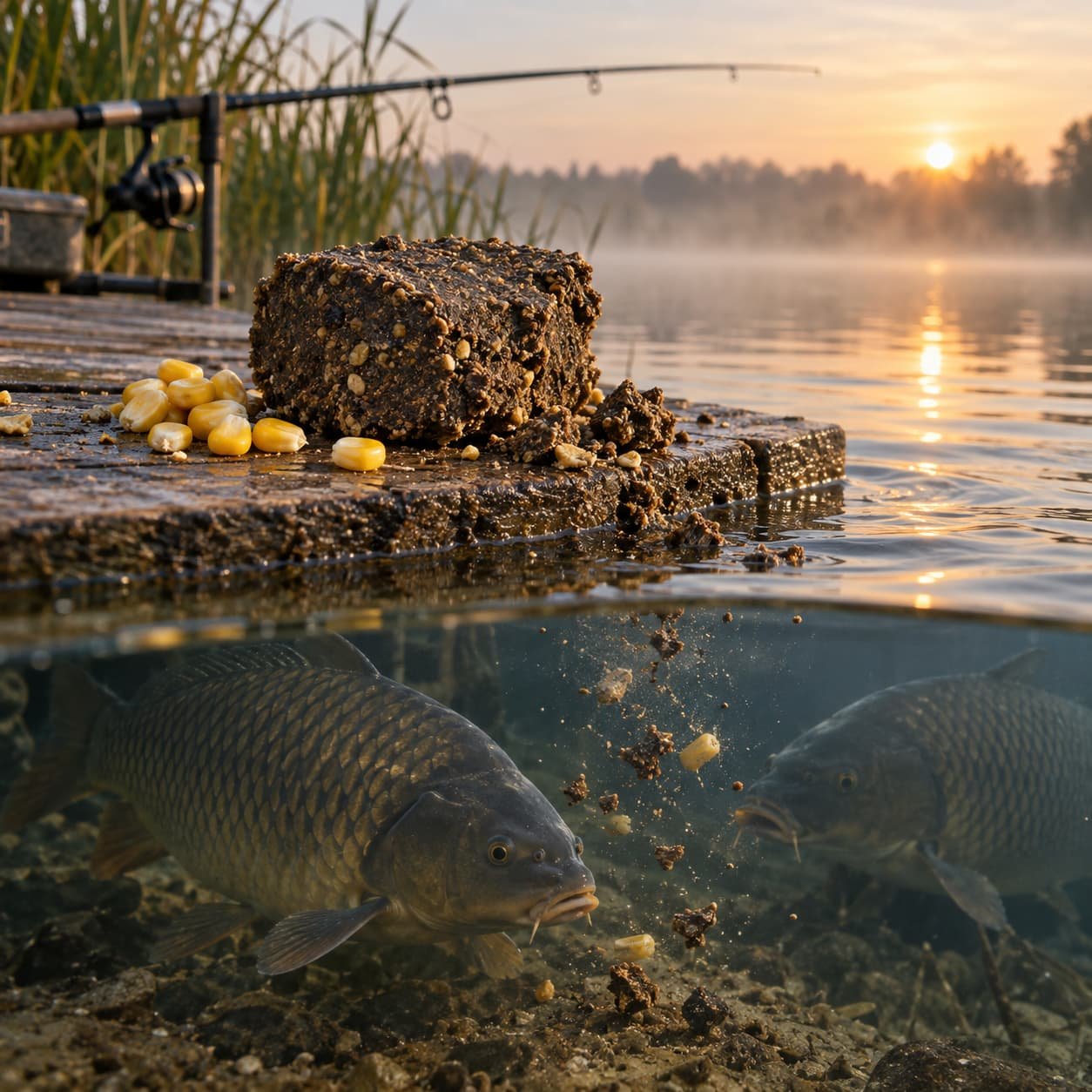
Is it bait kneading or bait pulling?

- Category
- Fishing bait
- Date

Kneaded bait or pulled bait? The better choice depends on what you are trying to catch.
Kneaded bait is firm, compact, and stays on the hook longer. It sinks quickly, gets past small bait stealers, and works well when you want to reach larger fish holding deeper in the water.
Pulled bait behaves very differently. It is softer, lighter, and begins breaking apart as soon as it hits the water. That creates a wider scent and food trail, making it a good choice for active fish and schools feeding higher in the water column.
So before you mix your bait, decide on your target. Use a tighter, heavier presentation when you want to reach bigger fish in deeper water. Keep it loose and soft when you want faster action from active feeders.
Choose the fish first, then mix the bait to match.

Is it bait kneading or bait pulling?
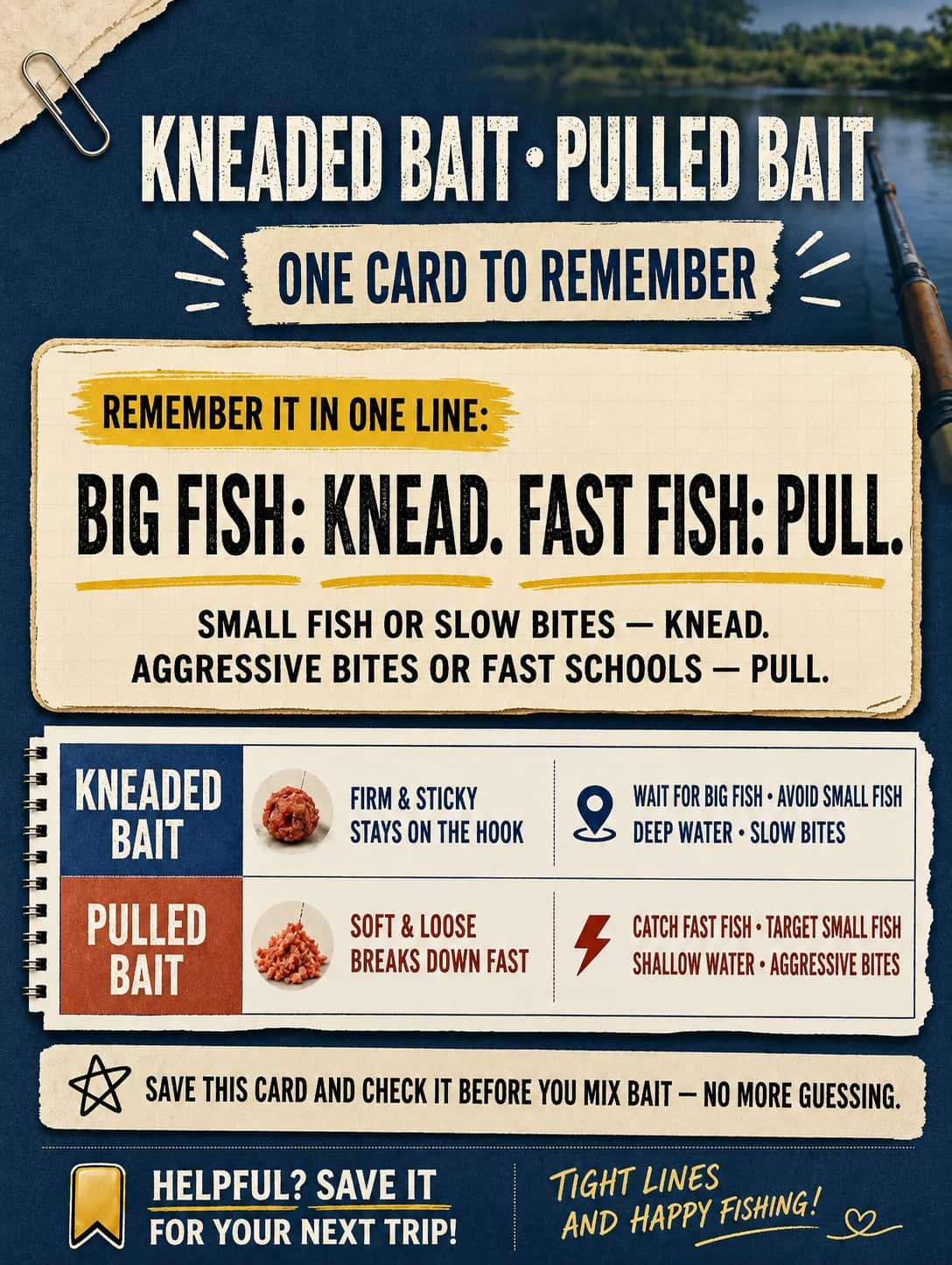
Choose kneaded bait when you need a firm hook bait that holds together. Choose pulled bait when you want a soft, fibrous bait that starts breaking down quickly. Both methods prepare bait for the hook, but each suits a different feeding situation.
What is the difference between kneaded bait and pulled bait?
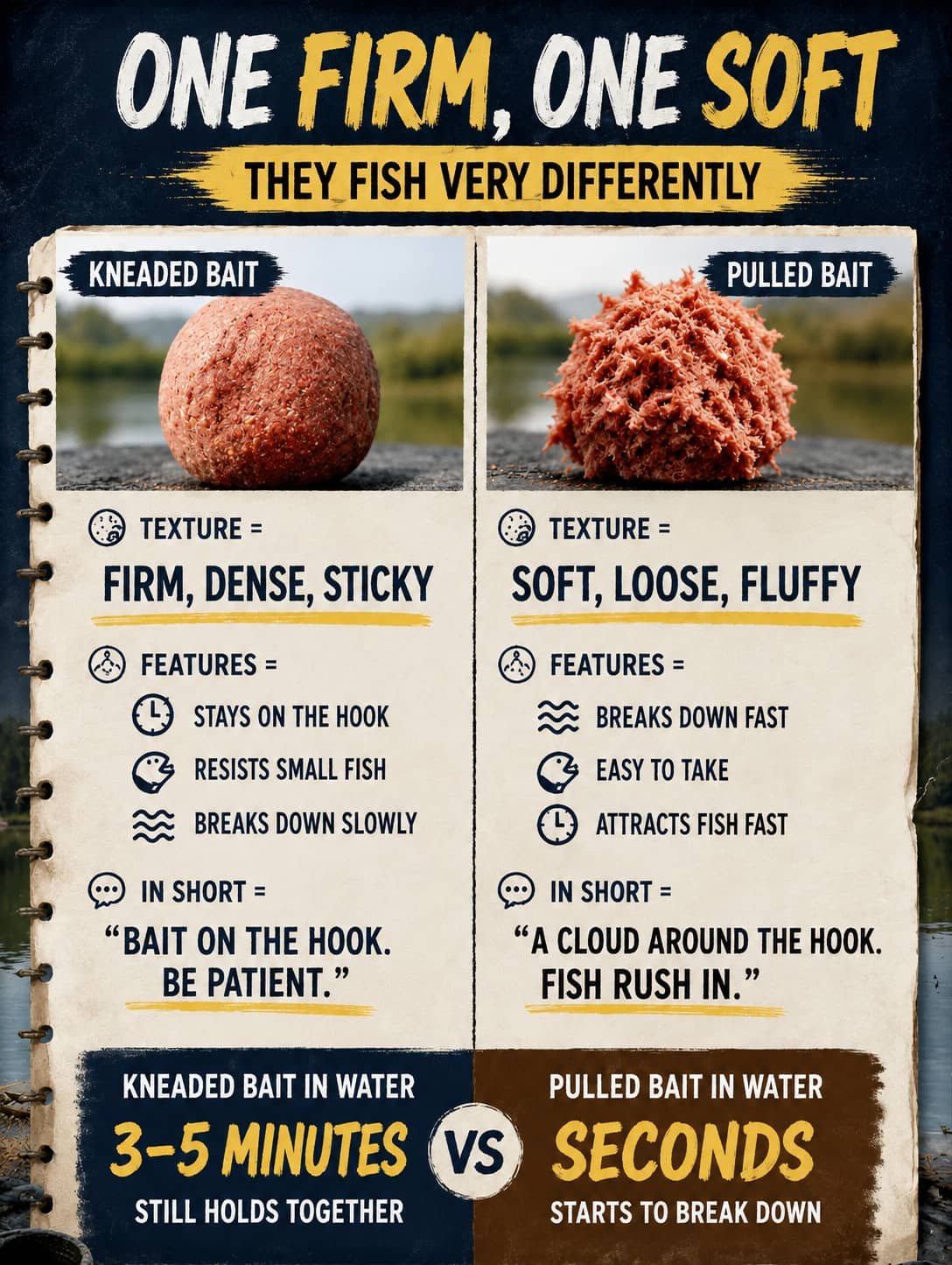
Kneaded bait is a dense, sticky mixture that you compress into a firm ball around the hook. Pulled bait is a softer mixture with fibers that help a small portion cling to the hook as you draw the hook through the bait. The main difference is firmness and breakdown speed.
Here, pulled bait means a method of preparing and attaching a fibrous hook bait. Hook bait simply means the bait attached to your hook.
| Feature | Kneaded bait | Pulled bait |
|---|---|---|
| Texture | Firm, dense, and sticky | Soft, loose, and fluffy |
| Preparation | Knead and compress | Mix, rest, and handle lightly |
| Behavior in water | Holds together and breaks down slowly | Releases particles and breaks down quickly |
| Main purpose | Keep bait on the hook while waiting | Present an easy-to-take bait during active feeding |
| Typical situation | Deeper water, slower bites, nuisance small fish | Shallow water, faster bites, small fish you want to catch |
The useful timing comparison is minutes versus seconds. A firm kneaded ball may still hold together after 3–5 minutes in water, while pulled bait can start breaking down within seconds. Those timings illustrate the texture difference; they do not guarantee how long every batch will last.
When should you use kneaded bait?
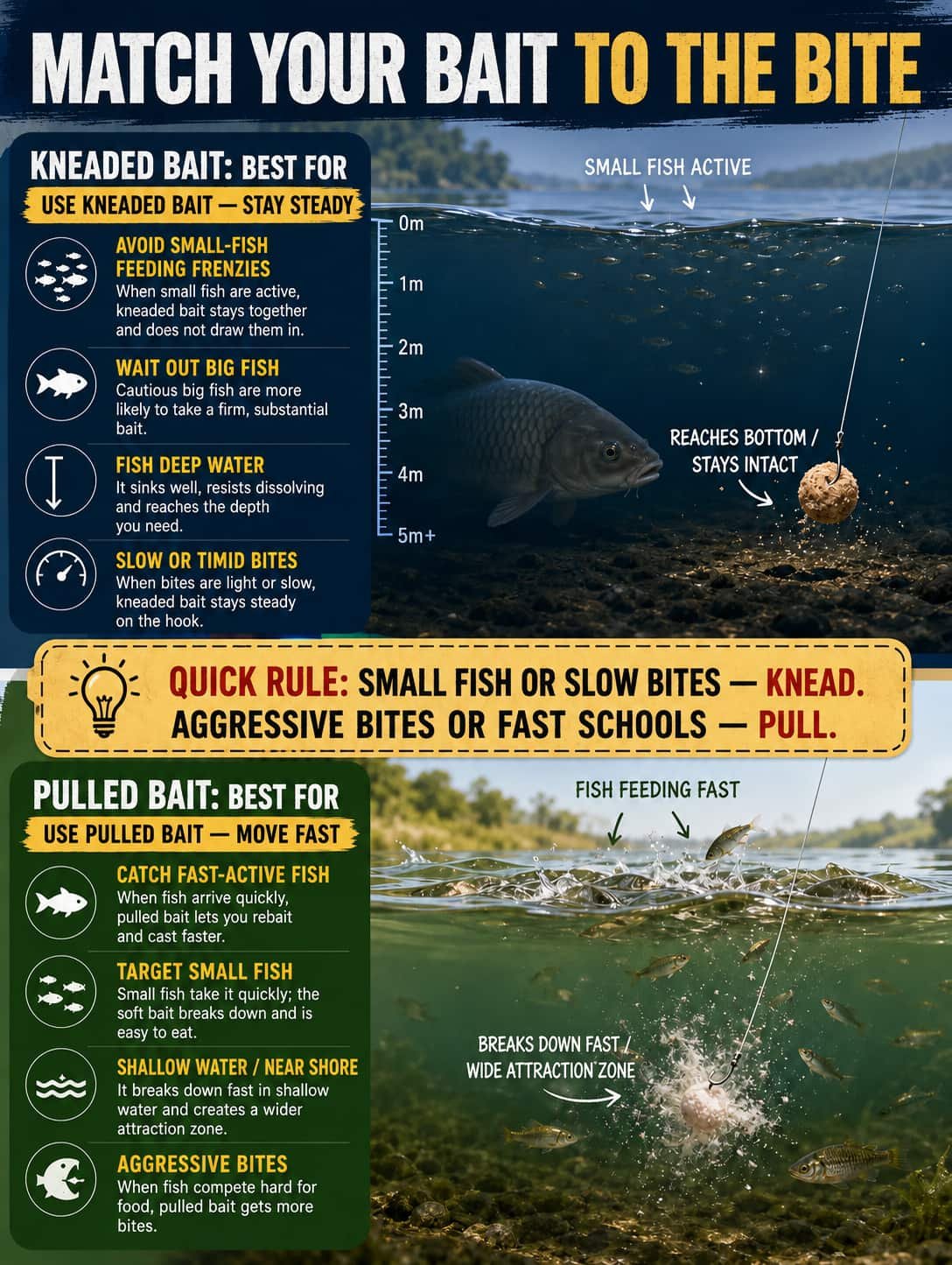
Use kneaded bait when small fish keep picking at your hook bait, when you need the bait to reach deeper water intact, or when bites come slowly. The firm texture keeps a substantial bait on the hook while you wait, including when larger fish are your intended target.
Firm bait gives you a practical advantage when unwanted small fish intercept a loose mixture. The compressed ball resists picking and breaks down more slowly than the softer presentation. Kneaded bait does not stop small fish from feeding, but the firmer texture helps preserve the hook bait.
Kneaded bait also suits bottom fishing because the dense ball sinks readily and stays together during the descent. The aim is to deliver bait to the bottom with enough bait left on the hook to fish effectively.
Slow bites call for a bait that can wait. When fish approach cautiously or feed only occasionally, a kneaded ball offers a steadier presentation than a loose bait that begins shedding particles almost immediately.
When should you use pulled bait?
Use pulled bait when fish feed actively, when you want to catch small fish, or when you fish shallow water near the bank. The soft, fibrous mixture releases particles quickly and is easy for fish to take. Pulled bait also supports quick rebaiting when bites arrive close together.
Pulled bait suits a faster fishing rhythm. When feeding fish keep taking the bait, a lightly formed portion lets you rebait and cast again without spending as much time shaping a firm ball.
The loose mixture releases food particles around the hook as the bait breaks down. Pulled bait also suits midwater fishing, where a light bait that breaks down quickly fits the presentation.
Your intention matters more than the phrase “small fish.” Choose kneaded bait when small fish are a nuisance and you want the bait to last. Choose pulled bait when those small, actively feeding fish are the fish you want to catch.
How do you mix kneaded bait and pulled bait differently?
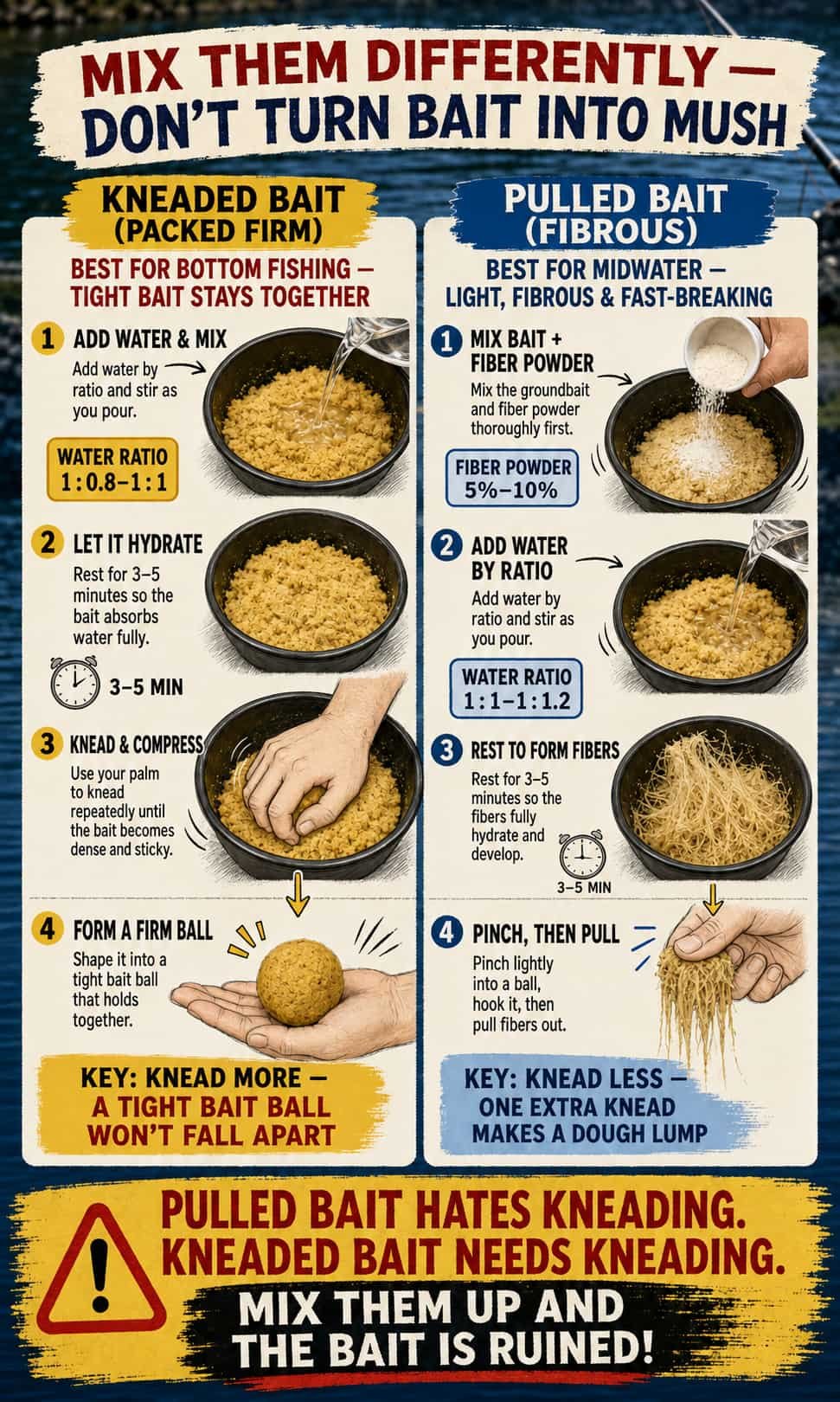
Mix kneaded bait for a dense finish, and mix pulled bait for a soft, fibrous finish. Both mixtures need water and a short rest, but the handling differs after hydration. Kneaded bait needs compression; pulled bait needs a light touch so the finished bait keeps its loose structure.
The ratios below express bait to water, but the measurements do not identify weight or volume. The 5%–10% fiber-powder figure also leaves the percentage basis unspecified. These figures give preparation ranges without defining a fully measured recipe; they cannot be reliably converted into cups or grams.
| Mixing detail | Kneaded bait | Pulled bait |
|---|---|---|
| Bait-to-water ratio | 1:0.8 to 1:1 | 1:1 to 1:1.2 |
| Fiber powder | No added percentage specified | 5%–10% |
| Resting time | 3–5 minutes | 3–5 minutes |
| Final handling | Knead and compress into a firm ball | Pinch lightly and pull a portion onto the hook |
How do you prepare a firm kneaded bait ball?
Prepare kneaded bait by mixing in water, resting the mixture for 3–5 minutes, and then kneading until the bait becomes dense and sticky. Use a bait-to-water ratio of 1:0.8 to 1:1 as the starting range. Finish by shaping a firm ball that holds together around the hook.
- Add water while stirring. Spread the water through the dry bait as you pour.
- Let the bait hydrate. Leave the mixture for 3–5 minutes so the bait can absorb the water.
- Knead and compress. Work the hydrated mixture with your palm until the bait becomes firm and cohesive.
- Shape the hook bait. Form a tight ball that stays together rather than crumbling during handling.
The finished ball should feel firm, sticky, and workable. You should be able to shape the mixture around the hook while keeping the bait ball intact.
How do you prepare soft, fibrous pulled bait?
Prepare pulled bait by blending the dry bait with fiber powder, adding water, and resting the mixture for 3–5 minutes. Use the 5%–10% fiber-powder range and a bait-to-water ratio of 1:1 to 1:1.2 as starting guides. Handle the hydrated bait lightly to preserve the soft, fibrous texture.
- Mix the dry ingredients first. Blend the groundbait and bait fiber powder thoroughly before adding water.
- Add water while stirring. Distribute the water through the mixture as you pour.
- Rest for 3–5 minutes. Allow the bait and fibers to hydrate before judging the texture.
- Pinch lightly, then pull. Gather the bait gently, engage the hook in the mixture, and draw out a small fibrous portion onto the hook.
Fiber powder is the bait additive used here to develop the strands that help the loose mixture hold on the hook. The finished bait should retain visible fibers and a soft structure. Repeated kneading compresses that structure into a denser dough.
How do you fix common bait-mixing mistakes?
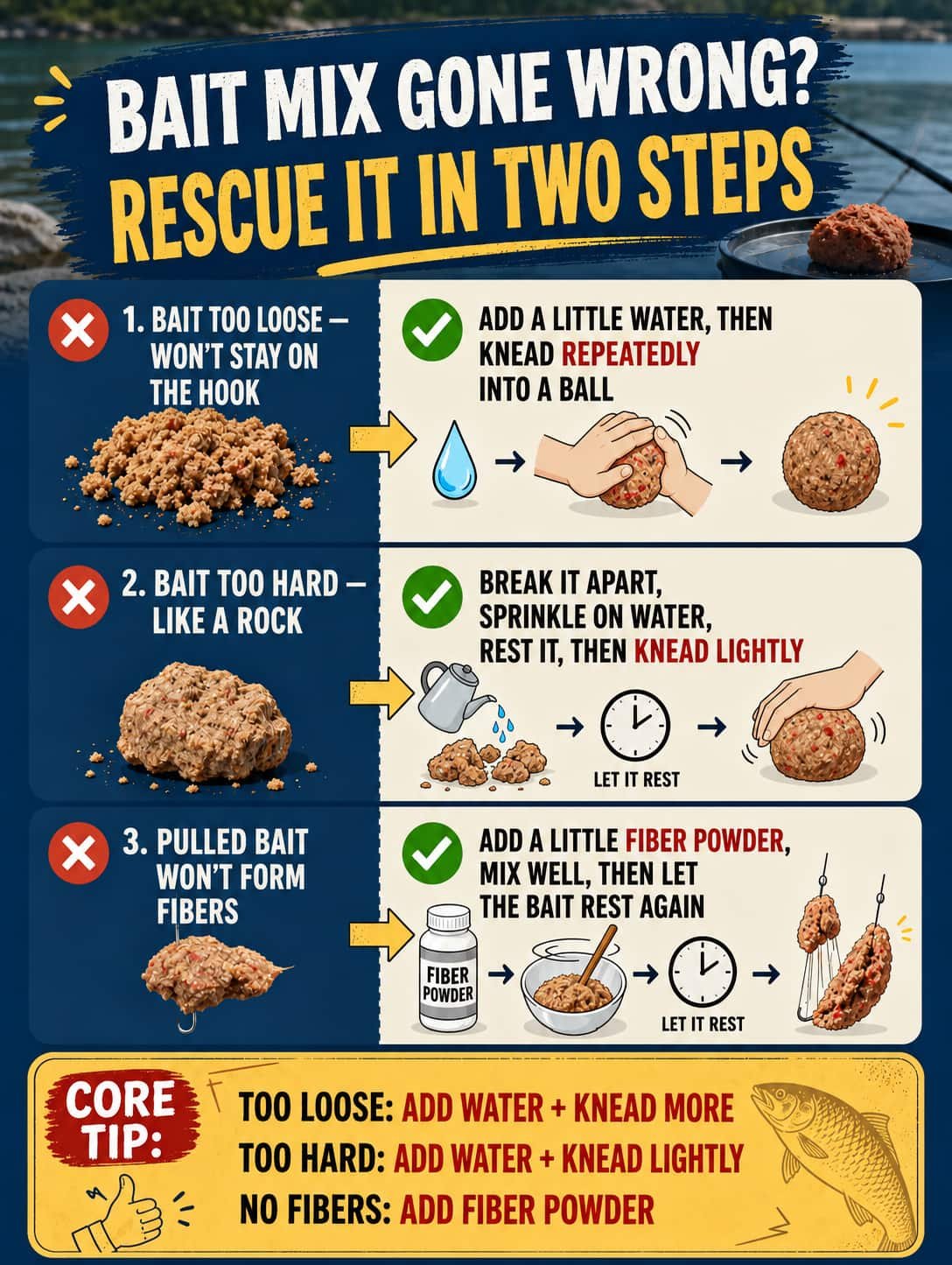
Fix the specific texture problem before changing the whole batch. Loose, crumbly kneaded bait needs a little water and more kneading; hard kneaded bait needs moisture, a rest, and gentle handling. Pulled bait that will not form fibers needs a little more fiber powder, mixing, and another rest.
Keep the two preparation methods separate during repairs. Repeated kneading belongs to the firm-bait method. Working pulled bait the same way can remove the loose texture you wanted in the first place.
What should you do when kneaded bait will not stay on the hook?
Add a little water to dry, crumbly kneaded bait, then knead the mixture repeatedly until a cohesive ball forms. The aim is to help loose particles bind together so the hook bait survives handling. Keep the addition small and judge the texture before adding any more water.
Apply this repair to a crumbly mixture, rather than assuming every bait that falls off the hook needs more water. The useful sign is a bait ball that breaks apart instead of holding its shape when compressed.
What should you do when kneaded bait becomes too hard?
Break hard kneaded bait into smaller pieces, sprinkle the pieces with water, and let the bait rest before kneading lightly. The extra moisture needs time to spread through the mixture. Stop when the bait becomes workable again; repeated hard kneading is not the aim of this repair.
What should you do when pulled bait will not form fibers?
Add a little bait fiber powder, mix the bait thoroughly, and let the mixture rest again when pulled bait will not develop strands. Give the added powder time to hydrate before checking the result. The goal is a soft, fibrous portion that clings to the hook when pulled.
Choose the bait texture before you mix, then let the feeding situation guide the next batch. A firm ball suits a longer wait and a bait that needs to arrive intact. A soft, fibrous portion suits active feeding and quick rebaiting. Match the texture to the job the hook bait needs to do.
More to Explore
Related Articles
More guides in Fishing bait
Want groundbait that lasts? Rapeseed cake for fishing releases a natural scent trail and helps keep fish feeding longer.